
How healthcare engineering supports safer device deployment?

In a market shaped by digital integration and stricter IVDR certification demands, healthcare engineering is becoming essential for safer device deployment. From hospital furniture wholesale and oxygen concentrator factory sourcing to patient monitor PCBA manufacturer audits and supply chain verification, buyers need more than claims—they need medical technology verification backed by an independent think tank. This article explains how engineering-led evaluation helps procurement teams, operators, and decision-makers reduce risk across today’s healthcare equipment landscape.
For procurement teams, the real issue is rarely availability alone. The harder question is whether a device, subsystem, or material can perform consistently across 12–36 months of clinical use, transportation stress, cleaning cycles, firmware updates, and regulatory review. Healthcare engineering closes that gap by turning performance claims into measurable evidence.
For operators and technical users, engineering support also improves deployment safety at the point of use. It helps verify alarm behavior, mechanical stability, power integrity, environmental tolerance, and maintenance intervals before equipment reaches wards, labs, and outpatient sites. That reduces commissioning errors, unplanned downtime, and downstream service costs.
Why healthcare engineering matters before a device enters clinical use
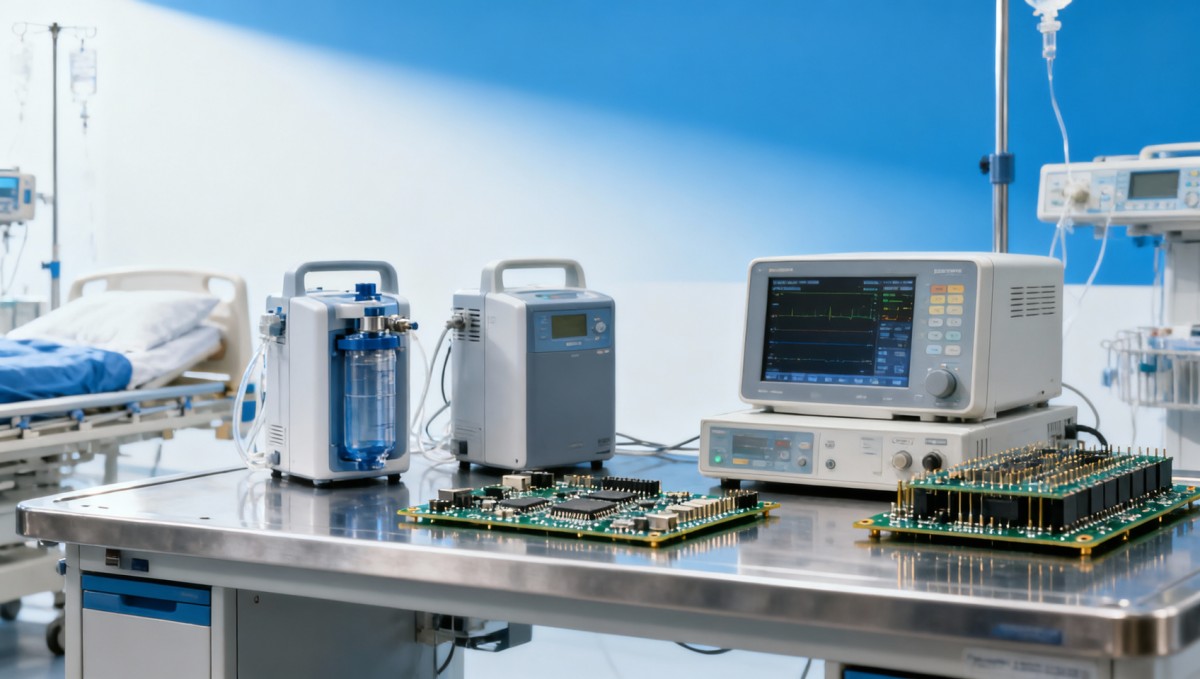
Healthcare engineering is not limited to product design. In deployment terms, it is the structured evaluation of whether a device can be sourced, integrated, validated, and maintained under real operating conditions. This matters across mixed procurement categories, including hospital beds, oxygen concentrators, patient monitors, laboratory analyzers, and embedded electronic assemblies such as PCBAs.
A safe deployment decision usually depends on at least 4 layers of evidence: functional performance, manufacturing consistency, regulatory readiness, and lifecycle support. A unit may pass a showroom demonstration yet still fail under repeated cleaning with disinfectants, unstable voltage input, 8-hour continuous duty, or transport vibration. Engineering-led verification reveals those issues before purchasing commitments expand.
This is especially relevant in cross-border sourcing. A buyer comparing 3 oxygen concentrator factories may receive similar brochures, but the engineering questions are different: oxygen purity stability across flow settings, compressor thermal behavior at 30℃ ambient temperature, alarm reliability, spare part traceability, and calibration documentation. Those factors directly affect deployment safety.
Independent technical benchmarking adds value because it separates marketing language from verifiable data. A think tank and benchmarking lab such as VitalSync Metrics can translate engineering parameters into standardized reports that make procurement decisions more defendable for quality teams, finance leaders, and hospital boards.
Core deployment risks engineering can identify early
- Electrical instability, such as voltage fluctuation tolerance outside common ranges like 100–240V AC.
- Mechanical fatigue in moving components after 5,000–20,000 operating cycles.
- Sensor drift that exceeds acceptable error bands such as ±2% or ±0.5 units, depending on device type.
- Cleaning and disinfection incompatibility that shortens enclosure life within 6–12 months.
- Documentation gaps that delay MDR or IVDR file review during qualification.
When these issues are addressed at the engineering review stage, the organization avoids expensive corrective actions after installation. In practical terms, safer deployment starts long before the device is switched on in a hospital room or laboratory.
What procurement teams should verify beyond product claims
Procurement in healthcare is now more technical than transactional. Buyers are expected to assess not just price and delivery, but also component integrity, quality process maturity, and service readiness. This is true whether the item is a metal-framed hospital trolley or a patient monitor PCBA with mixed-signal circuitry and alarm interfaces.
One useful approach is to score vendors across a fixed evaluation matrix. This keeps comparisons objective and reduces the risk of overvaluing cosmetic features or sales responsiveness. In many projects, 5–7 criteria are enough to expose meaningful differences between suppliers that otherwise look equivalent on paper.
The table below summarizes common decision factors used in engineering-led procurement reviews across healthcare equipment categories.
The key takeaway is that safer device deployment depends on evidence that can survive internal review. A lower quotation may not be lower risk if replacement parts take 8 weeks, calibration records are incomplete, or supplier change control is weak. Procurement teams should request engineering documentation early, ideally before final commercial negotiation.
Practical checks during supplier qualification
During qualification, buyers should ask for build-of-material visibility, verification data for critical parameters, and a clear definition of acceptance criteria. For a patient monitor PCBA manufacturer, that may include solder joint inspection records, power rail stability, EMC pre-compliance evidence, and burn-in duration such as 4–24 hours, depending on the assembly’s intended use.
A 5-step review sequence
- Screen documentation for standards alignment and revision control.
- Review engineering test data for critical functions and environmental limits.
- Audit the manufacturing process for traceability and process discipline.
- Compare lifecycle support, including spare parts and service turnaround.
- Approve conditional deployment with incoming inspection and pilot monitoring.
That sequence helps decision-makers turn supplier selection into a repeatable governance process rather than a one-time commercial judgment.
How engineering-led benchmarking supports different healthcare equipment categories
Different product categories fail in different ways, so benchmarking criteria must match the application. Hospital furniture may look simple, but rail strength, caster endurance, corrosion resistance, and surface compatibility with disinfectants can determine whether the equipment remains safe after 18 months of high-frequency use. By contrast, oxygen delivery devices rely heavily on pneumatic stability, alarm accuracy, and thermal management.
For laboratory environments, IVDR-driven workflows add another layer. Devices and consumable-related systems must support repeatability, labeling accuracy, and integration with digital records. A lab architect or technical buyer often needs engineering evidence that the chosen equipment can function under controlled ranges such as 18–26℃, specific humidity limits, and planned throughput volumes.
The benchmarking framework below shows how deployment criteria vary by product family and why a one-size-fits-all sourcing checklist is not enough.
This kind of category-based benchmarking helps buyers focus resources where failure consequences are highest. It also supports tiered procurement decisions. Not every item needs the same test depth, but every clinical or lab-facing item should pass a defined minimum review threshold before rollout.
Where independent verification becomes especially valuable
Independent verification is most useful when the supply chain includes multiple subcontractors, when product revisions are frequent, or when the buyer lacks an in-house biomedical engineering team. In those cases, third-party engineering review can function as a technical filter, especially during pilot sourcing, distributor onboarding, or regional expansion.
For example, if two suppliers offer similar oxygen concentrators with lead times of 3–5 weeks, the differentiator may be not only price, but compressor fatigue behavior, sieve bed consistency, and after-sales documentation quality. Technical benchmarking makes that difference visible before the contract is signed.
Deployment workflow: from engineering review to operational handover
Safer device deployment requires more than a purchase order and delivery note. A structured workflow typically includes specification alignment, supplier verification, sample evaluation, acceptance criteria, installation checks, and user training. In many healthcare projects, the difference between smooth commissioning and repeated escalations comes down to whether these steps were documented in advance.
A practical deployment model uses 3 phases. Phase 1 is pre-procurement engineering review, usually completed in 1–3 weeks depending on product complexity. Phase 2 covers pilot validation and incoming inspection, often lasting 5–10 working days. Phase 3 is operational handover, including training, maintenance scheduling, and escalation mapping.
Recommended handover checklist
- Confirm serial number or batch traceability against shipping and inspection records.
- Verify installation environment, including voltage, ventilation clearance, and network conditions where relevant.
- Check alarms, interfaces, and key functions using a documented test script.
- Assign maintenance intervals such as monthly visual checks and semiannual functional review.
- Train users and operators in 2 levels: daily operation and fault escalation.
This process is particularly important for devices that combine hardware, software, and clinical workflow dependence. Without a structured handover, an equipment fault may be misclassified as user error, delaying corrective action and creating unnecessary service calls.
Engineering support also improves post-deployment stability. For example, when maintenance instructions define replacement intervals, inspection points, and acceptable drift limits, operators can detect deterioration before it turns into a safety event. That is a major advantage in decentralized care settings where biomedical resources are limited.
Common mistakes during rollout
- Approving devices based only on brochure specifications and price.
- Skipping pilot testing for first-time suppliers or revised product versions.
- Overlooking spare part lead times that may exceed 30–60 days.
- Failing to align training content with actual operator skill levels.
Avoiding these mistakes lowers downtime, protects procurement credibility, and improves end-user confidence. For enterprise decision-makers, it also creates a clearer basis for expansion across multiple sites without repeating the same qualification work from zero.
How operators, buyers, and executives can use engineering evidence for better decisions
Different stakeholders need different outputs from the same engineering process. Operators want clarity on usability, alarm behavior, maintenance burden, and failure escalation. Procurement teams need comparable technical evidence to defend sourcing choices. Executives need confidence that acquisition decisions support reliability, compliance, and total lifecycle value rather than short-term savings alone.
That is where standardized whitepapers and benchmark summaries become useful. They translate manufacturing parameters, test outcomes, and review findings into decision-ready language. Instead of reading scattered claims from multiple suppliers, stakeholders can assess risk through the same framework and agree on minimum approval thresholds.
FAQ for healthcare equipment sourcing and deployment
How do I evaluate whether a supplier is ready for hospital deployment?
Start with 4 checkpoints: performance data, regulatory documentation, manufacturing traceability, and after-sales support. If one of these is weak, request corrective evidence before scaling the order. For first cooperation, a pilot batch and 7–14 day incoming review is often more reliable than full-volume commitment.
What should I prioritize when comparing oxygen concentrator factories?
Focus on oxygen purity stability, flow-rate consistency, thermal management, alarm logic, and service parts availability. Delivery time matters, but not more than sustained performance under continuous use. Ask for data across multiple operating points rather than one nominal setting.
Why is PCBA verification important for patient monitoring systems?
Because many field issues begin at the assembly level. Power noise, solder fatigue, connector instability, or insufficient burn-in can create intermittent faults that are hard to diagnose after installation. A PCBA audit helps reveal these risks before the device is deployed in care areas.
What is a reasonable review cycle for engineering-based sourcing?
For standard equipment, an initial technical review may take 1–2 weeks. More complex devices or multi-supplier comparisons can take 3–4 weeks, especially if sample testing, factory audits, or document remediation are required. The time spent upfront is often lower than the cost of one failed rollout.
As healthcare procurement becomes more data-driven, organizations that use engineering evidence gain a practical advantage. They can qualify suppliers faster, reduce avoidable deployment risk, and create more defensible purchasing decisions across furniture, devices, electronics, and lab-support equipment.
VitalSync Metrics supports this shift by acting as an independent technical filter for the MedTech and Life Sciences supply chain. If you need clearer benchmarking, supplier verification, or a more structured path to safer device deployment, contact us to discuss your sourcing scenario, request a tailored evaluation approach, or learn more about our engineering-led healthcare solutions.
- EMS
- ESS
- hospital furniture
- patient monitoring
- oxygen concentrators
- life sciences
- tractors
- EdTech
- procurement
- AR
- supply chain
- Cement
- benchmarking
- benchmarking lab
- healthcare procurement
- medical technology
- technical benchmarking
- digital integration
- life sciences
- supply chain
- manufacturing parameters
- independent think tank
- data-driven
- healthcare engineering
- IVDR certification
- biomedical engineering
- healthcare solutions
- healthcare equipment
- medical technology verification
- supply chain verification
- patient monitor pcba manufacturer
- oxygen concentrator factory
- hospital furniture wholesale
Recommended News
- 2026.04.17Hospital equipment standards shaping modern rehab devicesSarah Jenkins (Laboratory Infrastructure Consultant)
- 2026.04.17Laboratory equipment validation errors in sample storageDr. Hideo Tanaka (Imaging Systems Analyst)
- 2026.04.17Medical equipment certification delays in remote monitoringLydia Vancini (Regulatory Compliance Lead)
The VitalSync Intelligence Brief
Receive daily deep-dives into MedTech innovations and regulatory shifts.