
Medical device innovation trends reshaping remote monitoring
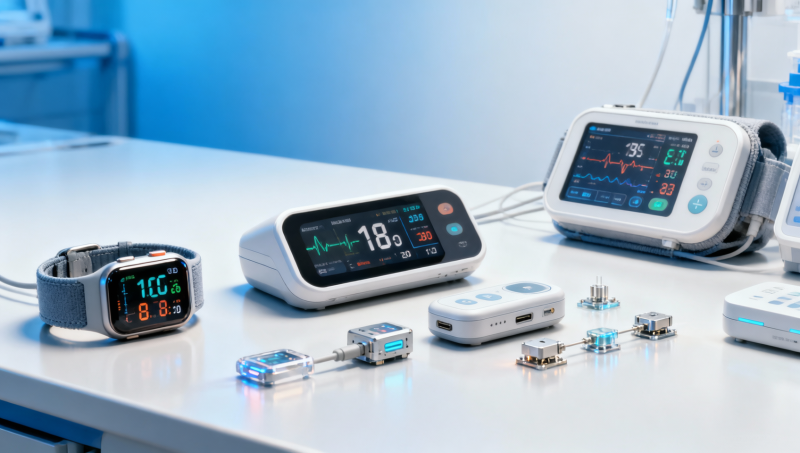
Medical device innovation is changing remote monitoring quickly, but for hospital buyers, MedTech founders, lab planners, and clinical operators, the real question is not which device looks most advanced. It is which innovations can deliver clinically reliable data, fit into healthcare digital integration strategies, meet MDR/IVDR and broader medical technology compliance expectations, and continue performing outside controlled demo conditions. In practice, the most important trends are those that improve signal quality, interoperability, workflow usability, and long-term medical device reliability—not just those that add more sensors or more dashboards.
For organizations making procurement or validation decisions, this means remote monitoring should be evaluated as an engineering and risk-management issue as much as a digital health opportunity. The devices and platforms that will reshape care are the ones that can stand up to medical device testing, medical device evaluation, and healthcare benchmarking under real-world conditions.
Which innovation trends are actually reshaping remote monitoring?
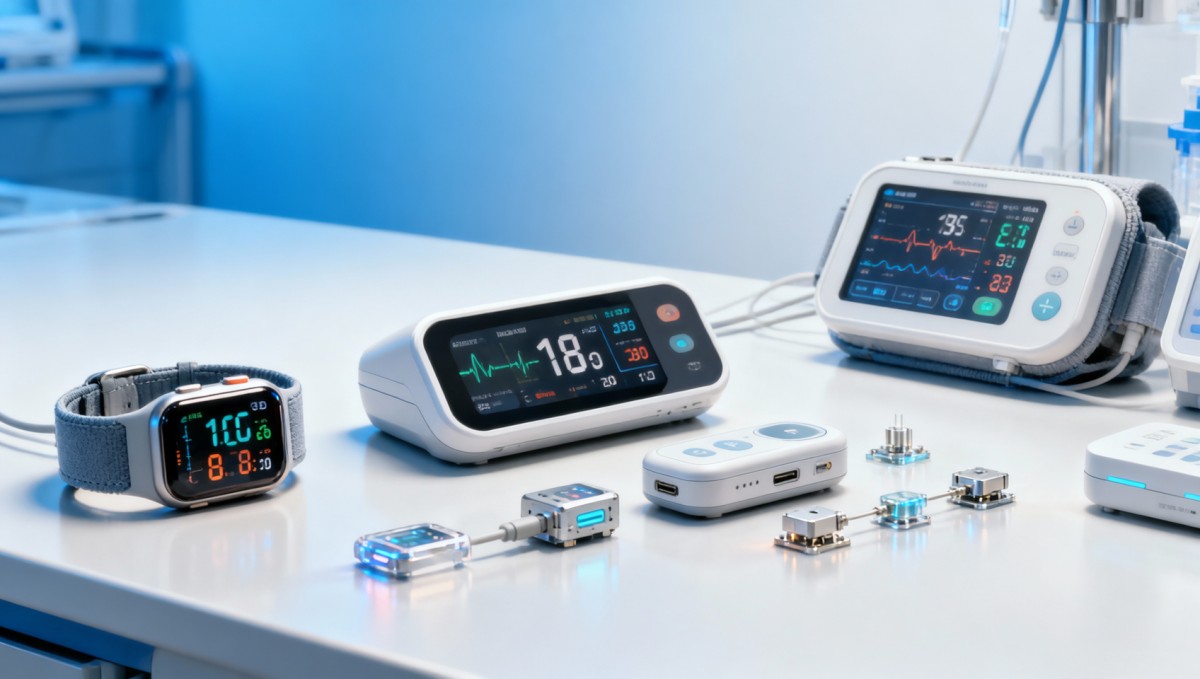
Several trends are driving the next phase of remote monitoring, but they do not all create equal value. The strongest innovations are those that improve trust in data, reduce operational friction, and support scalable deployment.
1. Higher-fidelity wearable and ambient sensing
Remote monitoring is moving beyond basic step counts and intermittent vitals. New devices are improving signal capture for ECG, SpO2, respiratory rate, temperature, sleep, blood pressure, and mobility tracking. The real shift is not simply more data points, but better signal-to-noise performance in uncontrolled environments such as homes, rehabilitation settings, and elder care facilities.
For users and operators, this means fewer false alarms and less time spent correcting poor readings. For procurement teams, it means the value of a device increasingly depends on evidence of technical performance across movement, skin types, environmental variation, and long wear periods.
2. AI-assisted filtering, triage, and early risk detection
Artificial intelligence is increasingly used to detect anomalies, prioritize alerts, and identify patterns that would be difficult to catch manually. In remote monitoring, the practical value of AI comes from reducing alert fatigue and helping care teams focus on events that are clinically meaningful.
However, decision-makers should be cautious. AI adds value only when the underlying device data is stable and validated. If the sensor layer is weak, algorithmic sophistication does not solve the core reliability problem. This is why medical device evaluation should assess both raw data quality and the performance of analytical layers.
3. Interoperability and platform-level integration
One of the most influential trends is the shift from standalone remote monitoring devices to connected systems that integrate with EHRs, lab systems, telehealth platforms, and procurement workflows. Healthcare digital integration is now central to adoption. A device that performs well in isolation but creates workflow friction often fails to scale.
Organizations increasingly favor solutions that support standardized data exchange, clean API structures, cybersecurity controls, and integration into care pathways. In value-based environments, operational compatibility matters almost as much as device accuracy.
4. Miniaturization, low-power design, and longer wear cycles
Smaller form factors, improved battery efficiency, and lower-maintenance designs are making remote monitoring more practical for long-term use. This matters especially in chronic disease management, post-acute follow-up, and decentralized trials, where patient adherence can determine whether a program succeeds.
From a business perspective, lower charging frequency, fewer replacements, and more durable components can reduce support burden and total cost of ownership. These are often more meaningful procurement factors than headline innovation claims.
5. Home-use readiness and human factors engineering
As more monitoring shifts outside clinical facilities, usability has become a major innovation category. Devices must be easy to place, interpret, clean, and maintain without trained technicians. Operators care about setup simplicity and error-proofing. Enterprise buyers care about the downstream effect on adherence, training costs, and service calls.
Products that succeed in remote settings are increasingly those built around realistic user behavior rather than idealized use cases. Human factors engineering, therefore, is no longer secondary; it is central to clinical-grade adoption.
What matters most to buyers and decision-makers evaluating these trends?
For the target audience, the main concern is not whether remote monitoring is growing. That is already clear. The concern is how to distinguish meaningful innovation from commercially polished but operationally risky products.
The most important questions usually include:
- Is the device clinically reliable in real-world conditions, not only in controlled tests?
- What evidence supports performance consistency over time?
- How strong is the medical device testing and validation documentation?
- Is the product aligned with MDR/IVDR expectations where applicable and broader medical technology compliance requirements?
- Can it integrate into existing clinical and digital workflows without expensive customization?
- What are the failure modes, maintenance needs, and support implications?
- Does the innovation reduce total operational burden or simply add another dashboard?
These questions reflect a broader market shift. Procurement is no longer centered only on feature comparison or initial cost. It increasingly depends on technical integrity, regulatory readiness, and evidence-based confidence.
Why medical device testing and healthcare benchmarking now matter more than product claims
As remote monitoring becomes more crowded, marketing language has become less useful as a decision tool. Many vendors claim accuracy, seamless integration, and AI intelligence. Fewer provide benchmarking data that allows objective comparison.
This is where independent healthcare benchmarking becomes critical. For remote monitoring technologies, useful benchmarking can include:
- Signal-to-noise ratio under motion and environmental stress
- Sensor drift over extended wear periods
- Battery degradation and uptime stability
- Material durability and cleaning tolerance
- Connectivity resilience across network variability
- Alert precision, sensitivity, and false positive rates
- Interoperability performance across software environments
For procurement directors and enterprise decision-makers, this type of evidence supports more defensible sourcing decisions. For operators, it improves implementation confidence. For startups and manufacturers, it helps prove that a solution can stand up to scrutiny beyond sales presentations.
Independent medical device evaluation also reduces a common risk in digital health procurement: selecting a product based on innovation narrative before verifying engineering performance.
How MDR/IVDR readiness and compliance are reshaping remote monitoring adoption
Innovation in remote monitoring is no longer judged only by functionality. Compliance maturity now shapes commercial viability. In Europe and many global procurement environments, MDR/IVDR expectations have raised the bar for technical documentation, traceability, post-market surveillance, and risk management.
For remote monitoring solutions, compliance-related evaluation should include:
- Clarity of intended use and claims
- Quality of clinical and analytical performance evidence
- Software lifecycle controls and update governance
- Cybersecurity risk management
- Post-market monitoring strategy
- Supplier quality consistency and manufacturing transparency
This matters because a technically promising device can still become a poor procurement choice if its compliance foundation is weak. Delays in documentation, inconsistent manufacturing controls, or unclear labeling can create downstream risk for healthcare providers and channel partners.
For decision-makers, compliance should not be treated as a final checklist item. It should be part of the initial assessment of whether a remote monitoring technology is procurement-ready.
How to assess whether a remote monitoring innovation will create real business and clinical value
The most useful way to evaluate innovation is to connect technical performance to operational and financial outcomes. A remote monitoring device is valuable when it improves care visibility without creating hidden costs in support, retraining, integration, or false alert handling.
A practical assessment framework includes five areas:
Clinical relevance
Does the device monitor parameters that support a real care pathway, such as chronic disease management, post-surgical recovery, early deterioration detection, or decentralized diagnostics? Innovation without a clear use case rarely creates sustained value.
Engineering reliability
Has the product demonstrated stable performance in realistic conditions? This includes device reliability, signal quality, environmental tolerance, and wear durability. This is where rigorous medical device testing is essential.
Workflow fit
Can clinicians, technicians, and patients use it consistently without excessive onboarding or troubleshooting? Even a strong device can fail if it disrupts routine operations.
Economic impact
Does the solution reduce readmissions, shorten intervention time, support staff efficiency, or improve procurement confidence? Enterprise buyers increasingly need a defensible view of total value, not just unit price.
Regulatory and lifecycle resilience
Can the supplier support audits, updates, field performance monitoring, and long-term product continuity? In healthcare, value depends on durability of support as much as device capability.
Common mistakes when interpreting remote monitoring innovation trends
Many organizations make similar mistakes when assessing this category.
- Confusing more features with better outcomes. Additional metrics only help if they improve clinical decisions or operational efficiency.
- Overvaluing AI without verifying input quality. Poor source data will undermine even advanced analytics.
- Underestimating interoperability challenges. Integration complexity can erase expected ROI.
- Ignoring long-term reliability. Early performance may not predict six-month or twelve-month field stability.
- Treating compliance as separate from procurement quality. Weak compliance often signals deeper process and documentation risks.
- Relying on vendor claims without independent benchmarking. Objective comparison is essential in a crowded market.
Avoiding these mistakes helps organizations choose remote monitoring systems that are sustainable, not just impressive in pilot projects.
The bigger market direction: from novelty to validated, procurement-grade remote monitoring
The remote monitoring market is maturing. The next wave of winners will likely not be defined by who launches the most eye-catching sensor package, but by who can prove repeatable clinical-grade performance, clean digital integration, and compliance-ready documentation.
This is particularly important in a value-based procurement environment. Global healthcare systems increasingly need technologies that can be trusted across the full lifecycle: selection, validation, deployment, operation, and post-market review. That is why healthcare benchmarking, medical device reliability, and evidence-driven evaluation are becoming central to market access.
In other words, medical device innovation is indeed reshaping remote monitoring—but the reshaping is not only technological. It is also changing how products must be tested, compared, approved, and purchased.
Conclusion
For today’s healthcare buyers, operators, and strategic decision-makers, the most important remote monitoring innovations are those that improve data integrity, usability, interoperability, and long-term reliability in real-world care settings. The market is moving away from feature-led procurement and toward evidence-led adoption.
If a solution cannot demonstrate strong medical device testing results, credible medical device evaluation, healthcare benchmarking evidence, and alignment with MDR/IVDR and broader medical technology compliance expectations, it may not be a true innovation from a procurement perspective. The technologies that will create lasting value are the ones that combine smart design with verifiable performance and operational fit.
That is the new standard for remote monitoring: not just connected devices, but trusted, benchmarked, clinically dependable systems.
- EMS
- ESS
- remote monitoring
- EdTech
- procurement
- cybersecurity
- AR
- ML
- Cement
- benchmarking
- value-based procurement
- medical device reliability
- medical technology compliance
- medical technology
- technical integrity
- signal-to-noise ratio
- digital integration
- long-term reliability
- healthcare digital integration
- healthcare benchmarking
- medical device evaluation
- medical device testing
- medical device innovation
- Remote Monitoring
Recommended News
- 2026.04.17Hospital equipment standards shaping modern rehab devicesSarah Jenkins (Laboratory Infrastructure Consultant)
- 2026.04.17Laboratory equipment validation errors in sample storageDr. Hideo Tanaka (Imaging Systems Analyst)
- 2026.04.17Medical equipment certification delays in remote monitoringLydia Vancini (Regulatory Compliance Lead)
The VitalSync Intelligence Brief
Receive daily deep-dives into MedTech innovations and regulatory shifts.