
Which energy-efficient technologies will matter most in 2026
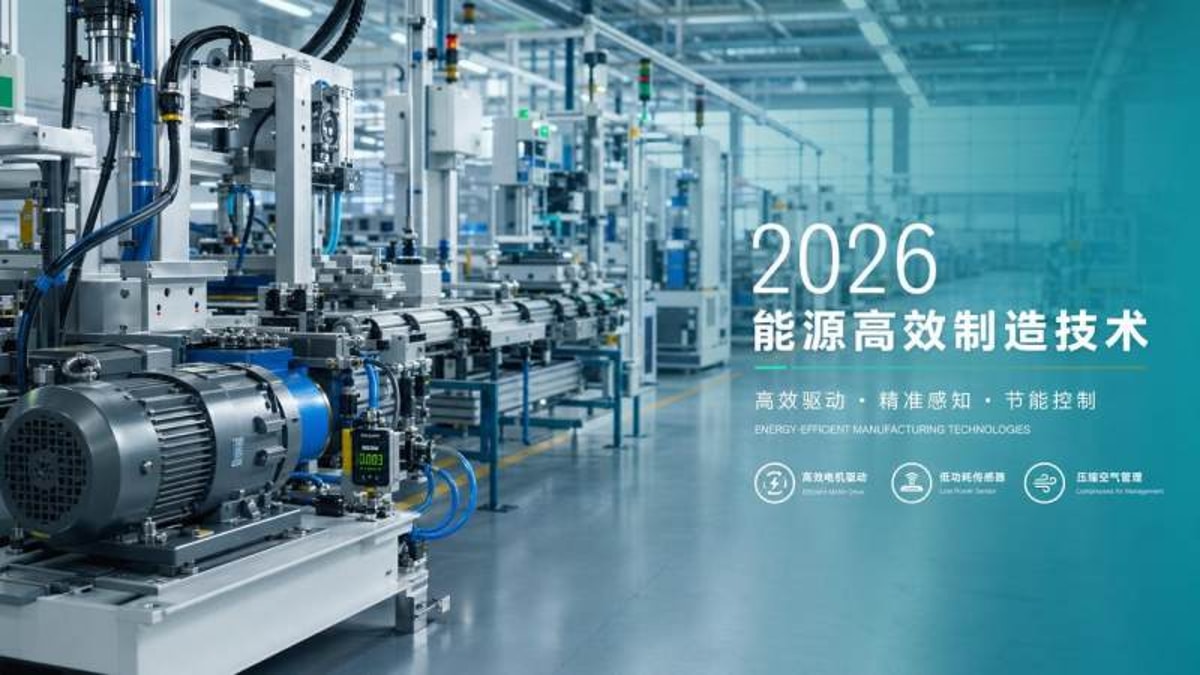
As Smart manufacturing trends 2026 accelerate, energy-efficient technologies are becoming a defining factor in both industrial performance and healthcare supply-chain resilience. From intelligent automation to low-power sensing and data-optimized production systems, the real question is which innovations will deliver measurable value rather than inflated claims. For decision-makers and researchers, understanding what will matter most in 2026 starts with technical evidence, operational impact, and long-term reliability.
Why a checklist approach matters before judging 2026 technologies
For information researchers, broad claims around energy efficiency often blur together. In practice, not every upgrade deserves equal attention. Some technologies cut kilowatt-hours but increase maintenance complexity. Others improve automation but add cyber risk, validation burden, or regulatory documentation challenges. That is why Smart manufacturing trends 2026 should be evaluated through a structured checklist rather than through vendor narratives alone.
This is especially relevant in healthcare-linked manufacturing, where energy-efficient technologies must support not only lower operating costs but also process stability, traceability, and quality assurance. A sensor platform that saves power but weakens signal integrity, or a machine optimization layer that reduces loads but obscures audit trails, may fail under real procurement review. The most important technologies in 2026 will be those that combine efficiency with measurable engineering integrity.
First-screen checklist: what to confirm before calling a technology “important”
Before diving into product categories, use the following screening criteria. These are the most practical filters for identifying which Smart manufacturing trends 2026 are likely to matter across industries, including MedTech, laboratory infrastructure, and precision production environments.
- Verify whether the technology reduces total energy use at the system level, not only at the component level. A motor, sensor, or software module may be efficient alone but ineffective in the full line.
- Check whether performance data is repeatable under variable loads, shifts, ambient temperatures, and real production schedules.
- Confirm whether energy savings come with preserved quality metrics such as tolerance control, sterility support, signal accuracy, or uptime.
- Assess integration burden. A technology that saves energy but requires major downtime, custom middleware, or retraining may lose practical value.
- Review lifecycle economics, including maintenance, calibration, firmware support, spare parts, and expected service life.
- For regulated sectors, determine whether the technology supports traceability, validation, and compliance expectations such as MDR/IVDR-linked documentation workflows.
The energy-efficient technologies most likely to matter in 2026
1. AI-guided energy orchestration for production lines
Among Smart manufacturing trends 2026, AI-based energy orchestration stands out because it acts across machines instead of optimizing isolated assets. These systems analyze load profiles, idle cycles, compressed air demand, thermal behavior, and utility timing to reduce waste dynamically. Their value grows in facilities with mixed equipment ages and uneven usage patterns.
The key judgment standard is not whether AI is present, but whether the platform can show verified reductions in peak demand, standby losses, and process drift. In healthcare manufacturing or laboratory-support environments, this matters because energy control cannot compromise environmental consistency or production timing.
2. High-efficiency motors, drives, and motion control upgrades
Variable frequency drives, servo optimization, and next-generation motor systems remain highly relevant because motion consumes a large share of industrial electricity. What makes them especially important in 2026 is the shift from simple replacement logic to digitally managed motion efficiency. The best solutions pair hardware upgrades with analytics that monitor load matching, torque waste, and duty-cycle tuning.
For buyers, the checklist is straightforward: confirm actual duty-cycle suitability, evaluate harmonic effects, and compare energy reduction against installation cost and maintenance impact. In precision sectors, also check whether lower-energy motion still supports repeatable positioning and vibration control.
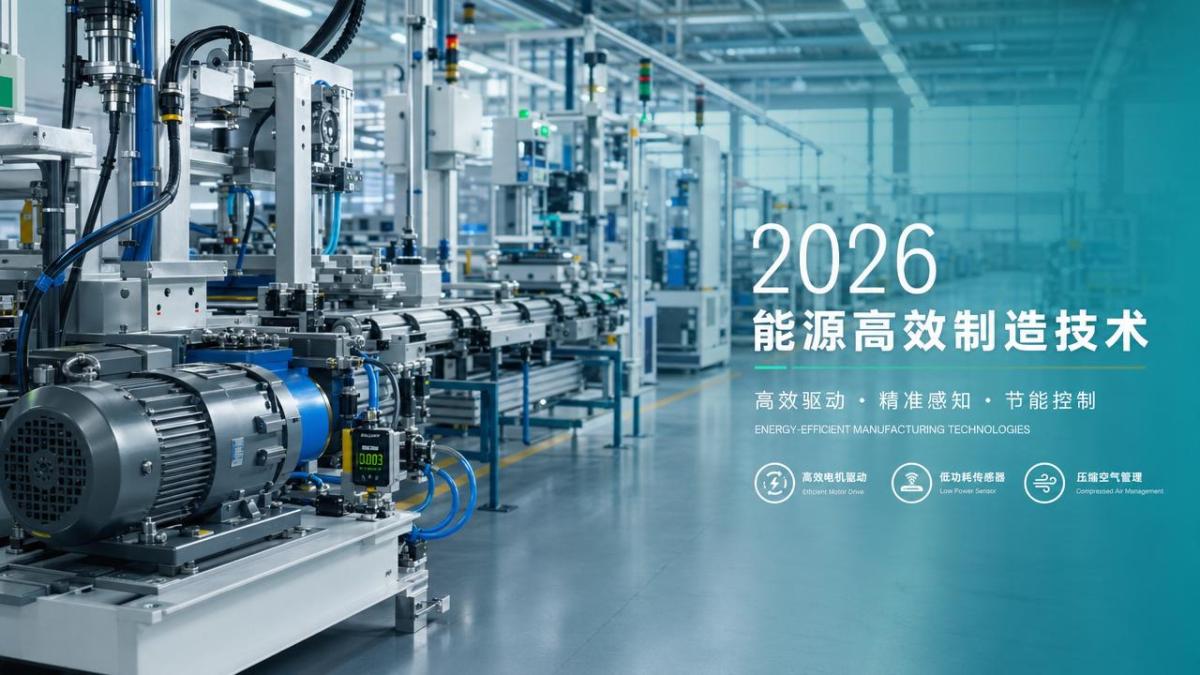
3. Low-power industrial IoT and edge sensing
Low-power sensing will matter not because sensors themselves consume large amounts of energy, but because they enable better control of larger energy loads. Smart manufacturing trends 2026 increasingly rely on distributed edge devices that monitor temperature, vibration, occupancy, airflow, and machine state while minimizing power draw and network congestion.
In facilities tied to healthcare supply chains, these systems can support equipment condition monitoring, cold-chain supervision, and clean-environment efficiency. The important selection factor is signal quality under low-power operation. Decision-makers should ask whether lower consumption affects sampling frequency, data integrity, or calibration stability.
4. Heat recovery and thermal reuse systems
Thermal waste is often underestimated. In 2026, heat recovery technologies will matter more because energy prices, sustainability targets, and facility resilience concerns are converging. Recovering waste heat from compressors, HVAC loops, sterilization support systems, process cooling, or data infrastructure can create meaningful gains without changing core production equipment.
The evaluation standard here is practical fit: is the recovered energy usable when and where it is generated? Technologies that produce theoretical savings but lack thermal matching rarely deliver expected ROI. Researchers should focus on seasonal performance, contamination separation, and maintenance access.
5. Smart compressed air and vacuum optimization
Compressed air remains one of the costliest hidden inefficiencies in manufacturing. Leak detection, pressure optimization, demand-based control, and smarter compressor staging are among the most immediately actionable energy-efficient technologies. Their relevance in Smart manufacturing trends 2026 comes from short payback periods and measurable operational impact.
However, the most important check is whether process quality depends on stable pressure bands. In laboratory and medical production environments, reducing pressure aggressively without validating equipment response can create reliability issues. Efficiency should be balanced against process criticality.
6. Digital twins for energy and process simulation
Digital twins are becoming more relevant as simulation models improve and data pipelines become cleaner. Their importance in 2026 lies in decision support: they help teams test equipment schedules, airflow changes, maintenance plans, and production mixes before altering live operations. This reduces both energy waste and implementation risk.
The critical question is model fidelity. A digital twin is useful only if it reflects actual machine behavior, utility interactions, and process constraints. For information researchers, this is a key distinction between a visualization tool and a real optimization platform.
How priorities change by use case
Not all organizations should rank these technologies the same way. Smart manufacturing trends 2026 need to be matched to operational context.
Common blind spots that distort technology decisions
- Confusing “connected” with “efficient.” A system may collect excellent data yet have no proven energy reduction logic.
- Ignoring verification conditions. Savings measured in pilot mode may not survive multi-shift operation.
- Overlooking maintenance energy. Filters, leaks, recalibration cycles, and poor servicing can erase projected benefits.
- Underestimating interoperability risk. If software layers cannot communicate with legacy assets, efficiency gains stall.
- Failing to connect energy metrics with product quality. In regulated sectors, lower utility use is irrelevant if output consistency weakens.
Execution guide: what to prepare before investing
If your organization is reviewing Smart manufacturing trends 2026 and trying to identify the right energy-efficient technologies, begin with a short preparation package. This avoids vague vendor comparisons and makes technical discussions more productive.
- Map your highest energy-consuming assets and utilities, including motors, HVAC, compressed air, process cooling, and idle loads.
- Document current baseline metrics: energy per unit, downtime frequency, thermal instability, reject rates, and maintenance events.
- Clarify operational constraints such as validation rules, contamination controls, cleanroom requirements, and batch traceability needs.
- Ask suppliers for test conditions, not just claimed percentages. Verified ranges are more useful than best-case figures.
- Request lifecycle support details, including software updates, recalibration schedules, spare part access, and service response times.
FAQ for researchers tracking Smart manufacturing trends 2026
Which technology offers the fastest visible return?
In many facilities, compressed air optimization and drive upgrades deliver the fastest measurable results. They are easier to quantify and often require less process redesign than broader platform changes.
Which technology has the highest strategic value long term?
AI-guided orchestration and digital twins tend to create the strongest long-term value because they improve decision quality across multiple assets. Their impact expands over time if the data architecture is reliable.
What should healthcare-related buyers prioritize?
They should prioritize technologies that link energy reduction with stability, traceability, and compliance readiness. Efficiency alone is not enough in supply chains where performance claims must withstand technical scrutiny.
What matters most in 2026 and what to discuss next
The energy-efficient technologies that will matter most in 2026 are not simply the newest ones. They are the solutions that reduce real operating load, integrate into existing systems, preserve output quality, and remain verifiable over time. For most organizations evaluating Smart manufacturing trends 2026, the strongest priorities are AI-guided energy orchestration, efficient motion systems, low-power sensing, heat recovery, compressed air optimization, and credible digital twin platforms.
If you need to move from research to action, the most useful next discussion points are clear: confirm your baseline energy profile, identify the most critical process constraints, compare validation and integration requirements, and request evidence on long-term reliability. For healthcare and life sciences stakeholders, it is also wise to ask how each option supports technical benchmarking, documentation quality, and procurement confidence before budget, timeline, or supplier selection decisions are finalized.
Recommended News
- 2026.05.01New Maritime Code Tightens Liability for Ultra-Low-Temp Bio-Sample TransportDr. Hideo Tanaka (Imaging Systems Analyst)
- 2026.05.01CAICT Releases Zero Trust White Paper for Remote Monitoring DevicesLydia Vancini (Regulatory Compliance Lead)
- 2026.05.01Gulf Green Packaging Agreement Takes Effect May 1, 2026Dr. Julian Rossi (RehabTech Specialist)
The VitalSync Intelligence Brief
Receive daily deep-dives into MedTech innovations and regulatory shifts.