
What to ask an ultrasound machine OEM factory first?
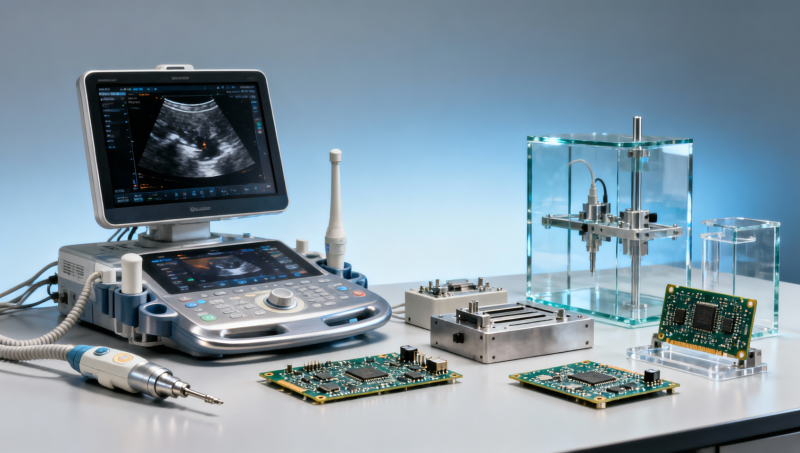
Before engaging an ultrasound machine OEM factory, buyers should first verify supply chain verification processes, IVDR certification readiness, and real-world engineering performance. For procurement teams comparing an icu monitor supplier, oxygen concentrator factory, or patient monitor pcba manufacturer, the same rule applies: technical integrity matters more than brochures. This guide helps healthcare equipment decision-makers ask the right first questions and avoid costly sourcing mistakes.
In medical equipment sourcing, the first conversation often determines whether a project moves toward a stable product launch or a costly compliance delay. An ultrasound machine OEM factory may present polished catalogs, fast quotations, and broad customization claims, but procurement teams need deeper evidence. The right opening questions should expose whether the factory can manage component traceability, imaging consistency, software validation, and long-term serviceability across a 3- to 7-year product lifecycle.
For hospitals, MedTech startups, and laboratory planners, the risk is rarely limited to purchase price. A weak OEM partner can create shipment delays of 8–16 weeks, documentation gaps during registration, unstable probe performance, or maintenance burdens after deployment. That is why independent benchmarking and engineering-led due diligence matter. VitalSync Metrics (VSM) focuses on turning technical claims into verifiable sourcing criteria so decision-makers can ask better questions from day one.
Start with verification of manufacturing control, not product claims
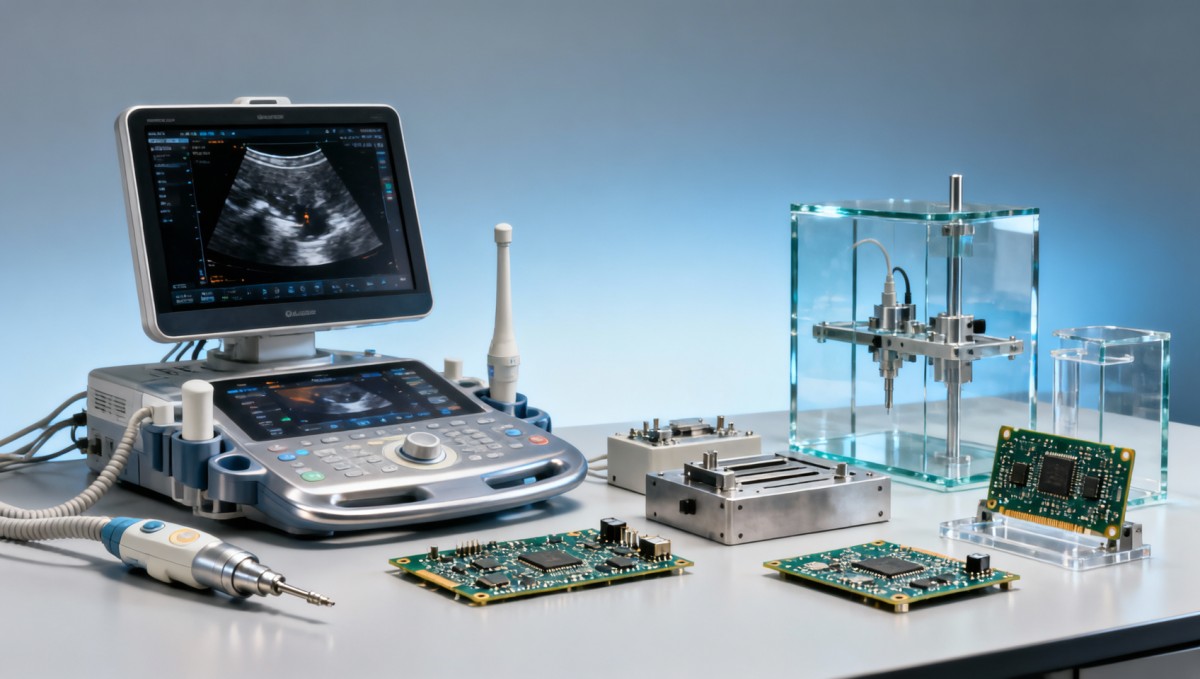
The first thing to ask an ultrasound machine OEM factory is not about price, screen size, or available probes. The first question should be: how do you verify your manufacturing process from incoming components to final system validation? This shifts the discussion from sales language to production discipline. In regulated healthcare sourcing, process control is often a stronger predictor of field reliability than brochure-level specifications.
A capable factory should be able to explain at least 4 control layers: incoming material inspection, in-process assembly control, final functional testing, and shipment traceability. For example, buyers should ask whether transducer elements are batch-tracked, whether power boards undergo burn-in testing for 12–24 hours, and whether image output is validated against a reference phantom before release. If the answer stays vague, the risk profile is already rising.
This matters beyond ultrasound alone. The same sourcing logic applies when evaluating an icu monitor supplier, oxygen concentrator factory, or patient monitor pcba manufacturer. Medical devices depend on controlled tolerances, repeatable assembly, and auditable documentation. If an OEM cannot clearly describe process checkpoints, then future claims about reliability, calibration stability, or product consistency may be difficult to trust.
Buyers should also ask how nonconforming parts are handled. A mature factory usually has a documented corrective action workflow, root-cause analysis records, and quarantine procedures. In practical terms, this means defects are identified before shipment rather than after installation. Even a 2% rework rate can become costly when deployment spans multiple sites or public tenders with fixed commissioning timelines.
Key first-round questions for manufacturing verification
- What percentage of critical components are traceable by lot or serial number?
- How many stages of functional testing are completed before shipment: 2, 3, or more?
- Is there a standard burn-in duration for power modules, displays, and control boards?
- How is imaging consistency checked across different production batches?
- What is the documented response process when a component fails incoming inspection?
The table below shows the difference between surface-level factory answers and technically useful answers that support medical procurement decisions.
The strongest signal in an OEM discussion is specificity. A factory that can describe 3–5 measurable checkpoints, retention periods, and failure-handling rules is usually better prepared for regulatory review and multi-market supply than one relying on generic quality language.
Ask about regulatory readiness and document depth before discussing customization
The second critical question is whether the ultrasound machine OEM factory is ready to support your target regulatory pathway. For buyers entering Europe or working with institutional procurement teams, MDR and IVDR awareness is not optional. Even where IVDR applies more directly to in vitro diagnostics, the broader lesson remains the same: document readiness, risk management discipline, and technical file support must be clarified early, not after samples are approved.
An OEM partner should be able to explain what documents are available during supplier qualification and what additional records can be prepared during registration or audit review. This typically includes quality management certificates, risk analysis outputs, electrical safety test records, software validation summaries, and component declarations where relevant. If document delivery takes 6–10 weeks or requires repeated escalation, future approvals may become a bottleneck.
Customization is often where compliance risk increases. A request for private labeling, user interface modification, language packs, wireless modules, or cart redesign may look minor from a marketing standpoint, but each change can affect labeling, verification scope, EMC assessment, and file version control. Buyers should ask which modifications remain within an existing validation envelope and which trigger additional testing.
This is especially important for startup teams launching under tight investment or tender schedules. A delay of 4–8 weeks due to missing declarations or incomplete verification data can affect distributor onboarding, clinical training, and first shipment timing. Early regulatory questioning saves time because it reveals whether the factory truly operates as a MedTech manufacturer or only as an assembler with limited documentation depth.
Document areas buyers should verify in the first meeting
- Quality management documentation and audit history relevant to medical device production.
- Product technical file depth, including risk analysis, design verification, and change control records.
- Electrical safety and EMC evidence for the current configuration and for any planned localization.
- Software version management, cybersecurity considerations, and validation records for updates.
- Labeling, packaging, and language control procedures for different export destinations.
The table below helps procurement teams align common OEM requests with the likely compliance workload they create.
A practical sourcing rule is simple: if a factory can explain the documentation consequences of customization before quotation finalization, it is more likely to support predictable registration, tender response, and lifecycle maintenance.
Validate real-world engineering performance, not just catalog specifications
The third question to ask an ultrasound machine OEM factory is how performance is proven under realistic use conditions. Catalog specifications can be useful, but they rarely show how the system behaves after transport vibration, repeated probe connection cycles, long scanning sessions, or voltage fluctuation. Procurement teams should ask for engineering evidence that connects lab testing with field reliability.
For ultrasound systems, meaningful performance discussion may include image consistency, probe durability, boot stability, thermal behavior, user interface responsiveness, and service replacement strategy. For instance, if a cart-based system runs continuously for 6–8 hours per day, can the OEM show temperature management data or fan-life assumptions? If a portable model is moved across departments daily, what drop, shock, or connector cycle testing has been completed?
This cross-checking approach also helps when buyers compare related device categories. An icu monitor supplier may need waveform stability and alarm validation data. An oxygen concentrator factory should explain purity stability, compressor stress, and preventive maintenance intervals. A patient monitor pcba manufacturer should discuss soldering consistency, board-level inspection, and environmental test coverage. In each case, engineering proof should be tied to use conditions, not only nominal specs.
Ask for evidence in formats that can be reviewed by technical and commercial teams alike: validation summaries, sample acceptance protocols, burn-in records, environmental test overviews, and recommended spare-parts lists. Even 3 simple data points—such as connector cycle count, operating temperature range, and preventive maintenance interval—can reveal more than a long feature list.
H4-Level red flags during technical discussions
No distinction between prototype performance and mass-production performance
A factory should clearly separate engineering sample data from ongoing production validation. If one strong prototype is used to represent all future units, consistency risk remains high.
No field-service logic behind spare parts planning
If probe assemblies, displays, or boards have no documented replacement path or lead time estimate, downtime may expand from 3–5 days to several weeks after installation.
No explanation of environmental limits
An OEM should define storage and operating ranges, such as 10°C–35°C or 30%–75% relative humidity, and clarify what happens outside those conditions.
Technical performance is ultimately about repeatability. If the OEM can demonstrate repeatable output across batches, service cycles, and use environments, buyers gain a more defensible basis for qualification and rollout.
Clarify supply chain resilience, lead times, and after-sales support from the beginning
A fourth priority question is how the ultrasound machine OEM factory manages supply continuity. In the past few years, medical equipment buyers have seen how component shortages, logistics disruption, and single-source dependencies can extend lead times from 4 weeks to 12 weeks or more. A credible OEM should be able to explain which critical parts are dual-sourced, which are high-risk, and how forecast commitments are handled.
This conversation should include probes, displays, key semiconductors, batteries where relevant, and any custom PCBA modules. For a patient monitor pcba manufacturer, component availability may directly affect revision control and delivery predictability. For an oxygen concentrator factory, compressor sourcing and sieve bed materials can influence both cost and maintenance timing. For an icu monitor supplier, sensor interface modules and alarm circuitry may be the bottleneck. The principle is consistent across categories: map risk early.
After-sales support should be evaluated with equal rigor. Ask what spare parts are stocked, whether technical training is delivered remotely or on-site, and what response times apply for software issues versus hardware failures. In practical procurement terms, a 24–48 hour first response window and a 7–14 day spare part dispatch target are often more useful than vague promises of “full support.”
You should also ask whether the factory supports lifecycle planning. Medical procurement is rarely a one-time transaction. Hospitals and distributors need to know whether the OEM can support 3-year spare availability, firmware maintenance, operator training refresh cycles, and phased upgrades. These details affect total ownership cost far more than a small discount on the initial unit price.
Practical supply and service checkpoints
- Confirm standard lead time for sample units, first order, and repeat order separately.
- Ask which top 5 critical components have alternative suppliers or approved substitutions.
- Check spare-part stocking duration and whether high-failure items are regionally warehoused.
- Request response and escalation timelines for installation, training, and post-warranty service.
- Verify whether preventive maintenance documents are available for in-house biomedical teams.
The matrix below helps buyers compare operational resilience across OEM candidates.
Factories that can answer these questions with timelines, stock logic, and escalation paths are generally easier to work with across tenders, distributor networks, and multi-site hospital deployments.
Build a first-meeting checklist that aligns engineering, procurement, and business goals
A strong first meeting with an ultrasound machine OEM factory should end with a checklist, not just a quotation request. Decision-makers from procurement, engineering, regulatory affairs, and operations often evaluate suppliers through different lenses. The best sourcing outcomes happen when those priorities are turned into a shared qualification framework in the first 1–2 weeks of engagement.
For example, procurement may focus on MOQ, price breaks, lead times, and warranty terms. Engineers may prioritize image stability, board architecture, and serviceability. Regulatory teams need document access and change control clarity. Operators and clinical users care about interface usability, probe handling, and maintenance burden. When these views are aligned early, the buying team avoids the common mistake of approving a supplier based on one department’s needs alone.
VitalSync Metrics (VSM) supports this kind of evidence-based qualification by translating engineering data into sourcing language that procurement leaders can act on. In healthcare technology, the first questions should reduce uncertainty, not simply accelerate negotiation. If the OEM cannot answer clearly on process control, document readiness, real-world performance, and support logistics, it is better to pause than to proceed on assumptions.
The goal is not to eliminate all risk, which is unrealistic in any medical device supply chain. The goal is to identify manageable risk, assign verification steps, and select a partner whose technical integrity matches the seriousness of the market you serve. Whether you are comparing an ultrasound machine OEM factory, an icu monitor supplier, an oxygen concentrator factory, or a patient monitor pcba manufacturer, the same discipline applies.
First-meeting checklist
- Request process verification details for incoming inspection, final testing, traceability, and nonconformance control.
- Confirm regulatory document scope, update timelines, and the compliance effect of each customization request.
- Review engineering evidence for reliability, environmental tolerance, service parts, and production consistency.
- Check lead times, dual-source strategies, spare stock plans, and escalation paths for after-sales support.
- Align internal stakeholders on the top 5 qualification criteria before requesting final commercial terms.
FAQ
How many factories should a buyer compare before shortlisting?
For most B2B medical equipment projects, comparing 3–5 qualified suppliers is usually enough. Fewer than 3 may limit benchmarking, while more than 5 often slows decision-making without adding proportionate insight.
What is a realistic timeline for supplier qualification?
A practical range is 2–6 weeks for initial qualification, depending on document availability, sample testing, and internal review. Projects involving hardware customization or multi-country registration may require 6–12 additional weeks.
What is the most common buyer mistake?
The most common error is discussing price before verifying technical and regulatory capability. A lower unit cost can be erased quickly by delayed approvals, unstable performance, or higher service burden after deployment.
Should small buyers ask the same technical questions as large hospital groups?
Yes. The scale of the order may differ, but the need for traceability, document clarity, and service support remains the same. Smaller buyers are often more exposed because they have less room to absorb rework or shipment delay.
The right first questions reveal whether an ultrasound machine OEM factory can support safe delivery, compliant market entry, and sustainable lifecycle performance. If your team needs a more structured way to compare suppliers, validate engineering claims, or build an evidence-based sourcing checklist, contact VitalSync Metrics (VSM) to get a tailored evaluation framework, deeper product benchmarking, and clearer procurement guidance for your next healthcare equipment project.
- EMS
- ESS
- medical devices
- PPE
- healthcare technology
- RTW
- EdTech
- port logistics
- procurement
- cybersecurity
- AR
- supply chain
- Cement
- benchmarking
- technical integrity
- medical equipment
- supply chain
- IVDR certification
- healthcare technology
- healthcare equipment
- supply chain verification
- Packaging
- ultrasound machine oem factory
- icu monitor supplier
- patient monitor pcba manufacturer
- oxygen concentrator factory
Recommended News
- 2026.04.17Hospital equipment standards shaping modern rehab devicesSarah Jenkins (Laboratory Infrastructure Consultant)
- 2026.04.17Laboratory equipment validation errors in sample storageDr. Hideo Tanaka (Imaging Systems Analyst)
- 2026.04.17Medical equipment certification delays in remote monitoringLydia Vancini (Regulatory Compliance Lead)
The VitalSync Intelligence Brief
Receive daily deep-dives into MedTech innovations and regulatory shifts.