
OEM electronics for medical devices: hidden hurdles in compliance
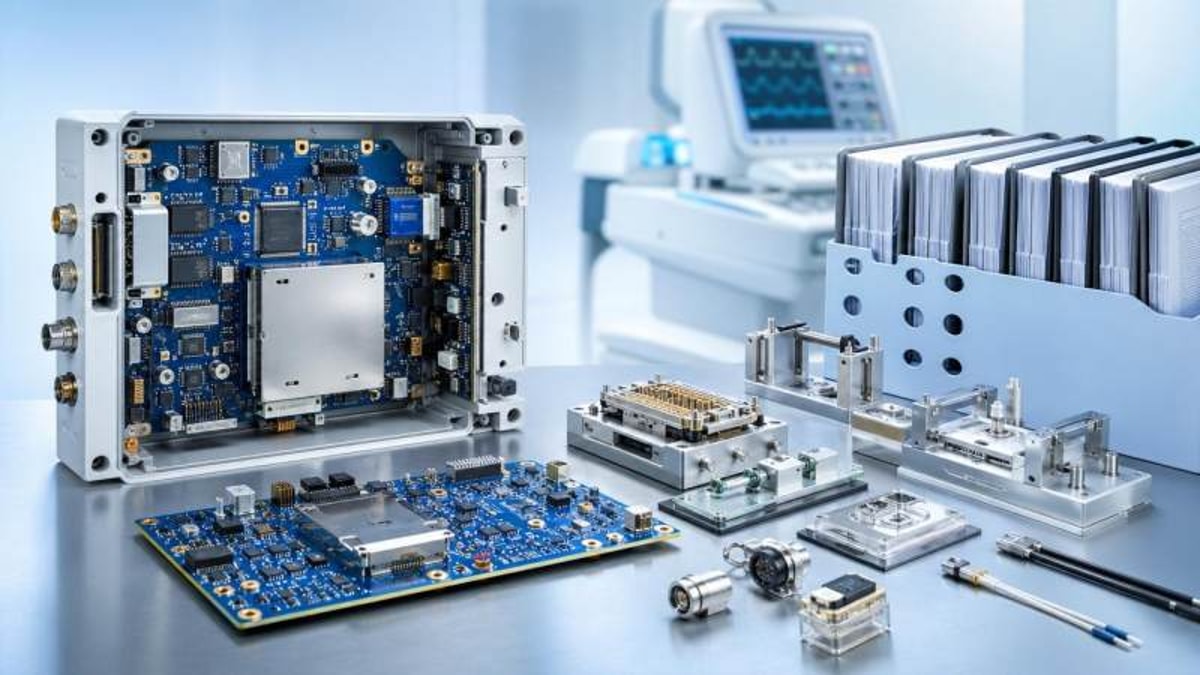
Choosing OEM consumer electronics for medical devices may look efficient on paper, but hidden compliance hurdles often derail timelines, budgets, and regulatory approval. For project managers and engineering leads, the real challenge is not component sourcing alone—it is proving MDR/IVDR readiness, performance consistency, and long-term reliability under clinical demands. In practice, the biggest risks rarely come from the obvious technical specification sheet. They come from traceability gaps, undocumented design changes, lifecycle instability, usability failures, and supplier quality assumptions that do not survive regulatory review.
If you are evaluating OEM electronics for a medical product, the practical answer is clear: consumer-grade speed and cost advantages can be useful, but only when the electronics strategy is built around compliance evidence, risk controls, and sustained manufacturing discipline from the start. Otherwise, what appears to be a fast route to market often becomes a slow, expensive remediation project.
Why OEM electronics become a compliance problem in medical devices
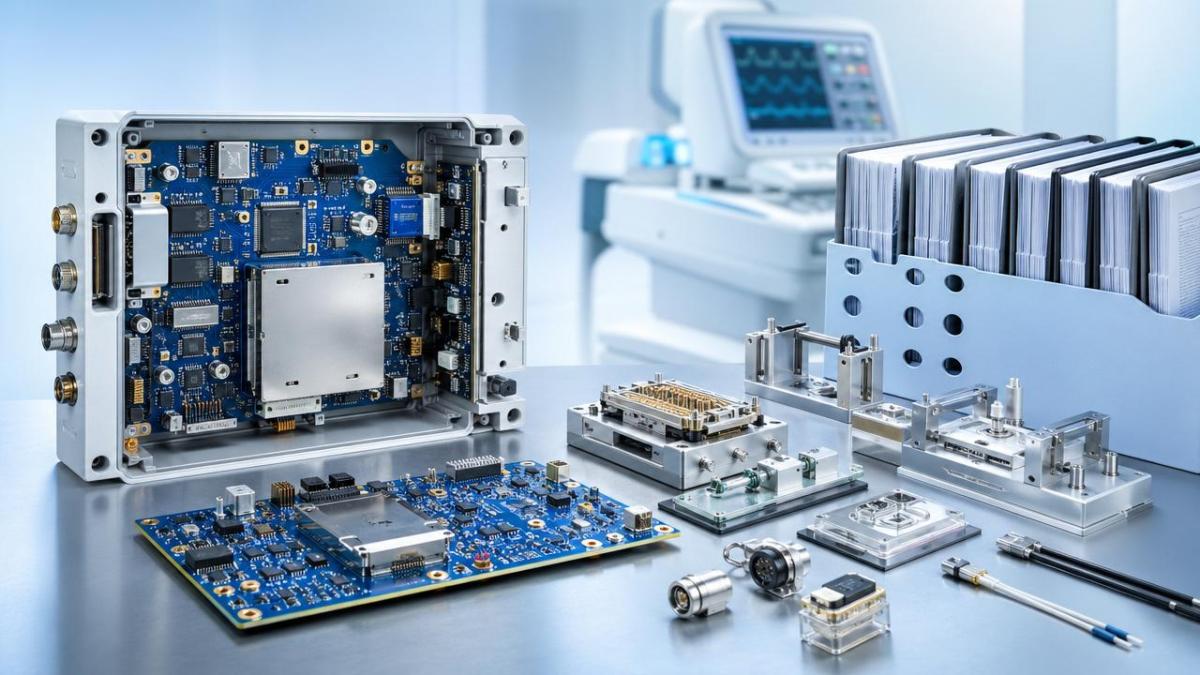
Many project leaders begin with a reasonable assumption: if an electronic module performs well in a consumer environment, it can probably be adapted for a medical application. That assumption is attractive because it promises shorter development cycles, lower non-recurring engineering cost, and easier access to mature components. But medical compliance is not based on commercial availability alone. It is based on documented evidence that the device is safe, effective, repeatable, and controllable under its intended use.
That is the first hidden hurdle. In medical development, the question is not simply whether the OEM electronics work. The question is whether you can prove, through design controls and supplier records, that they will keep working within defined limits across production lots, environments, users, and time. Regulatory bodies, notified bodies, and procurement teams do not approve assumptions. They evaluate objective evidence.
For project managers, this distinction matters because it changes the entire delivery model. A component that saves three months in prototyping can add nine months during verification, documentation cleanup, supplier remediation, or regulatory submission if it lacks the right compliance foundation.
What project managers and engineering leads should worry about first
When target readers search for “OEM electronics for medical devices: hidden hurdles in compliance,” they are usually not looking for a generic explanation of regulations. They want to identify where projects fail, what due diligence is actually needed, and how to avoid late-stage surprises. Their concerns are operational, financial, and regulatory at the same time.
The first concern is documentation sufficiency. Can the OEM supplier provide material declarations, change notification procedures, design history support, test records, and manufacturing traceability at a level suitable for medical review? A well-performing module without these records may still be unusable in a regulated product.
The second concern is lifecycle stability. Consumer electronics supply chains often optimize for speed, volume, and rapid refresh cycles. Medical devices, by contrast, need predictable availability, validated substitutions, and controlled obsolescence planning. A project can pass early validation and still become commercially fragile if a key chipset or sensor is discontinued too quickly.
The third concern is quality system compatibility. An OEM may be excellent at high-volume electronics production while still lacking the process discipline expected in medical manufacturing support. This includes complaint handling inputs, CAPA alignment, nonconformance escalation, process validation, and clear ownership for design or process changes.
The fourth concern is intended-use mismatch. Components that behave reliably in fitness, wellness, or home convenience products may not hold the same accuracy, electromagnetic robustness, cleaning tolerance, or environmental durability in clinical workflows. What is acceptable in a consumer setting may be unacceptable in a medical context where performance drift can affect diagnosis, therapy, or procurement confidence.
The hidden compliance hurdles most teams discover too late
One of the most common hidden issues is incomplete traceability. In a regulated program, traceability is not just a paperwork burden. It is the basis for linking user needs, design inputs, component selections, verification results, and risk controls. If your OEM electronics supplier cannot support traceability down to critical subcomponents and process changes, every future investigation becomes harder, slower, and more expensive.
Another overlooked hurdle is undocumented firmware or hardware revision change. Consumer supply chains often permit rolling updates that improve availability or cost. In a medical setting, even a small component revision can trigger design impact analysis, additional verification, software regression testing, or renewed biocompatibility and EMC review depending on the change scope. If the supplier’s change control is weak, your validated state may be more fragile than it appears.
EMC and electrical safety assumptions also create trouble. A module may pass standalone bench tests but behave differently once integrated into a larger medical system with cables, enclosures, power supplies, wireless functions, and nearby equipment. Project teams that rely too heavily on supplier-level claims often underestimate the integration burden required for IEC 60601-related performance and safety expectations.
Reliability evidence is another gap. Consumer modules are frequently designed for cost-sensitive use cases with shorter average life assumptions, narrower service models, or lower duty cycles. Medical products may require higher uptime, longer field life, sterilization or cleaning exposure, broader temperature tolerance, and more demanding alarm or sensor stability performance. Unless those use conditions are translated into a structured qualification plan, the risk remains hidden until verification failures or field complaints emerge.
Cybersecurity and data integrity concerns have also become more serious. Connected electronics sourced from broader OEM ecosystems may include embedded software stacks, wireless modules, or third-party libraries with unclear maintenance ownership. In modern medical environments, this creates not only technical debt but submission risk and customer trust risk. Hospital buyers increasingly ask whether the supply chain can support patching, vulnerability monitoring, and controlled software maintenance over the product lifecycle.
Why MDR and IVDR raise the bar beyond basic supplier qualification
Under MDR and IVDR expectations, it is no longer enough to show that a supplier is generally competent. Manufacturers must demonstrate that the final device, including outsourced and OEM-derived elements, is developed and controlled through a risk-based, evidence-driven framework. That means supplier qualification is necessary, but not sufficient.
For engineering project leaders, the practical impact is significant. You need technical files and supplier packages that support clinical-grade claims, not just purchasing decisions. If the electronics influence measurement accuracy, therapeutic delivery, user alarms, sample handling, connectivity, or diagnostic output, the supporting evidence must align with the device’s intended use and risk classification.
This is where many teams underestimate the burden of “OEM consumer electronics for medical devices.” The word consumer suggests accessibility, but compliance demands device-specific proof. You must be able to show why the selected electronics are appropriate, what hazards they introduce, how those hazards are mitigated, how the design is verified, and how future changes are governed. Without that chain of logic and evidence, regulatory review becomes vulnerable.
Procurement leaders should also note that value-based sourcing increasingly depends on this same proof. Buyers do not only compare unit cost. They compare supplier resilience, validation maturity, complaint risk, service continuity, and the likelihood of costly redesign after launch. Compliance readiness therefore becomes part of the commercial value proposition, not just a regulatory requirement.
How to evaluate an OEM electronics supplier before the project slips
A practical evaluation framework should begin with five questions. First, what exactly is the supplier responsible for: component supply, module design, firmware, testing, manufacturing, or ongoing configuration control? Second, what evidence can they provide today, not later? Third, how stable is the bill of materials over the expected product life? Fourth, how formal is their change notification process? Fifth, can their quality and engineering documentation survive a medical audit trail?
Project managers should then translate those questions into a structured diligence checklist. Review design documentation availability, process flow visibility, incoming inspection methods, production test coverage, calibration controls, environmental stress data, software maintenance policy, and end-of-life notification terms. This is not administrative overhead. It is a way to identify whether the supplier’s operating model can support a regulated product without constant rework.
It is equally important to test responsiveness under pressure. Ask the supplier to simulate a hypothetical issue: a sensor drift trend, a component obsolescence event, or a firmware anomaly found during verification. Their speed and quality of response will tell you more than a polished sales presentation. In medical programs, the hidden cost of a supplier often appears during exception handling, not normal production.
Independent benchmarking can add value here. A neutral technical assessment of signal quality, tolerance stability, environmental robustness, and manufacturing consistency can reveal whether supplier claims are supported by engineering reality. For organizations like VitalSync Metrics, this type of evidence is critical because it converts supplier marketing language into procurement-grade decision criteria.
How to build a safer business case for OEM consumer electronics in medical products
The goal is not to reject OEM electronics outright. In many categories, they can accelerate innovation and reduce development burden. The smarter approach is to build a business case that includes compliance cost, validation effort, quality oversight, lifecycle management, and redesign probability alongside direct unit economics.
For example, a lower-cost OEM module may appear financially superior at sourcing stage. But if it requires extensive incoming inspection, additional integration testing, custom shielding, extra documentation work, and a high-touch obsolescence strategy, the true total cost can exceed that of a more expensive but medically supportable alternative. Project managers should present this as a program risk and total-value question, not simply a purchase-price comparison.
Scenario planning helps. Compare at least three sourcing paths: adapting a consumer-derived OEM module, selecting a medically oriented industrial module, or commissioning a custom design for regulated use. Evaluate each path against schedule certainty, validation burden, supply continuity, serviceability, and expected post-market change load. This framework often reveals that the cheapest option in prototype phase is not the cheapest option at launch or during scale-up.
Teams should also define decision gates early. If a supplier cannot provide essential compliance artifacts by a specific milestone, the project should escalate or pivot before design lock. This protects timelines and helps prevent sunk-cost bias from keeping weak suppliers in the program too long.
Red flags that should trigger immediate escalation
Several warning signs consistently predict later compliance or launch problems. One is vague language around revision control, such as “minor changes may occur without notice.” Another is refusal or inability to provide detailed material, manufacturing, or test information for critical functions. A third is heavy dependence on subcontractors with little transparency into who controls what.
Additional red flags include short product lifecycle commitments, no formal PCN process, poor answers about field failure analysis, unclear ownership of firmware maintenance, and test reports that are promotional rather than traceable. If a supplier cannot distinguish between internal quality checks and validation-grade evidence, your team will likely inherit that gap.
There is also a strategic red flag: when the internal team treats supplier selection as a procurement exercise rather than a cross-functional risk decision. Medical electronics sourcing should involve engineering, quality, regulatory, operations, and program management from the beginning. If any one of these functions is brought in only after supplier nomination, the project’s exposure increases sharply.
A more realistic path forward for compliant, reliable sourcing
The most successful medical device teams do not ask whether OEM electronics are good or bad in principle. They ask whether a specific OEM solution can be governed, evidenced, and sustained at a level appropriate for the product’s intended use. That is a much more useful decision standard.
For project managers and engineering leads, the path forward is straightforward in concept: define compliance-critical requirements early, qualify suppliers against medical realities rather than consumer assumptions, verify integration under actual use conditions, and insist on documentation and change control before dependency grows. The earlier these controls are built into the project, the lower the remediation cost later.
In a market increasingly shaped by value-based procurement, technical integrity becomes a sourcing differentiator. Hospitals, laboratories, and investors are more likely to trust products whose electronics strategy is transparent, testable, and regulator-ready. That is why independent benchmarking and evidence-based supplier assessment matter so much. They replace optimism with data.
In summary, the hidden hurdles in OEM consumer electronics for medical devices are rarely about whether the electronics can function. They are about whether the product team can prove safe performance, control change, maintain supply continuity, and defend every critical decision under regulatory and commercial scrutiny. If you manage those issues upfront, OEM electronics can be a strategic accelerator. If you ignore them, they often become the reason a promising medical device misses its launch window.
Recommended News
- 2026.05.01New Maritime Code Tightens Liability for Ultra-Low-Temp Bio-Sample TransportDr. Hideo Tanaka (Imaging Systems Analyst)
- 2026.05.01CAICT Releases Zero Trust White Paper for Remote Monitoring DevicesLydia Vancini (Regulatory Compliance Lead)
- 2026.05.01Gulf Green Packaging Agreement Takes Effect May 1, 2026Dr. Julian Rossi (RehabTech Specialist)
The VitalSync Intelligence Brief
Receive daily deep-dives into MedTech innovations and regulatory shifts.