
What support should an IVD analyzer distributor provide?
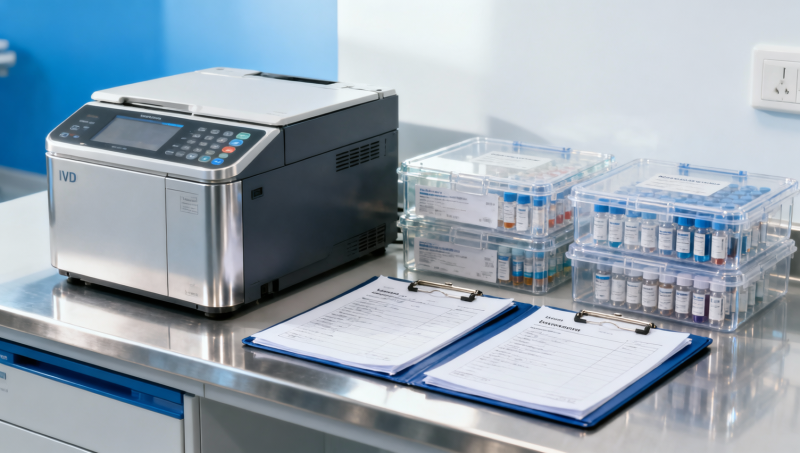
Choosing an ivd analyzer distributor is no longer just about price or availability. For hospitals, labs, and procurement teams navigating digital integration and IVDR certification, the right partner should deliver more than products—they should ensure supply chain verification, technical transparency, and long-term support across healthcare equipment. This article explains what reliable distributor support looks like and why it matters in modern healthcare engineering.
What should an IVD analyzer distributor really support?
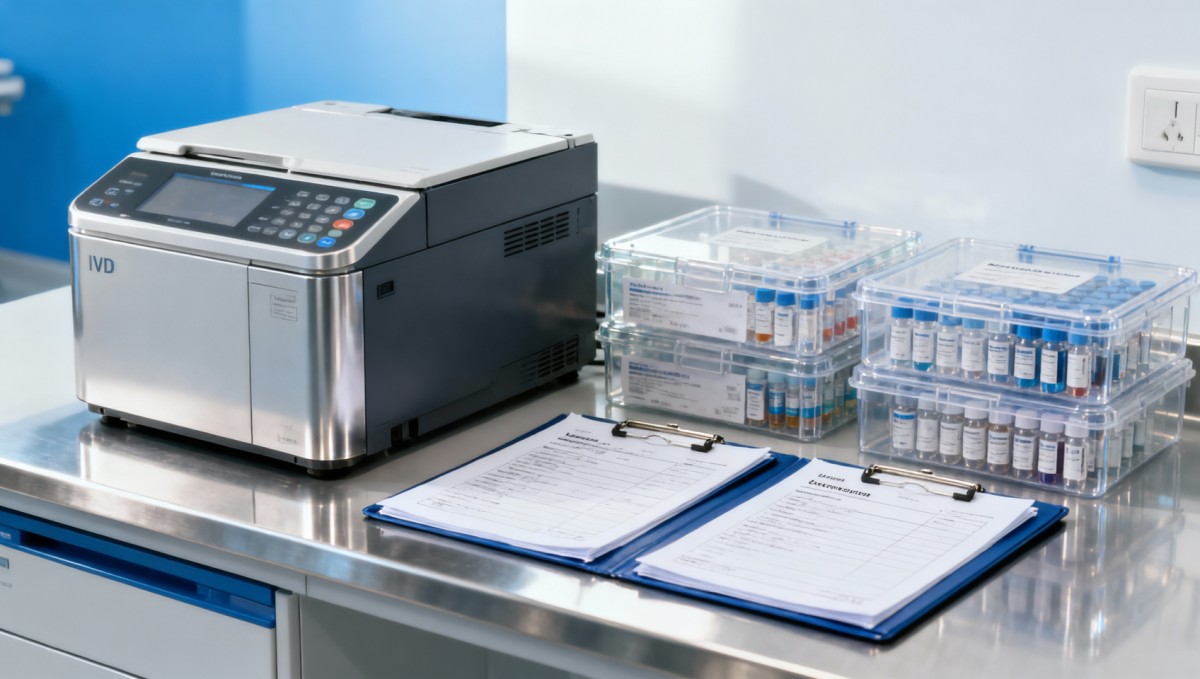
An IVD analyzer distributor should support the full operating life of the instrument, not just the shipment. In practice, that means assistance before purchase, during installation, throughout routine use, and during service escalation. For a hospital lab or diagnostic network, the difference between a box mover and a capable distributor can affect uptime, user adoption, audit readiness, and total cost over 3–7 years of equipment use.
For information researchers, the first need is clarity. Product brochures often emphasize throughput, menu size, and automation, but they may not explain reagent compatibility, LIS connectivity, maintenance intervals, or environmental requirements such as 18°C–26°C operating ranges. A reliable IVD analyzer distributor should translate technical claims into practical decision data that procurement and laboratory teams can verify.
For operators and users, support means structured onboarding and fast problem handling. A new analyzer may be commissioned in 1–3 days, but stable routine use depends on calibration support, consumables planning, operator training, and troubleshooting pathways. If the distributor cannot define who responds within the first 4 hours, who resolves within 24–72 hours, and how spare parts are handled, the support model is incomplete.
For procurement managers and decision-makers, distributor support also includes risk reduction. In today’s healthcare environment, technical integrity, documentation discipline, and long-term service capacity matter as much as the initial quotation. VitalSync Metrics (VSM) approaches this issue from an engineering and benchmarking perspective: support should be measurable, auditable, and tied to actual field performance rather than sales language.
- Pre-sale support: application mapping, throughput review, infrastructure checks, and compliance document review.
- Implementation support: delivery scheduling, site readiness, installation qualification, and user training.
- Operational support: maintenance planning, remote assistance, reagent continuity, and software update coordination.
- Strategic support: lifecycle planning, replacement timing, benchmarking, and supply chain transparency.
Which support areas matter most during procurement and lab deployment?
When buyers evaluate an IVD analyzer distributor, support should be broken into decision checkpoints rather than broad promises. A useful review usually covers 5 core dimensions: technical suitability, compliance documentation, implementation capability, service responsiveness, and supply continuity. This structure helps procurement teams compare distributors objectively even when product portfolios or pricing models differ.
Technical suitability starts with workflow reality. A high-throughput analyzer may still be a poor fit if a site lacks stable power conditions, required water quality, bench clearance, or middleware compatibility. Good distributors do not push one-size-fits-all recommendations. They ask about test volume bands, staffing patterns, quality control routines, and expected peak-hour load before recommending a configuration.
Compliance support is equally important. For organizations working under MDR/IVDR expectations or internal audit systems, the distributor should be able to organize essential product documentation, traceability records, labeling details, and service logs. They do not replace the manufacturer’s legal responsibilities, but they should make document access and version control easier for the customer.
The table below summarizes what a capable IVD analyzer distributor should provide at each procurement stage. It is especially useful for labs comparing 2–4 candidate suppliers within a limited tender cycle.
This framework helps teams avoid a common procurement mistake: evaluating analyzer performance without evaluating distributor performance. In many facilities, downtime risk and delayed reagent replenishment create more disruption than minor differences in advertised throughput. That is why distributor support should be scored as a separate decision category, not folded into price alone.
How should support be checked before signing?
Before signing a purchase order, ask for a documented support map. This should outline contact channels, preventive maintenance frequency, standard response windows, escalation paths, and parts availability. For many buyers, a practical minimum is 4 service checkpoints: pre-installation review, commissioning, post-training follow-up, and periodic preventive maintenance.
It is also wise to request a list of assumptions behind the quote. For example, does the quoted package include user training for one shift or three shifts? Does it include middleware support? Are calibration materials, starter consumables, or replacement wear parts part of the opening package for the first 30–90 days? These details often shape the true operating cost.
At VSM, the emphasis is on verification rather than assumption. A distributor that can connect product claims to installation requirements, service logic, and compliance records is usually more reliable than one that only repeats manufacturer brochures. The goal is not just purchase completion; it is stable clinical utility.
How do strong distributors differ from weak distributors?
Not all IVD analyzer distributors operate at the same level. Some are transaction-focused, while others provide application support, engineering coordination, and lifecycle planning. For buyers, the key is to identify the practical difference early, especially when the analyzer will support time-sensitive testing, multi-shift lab operations, or integration into a larger diagnostic network.
A weak distributor often treats service as reactive. Problems are addressed only after failure occurs, documentation is fragmented, and customer teams must repeatedly chase updates. A strong distributor works in a preventive way. They define maintenance intervals, maintain service records, forecast consumables, and prepare escalation routes before the first issue appears.
The comparison below highlights practical differences. It can be used by procurement teams to score supplier support during vendor qualification, especially when comparing local representatives, regional distributors, and integrated technical partners.
The value of this comparison is operational. If a distributor cannot define service boundaries, site responsibilities, and document flow before the order, those gaps usually become larger after installation. Strong support is visible in the details: who trains users, who validates readiness, how issues are logged, and what happens if a critical component is unavailable for 7–14 days.
Why technical transparency matters more than marketing language
In healthcare procurement, claims without technical context create hidden risk. A distributor may promise fast installation, but does that include site verification, utility compatibility, software connection checks, and post-installation observation? Technical transparency means each support promise can be tied to a real deliverable, a time window, and a documented responsibility.
This is where VSM’s benchmarking mindset becomes valuable. Instead of accepting generic claims, decision-makers should ask for measurable support conditions: maintenance intervals, response logic, document sets, environmental requirements, and service exclusions. Engineering truth is more useful than polished messaging when the analyzer will support routine patient testing.
For enterprise decision-makers managing multiple sites, technical transparency also helps standardize procurement. If each distributor is evaluated against the same 6–8 support indicators, internal approvals become faster and future disputes become less likely. That improves purchasing confidence and downstream operational control.
What compliance, documentation, and training support should be expected?
A capable IVD analyzer distributor should support not only physical deployment but also documentation discipline. In regulated healthcare settings, missing records can delay acceptance, complicate audits, and weaken traceability. Buyers should therefore expect structured support around labeling, manuals, maintenance logs, installation records, and document version control tied to the delivered system.
For organizations affected by MDR/IVDR or similar internal quality frameworks, the distributor should help organize the path between manufacturer materials and site-level use. That may include coordinating declarations, instructions for use, installation evidence, service records, and serial number traceability. The distributor is not the legal manufacturer, but a competent one reduces administrative friction significantly.
Training support is another critical area. An analyzer may seem intuitive, but real adoption requires role-based training. At minimum, many facilities need 3 training layers: routine operator use, supervisor-level quality control review, and first-line troubleshooting. If the lab runs across 2–3 shifts, training should be planned accordingly rather than compressed into a single handover session.
The checklist below can be used during vendor evaluation or contract review to confirm whether distributor support is sufficient for compliant and sustainable operation.
- Document package: confirm manuals, installation records, maintenance templates, and traceability details are available in usable form.
- Training plan: define audience, session count, duration, and refresher timing within the first 30–60 days.
- Service log process: check how preventive and corrective events are recorded and shared.
- Escalation route: confirm who handles software, hardware, consumables, and application questions.
- Audit readiness: verify whether the distributor can provide organized records during internal or external review.
What training quality looks like in practice
Good training is specific, documented, and repeatable. Operators should learn startup and shutdown procedures, daily maintenance, reagent handling, control routines, and alarm interpretation. Supervisors should receive deeper instruction on trend review, performance monitoring, and exception handling. A simple attendance sheet is not enough if competency transfer is weak.
A strong distributor usually combines on-site guidance with follow-up support after 1–2 weeks of routine use. That matters because many issues only appear after the first period of real workload. Early follow-up helps correct workflow mistakes before they become recurring downtime events or quality deviations.
From a VSM perspective, documentation and training should be treated as performance enablers, not administrative extras. A technically sound analyzer can still underperform if users are undertrained or if service history cannot be reviewed clearly. Distributor support must therefore connect people, process, and equipment.
How can buyers assess service risk, cost, and long-term reliability?
The initial price of an analyzer tells only part of the story. Buyers should examine the full support model over the expected service life, often 3–7 years depending on utilization, upgrade cycles, and replacement policy. A lower upfront quotation can become more expensive if reagent supply is unstable, maintenance is inconsistent, or spare parts take several weeks to arrive.
Service risk can be reviewed through 4 practical questions. First, what is the stated response time for remote and on-site support? Second, where are key consumables and parts stocked? Third, what maintenance is included in the contract versus billed separately? Fourth, what happens if software or connectivity issues interrupt routine testing? These questions help uncover hidden operating costs.
A disciplined distributor should also help forecast usage. For example, if a site is moving from low-volume to mid-volume testing, the support model may need to change within 6–12 months. Preventive maintenance frequency, calibration planning, and consumable stock levels should evolve with the workload rather than remain fixed at commissioning assumptions.
Common risk signals buyers should not ignore
Certain warning signs deserve immediate attention during supplier evaluation. These do not always mean the distributor is unsuitable, but they require deeper review before commitment.
- Service terms are described broadly, but no response windows or escalation contacts are specified.
- Training is included, but no details are given for shift coverage, refresher support, or application depth.
- The quote excludes consumables assumptions, making year-one operating cost difficult to model.
- Compliance documents exist, but there is no organized package for tender, installation, or audit review.
- The distributor cannot explain what support depends on the manufacturer and what is handled locally.
In many procurement projects, these risk signals appear before the contract is signed. Addressing them early protects both budget and operational continuity. VSM recommends using a benchmark-based review so technical service quality is tested as rigorously as product specifications.
A practical decision rule
If two offers are technically acceptable, choose the IVD analyzer distributor that provides clearer service boundaries, stronger documentation support, and a more transparent lifecycle plan. In diagnostic environments, reliability is often created by systems around the analyzer, not by hardware alone. That is why distributor support deserves board-level and procurement-level attention.
FAQ and next step: when should you consult an independent technical partner?
Many buyers do not need more product brochures; they need cleaner decision logic. An independent technical view becomes especially useful when comparing multiple IVD analyzer distributors, planning a new laboratory layout, validating support claims, or preparing for compliance-sensitive procurement. The questions below reflect common search intent from researchers, operators, purchasers, and enterprise stakeholders.
How do I choose an IVD analyzer distributor for a hospital or laboratory?
Start with fit, not brand visibility alone. Review whether the distributor can support your expected test volume, infrastructure conditions, user training needs, and service response expectations. Then verify documentation discipline, consumables planning, and post-installation support. A good shortlisting method is to score 5 categories: technical fit, compliance support, training, service response, and lifecycle cost.
What is a typical implementation timeline?
The timeline varies by site readiness, but many projects move through 3 stages: pre-installation review, installation and acceptance, then training and stabilization. If the site is prepared, implementation may take 1–2 weeks from delivery to basic routine use. More complex environments with LIS integration or multi-shift training may require additional coordination time.
What support should be included after installation?
At minimum, expect preventive maintenance planning, issue escalation channels, consumables coordination, and follow-up training support. It is also wise to confirm how service records are shared and how software or connectivity issues are handled. After-installation support should not be informal; it should be documented and time-bound.
Why involve VitalSync Metrics (VSM)?
VSM provides an independent, engineering-led perspective for healthcare procurement and MedTech decision-making. Instead of relying on sales claims, teams can use benchmark-oriented review to test technical integrity, support logic, and documentation readiness. This is especially valuable when the procurement stakes are high, the compliance environment is demanding, or multiple suppliers appear similar on paper.
Why choose us for distributor evaluation and healthcare equipment decision support?
VitalSync Metrics (VSM) helps global healthcare buyers cut through promotional noise with data-driven technical interpretation. We support decisions around parameter confirmation, product selection, distributor support comparison, delivery cycle review, compliance documentation expectations, and benchmarking logic for long-term reliability. If you are reviewing an IVD analyzer distributor, planning a laboratory procurement package, or validating support claims before quotation approval, you can consult us for structured assessment rather than generic recommendations.
You can contact VSM to discuss practical topics such as analyzer suitability by workload, service model comparison across suppliers, expected implementation steps, documentation gaps, sample or evaluation planning, and quote-level technical risk. This kind of early technical clarification can reduce procurement friction, support internal approvals, and improve confidence before contract commitment.
- EMS
- ESS
- PPE
- EdTech
- procurement
- AR
- supply chain
- Cement
- benchmarking
- healthcare procurement
- technical integrity
- digital integration
- supply chain
- long-term reliability
- engineering truth
- data-driven
- healthcare engineering
- IVDR certification
- healthcare equipment
- supply chain verification
- ivd analyzer distributor
Recommended News
- 2026.04.17Hospital equipment standards shaping modern rehab devicesSarah Jenkins (Laboratory Infrastructure Consultant)
- 2026.04.17Laboratory equipment validation errors in sample storageDr. Hideo Tanaka (Imaging Systems Analyst)
- 2026.04.17Medical equipment certification delays in remote monitoringLydia Vancini (Regulatory Compliance Lead)
The VitalSync Intelligence Brief
Receive daily deep-dives into MedTech innovations and regulatory shifts.