
What is medical technology verification used for?
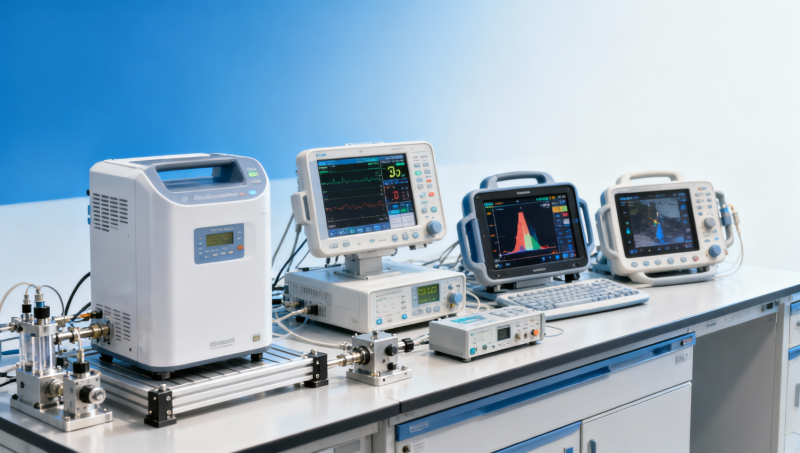
Medical technology verification is used to separate marketing claims from measurable performance across today’s healthcare equipment supply chain. For buyers comparing an oxygen concentrator factory, icu monitor supplier, ultrasound machine oem factory, or smart wheelchair manufacturer, it supports supply chain verification, IVDR certification readiness, and safer digital integration—helping procurement teams and decision-makers choose clinically reliable solutions with confidence.
In practical terms, verification gives hospitals, laboratories, distributors, and MedTech companies a disciplined way to confirm whether a device performs as specified under repeatable conditions. It moves procurement away from brochure language and toward engineering evidence, test protocols, manufacturing consistency, and documented risk control.
For information researchers, equipment operators, purchasing teams, and executives, this matters at every stage of the buying cycle. A device that passes a sales demonstration may still fail under 8-hour continuous operation, repeated sterilization cycles, noisy signal environments, or cross-platform data integration requirements.
That is why independent benchmarking organizations such as VitalSync Metrics (VSM) play an increasingly strategic role. By converting manufacturing parameters, device outputs, compliance checkpoints, and durability indicators into standardized technical reviews, verification supports better sourcing, faster risk identification, and stronger long-term asset decisions.
What medical technology verification actually covers
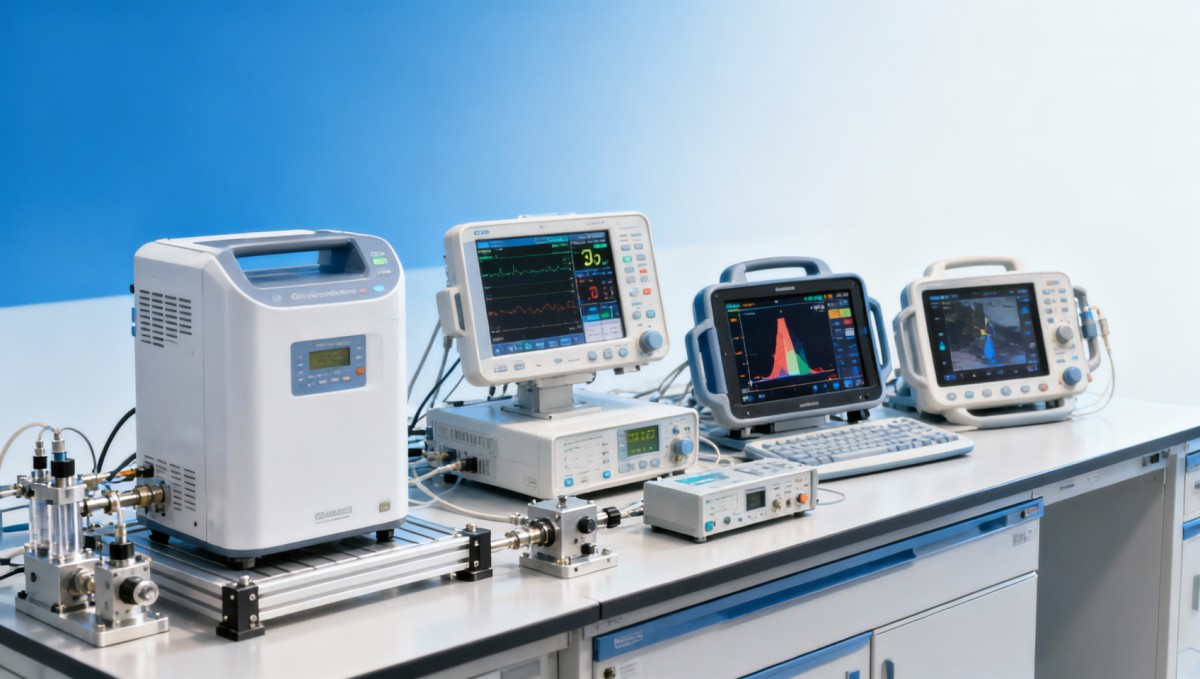
Medical technology verification is broader than a simple product inspection. In most healthcare procurement workflows, it covers at least 4 layers: technical performance, safety and compliance readiness, production consistency, and digital interoperability. Each layer answers a different question about whether a device is ready for real-world use rather than controlled showroom conditions.
Technical performance verification examines measurable outputs such as accuracy, repeatability, response time, signal stability, material endurance, battery runtime, or calibration drift. For example, a wearable sensor may need stable signal-to-noise performance over 24 to 72 hours, while an orthopedic component may need fatigue testing across thousands or millions of loading cycles depending on its use profile.
Safety and compliance readiness focuses on whether a device aligns with applicable documentation, labeling, risk management, and test evidence expected under MDR, IVDR, or related market-entry frameworks. Verification does not replace regulatory approval, but it can reveal gaps early, reducing expensive redesign work during the final 2 to 6 months before submission or procurement approval.
Production consistency matters because one successful sample does not prove manufacturing reliability. Procurement teams often need evidence from 3 to 5 production batches, not just one prototype unit. Verification can compare tolerance drift, component substitution risk, assembly repeatability, and failure patterns that may only appear at scale.
Digital interoperability has become equally important. ICU monitors, imaging systems, diagnostic platforms, and smart mobility devices increasingly feed data into hospital information systems, remote monitoring platforms, or analytics dashboards. Verification checks whether data formats, connectivity protocols, update routines, and alert thresholds perform predictably under clinical workflow conditions.
Core verification domains in healthcare equipment sourcing
The table below shows how buyers typically map verification work to operational risk. This is especially useful when comparing multiple factories or OEM partners that appear similar at the quotation stage but differ significantly in evidence quality.
The key conclusion is that medical technology verification is used not for one isolated pass-fail event, but for a layered assessment model. A supplier may look strong in one domain, such as pricing or industrial design, while still presenting hidden risk in consistency, documentation, or system integration.
Why verification matters for buyers, operators, and decision-makers
For procurement teams, verification reduces commercial uncertainty. A quotation may look competitive, but if the failure rate rises after installation, the real cost can increase through maintenance visits, delayed deployment, retraining, replacement parts, and reputational risk. In many B2B healthcare environments, a 5% to 10% deviation in uptime can have operational consequences far beyond the original purchase price.
For device users and operators, verification supports usability and reliability in daily practice. A monitor with unstable alarms, a wheelchair platform with inconsistent battery behavior, or an ultrasound unit with variable imaging performance can create workload friction within days. Operators benefit when performance claims are translated into verified thresholds they can actually observe on site.
For executives and enterprise decision-makers, verification supports capital planning and supplier governance. It allows leadership teams to compare vendors using evidence categories instead of relying on brand perception alone. This is especially valuable when evaluating new entrants, private-label OEM manufacturers, or cross-border suppliers with different documentation maturity levels.
For product developers and MedTech startups, verification provides early feedback before broad market expansion. A startup may prove concept feasibility in a pilot of 20 units, yet encounter major issues when moving to 500 or 2,000 units. Independent verification helps identify where the gap exists: firmware stability, sensor calibration, component sourcing, packaging, or documentation.
Typical risks when verification is skipped
- Procurement decisions rely on demonstrations lasting 30 to 60 minutes, while real operation requires continuous performance over 8, 12, or 24 hours.
- Technical files look complete at first review, but missing traceability records delay registration, import clearance, or hospital acceptance.
- A low initial unit cost is offset by high service frequency, spare part shortages, or recalibration demands every 3 to 6 months.
- Digital integration appears possible in theory, but interface errors or unstable data export create workflow failures after installation.
In value-based procurement environments, those risks are increasingly visible in tender scoring, supplier qualification, and post-purchase performance review. Verification therefore acts as both a risk-reduction tool and a stronger negotiation foundation.
Who benefits most from third-party benchmarking
Independent verification is particularly useful for 4 groups: hospital procurement directors comparing multiple brands, laboratory architects planning compliant installations, distributors screening OEM factories, and MedTech companies validating claims before market launch. In each case, the core benefit is the same: clearer evidence for decisions that involve technical, operational, and financial exposure.
How medical technology verification is used in the purchasing process
In healthcare sourcing, verification is most effective when built into the purchasing process from the start rather than treated as a final checklist. Buyers commonly use it in 5 stages: supplier pre-screening, sample assessment, documentation review, pilot validation, and acceptance planning. This staged approach helps avoid last-minute surprises and shortens rework cycles.
During supplier pre-screening, teams compare claims against evidence depth. If two ICU monitor suppliers offer similar specifications, the stronger supplier is usually the one that can provide repeatability data, interface behavior records, component traceability, and batch-level quality controls. A difference of 2 to 3 documentation categories can materially affect the final risk profile.
At the sample assessment stage, buyers verify use-case performance under realistic conditions. An oxygen concentrator should not only reach nominal output in ideal lab conditions, but also maintain stable operation across ambient temperature ranges, continuous-use periods, and expected maintenance intervals. The same principle applies to imaging systems, mobility devices, and IVD-related equipment.
Documentation review then tests the supplier’s ability to support market access and institutional approval. This can include bill-of-material consistency, labeling logic, risk control records, software revision tracking, and product change notification procedures. For organizations sourcing globally, this step often determines whether a supplier can support expansion across 2, 3, or more regulatory markets.
Pilot validation and acceptance planning translate all previous findings into deployment terms. If a supplier needs recalibration every 90 days or replacement parts have a 4-week lead time, those details should be captured before signing the final contract. Verification therefore strengthens both technical approval and service-level expectations.
A practical verification workflow for B2B healthcare sourcing
The following workflow is commonly used when selecting factories, OEM partners, or specialized device suppliers. It helps align engineering review with procurement timelines and stakeholder approvals.
The main insight is that medical technology verification is used to support purchasing decisions at multiple checkpoints, not only after a purchase order is issued. When evidence is gathered earlier, buyers gain leverage, shorten approval cycles, and reduce downstream correction costs.
Key metrics and selection criteria to verify before choosing a supplier
Not every procurement project needs the same depth of testing, but most healthcare buyers should evaluate at least 6 criteria before selecting a supplier: performance accuracy, repeatability, durability, compliance documentation, service response, and integration compatibility. The weighting of each factor depends on whether the device is used in acute care, diagnostics, rehabilitation, remote monitoring, or laboratory workflows.
For performance accuracy, buyers should request tolerances, not just nominal values. For instance, a measurement claim is more useful when expressed with an acceptable error range or stability interval over time. Repeatability should be demonstrated across multiple tests, users, or units, ideally from more than one production batch when volume purchasing is planned.
Durability verification becomes critical for equipment exposed to frequent transport, sterilization, high daily duty cycles, or long operating hours. A wheelchair manufacturer, for example, may need to show frame endurance, battery cycle expectations, and charging stability. An ultrasound machine OEM factory should demonstrate consistent image quality, probe compatibility behavior, and maintenance planning over the expected service life.
Compliance documentation should be reviewed for structure and change control, not just existence. A document package that is 80% complete but poorly maintained may be riskier than a smaller but clearly controlled set of records. Procurement teams should also check whether the supplier can manage updates within 5 to 10 business days when specifications or labeling require revision.
Service capability should be verified using measurable terms such as remote response within 24 hours, spare part availability windows, onboarding training duration, and preventive maintenance frequency. These details shape the true operating cost after purchase and directly affect user satisfaction.
A supplier comparison checklist
- Request evidence from at least 3 categories: technical test data, quality records, and post-installation support terms.
- Check whether sample performance matches batch performance, especially for orders above 100 units or multi-site deployment.
- Confirm if software, firmware, or accessory changes trigger documented version control and customer notification.
- Review whether the supplier can support localization, operator training, and replacement part logistics within agreed timelines.
Common verification mistakes in healthcare procurement
A frequent mistake is to compare only spec sheets without examining testing conditions. Another is assuming a regulatory label alone proves operational fit for every environment. Buyers also underestimate the value of integration testing, especially when devices must connect with hospital IT systems, cloud dashboards, or clinical reporting tools. In many cases, the decisive issue is not whether a device works once, but whether it works consistently across 12 months of routine use.
How independent benchmarking supports compliance, trust, and long-term reliability
Independent benchmarking adds value because it reduces bias. Manufacturers naturally emphasize favorable features, while procurement teams need a more neutral view of performance limits, documentation gaps, and lifecycle risk. A third-party laboratory or technical think tank can standardize test methods so buyers are comparing like with like instead of mixing inconsistent claims from different vendors.
This is especially useful in complex categories where performance is affected by materials, firmware behavior, environmental conditions, and user variability. VSM’s approach of translating manufacturing parameters into structured whitepapers helps organizations compare devices through engineering evidence rather than promotional language. That can be decisive when choosing between multiple factories with similar price bands.
Benchmarking also supports compliance readiness. If a supplier wants to enter or expand in markets shaped by MDR or IVDR expectations, early verification can highlight missing risk controls, unclear traceability, or inconsistent performance evidence before those issues delay commercialization. In many projects, finding such gaps 8 to 12 weeks earlier has a major effect on cost and launch timing.
Long-term reliability is another area where independent review is valuable. Procurement is not just a transaction; it is a multi-year operational commitment. Benchmarking helps estimate whether a supplier can maintain stable quality, support product revisions, and sustain service across the life of the equipment. For capital purchases and framework agreements, this perspective often matters more than initial price alone.
FAQ on medical technology verification
How is verification different from a sales demo?
A sales demo usually shows best-case functionality in a controlled setting and may last less than 1 hour. Verification examines repeatability, threshold behavior, documentation quality, and operational stability over longer periods such as 8 hours, 24 hours, or repeated use cycles. It is evidence-based rather than presentation-based.
Is verification only relevant for large hospitals?
No. Smaller clinics, regional distributors, laboratory planners, and startups also benefit. The scale of the project may differ, but the need to confirm technical integrity, support readiness, and documentation quality remains the same. Even a purchase of 20 to 50 units can carry significant operational risk if verification is skipped.
Which products should be prioritized for verification?
Priority should go to devices with high clinical impact, high integration complexity, or high maintenance exposure. Common examples include patient monitoring systems, diagnostic platforms, wearable sensors, orthopedic components, respiratory support devices, and smart mobility equipment. Products entering new markets or switching OEM factories should also be reviewed carefully.
How long does a verification project usually take?
A focused pre-screening review may take 3 to 7 business days. A broader project involving sample testing, file review, and pilot planning may take 2 to 6 weeks depending on product complexity, document availability, and the number of suppliers under comparison.
Medical technology verification is used to make healthcare sourcing more defensible, measurable, and clinically aligned. It helps buyers confirm performance, reveal compliance gaps, assess factory consistency, and reduce lifecycle risk before contracts are signed. For operators and decision-makers, it turns technical complexity into actionable evidence.
For organizations navigating digital integration, value-based procurement, and stricter regulatory expectations, independent verification is no longer optional background work. It is a practical decision framework. If you need clearer benchmarking for suppliers, OEM partners, or device categories, contact VitalSync Metrics to get a tailored evaluation approach, review product details, and explore a verification plan built around your procurement goals.
- EMS
- ESS
- PPE
- patient monitoring
- remote monitoring
- EdTech
- procurement
- cybersecurity
- AR
- supply chain
- Cement
- system integration
- benchmarking
- healthcare procurement
- value-based procurement
- wearable sensors
- medical technology
- technical integrity
- hospital procurement
- digital integration
- supply chain
- long-term reliability
- manufacturing parameters
- IVDR certification
- healthcare equipment
- medical technology verification
- supply chain verification
- Remote Monitoring
- Packaging
- ultrasound machine oem factory
- icu monitor supplier
- oxygen concentrator factory
- smart wheelchair manufacturer
Recommended News
- 2026.04.17Hospital equipment standards shaping modern rehab devicesSarah Jenkins (Laboratory Infrastructure Consultant)
- 2026.04.17Laboratory equipment validation errors in sample storageDr. Hideo Tanaka (Imaging Systems Analyst)
- 2026.04.17Medical equipment certification delays in remote monitoringLydia Vancini (Regulatory Compliance Lead)
The VitalSync Intelligence Brief
Receive daily deep-dives into MedTech innovations and regulatory shifts.