
Why supply chain verification matters in medical sourcing?
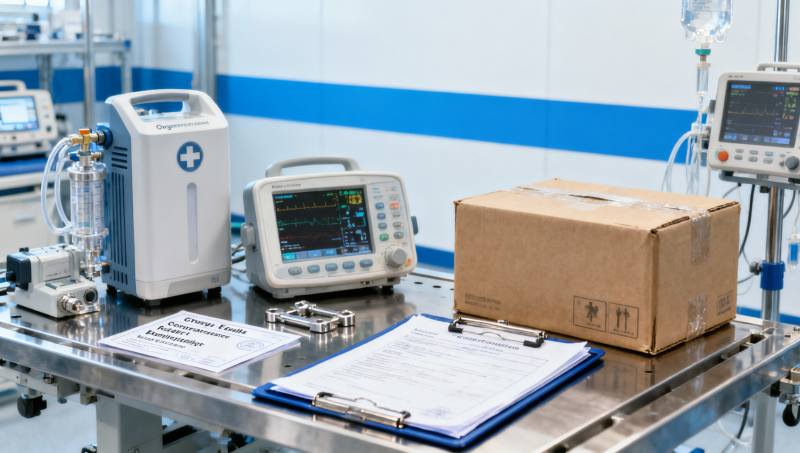
In today’s medical sourcing environment, supply chain verification is no longer optional—it is the foundation of safe, compliant, and cost-effective healthcare equipment procurement. Whether evaluating a smart wheelchair manufacturer, an oxygen concentrator factory, or an ICU monitor supplier, buyers must look beyond marketing claims to assess IVDR certification, engineering quality, and long-term reliability across an increasingly complex, digitally integrated global supply chain.
For most buyers, the real question is simple: can this supplier consistently deliver safe, compliant, and reliable products at scale, without creating downstream regulatory, operational, or financial risk? In medical sourcing, that answer cannot come from brochures, trade show demos, or price sheets alone. It comes from verification.
What decision-makers really need to verify before choosing a medical supplier
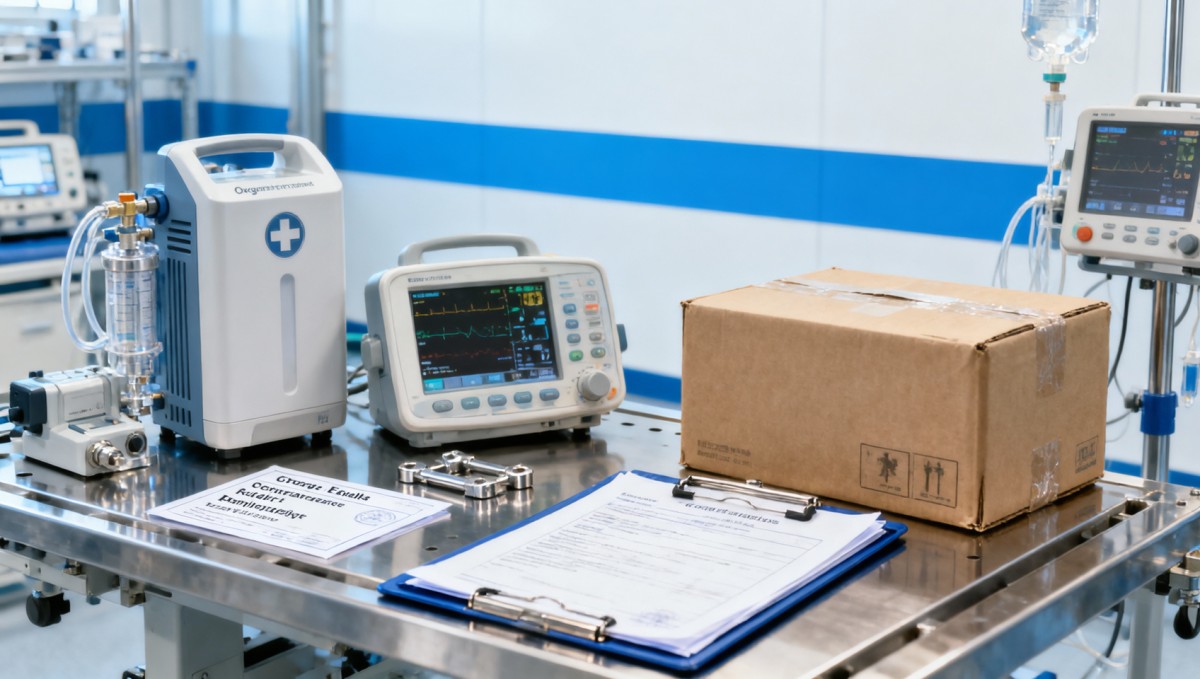
Supply chain verification matters because healthcare procurement is not just about buying a product. It is about buying a chain of materials, processes, quality systems, certifications, subcontractors, logistics controls, and post-sale support that all affect real clinical outcomes.
For procurement teams, lab planners, MedTech founders, and hospital decision-makers, the core search intent behind this topic is usually practical: how do we reduce sourcing risk and make better purchasing decisions? The answer starts with understanding what must be verified:
- Regulatory compliance: Does the supplier meet applicable requirements such as MDR, IVDR, ISO 13485, CE, FDA-related expectations, or market-specific documentation standards?
- Manufacturing consistency: Can the factory produce the same quality level across batches, volumes, and time periods?
- Component traceability: Are critical parts, raw materials, and subassemblies documented and traceable?
- Technical performance: Does the equipment perform to engineering and clinical expectations under real-world conditions?
- Delivery resilience: Can the supplier maintain lead times and continuity during shortages, geopolitical disruption, or quality events?
- After-sales reliability: Is there a dependable process for maintenance, replacement parts, software updates, and field support?
Without verification, buyers often discover problems too late: failed audits, customs delays, inconsistent device performance, incomplete technical files, hidden subcontracting, or support breakdowns after installation. In healthcare, these are not minor inconveniences. They can affect patient safety, service continuity, reimbursement, and reputation.
Why marketing claims are not enough in medical sourcing
Medical products are increasingly complex, especially in categories involving connected diagnostics, wearable sensors, digital monitoring, rehabilitation devices, and lab systems. Suppliers may present impressive feature lists, but features alone do not prove clinical-grade reliability.
A sourcing team may hear claims such as “hospital-grade accuracy,” “fully compliant production,” or “stable global supply.” Those statements only become meaningful when backed by evidence. Verification turns claims into decision-ready facts.
This is especially important when sourcing from new regions, first-time vendors, or fast-growing manufacturers. A supplier may appear capable on the surface but still have critical weaknesses in:
- document control and design history
- change management for components
- incoming material inspection
- sterility assurance or cleanliness controls
- calibration routines
- software validation and cybersecurity maintenance
- complaint handling and CAPA systems
In other words, a polished commercial presentation does not guarantee a robust medical supply chain. Verification helps buyers distinguish between a supplier that sells convincingly and one that can actually support long-term clinical use.
What risks increase when supply chain verification is weak
Weak verification typically creates risk in four areas: compliance, operations, finances, and patient impact.
1. Compliance risk
If a supplier’s certifications are outdated, incomplete, misapplied, or unsupported by technical documentation, the buyer may face import issues, audit findings, or product registration delays. In Europe, MDR and IVDR expectations have raised the threshold for acceptable evidence. Buyers can no longer assume that a declaration on paper equals full compliance in practice.
2. Operational risk
When upstream vendors are unstable, hospitals and distributors may face stockouts, replacement part shortages, or maintenance delays. For high-dependency equipment such as oxygen systems, monitoring devices, or laboratory instruments, this directly affects continuity of care.
3. Financial risk
The lowest quote often becomes the highest total cost when rework, returns, downtime, service calls, emergency sourcing, and delayed deployment are included. Verification improves total cost visibility, not just purchase price comparison.
4. Reputational and clinical risk
If a product underperforms in the field, the buyer’s organization may absorb the consequences. That could mean clinician dissatisfaction, failed projects, patient safety concerns, or damage to trust with regulators and internal stakeholders.
How to verify a medical supply chain in a practical, decision-ready way
Effective verification is not about creating paperwork for its own sake. It is about building enough evidence to make a confident sourcing decision. For most organizations, a practical verification framework includes the following steps:
- Review certifications and scope carefully. Confirm whether certificates are valid, current, and relevant to the exact product category and manufacturing site.
- Assess quality management maturity. Look beyond the existence of a QMS and examine CAPA discipline, deviation handling, audit results, and change control.
- Validate critical supplier dependencies. Identify whether key components come from single-source vendors, whether substitutes are qualified, and how shortages are managed.
- Examine traceability. Verify lot-level or serial-level traceability for critical materials and production stages.
- Check technical performance data. Request benchmark results, validation summaries, test methods, tolerance data, and failure-rate information.
- Review production and inspection controls. Understand in-process inspection, final release criteria, environmental controls, and calibration practices.
- Confirm post-market and service capability. Evaluate spare parts planning, field service response, software update governance, and complaint turnaround.
- Use independent benchmarking where possible. Third-party engineering reviews and technical whitepapers can reveal gaps that standard vendor documentation may not show.
This approach helps both executive buyers and operational users. Leaders gain risk visibility and sourcing confidence, while technical teams get a clearer basis for comparing suppliers objectively.
What procurement teams should ask before approving a supplier
Many sourcing mistakes happen because the wrong questions are asked too late. Before approving a medical supplier, procurement and technical reviewers should ask questions such as:
- Which manufacturing site actually produces this device, and is that site covered by the stated certification?
- What are the most failure-sensitive components, and how are they qualified?
- What happens if a key component becomes unavailable?
- How often are specifications, firmware, or materials changed, and how are customers notified?
- Can the supplier provide recent test data rather than generic claims?
- What evidence supports long-term reliability under real operating conditions?
- How are complaints investigated, and what is the average corrective action timeline?
- What is the service model for international customers after installation?
These questions shift sourcing from price-led selection to evidence-led evaluation. That is critical in value-based procurement, where lifecycle reliability often matters more than the initial unit cost.
Why supply chain verification supports better ROI, not just compliance
Some organizations still treat verification as an administrative burden. In reality, it is a business performance tool.
Strong supply chain verification can improve return on investment by:
- reducing the chance of failed purchases and replacement sourcing
- lowering downtime and service disruption
- improving installation success and user satisfaction
- preventing hidden quality costs
- supporting audit readiness and smoother market access
- building stronger internal confidence among procurement, engineering, compliance, and executive teams
For hospitals, labs, and MedTech companies, this means better procurement outcomes across the full lifecycle of the equipment. For users and operators, it means fewer surprises in daily use. For enterprise decision-makers, it means lower risk exposure and better control over supplier performance.
Where independent technical benchmarking adds real value
In complex medical sourcing, internal teams often lack the time or specialized equipment to verify every supplier claim in depth. That is where independent benchmarking becomes valuable.
A neutral, data-driven review can compare real engineering parameters across vendors, such as signal stability, material fatigue, accuracy drift, environmental tolerance, or manufacturing repeatability. This is particularly useful when products appear similar commercially but differ significantly in technical integrity.
Independent verification also helps remove bias from the sourcing process. Instead of relying only on vendor-selected data, buyers can evaluate standardized evidence that is more relevant to procurement decisions, quality assurance, and long-term operational planning.
For organizations operating in regulated healthcare markets, this kind of evidence can become a competitive advantage. It strengthens internal approval processes and helps justify decisions to regulators, auditors, clinicians, and investment stakeholders.
Conclusion: verification is how medical buyers protect quality, continuity, and trust
Supply chain verification matters in medical sourcing because healthcare buyers are not simply purchasing devices—they are accepting the risk profile behind those devices. In an environment shaped by stricter regulation, digital complexity, and value-based procurement, choosing a supplier without verification is no longer a reasonable option.
The most effective sourcing decisions are based on evidence: compliance scope, manufacturing discipline, traceability, technical performance, and long-term support capability. When buyers verify these factors early, they reduce risk, improve ROI, and make procurement decisions that stand up over time.
In short, supply chain verification is not a box to tick. It is the foundation for sourcing medical products with confidence.
- EMS
- ESS
- PPE
- laboratory instruments
- medical supply chain
- tractors
- EdTech
- procurement
- cybersecurity
- AR
- supply chain
- Cement
- material fatigue
- benchmarking
- healthcare procurement
- value-based procurement
- regulatory compliance
- wearable sensors
- technical integrity
- technical benchmarking
- material fatigue
- supply chain
- long-term reliability
- sourcing confidence
- data-driven
- IVDR certification
- healthcare equipment
- supply chain verification
- icu monitor supplier
- oxygen concentrator factory
- smart wheelchair manufacturer
Recommended News
- 2026.04.17Hospital equipment standards shaping modern rehab devicesSarah Jenkins (Laboratory Infrastructure Consultant)
- 2026.04.17Laboratory equipment validation errors in sample storageDr. Hideo Tanaka (Imaging Systems Analyst)
- 2026.04.17Medical equipment certification delays in remote monitoringLydia Vancini (Regulatory Compliance Lead)
The VitalSync Intelligence Brief
Receive daily deep-dives into MedTech innovations and regulatory shifts.