
How to judge dental implant wholesale quality fast?
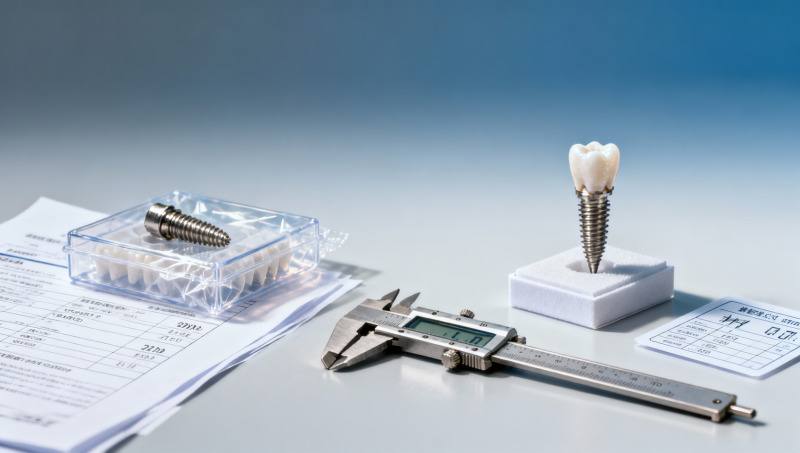
When evaluating dental implant wholesale options, speed matters—but so does evidence. For procurement teams, operators, and decision-makers navigating healthcare equipment sourcing, fast quality judgment depends on supply chain verification, material consistency, regulatory signals, and real manufacturing capability. This guide shows how to quickly identify reliable partners, reduce sourcing risk, and separate clinical-grade performance from sales claims.
In the dental implant wholesale market, a fast decision is rarely about picking the lowest unit price or the supplier with the most polished brochure. It is about screening for technical reliability in the shortest possible time. For hospitals, dental chains, distributors, and laboratory planners, that means checking a compact set of proof points: raw material traceability, dimensional consistency, packaging control, sterilization status, manufacturing documentation, and post-sale support capability.
From a B2B sourcing perspective, dental implants sit at the intersection of clinical safety, precision engineering, and regulatory risk. A poor wholesale choice can lead to delayed surgeries, incompatibility with surgical kits, increased chairside adjustment time, and long-term reputation damage. A good choice can reduce incoming inspection time from several days to a few hours and help procurement teams build a more predictable supply chain.
Start with the 5-minute quality screen
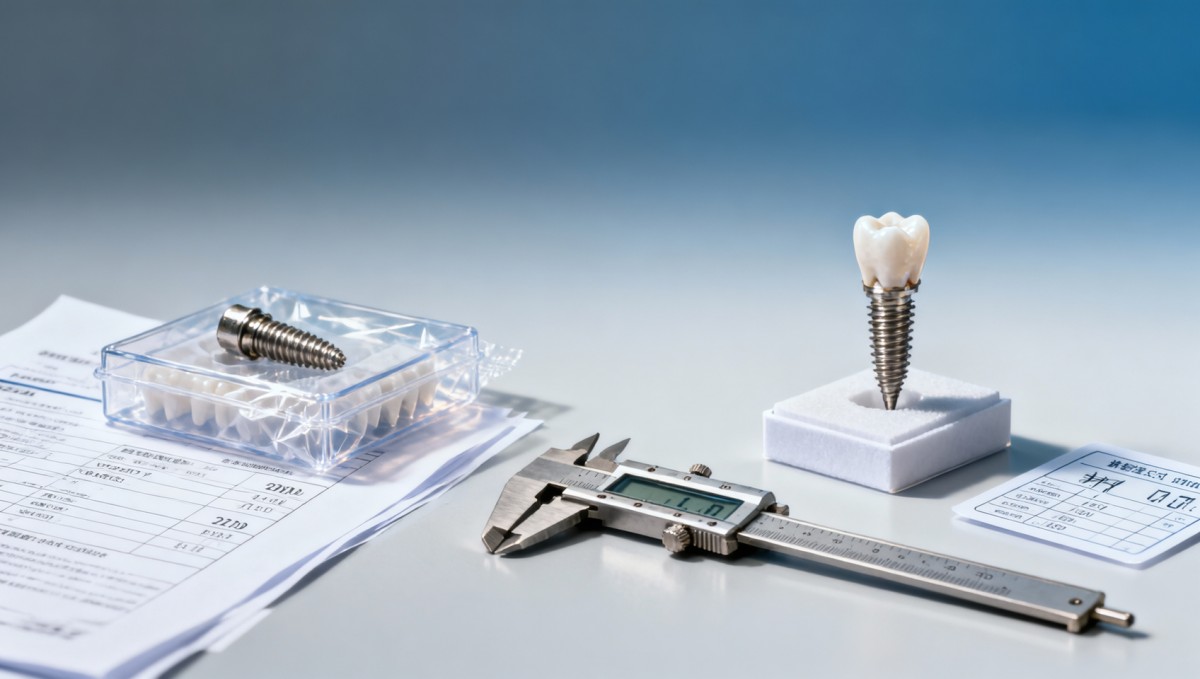
The fastest way to judge dental implant wholesale quality is to begin with a structured 5-minute screen. This is not a full technical audit. It is a first-pass filter designed to eliminate weak suppliers before samples, negotiations, or site visits consume time. In most procurement settings, 70% of sourcing risk becomes visible through documentation quality, specification clarity, and response speed.
At this stage, buyers should focus on 4 core signals. First, ask what implant material grade is used and whether the supplier can provide batch traceability. Second, verify whether dimensions, tolerances, and connection types are documented clearly. Third, check regulatory readiness for target markets. Fourth, assess whether the supplier can explain manufacturing controls without relying only on marketing language.
A reliable supplier should usually provide a basic technical package within 24–72 hours. If it takes more than 5 business days to send standard specifications, sterilization information, or packaging details, that delay often signals weak internal process control. Slow and vague replies are not just communication issues; they may indicate poor documentation discipline across production and quality systems.
What to ask before requesting samples
Before you spend on freight, sample evaluation, or compatibility testing, ask a short set of operational questions. These questions help information researchers and procurement managers identify whether the supplier works at an engineering level or only at a trading level.
- What material is used for the implant body, and can each lot be traced back to a material batch?
- What connection standard or interface geometry is used, and how is dimensional tolerance controlled?
- Is the product supplied sterile or non-sterile, and what is the labeled shelf life, such as 2–5 years?
- What is the typical MOQ, such as 50, 100, or 500 units per SKU, and what is the standard lead time?
- Can the supplier provide packing validation, labeling samples, and basic quality documents within 3 days?
If the answers are specific, measurable, and document-backed, the supplier deserves deeper review. If the answers stay generic, the wholesale risk remains high even when pricing looks attractive.
Quick red flags in early-stage supplier screening
Several red flags can be spotted almost immediately. A supplier that cannot explain implant-abutment connection geometry, cannot confirm whether products are sterile, or cannot define packaging controls should not move to the final shortlist. In dental implant wholesale, ambiguity is itself a risk indicator.
The table below provides a fast screening model that can be used by procurement teams, operators, and business decision-makers during the first contact round.
This table helps shorten the shortlist quickly. In practical sourcing, a supplier that scores strong on at least 3 of these 4 factors is usually worth sample verification. A supplier that fails 2 or more may create hidden costs later, even if the quote is 10%–20% lower.
Check the engineering evidence behind the implant
Fast judgment does not mean superficial judgment. After the initial screen, the next step is to verify whether the dental implant wholesale offer is backed by real engineering discipline. The most important areas are material consistency, surface treatment control, dimensional precision, and packaging integrity. These factors directly affect fit, handling, storage, and long-term reliability.
Dental implants are precision components, not generic metal parts. Even small deviation ranges can matter. For example, if connection dimensions are poorly controlled, clinicians or operators may face instability during assembly, excessive torque variation, or poor compatibility with related components. A reliable supplier should be able to discuss tolerances, surface processes, and inspection steps in concrete terms rather than broad quality slogans.
Material quality also matters at the wholesale level because lot-to-lot variation affects confidence in every downstream process, from incoming quality inspection to clinical use. Buyers do not always need proprietary process details, but they do need enough information to verify that the supplier runs controlled production rather than ad hoc machining and packaging.
Engineering checkpoints that reveal real quality
When reviewing a supplier, ask for evidence in at least 6 areas. These checkpoints are practical for both technical buyers and commercial sourcing teams.
- Material batch records linked to the implant lot number.
- Defined dimensional inspection points for thread, platform, and connection features.
- Surface treatment process description and consistency controls.
- Packaging method, seal integrity process, and storage recommendations.
- Sterilization status and shelf-life labeling where applicable.
- Final inspection release criteria before shipment.
If the supplier can explain these 6 points with documents or sample records, quality judgment becomes much faster. If not, buyers should assume more time and cost will be needed for verification.
What matters more than a polished sample
A single well-made sample is useful, but it does not prove process stability. The key question in dental implant wholesale is whether the supplier can reproduce the same quality over 100, 1,000, or 10,000 units. Repeatability matters more than one attractive sample piece.
That is why procurement teams should ask how frequently dimensions are checked, how many inspection stages exist, and what happens when a lot falls out of spec. Even a simple answer such as in-process checks every batch and final release before packing is more valuable than generic statements about premium quality.
A practical parameter review table
The following table summarizes the technical areas that buyers can review quickly during supplier discussions. It is especially useful when comparing 2–3 wholesale suppliers side by side.
For sourcing teams, the takeaway is simple: engineering evidence accelerates decision-making. It reduces the need for repeated clarification loops and makes supplier comparison more objective. This is where independent benchmarking logic, such as the approach used by data-driven healthcare evaluation teams, creates real value.
Verify compliance, packaging, and supply chain stability
In healthcare procurement, dental implant wholesale quality is not limited to the implant itself. Quality also depends on how the product is labeled, stored, shipped, and supported across target markets. A technically acceptable implant can still become a poor procurement choice if packaging is unstable, documentation is incomplete, or delivery reliability is weak.
Regulatory readiness should be evaluated in a practical way. Buyers do not need to turn every supplier conversation into a legal review, but they do need to confirm whether the supplier understands destination market requirements, product labeling expectations, and traceability responsibilities. If a supplier sells internationally but cannot explain market-specific document flows, risk rises quickly.
Supply continuity is equally important. A low-cost wholesale partner is not truly low cost if lead times swing from 2 weeks to 8 weeks, or if reorder availability changes by SKU without notice. Decision-makers should look at the supplier’s ability to maintain stable production windows, manage batch release timing, and support predictable replenishment.
3 areas that often get missed
Many buyers focus heavily on implant body specifications and forget the operating realities that affect warehouse and clinical teams. Three areas are missed most often: outer packaging durability, lot label readability, and replacement response speed. These details shape day-to-day usability more than many buyers expect.
- Packaging should resist routine transport stress and preserve legibility across warehouse handling cycles.
- Labels should include clear lot identification and date information that can be read quickly during receiving and picking.
- After-sales response should include a defined turnaround, ideally within 24–48 hours for quality claims or shortage issues.
These elements matter because wholesale quality is measured not only at the moment of shipment, but through the full operational chain from production release to final use.
Supply risk comparison for procurement teams
The table below helps procurement managers compare wholesale suppliers based on operational reliability rather than only unit price.
This comparison shows that operational signals often reveal wholesale quality faster than promotional messaging. A supplier with slightly higher pricing but stronger traceability and response discipline may produce lower total sourcing cost over a 12-month procurement cycle.
Build a fast supplier scorecard for real-world decisions
For most organizations, the best way to judge dental implant wholesale quality fast is to use a scorecard. A scorecard reduces subjective debate and helps technical teams, procurement teams, and executives align on the same decision logic. It also shortens supplier review time because every candidate is assessed against the same weighted factors.
A practical scorecard can work with 5 categories: technical documentation, manufacturing consistency, regulatory readiness, delivery reliability, and commercial fit. Teams can score each category from 1 to 5, creating a total score out of 25. In many B2B sourcing cases, any supplier below 17 should be considered high review risk unless there is a strong strategic reason to continue.
This method is especially useful when comparing established manufacturers, OEM partners, and trading companies. It allows buyers to separate low price from low risk, which are not the same thing in implant sourcing.
Recommended scoring model
The table below offers a simple decision model that can be adapted for hospital procurement, distribution sourcing, or multi-clinic purchasing.
Once this scorecard is in place, buyers can move from reactive sourcing to controlled supplier qualification. That is the practical path to faster, lower-risk wholesale decisions.
FAQ for faster sourcing decisions
How many samples should be tested before a wholesale order?
A small initial review often starts with 3–5 representative units per key SKU, especially if you are comparing interface types or packaging forms. If the project is large or market-critical, a wider pilot with multiple lots is more reliable than reviewing only one sample set.
What lead time is considered reasonable in dental implant wholesale?
For repeat orders, 2–4 weeks is common when production planning is stable. New packaging, private labeling, or broader SKU launches may extend timelines to 4–8 weeks depending on documentation and supply readiness.
Is a lower MOQ always better?
Not always. Very low MOQ can help testing, but it may also signal weak production planning or unstable costing. A balanced MOQ, such as 50–200 units per SKU in early cooperation, often gives better visibility into the supplier’s real operating model.
Can a distributor judge quality without a factory audit?
Yes, to an extent. A strong document review, sample inspection, packaging check, and supplier scorecard can eliminate many weak candidates quickly. However, for long-term or high-volume partnerships, a deeper technical review remains the safer path.
Fast judgment in dental implant wholesale comes from disciplined filtering, not guesswork. Buyers who verify technical evidence, compare operational stability, and use a clear scorecard can reduce sourcing risk without slowing procurement cycles. For organizations that need a more objective way to assess supplier integrity, benchmark manufacturing signals, or translate technical data into procurement decisions, VitalSync Metrics supports evidence-led evaluation across the healthcare supply chain. Contact us to discuss your sourcing challenge, request a tailored assessment framework, or explore deeper benchmarking support for implant and medical device procurement.
- precision engineering
- surface treatment
- EMS
- ESS
- PPE
- procurement
- AR
- supply chain
- Cement
- benchmarking
- healthcare procurement
- hospital procurement
- supply chain
- long-term reliability
- data-driven
- healthcare supply chain
- medical device procurement
- healthcare equipment
- supply chain verification
- Packaging
- dental implant wholesale
Recommended News
- 2026.04.17Hospital equipment standards shaping modern rehab devicesSarah Jenkins (Laboratory Infrastructure Consultant)
- 2026.04.17Laboratory equipment validation errors in sample storageDr. Hideo Tanaka (Imaging Systems Analyst)
- 2026.04.17Medical equipment certification delays in remote monitoringLydia Vancini (Regulatory Compliance Lead)
The VitalSync Intelligence Brief
Receive daily deep-dives into MedTech innovations and regulatory shifts.