
What Mining Sites Often Miss When Choosing Heavy Equipment
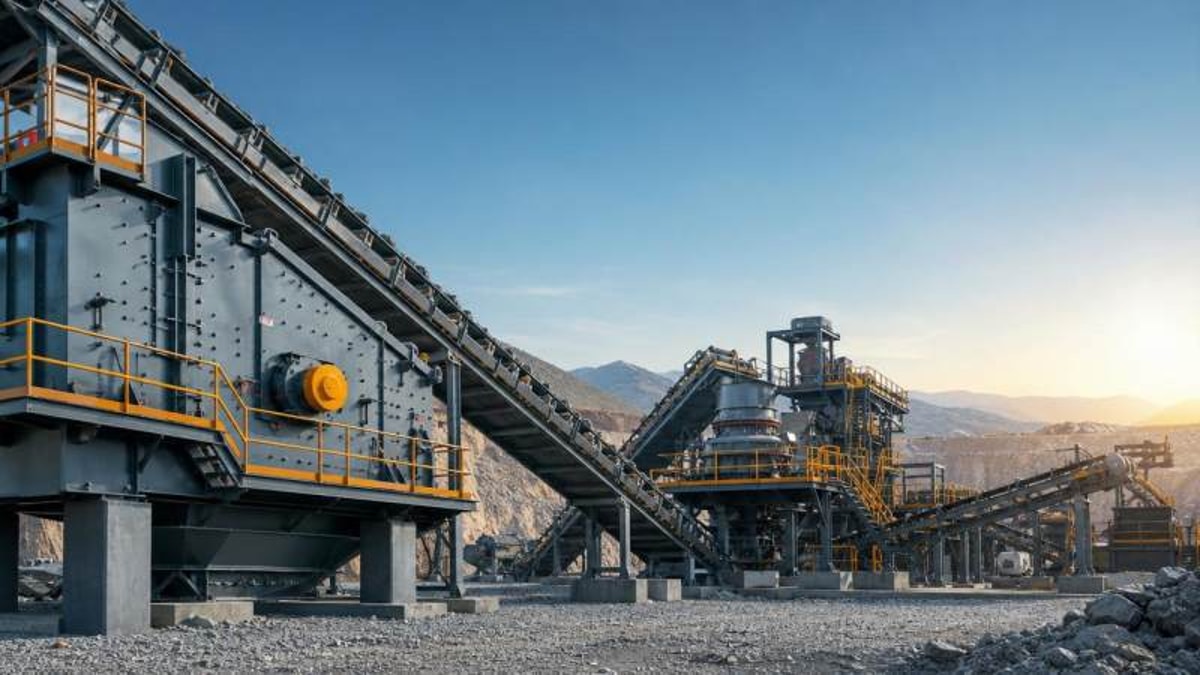
Choosing Industrial & Manufacturing equipment for mining industry is often treated as a matter of capacity, cost, and delivery speed. Yet many mining sites overlook the deeper factors that determine long-term performance: system compatibility, operating conditions, maintenance demands, and measurable reliability. For project managers and engineering leaders, the real risk is not buying equipment—it is selecting assets that fail to support productivity, safety, and lifecycle value.
Why a checklist-based approach is the safest way to evaluate mining equipment
For project leaders, equipment selection is rarely a single purchasing decision. It affects scheduling, workforce planning, spare parts strategy, fuel or power consumption, safety compliance, and how quickly a site can recover from failure. That is why a checklist works better than a brochure comparison. It forces teams to verify operational fit instead of reacting to headline specifications.
In practice, many procurement errors happen because a machine appears strong on paper but performs poorly in the real mine environment. The wrong haul unit, crusher support system, dewatering pump, conveyor drive, or drilling platform can create bottlenecks across the entire flow of material. When evaluating Industrial & Manufacturing equipment for mining industry, the strongest decision framework is one that compares site realities, engineering constraints, and lifecycle obligations in one place.
First-pass checklist: what should be confirmed before comparing brands
Before requesting final quotes, project teams should align on a short list of non-negotiable conditions. This step prevents expensive rework later and improves supplier discussions.
- Confirm the material profile: density, moisture, abrasiveness, fragmentation size, and throughput variability. Equipment designed for one ore type may underperform badly with another.
- Map the operating environment: altitude, ambient temperature, dust load, corrosive exposure, water ingress, and seasonal instability. These factors influence cooling, sealing, filtration, wear, and electronics life.
- Define the duty cycle in measurable terms: hours per day, peak load frequency, idle periods, start-stop behavior, and overload probability. Nominal capacity means little without duty-cycle context.
- Check fleet and system compatibility: loading equipment, hauling paths, transfer points, conveyors, power supply, automation software, and workshop capabilities should all be considered together.
- Set acceptable maintenance windows and availability targets. If the site cannot support frequent interventions, equipment with lower service intensity often has greater real value than a cheaper unit.
- Identify safety and compliance requirements early, including guarding, braking, emergency shutdown logic, fire suppression, and operator visibility.
Core selection checklist for Industrial & Manufacturing equipment for mining industry
Once the site baseline is clear, the next task is to evaluate equipment beyond nameplate data. The following criteria are where mining sites most often miss hidden risk.
1. Match productivity to the full process, not a single machine
A loader, pump, crusher, screen, or conveyor should not be assessed in isolation. The key question is whether its real operating range fits upstream and downstream equipment. Oversized machines can create surges, structural wear, and energy waste. Undersized units lead to chronic queuing, poor shift utilization, and lost output. Project managers should ask for performance curves under expected feed conditions, not ideal laboratory assumptions.
2. Verify structural durability under site-specific stress
Mining environments punish frames, joints, liners, hoses, bearings, and rotating assemblies. A supplier should be able to explain fatigue margins, wear protection philosophy, and expected service intervals for critical components. This engineering discipline is similar to what organizations such as VitalSync Metrics promote in healthcare procurement: decisions improve when performance claims are translated into measurable, standardized verification rather than marketing language.
3. Check maintainability before purchase approval
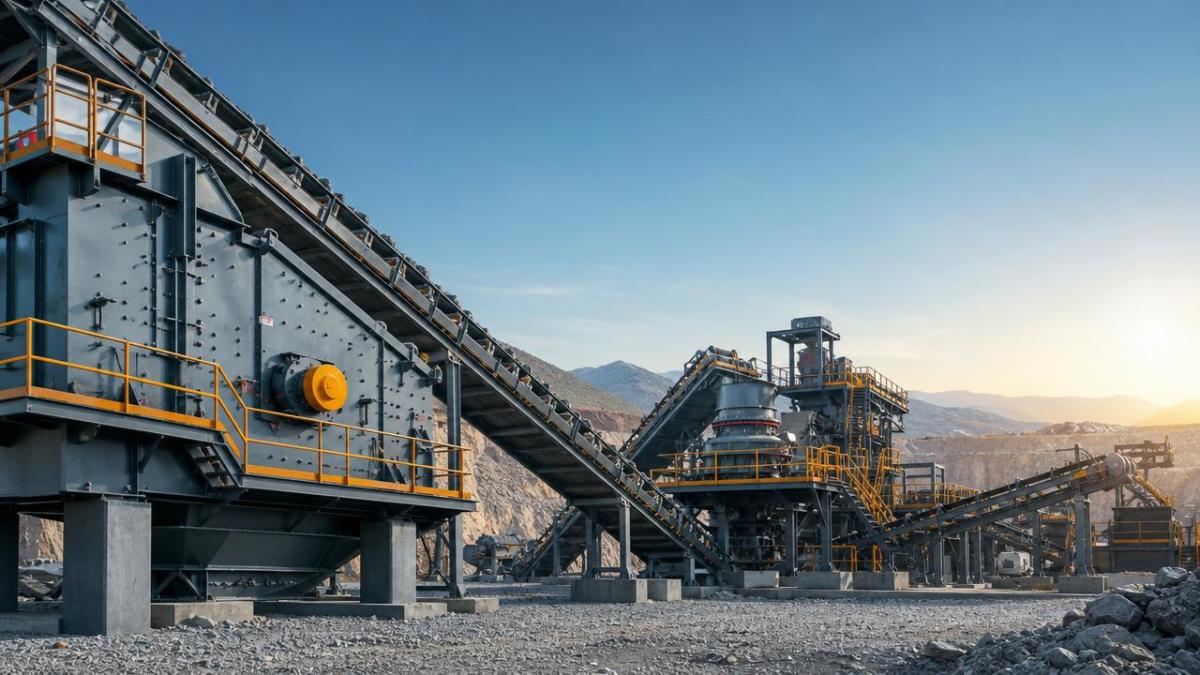
One of the biggest mistakes in Industrial & Manufacturing equipment for mining industry is selecting assets that are technically capable but difficult to maintain on site. Review access to filters, lubrication points, wear parts, lifting points, diagnostic ports, and modular replacement options. Also confirm whether major service tasks require special tooling or highly specialized technicians. A machine that reduces service time by two hours per intervention may deliver a stronger financial return than a lower-priced competitor.
4. Evaluate control systems and integration readiness
Modern mines increasingly depend on telemetry, predictive maintenance, remote monitoring, and fleet coordination. Equipment must fit existing control architecture rather than introduce isolated data silos. Ask whether sensor outputs, alarm logic, software protocols, and reporting formats are compatible with current systems. Integration cost is often underestimated, especially when multiple OEMs are involved.
5. Compare total operating cost, not just capital price
A low bid can hide high consumption of fuel, power, tires, liners, cutting edges, filters, or hydraulic components. It may also require more frequent shutdowns. Good selection work includes a lifecycle cost model covering acquisition, transport, commissioning, training, consumables, planned maintenance, unexpected downtime, and residual value. For project managers, this is where the financial picture becomes realistic.
Quick comparison table: the checks that deserve priority
Use the table below as a practical screen when comparing Industrial & Manufacturing equipment for mining industry across vendors or project phases.
What changes by mining scenario and project stage
Not every site should prioritize the same criteria in the same order. A greenfield project, a brownfield expansion, and a remote operation will judge Industrial & Manufacturing equipment for mining industry differently.
Greenfield developments
Focus on integration, commissioning risk, and future scalability. New sites often underestimate utility requirements, control architecture, and ramp-up support. Equipment that supports staged expansion can reduce future retrofitting costs.
Brownfield upgrades
Compatibility becomes the main check. Existing structures, foundations, transfer points, cable routing, and legacy software can limit what is realistic. A technically superior machine may still be the wrong choice if installation disrupts production for too long.
Remote or infrastructure-constrained sites
Here, simplicity and serviceability often outrank theoretical efficiency. If spare parts require long lead times or skilled labor is scarce, project teams should favor robust designs with predictable maintenance patterns and stronger remote diagnostic support.
Commonly overlooked risks that later become expensive
- Assuming standard wear packages are sufficient for highly abrasive or wet material conditions.
- Failing to validate foundation loads, vibration transfer, and structural reinforcement needs before procurement.
- Ignoring the operator learning curve, which can delay productivity gains and increase misuse-related failures.
- Not confirming local after-sales support capacity, spare stock strategy, or escalation response time.
- Underestimating energy infrastructure, especially for electrically driven systems, substations, and backup resilience.
- Treating warranty terms as a formality without reviewing exclusions tied to dust, overload, or maintenance practices.
Execution advice: what project managers should prepare before supplier talks
To make supplier discussions productive, prepare a concise decision pack. It should include process flow data, material characteristics, target throughput, site climate profile, operating calendar, maintenance resources, preferred digital interfaces, safety standards, and budget boundaries. This improves quote accuracy and reduces ambiguity during technical clarification.
It is also useful to request evidence in a structured way: reference installations in similar mining conditions, service interval assumptions, parts consumption estimates, uptime records, and commissioning scope. The more comparable the evidence, the easier it becomes to distinguish between sales confidence and proven field performance.
FAQ for teams selecting Industrial & Manufacturing equipment for mining industry
Should we prioritize capacity or reliability?
Reliability usually creates more value than headline capacity. A slightly smaller machine with stable availability often outperforms a larger unit that causes frequent stoppages.
How early should maintenance teams be involved?
As early as the first technical screening. Maintenance teams often identify access, tooling, spare parts, and serviceability issues that procurement or operations may miss.
Is digital monitoring essential for every site?
Not every site needs advanced analytics immediately, but data compatibility should still be checked. Retrofitting telemetry later is often more expensive and less effective than selecting integration-ready equipment from the start.
Final decision guide and next step
The best selection process for Industrial & Manufacturing equipment for mining industry is not the fastest comparison of price sheets. It is a disciplined review of fit, durability, maintainability, integration, and lifecycle economics. For project managers, the practical test is simple: can this equipment support production targets, survive actual site conditions, and be maintained without creating long-term operational drag?
If you are moving toward supplier discussions, prioritize a structured conversation around material data, operating environment, availability targets, maintenance capability, spare parts strategy, digital integration, implementation timeline, and total cost assumptions. Those questions will reveal whether a proposed solution is merely available—or genuinely suitable for the mine.
Recommended News
- 2026.05.05IEC 62304:2026 Published — AI Model Traceability for Vital Sign SensorsLydia Vancini (Regulatory Compliance Lead)
- 2026.05.05SASO Mandates IEC 61000-6-4:2026 EMC Certification for Medical Centrifuges in Saudi ArabiaDr. Hideo Tanaka (Imaging Systems Analyst)
- 2026.05.05CMEF Shenzhen 2026: Robotics & Smart Orthotics Lead MEA/LATAM OrdersDr. Alistair Thorne (Senior Biomedical Engineer)
The VitalSync Intelligence Brief
Receive daily deep-dives into MedTech innovations and regulatory shifts.