
How to Compare a Swimwear Wholesale Supplier Beyond MOQ
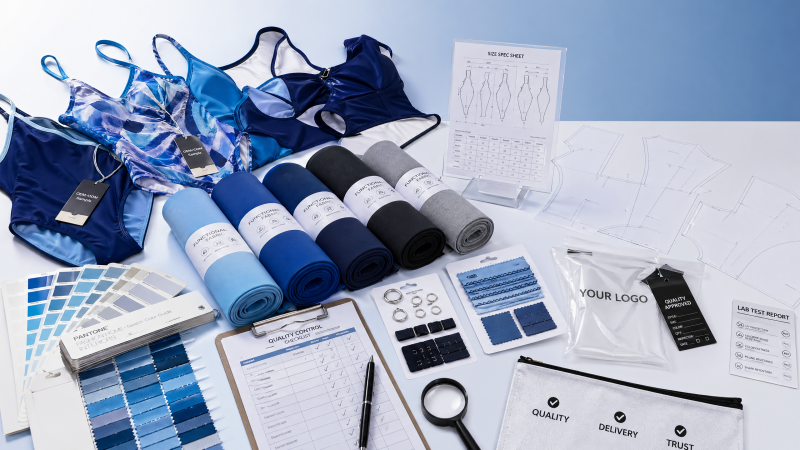
When evaluating a swimwear wholesale supplier, MOQ is only the starting point. Buyers sourcing quick-dry swimwear or swimwear for competitive swimming should also assess fabric performance, stitching consistency, lead times, compliance, and supply chain management solutions. A reliable partner is not just a low-cost vendor, but a supplier that protects quality, brand reputation, and long-term business growth.
If you are comparing swimwear wholesale suppliers, the real question is not “Who offers the lowest minimum order quantity?” but “Which supplier can consistently support my business without creating quality failures, delivery problems, or customer complaints?” MOQ matters because it affects cash flow and inventory risk, but it does not tell you whether a factory can meet your product standards, scale with your brand, or handle repeat production accurately.
For most buyers, especially procurement teams, growing brands, and decision-makers managing margin and reputation, the better comparison framework goes far beyond unit price and entry threshold. You need to evaluate product performance, production reliability, communication quality, compliance readiness, and the supplier’s ability to solve problems before they become expensive.
This article explains how to compare a swimwear wholesale supplier beyond MOQ, with a practical checklist built around what actually affects commercial results: product quality, lead times, consistency, flexibility, risk, and long-term partnership value.
Why MOQ is a weak standalone metric when choosing a swimwear wholesale supplier
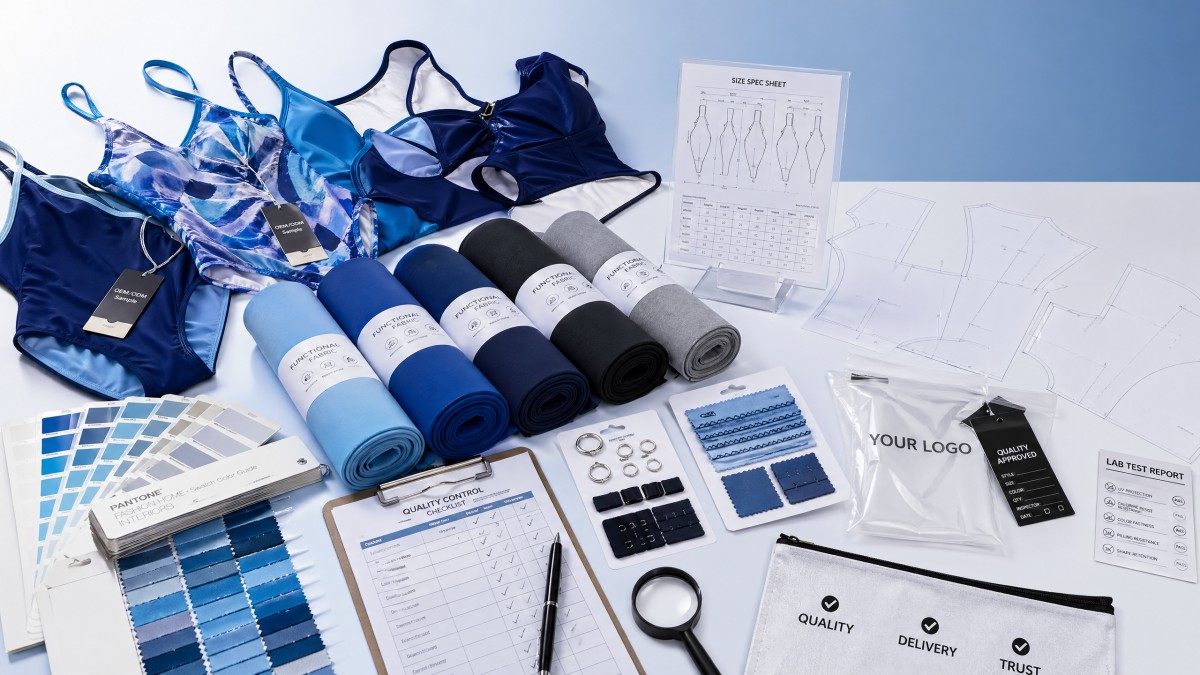
MOQ is attractive because it is easy to compare. A low MOQ can reduce upfront investment, help test new designs, and lower inventory exposure for small brands or new product launches. For startups and online sellers, this can feel like the most important number in the conversation.
However, MOQ often hides more than it reveals. A supplier may offer a low minimum order quantity but compensate with higher unit prices, limited fabric options, unstable production scheduling, or weaker quality control. In some cases, low MOQ production is treated as a low-priority order, which can lead to slower lead times or inconsistent workmanship.
Buyers who focus too heavily on MOQ also risk selecting suppliers that are not operationally mature. A factory can be flexible on order size yet fail in areas that matter more over time, such as color consistency across batches, accurate sizing, packaging execution, or the ability to replenish fast-selling styles quickly. The smartest sourcing teams use MOQ as one filter, not the final decision factor.
How to judge product quality before you place a large order
For swimwear, quality starts with fabric performance. Ask suppliers for detailed specifications, not just broad descriptions like “premium nylon” or “high-stretch spandex.” You should understand fabric composition, weight, stretch recovery, chlorine resistance, UV protection, colorfastness, and drying behavior. If you are sourcing quick-dry swimwear, drying performance and moisture handling are not secondary claims; they are core product attributes.
For swimwear intended for competitive swimming or high-frequency use, technical performance becomes even more important. Competitive products must maintain shape, reduce drag where applicable, withstand repeated exposure to chlorinated water, and hold up under intense movement. If the supplier cannot provide consistent test data or explain how the fabric behaves after repeated use, that is a warning sign.
Request pre-production samples and, where possible, compare samples from different suppliers side by side. Evaluate hand feel, lining stability, elasticity, seam smoothness, and opacity when stretched. A swimwear wholesale supplier that is serious about quality should be able to explain why a specific fabric or construction method is suitable for your target market instead of simply pushing the cheapest available option.
Stitching and construction quality are equally important. Swimwear is exposed to tension, water, sunlight, body oils, and repeated washing. Poor seam construction leads to puckering, tearing, discomfort, and rapid returns. Ask what sewing machines are used, what thread specifications apply, and how the factory checks seam strength during inspection.
Can the supplier deliver consistent sizing, fit, and repeatability?
One of the most expensive problems in swimwear wholesale is inconsistency between sample approval and bulk production. A beautiful sample means little if the next 2,000 pieces fit differently. This is why repeatability should be one of your top evaluation criteria.
Start by asking whether the supplier works from standardized size charts, tolerances, and graded patterns. A capable factory should have clear measurement control processes and understand that swimwear fit is especially sensitive. Small deviations in torso length, leg opening, bust support, or strap tension can create major customer dissatisfaction.
Repeatability also involves material stability. Different fabric lots can behave differently during cutting and sewing. Ask how the supplier controls shrinkage, elasticity variation, and color matching between production runs. If you plan seasonal reorders or evergreen styles, consistency over time matters more than one successful first batch.
For procurement professionals and brand owners, this is where supplier maturity shows. Strong suppliers maintain approved samples, technical packs, grading records, and production notes so future runs can match earlier orders. Weak suppliers rely too heavily on informal factory memory, which increases the chance of drift in fit and quality.
Lead time reliability matters more than the quoted production time
Many suppliers can provide an attractive production timeline during initial negotiations. What matters is whether they can meet it consistently under real-world conditions. A delayed swimwear shipment can ruin a seasonal launch, miss a promotional campaign, or force emergency air freight that destroys your margin.
When comparing suppliers, do not only ask for standard lead time. Ask for lead time performance history, sample development timing, raw material sourcing time, peak season capacity, and reorder timelines. A supplier that promises 20 days but regularly delivers in 35 is less valuable than one that quotes 28 days and reliably hits the date.
You should also understand the supplier’s production planning system. Do they rely on subcontractors? Do they have stable line allocation for swimwear? How do they handle urgent orders or fabric delays? A dependable swimwear wholesale supplier should be able to explain its workflow from order confirmation to cutting, sewing, inspection, packing, and shipment.
Lead time reliability is especially important for businesses with multiple channels. Retail launches, marketplace promotions, private label drops, and distributor commitments all depend on timing. If supply is unstable, even a good-looking MOQ or low ex-factory price quickly becomes irrelevant.
What compliance, testing, and documentation should buyers ask for?
Compliance is often overlooked in apparel sourcing until a problem appears. Depending on your market, you may need documentation related to fabric safety, restricted substances, labeling accuracy, country-of-origin rules, packaging requirements, or social compliance expectations from retailers and partners.
Ask the supplier what testing and certifications they can support. This may include colorfastness reports, fiber composition verification, azo dye restrictions, REACH-related material declarations, CPSIA-related support for children’s products if relevant, and third-party lab testing capabilities. Even if your current market does not require extensive documentation, future expansion may.
For private label buyers, packaging and labeling compliance is part of the same discussion. Incorrect care labels, missing size information, barcode errors, or noncompliant packaging can create delays, chargebacks, or customs issues. A strong supplier treats documentation as part of quality assurance, not an afterthought.
Operationally, this is a risk-control issue. Buyers should favor suppliers that can provide clear records, sample approvals, inspection reports, and traceability on materials. In an increasingly transparent sourcing environment, being able to verify claims is more valuable than hearing them in a sales presentation.
How to evaluate communication and problem-solving before problems happen
Communication quality often predicts supplier performance better than a polished product catalog. During the quotation and sampling stage, observe how the supplier handles questions. Do they answer directly? Do they clarify uncertainties? Do they identify possible risks in your design, fabric choice, or timeline? Or do they simply say yes to everything?
The best swimwear wholesale suppliers are not passive order takers. They act like production partners. They warn you when a fabric may become transparent when stretched, when a trim could rust in salt water, or when a design detail may increase defect risk. This kind of feedback protects your brand and usually saves money in the long run.
Also evaluate responsiveness and communication structure. Who manages development? Who handles bulk production? Is there an English-speaking account manager? How are approvals documented? A supplier with clear communication workflows reduces errors, especially when managing multiple SKUs, colorways, and packaging requirements.
Problem-solving should be tested early. Ask how they handle quality claims, delayed raw materials, failed inspections, or urgent style revisions. You are not looking for perfection. You are looking for transparency, accountability, and a process. A supplier that hides issues until the shipment date is far riskier than one that escalates them early with alternatives.
Price comparison should include hidden costs, not just the quoted unit rate
A low quoted price can become expensive if the supplier creates avoidable operational costs. This is one of the biggest sourcing mistakes in wholesale swimwear. Buyers compare FOB or ex-factory prices but fail to measure defect rates, shipping delays, communication friction, rework costs, and customer return exposure.
When building a true cost comparison, include sample fees, mold or pattern costs if any, fabric upgrade charges, packaging charges, testing fees, inspection costs, defect replacement policies, logistics coordination effort, and expected replenishment speed. If one supplier is 6% cheaper but causes a 10% return rate or repeated delays, the apparent savings disappear quickly.
Brand reputation also has financial value. Swimwear is a fit-sensitive category where disappointed end customers often leave visible reviews. Complaints about transparency, poor elasticity, color fading, or inaccurate sizing can hurt conversion and customer lifetime value. A more capable supplier often protects revenue indirectly by reducing these issues.
For enterprise buyers and decision-makers, the right supplier is not always the cheapest one. It is the one that delivers the strongest total commercial outcome: acceptable margins, stable quality, predictable operations, and lower long-term risk.
Questions procurement teams should ask before approving a swimwear supplier
A structured supplier review process helps remove emotion from the decision. Start with product capability questions: What swimwear categories do they specialize in? Can they support fashion swimwear, performance swimwear, quick-dry products, plus-size ranges, or eco-material lines? Specialization often matters more than broad claims of doing everything.
Then move to operational questions: What is the average lead time for samples and bulk orders? What is the on-time delivery rate? What is the defect rate? What is the process for incoming fabric inspection, inline quality control, and final inspection? How do they manage size consistency and color approvals?
Next, ask commercial and scalability questions: Can they support reorders efficiently? What happens when order volume grows? Are there volume price breaks? Can they handle mixed styles or mixed colors in one shipment? Do they offer stock fabric programs for faster turnaround? These factors often matter more to a scaling brand than the initial MOQ alone.
Finally, ask relationship-risk questions: How long have they been producing swimwear? Who are their major export markets? Can they provide references, case examples, or third-party audit records? Do they outsource key production steps? The objective is not just to verify capability, but to understand how resilient the supplier will be when your business depends on them.
A practical scorecard for comparing suppliers beyond MOQ
To make better sourcing decisions, create a weighted scorecard rather than relying on instinct. Give each supplier a score across major categories such as fabric quality, fit consistency, construction quality, MOQ flexibility, price competitiveness, lead time reliability, communication, compliance support, and reorder capability.
Not every category should carry equal weight. If you are launching a premium swimwear line, quality and fit should outweigh MOQ. If you are testing a trend-driven capsule collection, flexibility and speed may matter more. If you serve institutional or team-buying channels, repeatability and documentation may be the top priorities.
This approach helps both operational teams and executives. Procurement can collect data objectively, product teams can compare samples more clearly, and leadership can approve suppliers based on business impact instead of isolated metrics. It also creates a repeatable internal process for future supplier evaluations.
Most importantly, a scorecard shifts the conversation from “Who gave me the easiest entry point?” to “Who gives me the best chance of building a dependable, profitable product line?” That is the comparison that actually matters.
Conclusion: the best swimwear wholesale supplier protects your business, not just your starting budget
MOQ is important, especially for brands managing cash carefully or testing demand. But it should never be the main reason you select a swimwear wholesale supplier. A supplier with the lowest minimum order quantity can still expose you to quality complaints, inconsistent fit, missed delivery windows, and long-term operational headaches.
A stronger decision comes from comparing suppliers on the factors that influence real business outcomes: fabric performance, construction quality, size consistency, lead time reliability, compliance readiness, communication discipline, and the total cost of ownership. These are the areas that shape customer satisfaction, inventory efficiency, and brand trust.
If you want a supplier relationship that supports growth rather than creating hidden risk, treat MOQ as the first filter, not the final answer. The best wholesale partner is the one that can deliver reliable swimwear products again and again, while helping your business stay fast, credible, and profitable.
Recommended News
- 2026.04.28How to Spot Premium Car Accessories That Are Mostly MarkupDr. Julian Rossi (RehabTech Specialist)
- 2026.04.28What Shortens the Life of Aftermarket Truck Parts FastDr. Hideo Tanaka (Imaging Systems Analyst)
- 2026.04.28Aftermarket Auto Parts for Trucks That Cut Repeat RepairsDr. Hideo Tanaka (Imaging Systems Analyst)
The VitalSync Intelligence Brief
Receive daily deep-dives into MedTech innovations and regulatory shifts.