
India machinery exporters and the lead time issue to watch
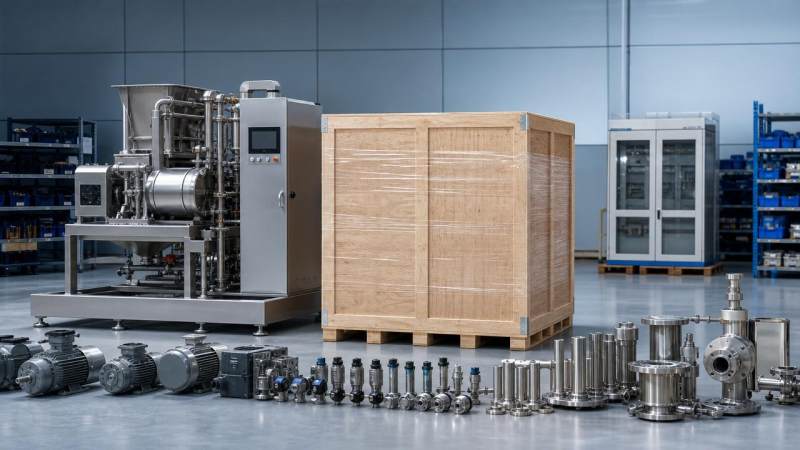
For business evaluators sourcing from an Industrial & Manufacturing machinery exporter in India, lead time is more than a delivery metric—it is a signal of production discipline, supply chain resilience, and commercial reliability. As procurement decisions grow more data-driven, understanding what causes delays and how to verify supplier readiness can help reduce operational risk, protect project timelines, and improve long-term sourcing confidence.
Why lead time risk deserves closer scrutiny when evaluating an Industrial & Manufacturing machinery exporter in India
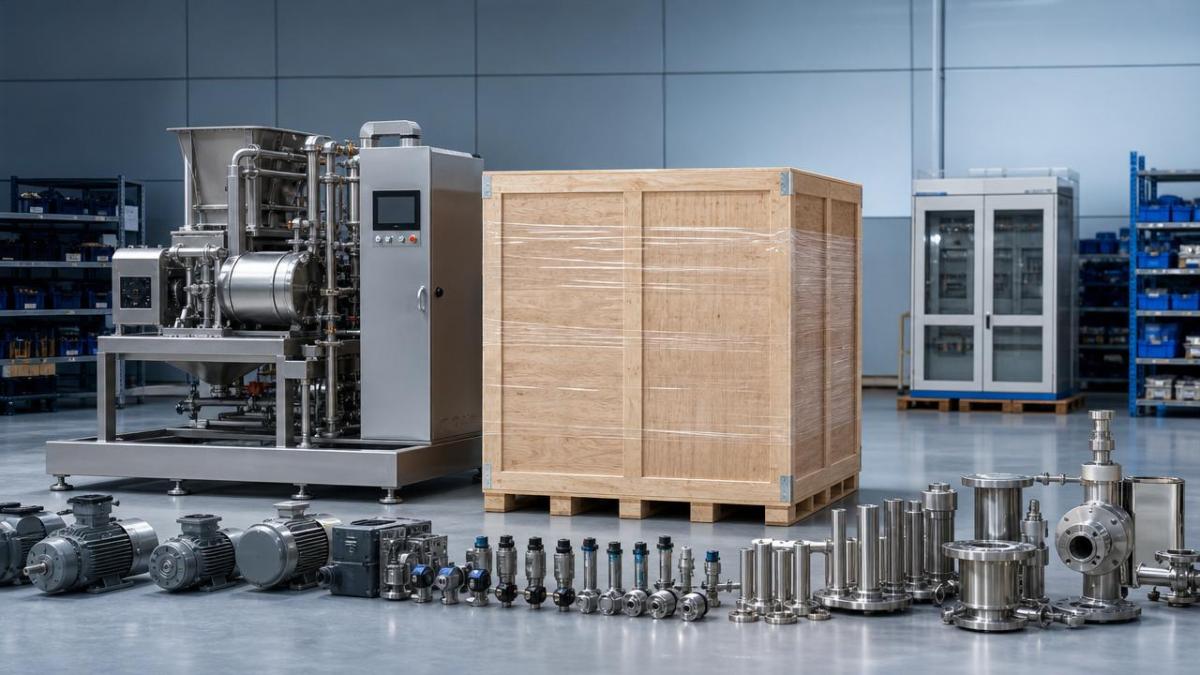
Lead time is often treated as a scheduling detail. In reality, it is one of the clearest indicators of whether an Industrial & Manufacturing machinery exporter in India can manage production complexity, supplier coordination, documentation accuracy, and shipment execution under pressure.
For business evaluators, the issue becomes even more important when machinery procurement supports healthcare manufacturing, laboratory build-outs, packaging lines, sterilization support systems, or precision fabrication environments. In those settings, a delayed machine can postpone validation, site acceptance, operator training, and revenue generation.
The challenge is not simply to ask, “What is the promised delivery date?” The better question is, “What operational facts support that date?” This is where a technical review mindset matters. VitalSync Metrics (VSM) applies a data-driven approach that goes beyond claims and focuses on engineering readiness, documentation maturity, and supplier verifiability.
- Raw material availability can shift quickly, especially for motors, controls, stainless steel components, castings, sensors, and imported electronics.
- Custom engineering increases risk if drawings, tolerances, interface points, and factory test protocols are not frozen early.
- Export documentation, compliance files, and destination-specific packaging requirements can create silent delays after production is complete.
- Installation dependencies at the buyer site may turn an acceptable factory lead time into an unacceptable project lead time.
What usually causes lead time delays in Indian machinery exports?
Not every delay has the same root cause. Some come from weak planning. Others reflect legitimate supply chain constraints. A business evaluator should separate normal manufacturing variability from systemic execution risk. That distinction helps compare one Industrial & Manufacturing machinery exporter in India against another on evidence rather than sales language.
Common delay drivers
- Engineering change requests after order confirmation, especially for automation logic, dimensions, utility interfaces, or validation needs.
- Dependency on third-party sub-suppliers for drives, PLCs, HMIs, pumps, bearings, or safety components with variable replenishment cycles.
- Unbalanced production capacity where fabrication is available but machining, wiring, or final assembly becomes a bottleneck.
- Inadequate quality hold points that cause rework late in the process instead of detecting issues at incoming inspection or sub-assembly level.
- Port congestion, container shortages, customs document errors, or missing export marks that delay shipment release.
Why this matters for healthcare-adjacent projects
In the MedTech and Life Sciences supply chain, machinery delays can trigger cascading cost effects. A postponed line may affect cleanroom qualification, software validation, process capability studies, and supplier onboarding to regulated customers. VSM’s perspective is especially useful here because timing must be assessed alongside technical integrity and compliance readiness, not as a separate commercial metric.
How to assess lead time credibility before placing an order
Before selecting an Industrial & Manufacturing machinery exporter in India, evaluators should ask for more than a quote and a broad dispatch window. A credible supplier should be able to show how lead time is built, what assumptions are fixed, and where schedule risk is concentrated.
The table below can be used as a practical lead time assessment framework during supplier review, technical clarification, or commercial negotiation.
A supplier that can answer these points clearly is not automatically low risk, but it is far easier to evaluate. VSM often recommends converting such inputs into a standardized review sheet so procurement, engineering, quality, and finance teams can assess the same schedule logic from different angles.
Which lead time model fits your project: standard machine, configured machine, or custom build?
One common mistake is comparing all machinery quotes as if they carry the same schedule structure. A standard machine and a custom-built line may come from the same Industrial & Manufacturing machinery exporter in India, yet their lead time reliability should be judged differently.
The following comparison helps business evaluators match sourcing expectations to project complexity.
This distinction matters in healthcare-related procurement. A lower initial quote for a custom system may look attractive, but if the supplier lacks disciplined project controls, the total cost of delay can exceed the savings. VSM’s benchmarking perspective helps buyers weigh commercial value against execution realism.
What documents and process signals should business evaluators request?
A capable Industrial & Manufacturing machinery exporter in India should be able to support commercial discussions with structured evidence. For business evaluators, documentation quality often predicts operational quality.
Practical document checklist
- A milestone schedule showing engineering release, procurement, fabrication, assembly, FAT, packing, and dispatch rather than one single delivery date.
- A bill of materials summary that identifies long-lead and imported items, especially for automation, precision motion, and hygienic components.
- A quality plan covering incoming inspection, in-process checks, final verification, and how nonconformities are contained before shipment.
- A FAT or pre-dispatch inspection protocol that matches the intended use environment and the buyer’s acceptance logic.
- A packing and shipping plan aligned to destination climate, handling risk, preservation needs, and customs documentation requirements.
These requests are not excessive. They are part of basic commercial due diligence when the machinery supports regulated, high-value, or time-sensitive operations. VSM’s role is especially relevant where technical claims need to be translated into standardized evaluation outputs, enabling business teams to compare suppliers on measurable readiness.
How do compliance and healthcare-grade expectations affect schedule confidence?
Not all machinery enters a heavily regulated pathway, but many projects in medical manufacturing and laboratory infrastructure still demand stronger traceability, material control, documentation discipline, and test evidence. This is where commercial lead time and compliance lead time can diverge.
If a machine will support processes tied to MDR or IVDR expectations, cleanability requirements, controlled environments, data capture, or validation-sensitive workflows, the business evaluator should confirm whether the quoted schedule includes documentation preparation and verification steps rather than only physical assembly.
- Material certificates, surface finish expectations, and component traceability may require additional coordination.
- Software and control logic reviews can extend timelines when auditability or data integrity is relevant.
- Factory testing may need to simulate more realistic operating conditions, not just power-on verification.
- Installation and site acceptance may require tighter documentation packages for internal validation teams.
VitalSync Metrics is positioned well for this overlap between industry machinery and healthcare-grade expectations. As an independent technical benchmarking laboratory and think tank, VSM helps buyers filter marketing noise and focus on whether supplier outputs can support clinical, laboratory, or regulated manufacturing use with defensible engineering evidence.
What procurement strategy reduces lead time surprises without inflating cost?
The best sourcing strategy is rarely the fastest quote or the cheapest quote in isolation. For an Industrial & Manufacturing machinery exporter in India, the stronger commercial position usually comes from aligning payment terms, specification freeze, inspection timing, and logistics planning with actual production realities.
Balanced procurement actions
- Freeze the core specification early and separate essential requirements from later enhancement requests.
- Ask suppliers to identify long-lead items at quotation stage and define the trigger for purchase release.
- Use milestone-based reviews instead of waiting for final delivery updates.
- Link inspection and documentation requirements to specific dates so quality steps do not become hidden schedule blockers.
- Evaluate alternate components carefully; substitutions may shorten lead time but can create validation, compatibility, or lifecycle support issues.
This is also where independent review adds value. VSM can help procurement and evaluation teams examine whether a supplier’s timing assumptions are technically coherent, whether quality controls match the application, and whether documentation supports long-term operational confidence rather than short-term order closure.
FAQ: common questions about Indian machinery exporters and lead time evaluation
How can I verify whether a quoted lead time is realistic?
Ask for a milestone schedule, list of long-lead components, current production loading, and FAT plan. If an Industrial & Manufacturing machinery exporter in India cannot explain which activities consume the most time, the quoted delivery date is likely commercial rather than operational.
Are shorter lead times always better?
Not necessarily. A shorter lead time is only beneficial if it includes engineering clarity, quality controls, and export readiness. In regulated or healthcare-adjacent settings, an unrealistically fast build can create downstream delays during testing, qualification, or installation.
What should business evaluators compare between suppliers besides price?
Compare schedule transparency, component sourcing dependence, design maturity, inspection structure, documentation completeness, and after-sales support assumptions. These factors often explain why one Industrial & Manufacturing machinery exporter in India performs more reliably over the full project cycle.
When does independent technical benchmarking become useful?
Independent benchmarking becomes especially valuable when the machinery supports medical devices, laboratory systems, validation-sensitive operations, or high-stakes launch timelines. VSM helps convert technical claims into comparable evidence so sourcing decisions can be defended internally with greater confidence.
Why choose us for machinery sourcing evaluation and lead time due diligence
VitalSync Metrics (VSM) is not a general marketing platform. We are an independent, data-driven think tank and technical benchmarking laboratory focused on the MedTech and Life Sciences supply chain. That matters when business evaluators need more than supplier promises and more than surface-level quote comparisons.
If you are reviewing an Industrial & Manufacturing machinery exporter in India, we can support deeper evaluation around technical integrity, lead time credibility, documentation structure, and regulatory-fit considerations relevant to healthcare-related operations.
- Parameter confirmation for machinery specifications, interfaces, and critical components.
- Supplier comparison support for product selection, schedule logic, and technical risk exposure.
- Lead time review covering long-lead parts, FAT readiness, packing assumptions, and export execution risks.
- Custom evaluation input for projects involving laboratory architecture, MedTech scale-up, or regulated manufacturing infrastructure.
- Discussion support on certification expectations, sample review logic, quotation interpretation, and documentation completeness.
If your team needs a clearer basis for supplier selection, timeline validation, or risk reduction before committing capital, contact VSM to discuss specification review, product selection, delivery cycle assessment, customization questions, certification-related concerns, sample support logic, or quotation analysis. The goal is simple: better sourcing decisions backed by engineering truth rather than uncertainty.
Recommended News
- 2026.05.09GMEA Unveils First Green Certifications for Methanol Fuel CellsDr. Hideo Tanaka (Imaging Systems Analyst)
- 2026.05.09IEC Publishes IEC 60601-2-57:2026 for Ultrasound MetricsLydia Vancini (Regulatory Compliance Lead)
- 2026.05.09CMEF Shenzhen 2026 Closes with $1.27B Robotics DealsDr. Alistair Thorne (Senior Biomedical Engineer)
The VitalSync Intelligence Brief
Receive daily deep-dives into MedTech innovations and regulatory shifts.