
Surgical Instrument Kits OEM: When Customization Starts Raising Risk
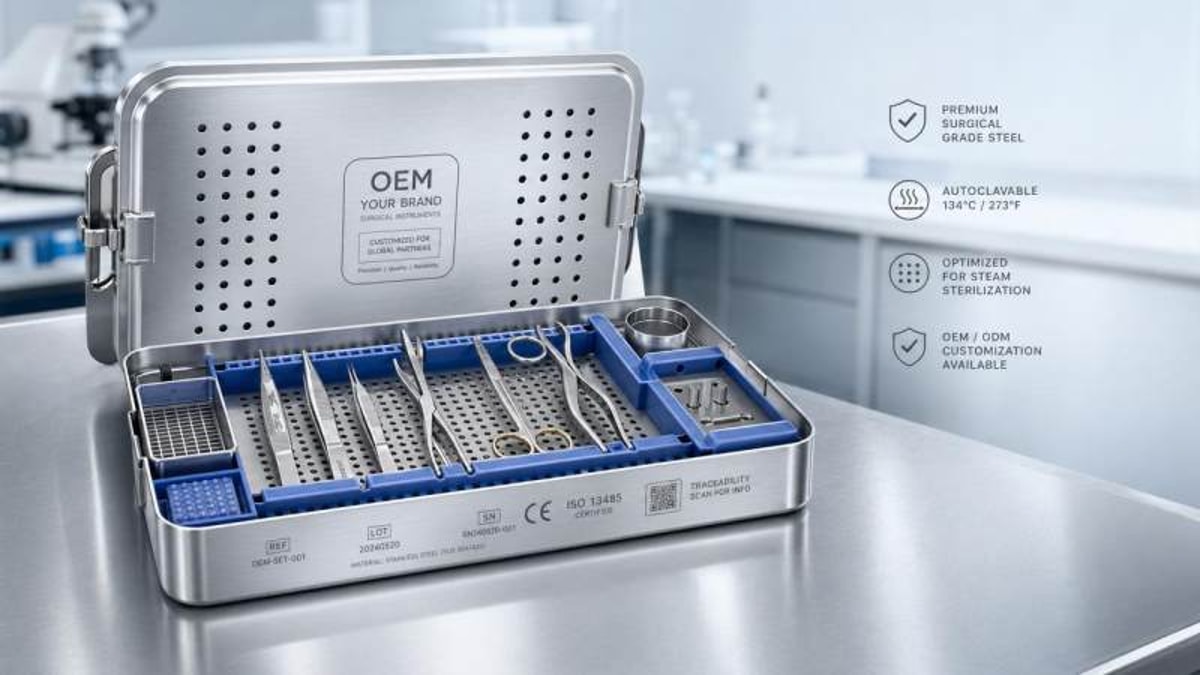
In surgical instrument kits OEM, customization can improve workflow fit, but it can also introduce hidden risks in material consistency, sterilization compatibility, traceability, and regulatory control. For quality and safety managers, the real issue is not how tailored a kit looks, but whether every modification can withstand clinical use, audit scrutiny, and long-term performance validation.
Why the Risk Profile of Surgical Instrument Kits OEM Is Changing
A clear shift is taking place in the global supply chain for surgical instrument kits OEM. Hospitals are no longer buying only standard trays in predictable volumes. They are asking for procedure-specific layouts, mixed-material assemblies, private-label configurations, and packaging formats aligned with tighter OR turnover goals. At the same time, regulators, notified bodies, and procurement teams are demanding stronger proof that every change remains safe, validated, and fully traceable.
For quality control and safety management teams, this creates a new tension. Customization appears commercially attractive because it promises differentiation and workflow efficiency. Yet every deviation from a validated baseline can multiply technical variables: steel grade variation, passivation performance, cleaning access, bioburden retention, labeling complexity, and document control burden. In other words, surgical instrument kits OEM is moving from a packaging exercise to a systems-engineering challenge.
This matters because the market is also shifting toward value-based procurement. Buyers want evidence that a custom kit reduces lifecycle cost without creating downstream compliance exposure. A supplier that can assemble a kit is no longer enough; stakeholders now need confidence that the OEM process is governed by engineering discipline, risk analysis, and post-market feedback loops.
The Strongest Trend Signals Quality and Safety Managers Should Watch
Several trend signals explain why surgical instrument kits OEM deserves closer scrutiny today than it did even a few years ago. First, device portfolios are becoming more modular. Second, procurement teams increasingly request region-specific configurations to fit local protocols. Third, MDR and IVDR-era thinking has pushed manufacturers and private-label partners toward stronger technical file discipline, even when the product category seems mature. Finally, sterilization and reprocessing expectations are rising as hospitals become less tolerant of hidden cleaning failures or inconsistent set composition.
The practical meaning is simple: the commercial language of flexibility is increasingly colliding with the technical language of control. When a custom request is approved too quickly, the hidden cost often appears later in complaints, CAPA volume, delayed submissions, or field-level confusion over use and reprocessing.
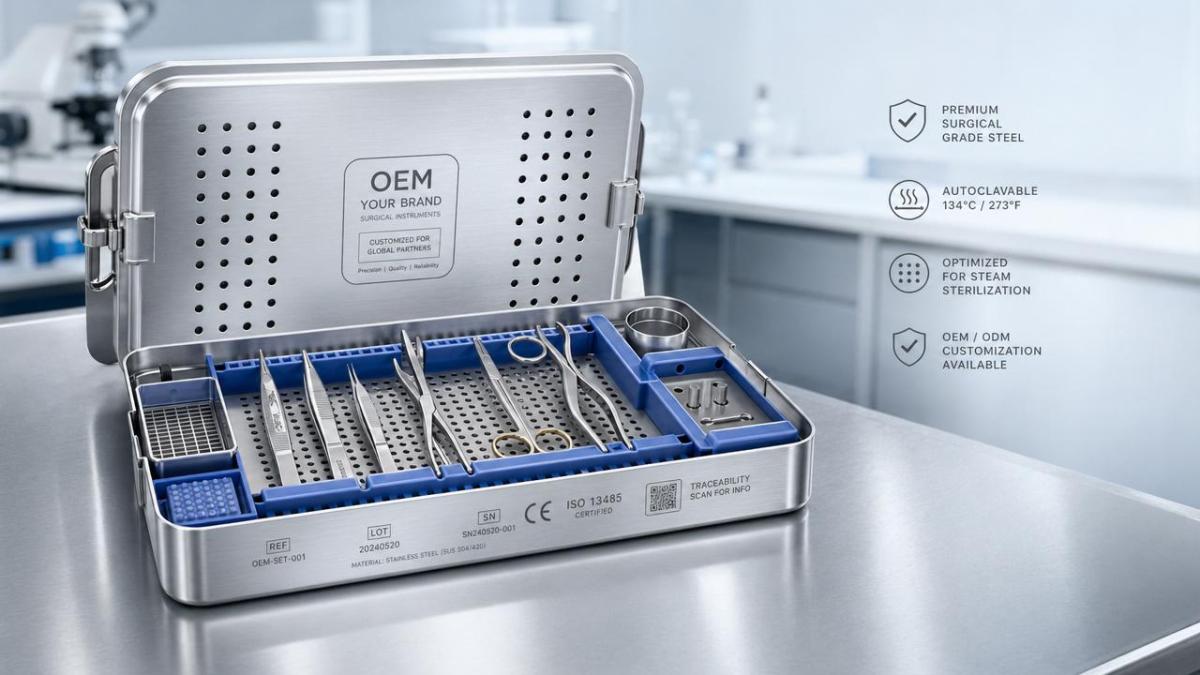
What Is Driving the Shift Beyond Simple Customization
The rise in risk is not caused by customization alone. It is being driven by the combination of operational pressure, regulatory maturity, and product complexity. OR managers want fewer unnecessary tools in each set. Procurement wants standardization where possible, but also local adaptation where justified. OEM partners want speed and differentiation. Quality teams, meanwhile, must prove that the final kit remains clinically sound and manufacturable at scale.
Another key driver is the gap between assembly logic and performance logic. A kit may look complete on paper while failing under real-world cleaning, repeated sterilization, transport vibration, or instrument wear. This is especially relevant in surgical instrument kits OEM because many risks are cumulative rather than immediate. Corrosion does not always appear in incoming inspection. Retained moisture may only emerge after repeated cycles. Misidentification may only surface when multiple revisions circulate across sites.
Digital procurement systems also play a role. As hospitals use data to compare suppliers, OEM claims are easier to challenge. Buyers ask sharper questions about shelf-life validation, UDI alignment, component genealogy, and equivalence assumptions. Quality and safety managers should treat this as a structural change, not a temporary compliance wave.
Where Hidden Risk Usually Enters the OEM Process
In many organizations, the most serious issues in surgical instrument kits OEM enter through seemingly minor decisions. A substitute alloy is approved due to supply constraints. A handle geometry is changed for surgeon preference. A tray insert is modified to improve fit. A label language set is expanded for export. Individually, each decision seems manageable. Collectively, they can alter how the kit performs, how it is cleaned, how it is documented, and how deviations are investigated.
Quality teams should pay particular attention to four recurring failure zones. The first is material consistency. Instruments from different production lots or suppliers may meet nominal specifications yet behave differently under repeated use and sterilization. The second is sterilization compatibility. Tray density, packaging method, hinge areas, and surface finish can affect cleaning access and steam penetration. The third is traceability. Once components from multiple sources are packed under one OEM identity, lot linkage must remain precise enough for complaint handling and recall execution. The fourth is change governance. Informal customer-driven updates often outpace the formal validation process.
These are not abstract concerns. In a value-based environment, every unresolved control gap increases the probability that a custom kit becomes harder to defend during an audit than it was to sell during procurement.
Who Feels the Impact Most Across the Supply Chain
The impact of this shift is uneven. Some functions experience higher exposure because they sit at the intersection of technical detail and operational accountability. Surgical instrument kits OEM affects not only manufacturers but also hospital stakeholders who must rely on the final product in real use.
For VSM’s target audience, the most important insight is that risk now travels across organizational boundaries. A problem that starts as an OEM configuration decision can become a sterilization issue in CSSD, a complaint trend in the field, and a supplier-management finding during audit review.
The Next Competitive Divide: Evidence-Rich OEM vs. Appearance-Driven OEM
A new divide is emerging in surgical instrument kits OEM. On one side are suppliers that focus on visual customization, fast quoting, and portfolio breadth. On the other are suppliers that can prove engineering integrity across the full lifecycle. The market is gradually rewarding the second group, especially where procurement teams involve quality, clinical engineering, and risk management earlier in the selection process.
This does not mean all customization is dangerous. It means customization must be evidence-rich. High-quality OEM programs increasingly require documented rationale for each component choice, reprocessing validation tied to actual configuration, controlled equivalence decisions, and version discipline strong enough to survive multi-site deployment. The future advantage will not come from offering infinite kit variation. It will come from knowing which variations are defensible, repeatable, and supportable under regulatory review.
That distinction matters in competitive evaluations. A supplier that cannot clearly connect design changes to verification data may still win on short-term convenience, but it is less likely to perform well in long-term quality metrics, field reliability, and contract renewal reviews.
How Quality and Safety Teams Should Judge OEM Readiness Now
For quality and safety managers, the right response is not to reject surgical instrument kits OEM outright. It is to change the evaluation threshold. The central question should shift from “Can this supplier customize?” to “Can this supplier control the consequences of customization?” That requires a more disciplined review framework.
Start with configuration governance. Every custom kit should have a clearly frozen bill of materials, revision structure, and approval path. Then review material and process evidence. Are alloy, coating, passivation, and surface finishing controls documented at the component level? Next, examine sterilization and cleaning logic. Was validation performed on a representative worst-case configuration, or only on a simpler reference set? Finally, test traceability depth. Can the OEM partner connect each delivered kit to upstream component lots without ambiguity?
Another useful checkpoint is change velocity. If a supplier frequently accepts informal modifications, introduces alternates during shortages, or updates packaging without synchronized document control, the apparent flexibility may actually signal weak system maturity. In surgical instrument kits OEM, uncontrolled responsiveness is often a leading indicator of future nonconformance.
A Practical Decision Framework for the Next 12 Months
Over the next year, organizations evaluating surgical instrument kits OEM should focus on structured judgment rather than broad assumptions. The most reliable approach is to separate requests into low-impact, medium-impact, and high-impact customization categories. Low-impact changes may involve approved labeling or outer packaging adjustments. Medium-impact changes may include tray organization or accessory substitution. High-impact changes involve material changes, reprocessing-sensitive geometry, or component additions that alter clinical use or cleaning profile.
This staged view helps teams avoid two common mistakes: over-approving risky changes because they look operationally minor, or over-blocking useful improvements because the review model is too blunt. Better segmentation supports faster decisions where risk is genuinely low and deeper validation where the consequences are larger.
What Deserves Ongoing Monitoring as the Market Evolves
Looking ahead, several indicators will help determine whether a surgical instrument kits OEM program is becoming safer or more fragile. Watch for growing use of alternate materials during supply disruption. Track complaint narratives related to corrosion, missing components, difficult cleaning, or inconsistent set composition. Review whether IFUs are being updated with each meaningful configuration change. Monitor audit findings tied to supplier control, DHR completeness, and change management. Most importantly, compare what the supplier promises in customization speed with what its quality system can actually absorb.
The broader direction is clear: the market is moving toward fewer assumptions and more proof. Custom kits will remain important, but they will be judged less by convenience and more by whether they stand up to lifecycle evidence. For quality and safety leaders, that is not a barrier to innovation. It is the condition that makes innovation sustainable.
Key Questions to Ask Before Expanding a Custom OEM Program
If your organization is reviewing or expanding a surgical instrument kits OEM strategy, focus on a few critical questions. Which custom elements truly improve clinical workflow, and which only add SKU complexity? Which changes alter sterilization or cleaning behavior? How strong is lot-level genealogy when multiple upstream suppliers are involved? Can the OEM partner show validation evidence that matches the final commercial configuration, not just a similar reference version? And when shortages force substitutions, who owns the approval logic and documentation trail?
For teams that want a deeper, evidence-based view of these trend impacts, the next step is to benchmark OEM claims against engineering reality: material controls, validation boundaries, traceability depth, and change governance maturity. That is where better sourcing decisions begin, and where customization stops being a marketing promise and starts becoming a defensible healthcare supply strategy.
Recommended News
- 2026.04.30Wholesale Medical Endoscopes China: After-Sales Questions Worth Asking EarlyDr. Alistair Thorne (Senior Biomedical Engineer)
- 2026.04.30Dental Implant Wholesale: How to Balance Margin, Quality, and Repeat OrdersDr. Alistair Thorne (Senior Biomedical Engineer)
- 2026.04.30Surgical Instrument Kits OEM: When Customization Starts Raising RiskDr. Julian Rossi (RehabTech Specialist)
The VitalSync Intelligence Brief
Receive daily deep-dives into MedTech innovations and regulatory shifts.