
Waterproof Floor Mats That Still Leak at the Edges
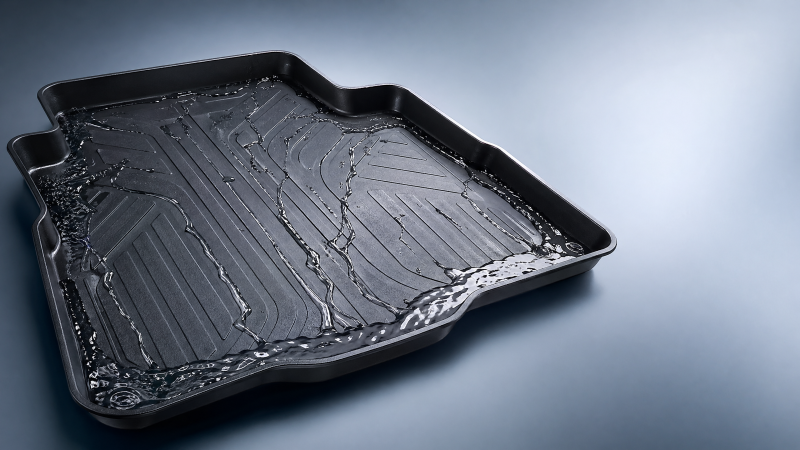
Waterproof floor mats often fail where it matters most: the edges. For buyers, operators, and decision-makers comparing premium car accessories, eco-friendly home improvement options, or supply chain management solutions, edge leakage raises bigger questions about material design, durability, and real-world performance. This article examines why waterproof floor mats leak at the perimeter, how testing should be approached, and what procurement teams should verify before trusting product claims.
Why do waterproof floor mats leak at the edges in real use?
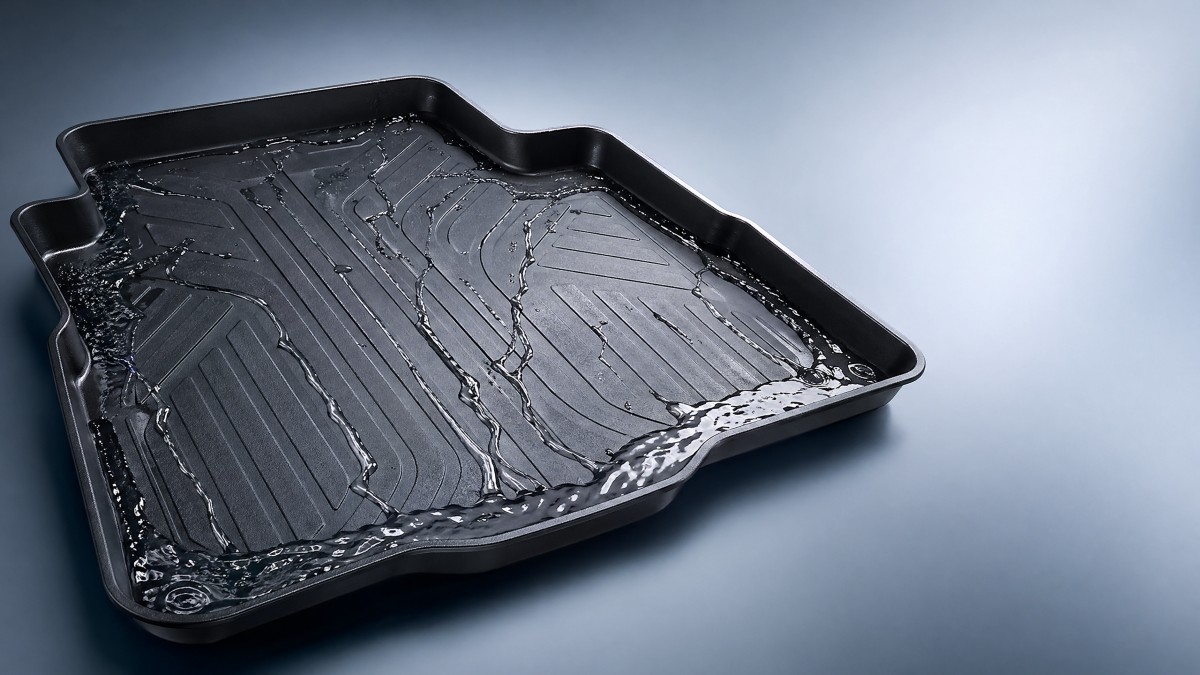
In product claims, “waterproof” usually refers to the central tray area, not the full containment performance of the entire mat system. Edge leakage happens when fluid reaches the perimeter faster than the raised lip can retain it, or when the lip collapses under foot pressure, load, heat, or repeated flexing. In procurement terms, that means the sealing geometry is failing under normal operating conditions, not necessarily that the base polymer is absorbing water.
Across automotive interiors, utility vehicles, residential entrances, and light commercial environments, three variables cause most perimeter failures: shallow edge height, inconsistent wall stiffness, and poor fit against the surrounding floor contour. A lip height of 8–15 mm may look adequate on a datasheet, but in mud, meltwater, or cleaning-fluid exposure, localized pooling can exceed that threshold quickly, especially near pedal zones or door-entry corners.
Operators also see a hidden problem: edge leakage is often intermittent. It may appear only after 3–6 months of use, once the mat has curled, shrunk slightly, or developed compression-set at key pressure points. That makes return analysis difficult and can mislead purchasing teams into treating the issue as user error rather than a material and design validation problem.
For organizations used to evaluating technical products in healthcare and life sciences, the lesson is familiar. Marketing language can describe a product category, but performance must be verified at the failure boundary. VitalSync Metrics applies that same benchmarking mindset: claims about waterproof floor mats should be tested at the edge, under repeatable load, angle, and fluid-volume conditions, not accepted at face value.
The 4 most common edge-leak failure modes
- Edge wall collapse under body weight or rolling load, reducing effective containment volume during use.
- Corner distortion caused by thermal cycling, especially in vehicles or sunlit entrances exposed to seasonal swings.
- Poor dimensional fit, leaving fluid escape channels along door sills, seat rails, or uneven subfloor contours.
- Surface flow concentration, where grooves direct liquid toward low points at the perimeter instead of retaining it centrally.
What should buyers compare beyond the word “waterproof”?
A specification sheet should separate waterproof material behavior from fluid-containment system behavior. These are related but not identical. A mat made from TPE, rubber blend, PVC, or multilayer recycled composite can resist water penetration, yet still leak at the edges because of geometry, memory, or installation mismatch. Buyers should therefore compare at least 5 core dimensions: lip height, wall stiffness, base traction, fit tolerance, and recovery after deformation.
For procurement teams, the comparison should also reflect the use case. A private car mat, a service-vehicle liner, and a high-traffic entry mat do not face the same liquid load profile. One may receive 200–500 mL of snowmelt over a commute, while another may face repeated cleaning runoff several times per shift. Product evaluation must start with expected fluid volume, load frequency, and replacement interval.
This is where a technical benchmarking approach creates value. VSM’s broader methodology in MedTech and laboratory supply chains is to translate promotional features into comparable engineering parameters. The same discipline helps here: instead of “premium protection,” ask for shape retention after repeated flex cycles, edge rebound after compression, dimensional consistency over temperature variation, and evidence of fit verification.
The table below shows how common purchasing descriptions can obscure materially different edge-leak outcomes. It is a useful starting point for information researchers, facility operators, and sourcing managers who need clearer screening criteria before requesting samples.
The practical takeaway is simple: waterproof floor mats should be evaluated as containment systems. A supplier that cannot discuss edge structure, tolerance ranges, and repeat-use behavior is giving an incomplete picture. For serious procurement, especially in regulated or performance-driven sectors, feature labels are only the first screening layer.
Comparison questions that improve sourcing quality
- What fluid volume can the mat retain before the lowest edge point overflows?
- After how many compression or flex cycles is edge deformation measured?
- What temperature range is used for fit and shape validation, such as cold-weather and heat-exposure conditions?
- Is the fit verified on the actual floor geometry or only on nominal CAD dimensions?
How should edge leakage be tested before purchase approval?
A reliable pre-purchase test does not need to be complex, but it must simulate actual failure conditions. In most buying environments, a 3-stage validation process is enough: static retention, loaded retention, and post-deformation retention. This sequence helps distinguish between a mat that looks waterproof in a showroom and one that performs after repeated daily use.
Stage 1 is static retention. Place the mat on the intended surface, level it, and introduce a controlled fluid volume in 100–250 mL increments until the first overflow point is observed. Stage 2 adds a realistic load, such as foot pressure, seated weight transfer, or rolling contact, because edge lips often fail only when compressed. Stage 3 repeats the fluid test after the mat has been folded, stored, or compressed for a defined period, such as 24–72 hours.
The value of this method is repeatability. Procurement teams can compare multiple suppliers under the same conditions and document variance. VSM’s work in engineering benchmarking follows the same principle used in healthcare device review: isolate the variable, define the operating envelope, and convert observations into decision-grade evidence instead of relying on sales narratives.
If a supplier already has internal data, ask for test boundaries, not only conclusions. “Passed leakage testing” is too vague. Buyers should know whether testing covered corner pooling, inclined surfaces, cold-start stiffness, and shape recovery after repeated use. Without those details, edge performance remains largely unverified.
A practical 6-point verification checklist
- Confirm the lowest perimeter point where leakage begins rather than assuming all sides behave equally.
- Run the same test on flat and slightly inclined placement, since a small angle can change flow behavior materially.
- Assess edge rebound after repeated stepping or load placement for at least several cycles, not just one press test.
- Inspect whether grooves channel liquid toward vulnerable corners during movement.
- Check fit after unpacking and after 24 hours, because some thermoformed products need time to settle.
- Document observations with a standard acceptance form so sample review stays comparable across vendors.
Suggested validation structure for procurement teams
The table below can be adapted into a supplier scorecard. It does not claim universal thresholds, because acceptable performance depends on application intensity. Instead, it shows how to convert edge leakage from a subjective complaint into a controlled qualification process.
When this type of validation is done early, buyers avoid two costly outcomes: approving a low-performing mat because the center surface is waterproof, or overpaying for premium branding without evidence of edge containment. In both cases, the missing step is engineering-grade verification.
What should procurement teams and decision-makers check in supplier documentation?
Supplier evaluation should focus on traceable technical detail. For waterproof floor mats, that means material composition, process consistency, dimensional tolerance, and application-specific fit evidence. In many categories, a vendor may provide an attractive appearance sample but lack documentation on batch variation, thermal response, or long-term edge integrity. That gap matters when purchases scale from one item to fleet, multi-site, or distribution-channel volumes.
Procurement personnel should ask whether the supplier can support 4 operational needs: sample comparison, specification clarification, lead-time planning, and issue-resolution workflow. Typical delivery windows in generic accessory markets may range from 2–6 weeks depending on tooling, stock status, and transport mode. If the supplier cannot define revision control or replacement handling, even a technically acceptable product can create downstream service problems.
For enterprise decision-makers, the more strategic question is whether evaluation criteria are standardized internally. A structured scorecard helps align the information researcher, end user, buyer, and manager. VSM’s role as an independent benchmarking platform is especially relevant here: when technical claims are hard to compare, a neutral review framework reduces bias and improves confidence across cross-functional teams.
Where products touch regulated, hygiene-sensitive, or high-accountability environments, documentation discipline becomes even more important. While floor mats are not medical devices in most contexts, the procurement logic from MDR/IVDR-conscious sectors still applies: verify what the supplier controls, what is tested, what is declared, and what remains assumed.
Key document requests before final approval
- A dimensional drawing or fit statement showing how the mat matches the intended application area.
- Material declaration with enough detail to distinguish between soft-touch marketing language and actual substrate type.
- Storage, temperature, and installation guidance, especially if shape recovery requires a defined settling period.
- A documented complaint or replacement process with timelines for response and resolution.
- Any available internal test method describing retention, deformation, and fit verification conditions.
Common sourcing mistakes that lead to edge leakage complaints
The first mistake is buying by category label. “All-weather,” “deep dish,” and “waterproof” are not equivalent technical definitions. The second is relying on visual depth without evaluating wall stiffness. The third is reviewing samples only at room temperature and without realistic use load. These shortcuts compress the sourcing timeline, but they increase the chance of post-delivery dissatisfaction.
Another frequent mistake is ignoring edge performance because failure rates seem low at first. A 5% complaint rate can still translate into a meaningful service burden if the order size is large, the application is customer-facing, or replacement logistics are expensive. In B2B channels, even limited leakage incidents can damage perceived quality far beyond the direct product cost.
FAQ: how to judge waterproof floor mats more accurately
Many searches around waterproof floor mats are not just about product features. They reflect uncertainty about fit, testing, value, and risk. The questions below address the most common decision points seen across researchers, users, procurement teams, and managers.
Are waterproof floor mats and leakproof floor mats the same thing?
No. Waterproof usually refers to resistance against water passing through the material itself. Leakproof implies the total system can contain liquid without escape, including at edges and corners. A mat can be waterproof in the center surface and still fail as a leak-containment solution. That distinction is critical when comparing products for vehicles, entrances, service fleets, or any high-moisture use case.
Which users should care most about edge leakage?
The issue matters most for users exposed to repeated fluid load or cleanup cost: drivers in wet climates, operators entering with mud or snow, facilities teams managing public access zones, and buyers responsible for multi-unit deployments. If maintenance frequency is weekly or higher, even moderate edge leakage can increase cleaning labor and surface damage risk over time.
How many samples should a procurement team test?
For an initial vendor screen, 2–3 competing samples tested under the same method is often enough to reveal major differences. For larger programs, teams may expand testing across more than one batch or application variant. The goal is not statistical overdesign; it is to reduce blind spots before contract commitment, especially when returns, rework, or customer complaints would be costly.
Is a higher edge always better?
Not necessarily. A higher edge can increase theoretical retention volume, but if it is too soft, too unstable, or poorly integrated with the floor shape, it may fold and leak sooner in practice. Good performance depends on the combination of height, stiffness, fit, and channel design. This is why comparative testing under load is more reliable than visual inspection alone.
Why work with VSM when product claims are difficult to verify?
When technical marketing gets ahead of measurable performance, buyers need more than a catalog. They need a structured way to translate claims into engineering checkpoints. That is the core value of VitalSync Metrics. Our background in independent technical benchmarking for MedTech and life sciences supply chains is built on one principle: decision-makers deserve evidence that survives operational reality, not language that sounds reassuring.
For teams evaluating waterproof floor mats or adjacent functional materials, we can help define the right comparison framework: which parameters matter, how to assess real-use leakage risk, what sample tests to request, and how to build a procurement scorecard that aligns researchers, operators, purchasing staff, and executives. That is especially useful when products span multiple suppliers, geographies, or performance tiers.
A practical engagement can cover 3 immediate needs: parameter confirmation, supplier comparison, and validation planning. If your team is also balancing lead time, custom-fit options, compliance-sensitive environments, or private-label sourcing, the review can be expanded into a broader technical due-diligence workflow. The objective is clarity before commitment, not damage control after rollout.
Contact VSM to discuss sample evaluation criteria, edge-containment test design, supplier documentation review, delivery-window questions, custom specification alignment, or quotation-stage technical screening. If you need a neutral benchmark before approving a product claim, we can help convert uncertainty into a decision framework your procurement and leadership teams can actually use.
Recommended News
- 2026.04.28How to Spot Premium Car Accessories That Are Mostly MarkupDr. Julian Rossi (RehabTech Specialist)
- 2026.04.28What Shortens the Life of Aftermarket Truck Parts FastDr. Hideo Tanaka (Imaging Systems Analyst)
- 2026.04.28Aftermarket Auto Parts for Trucks That Cut Repeat RepairsDr. Hideo Tanaka (Imaging Systems Analyst)
The VitalSync Intelligence Brief
Receive daily deep-dives into MedTech innovations and regulatory shifts.