
What affects portable lithium battery storage design most?
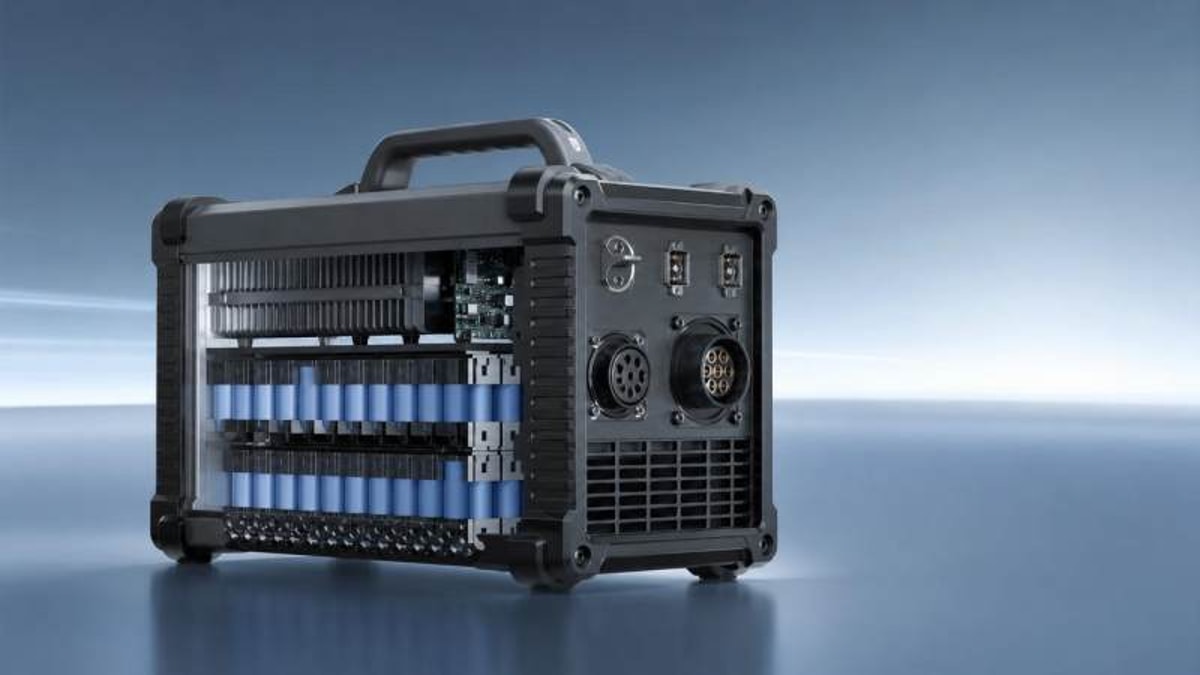
For technical evaluators, portable lithium battery storage design is shaped by more than size or runtime. Safety architecture, thermal control, energy density, cycle life, compliance requirements, and integration reliability all influence real-world performance. Understanding what impacts Lithium battery storage portable design most is essential for comparing solutions objectively and selecting systems that balance portability, durability, and engineering integrity.
When evaluators ask what affects portable lithium battery storage design most, the shortest accurate answer is this: the design is driven by trade-offs among safety, usable energy, transportability, and long-term reliability. In practice, no portable system can maximize all four at once. The best design is not the one with the highest advertised capacity, but the one whose architecture remains stable, compliant, and predictable under realistic operating and transport conditions.
For teams involved in technical assessment, this means moving beyond brochure-level specifications. A portable battery pack may look competitive on watt-hours per kilogram, yet fail under thermal stress, degrade rapidly in partial-state-of-charge use, or create avoidable integration risk because its battery management system, enclosure, connectors, and certification pathway were not engineered as a coherent whole.
What technical evaluators should assess first in portable lithium battery storage design
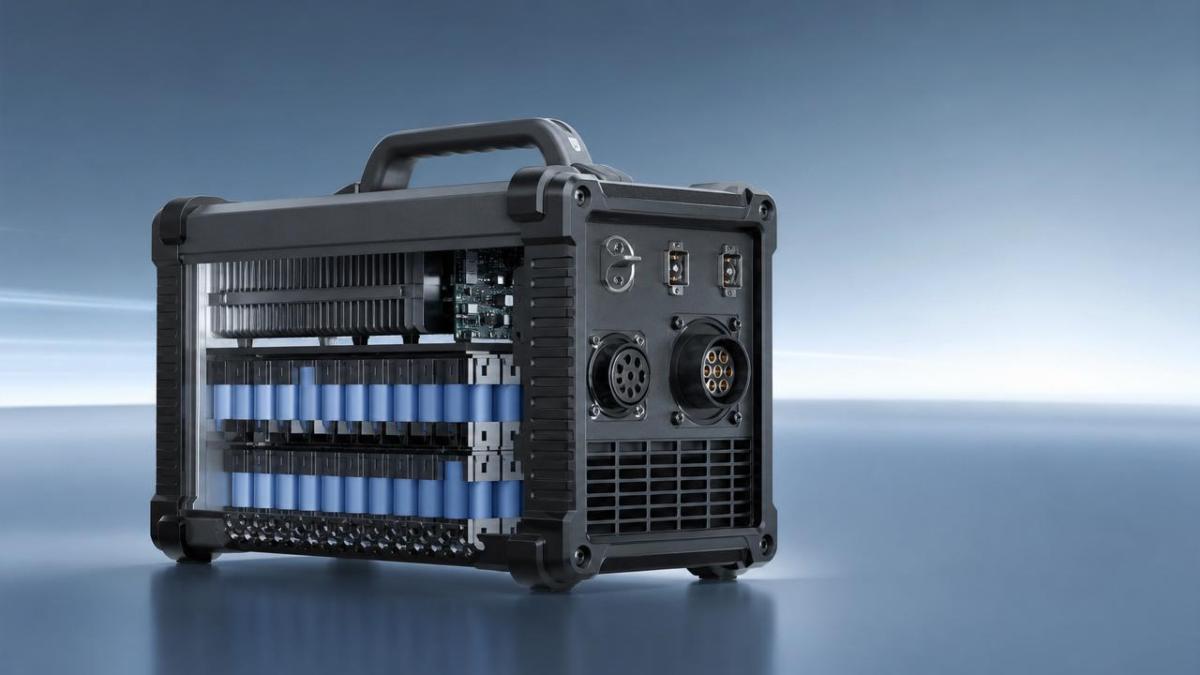
The most useful starting point is not capacity. It is architecture. Evaluators should first identify the intended use profile: intermittent backup, mobile field deployment, clinical device support, laboratory mobility, logistics operations, or consumer-adjacent transport. Each use case changes the acceptable limits for weight, enclosure type, ingress protection, thermal margins, charging behavior, and failure containment.
From there, the highest-impact design variables usually fall into six categories: cell chemistry selection, battery management system quality, thermal strategy, mechanical packaging, electrical integration, and compliance design. These factors determine whether a portable system performs consistently outside the test bench. They also reveal whether the product was engineered for credible service life or optimized mainly for initial sales appeal.
In evaluation terms, the key question is not “How much energy does it store?” but “How safely and consistently can it deliver usable energy across temperature ranges, duty cycles, charging patterns, and transport conditions?” That framing exposes the real strengths and weaknesses of Lithium battery storage portable design.
Why cell chemistry still shapes almost every design decision
Cell chemistry is often the deepest design lever because it influences energy density, thermal stability, cycle life, charging speed, weight, and enclosure demands. A portable system built around lithium iron phosphate, for example, typically offers better thermal stability and longer cycle life than one based on high-nickel chemistries, but it may require more volume and mass to deliver the same nominal energy.
For portable applications, that trade-off matters immediately. If the system must be carried frequently, mounted in constrained spaces, or shipped under strict transport conditions, designers may pursue higher energy density chemistries. But higher density can increase thermal sensitivity and place more burden on cooling pathways, monitoring logic, and protective circuitry. The apparent benefit in runtime may therefore come with hidden system complexity.
Technical evaluators should also examine whether the pack design is chemistry-appropriate. Some designs pair aggressive energy targets with minimal thermal separation, limited venting provisions, or generic battery management logic. That combination may look efficient on paper yet create unacceptable risk under mechanical shock, fast charging, or elevated ambient temperature. In other words, chemistry choice cannot be evaluated in isolation; it must be assessed with the protective architecture built around it.
Safety architecture matters more than peak specifications
In portable battery storage, safety is not one feature. It is a layered design philosophy. The strongest products usually combine cell-level protections, module-level sensing, pack-level isolation, fault detection, thermal barriers, current interruption devices, and robust enclosure design. If one layer fails, another limits escalation. This redundancy is what separates true engineering integrity from superficial spec optimization.
For evaluators, the battery management system is especially important. A credible BMS should do far more than report state of charge. It should monitor voltage imbalance, temperature distribution, overcurrent events, charge and discharge boundaries, and fault history. It should also communicate clearly with the host system and fail safely when abnormal conditions appear. Poor communication protocols, weak fault logging, or unclear shutdown behavior are major warning signs in portable deployments.
Another critical issue is propagation resistance. If a cell fails, can the design prevent or slow thermal spread to adjacent cells? Portable systems are frequently used in less controlled environments than stationary storage, so containment strategy becomes more important, not less. Evaluators should look for evidence of spacing, barrier materials, vent paths, and tested fault scenarios rather than relying on generic safety claims.
Thermal management is often the hidden determinant of real-world performance
Many portable battery systems underperform not because of poor nominal capacity, but because of inadequate heat management. Temperature affects charge acceptance, discharge efficiency, cycle degradation, and safety margin. A battery that delivers strong performance in room-temperature testing may lose consistency in field use if the enclosure traps heat, airflow is limited, or internal thermal gradients are poorly controlled.
Portable form factors amplify this challenge. Smaller enclosures, tighter component spacing, and lighter materials reduce thermal mass and can create localized hot spots. If the product supports high output power or rapid charging, the thermal burden grows further. The design team must then choose between passive cooling, active cooling, derating logic, or larger housing geometry. Each choice affects user experience, weight, cost, and reliability.
Technical evaluators should ask not only whether thermal management exists, but how it was validated. Were tests performed across charge states, ambient temperatures, and repeated duty cycles? Is temperature sensing distributed well enough to detect internal variation, or does the system depend on too few sensors? Are thermal limits conservative and transparent? These questions often reveal more than headline performance numbers.
Portable design is constrained by mechanical packaging and transport realities
Mechanical design strongly affects both reliability and usability. A portable battery system must withstand handling, vibration, shock, stacking, and sometimes outdoor exposure. The enclosure therefore plays a central role in drop resistance, ingress protection, flame behavior, connector retention, and service access. An elegant electrical design can still fail commercially if the housing cracks easily, traps moisture, or transfers impact forces poorly to the cell structure.
Weight distribution is another practical concern. Evaluators often focus on total mass, but carry ergonomics, center of gravity, handle reinforcement, and mounting interfaces matter just as much. A unit that is technically portable but awkward to lift or unstable in transport can create operational risk, especially in medical, laboratory, and field-service settings where safe movement matters.
Shipping and regulatory transport rules also influence packaging choices. Portable lithium systems may need to satisfy standards related to vibration, shock, short-circuit resistance, and altitude simulation. Designs that ignore transport compliance early can become expensive to certify later. For technical evaluators, this is a sign that portable battery storage design should be assessed as a full lifecycle system, not merely as an energy container.
Energy density is important, but usable energy is the better metric
One of the most common evaluation errors is to overvalue nominal watt-hour rating. In real applications, usable energy is what matters. That depends on discharge window, voltage stability, thermal derating, conversion losses, reserve margins enforced by the BMS, and aging behavior over time. A pack with higher nominal capacity may deliver less practical value than a better-controlled system with lower stated capacity but stronger voltage regulation and lower degradation.
Portable systems also face sharper trade-offs between energy density and durability. Designers pushing for lighter weight and longer runtime may narrow safety margins, increase internal stress, or rely on cells that degrade faster under repeated field cycling. For procurement or technical review teams, the right question is whether the design sustains acceptable usable energy after realistic cycle counts and storage conditions, not whether it posts the highest fresh-from-factory figure.
This is where independent benchmarking becomes valuable. Comparing watt-hours alone is misleading unless normalized by depth of discharge policy, ambient test conditions, cutoff thresholds, and cycle-aging methodology. Evaluators should insist on transparent test definitions before treating capacity claims as decision-grade data.
Cycle life, calendar life, and maintenance behavior drive total value
Portable lithium battery systems are often selected for flexibility, but that flexibility only has value if performance remains stable over time. Cycle life is important, yet calendar aging can be equally significant, especially in intermittent-use environments where units spend extended periods in storage, transport, or partial charge. The design must therefore manage both active use degradation and passive aging.
Several design factors affect this. Cell chemistry influences the baseline aging profile, but BMS charge limits, balancing quality, storage recommendations, enclosure temperature rise, and charger compatibility all contribute. A technically mature design usually shows evidence that these factors were considered together. For example, limiting the top-of-charge region slightly may improve life significantly, even if it reduces the marketed maximum runtime.
Maintenance strategy matters too. Can the unit be diagnosed easily? Are fault codes accessible? Is the battery replaceable at module level, or is the entire product disposable after one subsystem failure? For professional users and technical evaluators, maintainability is not a secondary concern. It directly affects lifecycle cost, downtime, and risk exposure.
Integration reliability is a major differentiator in professional environments
Portable battery storage rarely functions alone. It interacts with chargers, inverters, monitoring platforms, embedded devices, carts, instruments, or temporary backup systems. Integration quality therefore has a major influence on real-world value. Unstable communication, ambiguous connector pinouts, poor electromagnetic compatibility, or inconsistent voltage behavior can turn an otherwise capable battery into a deployment problem.
For technical evaluators in healthcare-adjacent or laboratory contexts, this issue is especially relevant. Sensitive devices may require stable output, predictable switchover behavior, low electrical noise, and traceable fault logging. A portable battery pack intended to support mobile medical workflows, analytical instrumentation, or connected field systems must show disciplined engineering around interface control, power conditioning, and operating state transparency.
In practical terms, evaluation should include connector durability, protocol interoperability, output regulation under load transients, grounding strategy, and isolation where required. These details rarely dominate marketing materials, but they often determine whether deployment is smooth or disruptive.
Compliance and documentation quality are part of the design, not an afterthought
For technical audiences, compliance should not be treated as a paperwork exercise. Good portable lithium battery design anticipates certification, transport requirements, safety testing, labeling, and traceability from the start. Products that pursue compliance late in development often reveal avoidable weaknesses such as unclear component pedigree, inconsistent test records, or enclosures that need redesign to pass abuse conditions.
Documentation quality is therefore a useful proxy for engineering maturity. Evaluators should look for clear electrical specifications, environmental limits, abuse test summaries, charging requirements, service guidelines, and version-controlled firmware or BMS documentation. If a supplier cannot explain how performance was validated, or if safety claims are broad but unsupported, risk increases regardless of the nominal design appeal.
In regulated or technically sensitive sectors, strong documentation shortens verification cycles and improves procurement confidence. It helps decision-makers separate genuinely engineered systems from products assembled around attractive but weakly substantiated claims.
How to judge Lithium battery storage portable design objectively
An effective evaluation framework should score portable battery systems across several weighted dimensions: safety architecture, thermal robustness, usable energy, cycle and calendar durability, mechanical resilience, integration compatibility, serviceability, and compliance readiness. Weighting should reflect the actual use case. A field-deployable unit may prioritize ruggedization and transport compliance, while a device-support application may prioritize electrical stability and fault transparency.
It is also wise to distinguish between declared performance and verified performance. Ask for test conditions, pass-fail criteria, sample size, and aging methodology. Review whether ratings were measured at beginning of life only or after stress exposure. Where possible, compare systems using normalized scenarios rather than vendor-specific headline claims. This reduces bias and supports better cross-supplier decisions.
Finally, evaluators should look for coherence. The best portable battery designs are internally consistent: the chemistry suits the use case, the thermal strategy suits the power profile, the enclosure suits the transport environment, and the documentation suits the compliance burden. Weak designs often show mismatch between these elements, such as high-output claims with minimal cooling margin or compact housings with insufficient service access.
Conclusion: the most important factor is not one feature, but design balance
What affects portable lithium battery storage design most? For technical evaluators, the decisive factor is the balance among safety, thermal control, usable energy, durability, portability, and integration reliability. No single metric can capture that balance. Capacity alone is too narrow, and weight alone is too simplistic.
The most credible systems are those designed as complete engineering platforms rather than as collections of attractive specifications. They manage risk through layered safety controls, preserve performance through disciplined thermal design, and deliver practical value through stable integration and documented compliance. That is the standard technical evaluators should apply when reviewing Lithium battery storage portable design.
In a market crowded with performance claims, objective assessment depends on asking the right questions: How does the system fail? How does it age? How is it validated? How well does it integrate? The answers to those questions reveal far more than a datasheet headline—and they are what ultimately determine whether a portable lithium storage solution is truly fit for purpose.
Recommended News
- 2026.05.06Global Methanol Electric Alliance Launches, Certifies Centrifugation Tech Power SolutionsDr. Hideo Tanaka (Imaging Systems Analyst)
- 2026.05.06IEC 60601-2-69:2026 Released: EMF Limits Tightened 30% for Physical Therapy DevicesSarah Jenkins (Laboratory Infrastructure Consultant)
- 2026.05.06FDA Finalizes AI SaMD Guidance, Opens Fast Track for Remote Monitoring DevicesLydia Vancini (Regulatory Compliance Lead)
The VitalSync Intelligence Brief
Receive daily deep-dives into MedTech innovations and regulatory shifts.