
What healthcare equipment needs the strictest vendor checks?
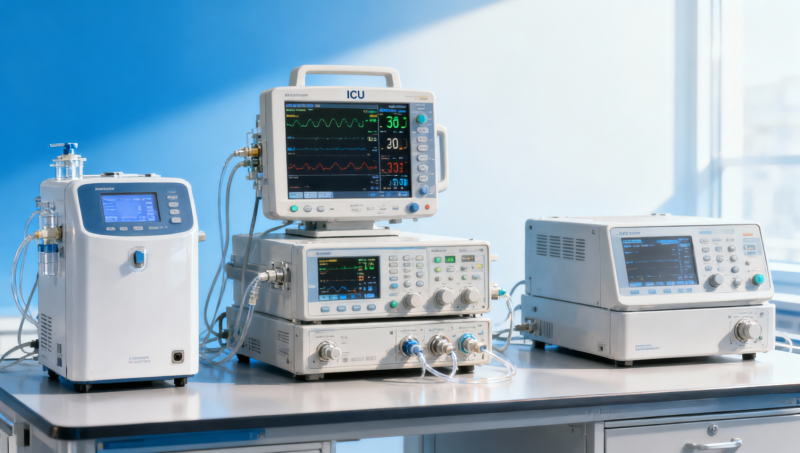
In healthcare equipment procurement, the strictest vendor checks are essential for products where patient safety, regulatory exposure, and long-term performance intersect. From an oxygen concentrator factory and ICU monitor supplier to an IVD analyzer distributor, smart wheelchair manufacturer, and ultrasound machine OEM factory, supply chain verification and medical technology verification have become critical in an era of digital integration, IVDR certification, and evidence-based healthcare engineering.
Which healthcare equipment categories require the strictest vendor checks first?
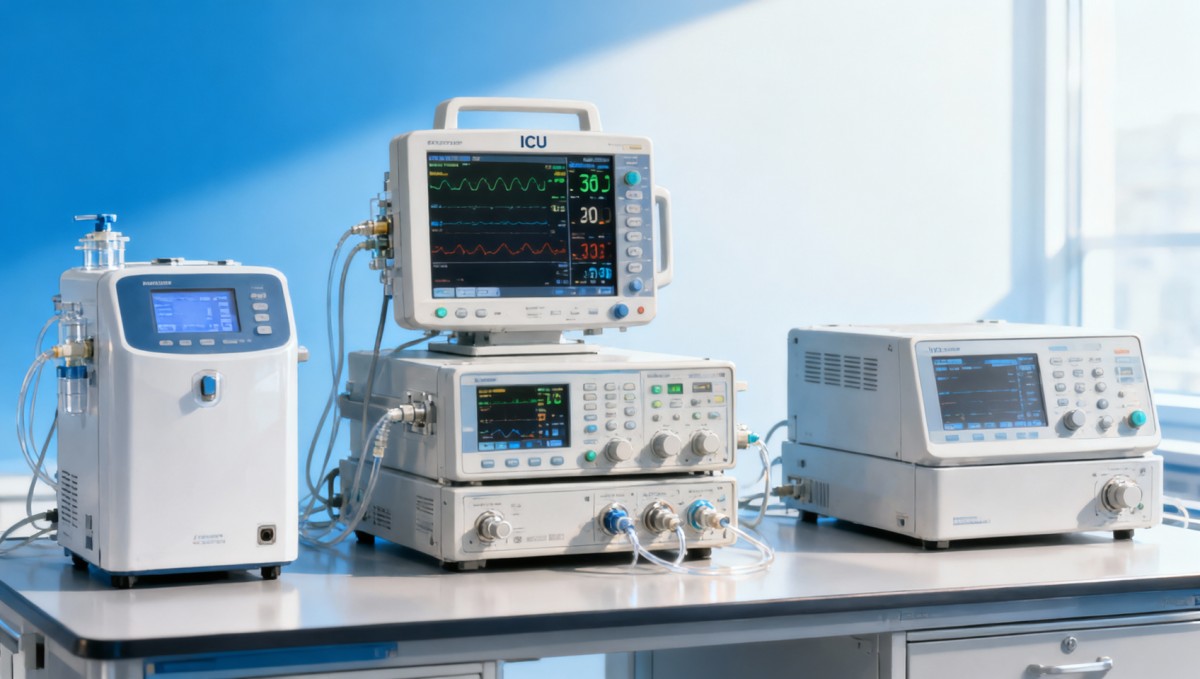
Not every device carries the same procurement risk. The strictest vendor checks usually apply to equipment that directly influences diagnosis, life support, therapeutic intervention, or continuous patient monitoring. In practice, procurement teams often place oxygen concentrators, ICU monitors, IVD analyzers, infusion systems, sterilization equipment, ultrasound platforms, and implant-adjacent manufacturing components into the highest-review tier because failure affects both safety and regulatory accountability.
For information researchers and decision-makers, the first mistake is treating all suppliers as interchangeable once a brochure lists similar features. A monitor that claims multiparameter capability may still differ widely in alarm reliability, signal stability, software traceability, spare parts continuity, and documented validation. In a value-based procurement model, those differences matter more over 3–7 years of operation than a lower initial quotation.
For operators and clinical users, vendor checks are strictest where uptime, calibration accuracy, and service response directly shape daily care. A smart wheelchair manufacturer may look less critical than an ICU monitor supplier at first glance, yet in rehabilitation and long-term care settings, failures in battery systems, control modules, braking response, or load stability can create persistent operational risk across every shift.
A practical way to classify risk is to sort equipment into 3 layers: life-support and acute-care devices, diagnostic and laboratory systems, and mobility or workflow devices with embedded electronics. The first layer usually requires the deepest audit, the second requires strong process and reagent compatibility review, and the third requires rigorous durability and post-market service checks.
High-scrutiny categories in healthcare equipment procurement
The following categories typically demand stricter vendor checks because they combine technical complexity with high downstream consequences:
- Life-support and respiratory equipment, such as oxygen concentrators and ventilatory support components, where flow stability, oxygen concentration consistency, and service continuity are fundamental.
- Critical-care monitoring systems, including ICU monitors, where alarm handling, waveform fidelity, sensor compatibility, and network integration affect bedside response in real time.
- IVD analyzers and laboratory instrumentation, where reagent traceability, calibration intervals, contamination control, and IVDR-related documentation shape diagnostic confidence.
- Imaging and ultrasound systems, where transducer quality, software version control, image consistency, and maintenance access influence clinical usability over repeated cycles.
- Smart mobility devices such as powered wheelchairs, where load-bearing range, battery cycle life, controller robustness, and field service logistics determine actual reliability.
This is exactly where VitalSync Metrics (VSM) adds value. Instead of relying on surface-level claims, VSM benchmarks technical integrity, manufacturing parameters, and long-term reliability indicators so procurement teams can separate acceptable vendors from high-risk vendors before contracts are signed.
What should procurement teams verify beyond brochures and certificates?
A certificate alone does not confirm manufacturing discipline. In high-risk healthcare equipment procurement, teams should verify at least 5 core dimensions: regulatory documentation, design and process control, performance validation, supply chain resilience, and after-sales service capability. If one dimension is weak, the vendor may still expose the buyer to delayed installation, inconsistent quality, or nonconformance during audits.
Regulatory review should include the intended market pathway rather than generic statements. For example, equipment aimed at the EU market may require MDR or IVDR-aligned documentation depending on the device category. Buyers should ask whether technical files, risk management records, labeling controls, and post-market surveillance processes are structured for the destination market, not just for domestic shipment.
Performance validation should be matched to the product type. An oxygen concentrator factory should demonstrate stable operating ranges and routine quality checks under realistic duty cycles. An ICU monitor supplier should explain alarm logic verification, accessory compatibility, and software update procedures. An IVD analyzer distributor should clarify calibration management, reagent matching, and preventive maintenance intervals, often every 6–12 months depending on workload and application.
Supply chain review is increasingly important because hidden component dependency creates major procurement risk. If one sensor board, compressor unit, transducer element, or imported reagent component has a lead time of 8–16 weeks, the vendor should disclose mitigation plans. Robust suppliers can explain second-source strategy, safety stock policy, and service parts availability over a typical 3–5 year support horizon.
Vendor check matrix for medical technology verification
The table below helps procurement teams compare what to check for different equipment types instead of applying one generic checklist to all healthcare equipment vendors.
This matrix shows why strict vendor checks must be product-specific. The right evaluation path for an ultrasound machine OEM factory is not identical to the path used for an IVD analyzer distributor. VSM helps convert these differences into measurable audit points, benchmark reports, and procurement-ready technical summaries.
A 4-step screening workflow before RFQ finalization
- Define the clinical or operational risk level of the equipment and classify it into high, medium, or lower verification depth.
- Request structured evidence: technical file summary, validation records, service plan, component sourcing overview, and destination-market compliance documents.
- Compare vendors using weighted criteria across 4–6 dimensions, not price alone.
- Escalate high-risk gaps to laboratory benchmarking, engineering review, or pilot-use verification before issuing purchase approval.
This workflow reduces the common procurement failure of awarding a contract too early, then discovering service limitations or documentation gaps during installation, registration, or clinical onboarding.
How do compliance, serviceability, and lifecycle risk change the purchasing decision?
Healthcare equipment vendor checks are no longer limited to initial product conformity. Buyers now need to judge whether a supplier can support the equipment through installation, validation, training, maintenance, software revision, and replacement parts over the expected service life. For many hospitals and labs, this horizon is commonly 3–8 years depending on device class, usage intensity, and capital planning policy.
Compliance risk can emerge even when the device works as intended. If the labeling set is incomplete, the traceability chain is weak, or post-market complaint handling is unclear, the buyer inherits unnecessary exposure. This is especially relevant for IVD systems, connected monitoring equipment, and devices entering regulated markets with MDR or IVDR expectations.
Serviceability is where many low-price offers fail. Operators care about whether a replacement sensor cable ships in 72 hours or 6 weeks. Procurement managers care about whether preventive maintenance can be completed on schedule every quarter or every 12 months. Decision-makers care about whether downtime will disrupt bed capacity, test throughput, or rehabilitation workflow.
Lifecycle risk is also linked to software and digital integration. Devices that connect to hospital information environments need clear version control, cybersecurity maintenance logic, and rollback procedures. A vendor that cannot explain change control in practical terms is difficult to trust, even if the feature list appears strong.
Why the lowest price often carries the highest hidden cost
The most expensive mistake in healthcare equipment procurement is confusing purchase price with total ownership cost. Hidden cost often appears in 5 areas: additional installation work, poor uptime, higher consumable dependency, delayed service, and shorter replacement cycles. A lower-priced vendor can become more expensive within 12–24 months if failures interrupt care delivery or laboratory throughput.
This is particularly true for complex categories such as ICU monitoring, diagnostic analyzers, and ultrasound systems. If accessories are proprietary, service manuals are restricted, or software updates require slow approval chains, the buyer may lose flexibility and face longer downtime during routine events.
VSM’s engineering-centered approach helps teams look past sales positioning. By converting manufacturing and performance variables into standardized comparison criteria, procurement leaders can judge cost against evidence rather than presentation quality.
The next comparison table can be used during internal review meetings when teams need to prioritize vendor checks by business impact, not only by device category.
Used correctly, this comparison framework helps teams assign deeper checks where lifecycle risk is highest. It also makes internal alignment easier between technical evaluators, end users, purchasing officers, and executive approvers.
How should different stakeholders evaluate the same vendor differently?
One reason healthcare equipment purchases stall is that each stakeholder asks a different question. Researchers want evidence. Operators want usability and uptime. Procurement wants delivery predictability and documentation. Executives want strategic risk reduction. A strong vendor is one that can satisfy all 4 layers with consistent answers rather than separate sales narratives.
For information researchers, the focus should be on traceable claims. Ask for test methods, performance boundaries, maintenance intervals, compatibility notes, and market-specific compliance scope. When claims are vague, VSM-style benchmarking is useful because it reframes the discussion around measurable engineering indicators instead of marketing language.
For users and operators, ask what happens on a difficult day, not on a perfect demo day. How long can the device operate continuously? How often does calibration or preventive maintenance occur? Is training delivered in 1 session or across 2–3 stages? What is the recovery path if a key module fails during a shift?
For procurement personnel and decision-makers, the key issue is comparability. If one quotation includes installation, onboarding, 12 months of service support, and a documented spare parts list, while another excludes those items, the cheaper option is not truly cheaper. Structured vendor checks create a common basis for approval.
Stakeholder-specific checklist before final selection
- Researchers: verify technical evidence, intended use boundaries, validation method, and regulatory pathway.
- Operators: verify setup complexity, workflow fit, preventive maintenance frequency, and troubleshooting support.
- Procurement teams: verify Incoterms scope, lead time range, documentation package, warranty terms, and spare parts commitments.
- Executives: verify lifecycle cost exposure, supply continuity, reputational risk, and service escalation route.
Common mistakes that weaken vendor verification
A frequent error is overvaluing a smooth presentation and undervaluing technical transparency. Another is reviewing only the product and not the service chain behind it. In categories like oxygen concentrator supply, ICU monitoring, or laboratory analyzers, the real procurement risk often sits in maintenance access, consumable dependency, software control, or hidden supply bottlenecks.
Another mistake is using a single checklist for all vendors. A smart wheelchair manufacturer should be assessed for battery management, loading profile, terrain use case, and controller durability. An ultrasound machine OEM factory requires a different emphasis: probe sourcing, image consistency, electrical safety documentation, and training pathway. Strict vendor checks are effective only when they are tailored.
The final mistake is delaying technical benchmarking until after commercial negotiation. By that point, organizational pressure often favors the shortlisted vendor. Independent verification earlier in the process improves negotiation leverage and reduces reversal costs.
FAQ: what do buyers most often ask about strict vendor checks?
How do I know if a healthcare device needs a deep vendor audit or a standard review?
Start with risk concentration. If the product affects diagnosis, life support, medication delivery, intensive monitoring, or regulated laboratory output, it usually needs a deeper audit. A practical threshold is to ask whether failure could stop care, delay a clinical decision, or trigger regulatory review. If yes, move beyond catalog comparison and request evidence across at least 4 dimensions: technical validation, compliance readiness, service support, and supply chain continuity.
What documents should I request from an ICU monitor supplier or IVD analyzer distributor?
Request a structured package rather than random files: product specifications, intended use statement, maintenance schedule, accessory compatibility information, market-specific regulatory documents, software or firmware control summary where relevant, and a service support outline. For IVD systems, also ask how calibration records, reagent lots, and result traceability are controlled. For monitors, ask how alarm functions and updates are validated.
How long should vendor verification take in a realistic procurement cycle?
For lower-risk equipment, a structured review may take 7–15 business days. For higher-risk categories with technical benchmarking, factory review, or regulatory clarification, 2–4 weeks is more realistic. The timeline depends on document readiness, cross-border compliance complexity, and whether the supplier can answer engineering questions directly rather than routing everything through sales.
Is a CE-related claim or general conformity statement enough for supplier approval?
No. A conformity statement may be relevant, but it does not replace product-specific technical assessment, destination-market fit review, or service capability evaluation. Buyers should confirm whether the documentation actually applies to the offered model, current software version, target geography, and intended clinical use. Strict vendor checks focus on validity and applicability, not just document presence.
Why choose VSM when procurement risk is high?
When healthcare equipment decisions involve patient safety, compliance exposure, and long-term operational cost, the key question is not who markets best. It is who can be verified most clearly. VitalSync Metrics (VSM) supports global procurement directors, MedTech startups, laboratory planners, and healthcare decision-makers with independent, data-driven benchmarking that turns technical uncertainty into actionable procurement insight.
VSM is especially useful when you need to compare an oxygen concentrator factory, ICU monitor supplier, IVD analyzer distributor, smart wheelchair manufacturer, or ultrasound machine OEM factory using a common engineering logic. Instead of relying on broad claims, we help assess measurable performance signals, manufacturing integrity, regulatory readiness, and lifecycle service risk.
You can contact VSM for practical support on parameter confirmation, supplier screening depth, technical benchmarking scope, delivery-cycle discussion, sample review strategy, destination-market compliance questions, and quotation comparison. If your team is deciding between 2–3 vendors, preparing an RFQ, or facing uncertainty around MDR/IVDR-related expectations, VSM can help structure the decision before risk becomes cost.
The strongest purchasing decisions are made when clinical reality, engineering evidence, and procurement discipline align. That is the gap VSM is built to close.
- EMS
- ESS
- PPE
- patient monitoring
- wheelchairs
- sterilization equipment
- oxygen concentrators
- EdTech
- procurement
- cybersecurity
- AR
- manufacturing components
- supply chain
- Cement
- benchmarking
- value-based procurement
- medical technology
- technical integrity
- technical benchmarking
- digital integration
- supply chain
- long-term reliability
- manufacturing parameters
- data-driven
- healthcare engineering
- IVDR certification
- healthcare equipment
- medical technology verification
- supply chain verification
- ultrasound machine oem factory
- icu monitor supplier
- ivd analyzer distributor
- oxygen concentrator factory
- smart wheelchair manufacturer
Recommended News
- 2026.04.17Hospital equipment standards shaping modern rehab devicesSarah Jenkins (Laboratory Infrastructure Consultant)
- 2026.04.17Laboratory equipment validation errors in sample storageDr. Hideo Tanaka (Imaging Systems Analyst)
- 2026.04.17Medical equipment certification delays in remote monitoringLydia Vancini (Regulatory Compliance Lead)
The VitalSync Intelligence Brief
Receive daily deep-dives into MedTech innovations and regulatory shifts.