
When machinery parts exports fail, documentation is often the reason
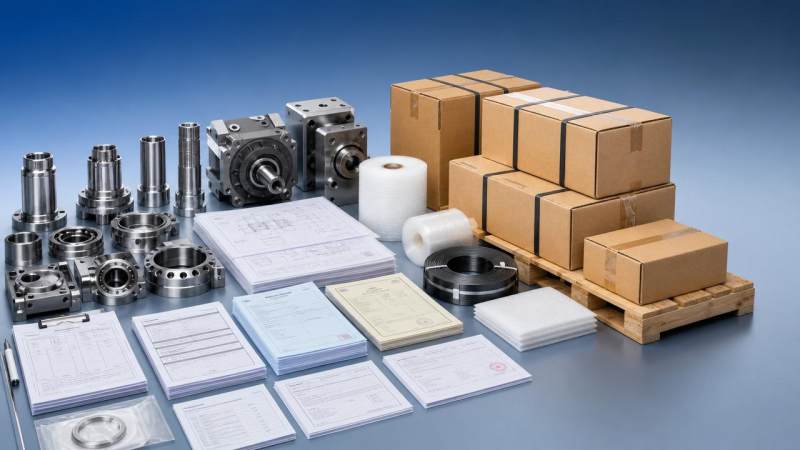
When cross-border shipments break down, the root cause is often not quality, but paperwork. For every Industrial & Manufacturing machinery parts exporter, incomplete specifications, inconsistent compliance files, or poorly aligned technical documents can delay approvals, trigger disputes, and damage project timelines. In complex industrial supply chains, documentation is not an administrative afterthought. It is the proof layer that connects engineering intent, customs clearance, regulatory conformity, and installation success.
This matters even more where machinery components intersect with regulated environments such as healthcare infrastructure, laboratory systems, sterile processing equipment, packaging lines, and precision mechanical assemblies. In these settings, technical truth must be documented, traceable, and audit-ready. That is why organizations such as VitalSync Metrics (VSM), with a focus on engineering-grade verification and standardized technical benchmarking, reflect a broader market demand: buyers no longer rely on claims alone. They expect documented evidence that parts, materials, tolerances, and compliance statements are accurate, consistent, and usable across borders.
Why documentation determines export success
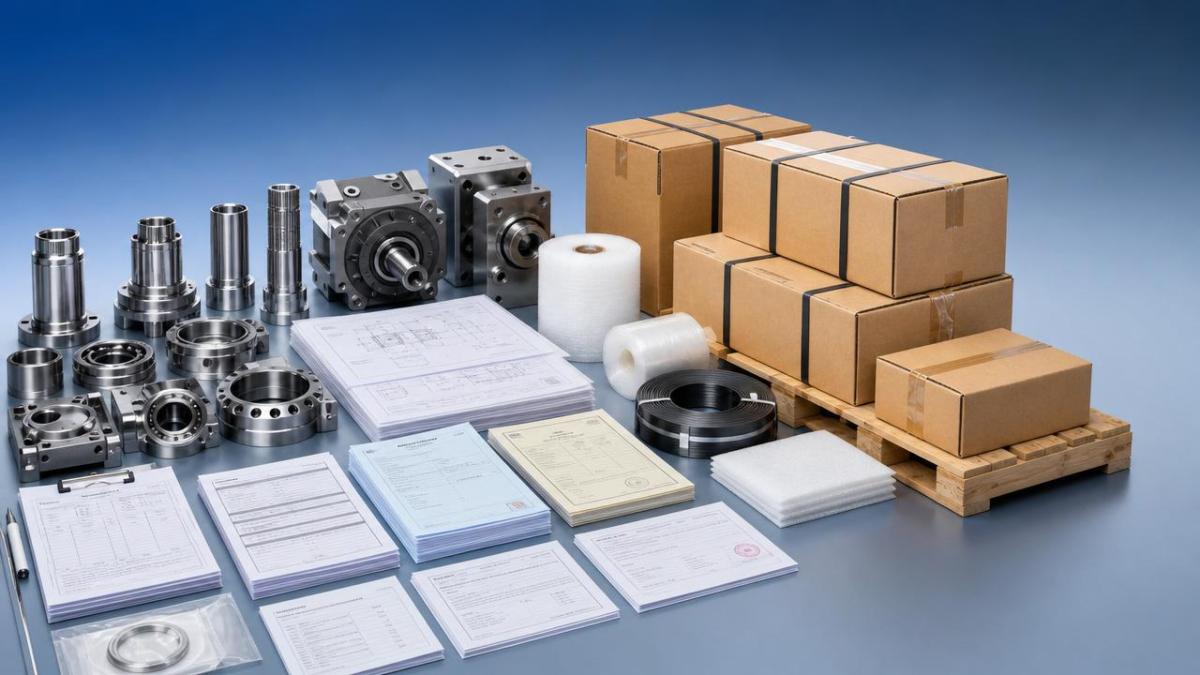
A shipment can leave the factory on time and still fail at the destination if its documents do not match the physical product, the purchase terms, or the receiving country’s expectations. For an Industrial & Manufacturing machinery parts exporter, documentation controls how customs officers classify goods, how inspectors verify conformity, how installers confirm fit, and how finance teams approve final acceptance.
The most costly failures usually happen in the gaps between teams: engineering updates a drawing revision, sales sends an older specification sheet, logistics uses a generic description, and quality attaches a certificate that does not reference the shipped batch. None of these errors may seem dramatic alone, but together they create doubt. In export transactions, doubt causes holds, clarification requests, re-inspection, demurrage fees, and contractual friction.
A checklist-based approach reduces this risk because it forces consistency before shipment. It also helps convert tacit knowledge into a repeatable process, which is essential for high-mix machinery parts, custom assemblies, and projects involving technical validation.
The essential documents to verify before any shipment
The following points create a practical pre-export control layer for any Industrial & Manufacturing machinery parts exporter. Each item should be reviewed against the purchase order, final drawing pack, and destination-country requirements.
- Confirm the commercial invoice uses the exact product name, part number, quantity, Incoterms, and declared value that appear on the order and packing records.
- Check the packing list matches carton count, net and gross weight, dimensions, serial numbers, and pallet structure without any unexplained differences.
- Verify technical drawings show the latest revision level, approved tolerances, material grade, surface treatment, and any customer-specific notes required for acceptance.
- Ensure certificates of conformity reference the shipped lot, inspection date, governing standard, and measurable criteria rather than generic quality statements.
- Review material certificates for full traceability, including heat number, alloy designation, supplier identity, and correlation to the final machined part.
- Validate customs classification codes and product descriptions so they reflect actual function, construction, and end use in the destination market.
- Confirm country-of-origin statements are consistent across invoice, certificate, labeling, and supplier declarations to avoid clearance contradictions.
- Attach test reports that clearly show method, instrument, pass criteria, and results for dimensions, pressure, fatigue, coating, or performance features.
- Check labeling files for serial number format, safety marks, storage conditions, and language requirements when the component enters regulated facilities.
- Make sure installation, handling, and maintenance instructions are included when improper setup could invalidate warranty or create safety exposure.
- Review document version control so every file in the shipment package reflects the same revision baseline and release approval.
- Create a final document index listing every file, issue date, revision, and responsible approver for quick verification during audits or disputes.
Where Industrial & Manufacturing machinery parts exporter documentation often fails
Specification mismatch
A common issue is that one document describes the part generically while another defines it with engineering precision. For example, a machined stainless component may be listed on the invoice as a “metal fitting,” but the drawing identifies a specific grade, finish, and sealing geometry. That gap invites customs questions and customer rejection because the commercial description no longer supports the technical reality.
Traceability gaps
Traceability becomes critical when machinery parts are installed in hygienic, laboratory, or medically adjacent systems. If the material certificate cannot be linked to the actual batch or serial number shipped, the file loses evidentiary value. For an Industrial & Manufacturing machinery parts exporter, this can turn a routine receipt into a nonconformance investigation.
Outdated revisions
Many export disputes are caused not by wrong parts, but by correct parts supported by outdated documents. A superseded drawing, withdrawn standard reference, or old declaration format can delay approval even when the product is physically acceptable. Revision control must therefore cover both product and paperwork.
Compliance language without evidence
Broad claims such as “meets international standards” are weak if no specific standard, test method, or report is attached. In sectors influenced by MDR, IVDR, facility validation, or quality-system audits, unsupported language creates risk. Evidence-based files are stronger than promotional claims.
How documentation needs change by application
General industrial equipment and replacement parts
For standard gear housings, shafts, couplings, fasteners, and machined replacements, the main control points are part identity, dimensions, quantity accuracy, origin, and customs classification. The documentation must allow the receiving site to confirm interchangeability without opening a technical dispute.
Here, an Industrial & Manufacturing machinery parts exporter should prioritize alignment among invoice description, part number, drawing revision, and packing records. These four fields often determine whether the shipment clears quickly or stalls.
Precision components for healthcare and laboratory infrastructure
When parts support diagnostic devices, clean utility systems, controlled environments, or automation used in life sciences, the documentation threshold rises. Material composition, biocompatibility-related statements where relevant, cleaning status, surface finish, calibration references, and validation support may all become necessary.
This is where the VSM perspective is especially relevant: technical integrity must be translated into standardized, comparable evidence. Even if the exported item is only one component in a larger system, weak documentation can undermine confidence in the whole installation.
Custom assemblies and project-based exports
Project shipments often contain mixed items, staged deliveries, and customer-specific acceptance criteria. The risk is less about one missing paper and more about fragmented information. The document package should include a master index, drawing register, inspection summary, deviation approvals if any, and a clear line between approved changes and pending issues.
Overlooked risks that create expensive delays
Generic product descriptions: Terms like “machine part” or “steel component” may be too vague for customs, warranty review, or installation teams. Specificity reduces reclassification risk and speeds acceptance.
Unlinked test reports: A valid test report is not enough if it does not identify the batch, serial range, or exact part revision shipped. Evidence must map to the delivered goods.
Missing unit consistency: Mixed use of mm and inches, bar and psi, or different temperature scales can create confusion in receiving inspection and installation. Standardize units across the entire file set.
Inconsistent names across systems: ERP, drawing title block, invoice, and label data often use slightly different naming conventions. For an Industrial & Manufacturing machinery parts exporter, that inconsistency is a hidden source of avoidable questions.
No document ownership: When nobody owns the final export file, missing signatures, old revisions, and incomplete attachments become much more likely. Accountability improves document quality.
A practical execution approach that improves reliability
Start by building a single export documentation matrix for each product family. This matrix should define mandatory files, acceptable formats, source owners, approval flow, and revision rules. Instead of recreating expectations for every shipment, the matrix becomes the baseline reference.
Next, create a pre-dispatch review gate that compares three things side by side: commercial data, technical data, and compliance data. If the invoice, drawing pack, and quality evidence do not align, the shipment should not be released. This one step prevents many downstream escalations.
It also helps to maintain customer- or country-specific annexes. Some destinations require legalized documents, some require origin declarations in a specific format, and some require extra installation or safety records. A mature Industrial & Manufacturing machinery parts exporter treats these variations as controlled requirements, not last-minute exceptions.
Finally, convert recurring documentation failures into measurable KPIs: customs holds by cause, document revision errors, missing certificates, and acceptance delays. Data makes process improvement objective. This evidence-driven mindset aligns closely with VSM’s broader principle that technical credibility comes from measurable, standardized proof.
Final takeaway and next steps
When machinery parts exports fail, documentation is often the reason because documents are the operational bridge between design, compliance, logistics, and field use. A capable Industrial & Manufacturing machinery parts exporter does not treat paperwork as a shipping formality. It treats documentation as part of product quality itself.
The most effective next step is simple: audit one recent shipment file from invoice to test report and look for mismatches, vague wording, unlinked evidence, and revision gaps. Then formalize the findings into a repeatable export checklist. In cross-border industrial trade, reliable documentation is not just support material. It is what allows engineering truth to travel safely from one market to another.
Recommended News
- 2026.05.09GMEA Unveils First Green Certifications for Methanol Fuel CellsDr. Hideo Tanaka (Imaging Systems Analyst)
- 2026.05.09IEC Publishes IEC 60601-2-57:2026 for Ultrasound MetricsLydia Vancini (Regulatory Compliance Lead)
- 2026.05.09CMEF Shenzhen 2026 Closes with $1.27B Robotics DealsDr. Alistair Thorne (Senior Biomedical Engineer)
The VitalSync Intelligence Brief
Receive daily deep-dives into MedTech innovations and regulatory shifts.