
Why machinery parts exporters vary so much in lead time
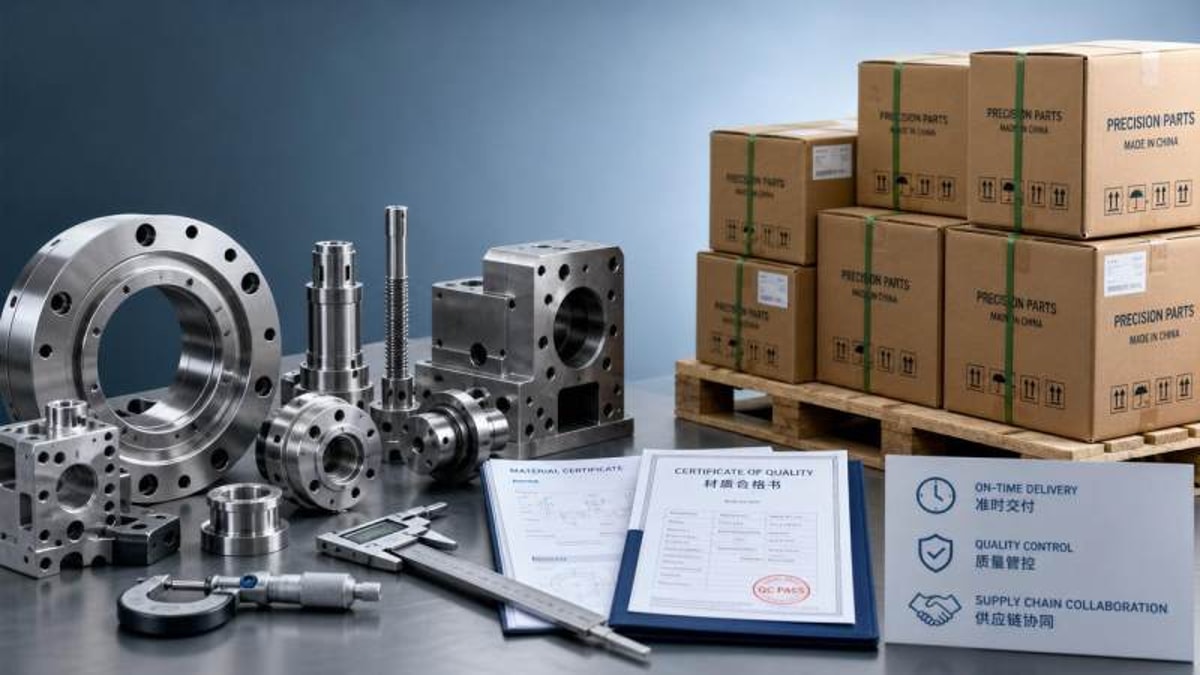
Lead times can differ dramatically from one Industrial & Manufacturing machinery parts exporter to another, and those gaps often signal more than simple production capacity. For business evaluators, the real drivers usually lie in sourcing discipline, process control, quality standards, and supply chain transparency. Understanding these factors helps buyers separate routine delays from structural risk and make procurement decisions with greater confidence.
Why scenario-based evaluation matters before comparing exporter lead times
When procurement teams review quotes from an Industrial & Manufacturing machinery parts exporter, the first instinct is often to compare price, promised ship date, and basic specifications. That shortcut is risky. A short lead time may reflect strong production planning, but it may also hide weak inspection depth, unstable subcontracting, or incomplete traceability. A longer lead time may indicate congestion, yet in some cases it reflects disciplined validation, tooling preparation, or controlled material sourcing.
For business evaluators, the better question is not simply, “Who is faster?” It is, “Faster for which scenario, under what quality threshold, and with what execution risk?” This is especially important when parts are tied to regulated equipment, precision assemblies, or after-sales service commitments. Organizations influenced by engineering-based assessment models, such as those promoted by VitalSync Metrics, increasingly treat delivery promises as a measurable capability rather than a sales statement.
Different applications create different expectations. A replacement bearing for routine maintenance, a machined housing for a product launch, and a high-tolerance component for validation testing do not belong in the same lead-time conversation. The exporter that looks ideal in one use case may be unsuitable in another.
Where lead-time differences usually show up in real business scenarios
Lead-time variation becomes most visible when buyers move beyond catalog parts and into semi-custom, tolerance-sensitive, compliance-linked, or project-driven orders. In practice, an Industrial & Manufacturing machinery parts exporter may perform well in one of the following scenarios and struggle in another:
- Emergency spare-part replenishment for ongoing operations
- Prototype or pilot production for engineering teams
- Volume ramp-up after product approval or commercial launch
- Multi-country procurement requiring documentation and shipment coordination
- High-specification parts requiring certification, traceability, or special materials
Each scenario changes the practical meaning of lead time. A supplier that can ship quickly from stock may not be able to validate raw material origin. A factory with strong machining capacity may still lose days in final inspection, export paperwork, or heat-treatment outsourcing. For evaluators, lead time should be interpreted as a chain of events, not a single date on a quotation.
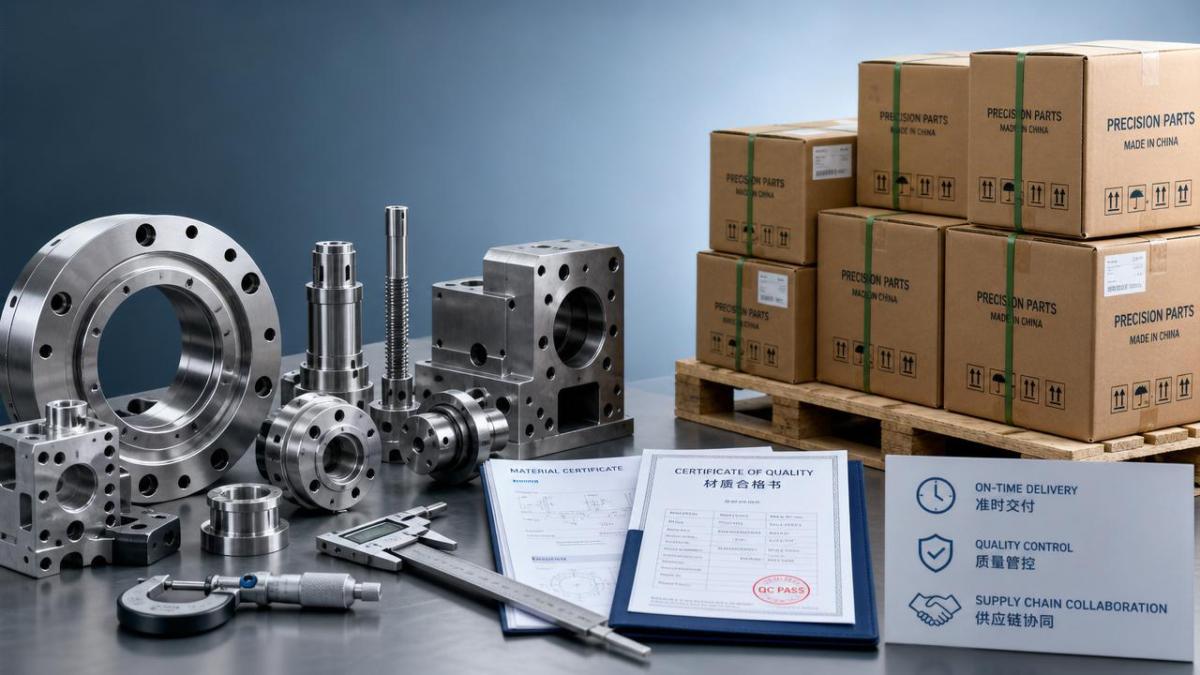
Scenario comparison: the same exporter may not fit every requirement equally well
The table below helps business evaluators compare common procurement situations and identify what should be checked behind a promised schedule from an Industrial & Manufacturing machinery parts exporter.
Scenario 1: urgent maintenance needs speed, but not at the cost of part integrity
In maintenance-driven buying, an Industrial & Manufacturing machinery parts exporter is often judged by how quickly it can send a replacement. That is reasonable, but speed alone can be misleading. Many urgent orders fail not because the supplier produced slowly, but because the available part was from an older drawing revision, lacked dimensional verification, or was packed without adequate corrosion protection.
For this scenario, evaluators should focus on stocked inventory discipline, ERP visibility, barcode or lot control, and warehouse handling accuracy. Ask whether the exporter can provide same-day confirmation with photos, traceable labels, and packing details. If the answer is vague, the short lead time may be a sales promise rather than an operational fact.
A practical indicator is whether the exporter separates “ready to ship” stock from “can be produced quickly.” Those are completely different conditions. Reliable exporters make the distinction clearly.
Scenario 2: prototype and pilot projects need communication speed more than raw factory speed
In early-stage product development, business evaluators often compare multiple exporters and become attracted to the one with the shortest estimated production window. However, for prototype work, the real bottleneck is usually not machining time. It is technical clarification. If the Industrial & Manufacturing machinery parts exporter cannot resolve tolerances, material substitutions, surface treatment limits, or assembly interfaces quickly, the nominal lead time becomes meaningless.
This is where engineering responsiveness matters. Exporters with strong application support may quote a longer schedule because they include drawing review, sample approval, and process validation. That extra time can reduce redesign risk. By contrast, exporters that quote immediately without asking technical questions may be underestimating complexity or shifting risk to the buyer.
For prototype scenarios, evaluators should check how many questions the supplier raises before confirming lead time, whether tolerance stacks are reviewed, and whether first-article reporting is built into the plan. Better technical friction at the start often means fewer delivery surprises later.
Scenario 3: production ramp-up exposes hidden weaknesses in exporter capacity planning
A common procurement mistake is assuming that if an exporter delivered 50 parts successfully, it can deliver 5,000 with the same timing discipline. In scaled procurement, lead-time variation often comes from queue management, subcontractor dependence, tooling wear, and inspection throughput. An Industrial & Manufacturing machinery parts exporter that performs well in sample quantities may struggle when order frequency, lot size, or shipment complexity increases.
This scenario requires buyers to look deeper into production loading. Does the exporter reserve capacity for repeat programs? Does it rely on external heat treatment, coating, or grinding partners with unstable availability? Can its quality team process larger inspection volumes without extending final release time? If not, quoted lead times may drift after the first few shipments.
Evaluators should also compare lead time consistency, not just average lead time. A supplier with a 30-day standard deviation problem is often riskier than one with a slightly longer but predictable schedule.
Scenario 4: compliance-sensitive applications demand documentation-ready delivery
For buyers operating in technically sensitive sectors, lead time includes far more than physical manufacturing. Material certificates, inspection records, batch traceability, and change control can all determine whether parts are usable on arrival. This is particularly relevant where procurement decisions are influenced by validation principles similar to MDR/IVDR-style discipline, even if the machinery itself is not a medical device.
In this context, an Industrial & Manufacturing machinery parts exporter with formal document control may appear slower, but often delivers lower lifecycle risk. Exporters without controlled paperwork may ship earlier yet create internal approval delays for the buyer. From a business evaluation standpoint, the part is not truly delivered until it is accepted into the buyer’s quality or operational system.
A useful check is whether the exporter can define lead time in stages: material readiness, machining completion, inspection release, document package completion, and shipment departure. The more structured the answer, the more credible the promise.
What really causes one exporter to be faster than another
Across scenarios, lead-time differences usually come from a handful of operational realities:
- Raw material sourcing depth and approved supplier networks
- In-house versus outsourced special processes
- Scheduling maturity and finite capacity planning
- Inspection bottlenecks and release discipline
- Change management for drawings and revisions
- Export logistics capability and document accuracy
A capable Industrial & Manufacturing machinery parts exporter usually does not win by being universally fast. It wins by being structurally clear about what can be shipped quickly, what needs validation, and where risk enters the schedule. Business evaluators should reward transparency, because transparent lead times are easier to manage than optimistic ones.
Common misjudgments buyers make when reviewing lead times
Several avoidable mistakes lead to poor supplier selection. First, buyers often compare calendar days without aligning technical scope. If one exporter includes coating, inspection, and export packing while another excludes them, the numbers are not comparable. Second, teams may treat a quotation as proof of capacity, even though no slot has been reserved. Third, they may ignore how much the schedule depends on one subcontractor or one raw material source.
Another frequent error is failing to distinguish commercial responsiveness from operational responsiveness. A fast reply from sales does not mean a fast factory. A mature Industrial & Manufacturing machinery parts exporter should be able to show routing logic, process sequence, and milestone ownership, not just promise an attractive date.
How business evaluators can match exporter lead time to their own scenario
A practical assessment framework begins with use-case clarity. Define whether the order is for emergency continuity, pilot testing, scaled production, or compliance-linked deployment. Then evaluate the exporter against the scenario rather than against a generic market average. Ask for lead-time breakdowns, evidence of bottlenecks, and examples from similar orders. If possible, request on-time delivery data by order type instead of a single headline metric.
For organizations influenced by data-led sourcing methods, this approach aligns with a broader principle: measurable reliability matters more than promotional claims. The right Industrial & Manufacturing machinery parts exporter is the one whose timing logic fits your operational consequence of delay. If downtime is expensive, stock discipline matters most. If approval risk is high, documentation readiness matters most. If product launch timing is critical, engineering coordination and change control become decisive.
FAQ for evaluating Industrial & Manufacturing machinery parts exporter lead times
Is a shorter quoted lead time always a competitive advantage?
No. A shorter quote from an Industrial & Manufacturing machinery parts exporter is only valuable if it includes the same technical scope, inspection level, and shipping readiness as competing offers.
What is the best proof that an exporter can really meet its promise?
Look for segmented lead-time data, similar case history, material availability evidence, and process-stage visibility. Reliable exporters can explain where time is spent and where schedule risk remains.
When should buyers be cautious about very fast offers?
Be cautious when drawings are complex, certifications are required, special processes are outsourced, or shipment documentation is critical. In these cases, unrealistically fast promises often indicate hidden assumptions.
Final decision guidance
Lead-time variation among exporters is not random. It reflects operating model choices, control depth, supplier network maturity, and how honestly a company translates production reality into a commercial commitment. For business evaluators, the smartest path is to judge every Industrial & Manufacturing machinery parts exporter through the lens of the actual application scenario. Once the scenario is clear, the “right” lead time becomes easier to interpret, compare, and negotiate.
Before making a final sourcing decision, align internal stakeholders on the consequence of delay, the minimum quality threshold, and the documentation needed for release. Then ask exporters to support that exact scenario with evidence. That step turns lead time from a vague promise into a decision-grade metric.
Recommended News
- 2026.05.07GMEA’s First Green Certification for Methanol Fuel Cells Backed by UNEPDr. Hideo Tanaka (Imaging Systems Analyst)
- 2026.05.07IEC 60601-2-57:2026 Raises Ultrasound Metrics Laser Safety to Class 1MLydia Vancini (Regulatory Compliance Lead)
- 2026.05.07CMEF 2026 Shenzhen: Robotics Zone Hits $1.27B in SigningsDr. Alistair Thorne (Senior Biomedical Engineer)
The VitalSync Intelligence Brief
Receive daily deep-dives into MedTech innovations and regulatory shifts.