
Medical device evaluation mistakes in smart orthotics
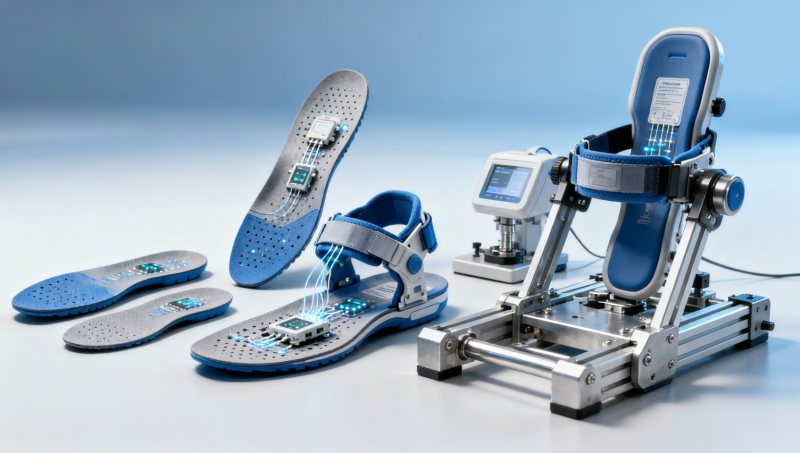
In smart orthotics, medical device evaluation mistakes can turn promising medical device innovation into costly risk. For hospital buyers, operators, and global decision-makers, accurate medical device testing, healthcare benchmarking, and medical technology evaluation are essential to verify medical device reliability, MDR IVDR alignment, and real-world performance. This article highlights the most common assessment errors and how stronger medical technology compliance supports safer, smarter procurement.
Smart orthotics now sit at the intersection of biomechanics, embedded sensing, software interpretation, and clinical workflow. That means evaluation can no longer stop at fit, comfort, or a supplier’s product brochure. Procurement teams need evidence across at least 4 dimensions: mechanical durability, sensor accuracy, software stability, and regulatory documentation. If any one of these is weak, a device that performs well in a demo may fail in daily rehabilitation, long-shift clinical use, or scaled deployment across multiple sites.
For organizations comparing wearable orthotic systems, pressure-sensing insoles, gait-monitoring braces, or connected post-operative supports, the key question is not whether the technology looks advanced. The question is whether performance remains stable after 3 months, 6 months, or 100,000 loading cycles. This is where independent benchmarking and disciplined medical technology evaluation become essential, especially for buyers working under value-based procurement pressure.
Why smart orthotics are frequently misjudged during evaluation
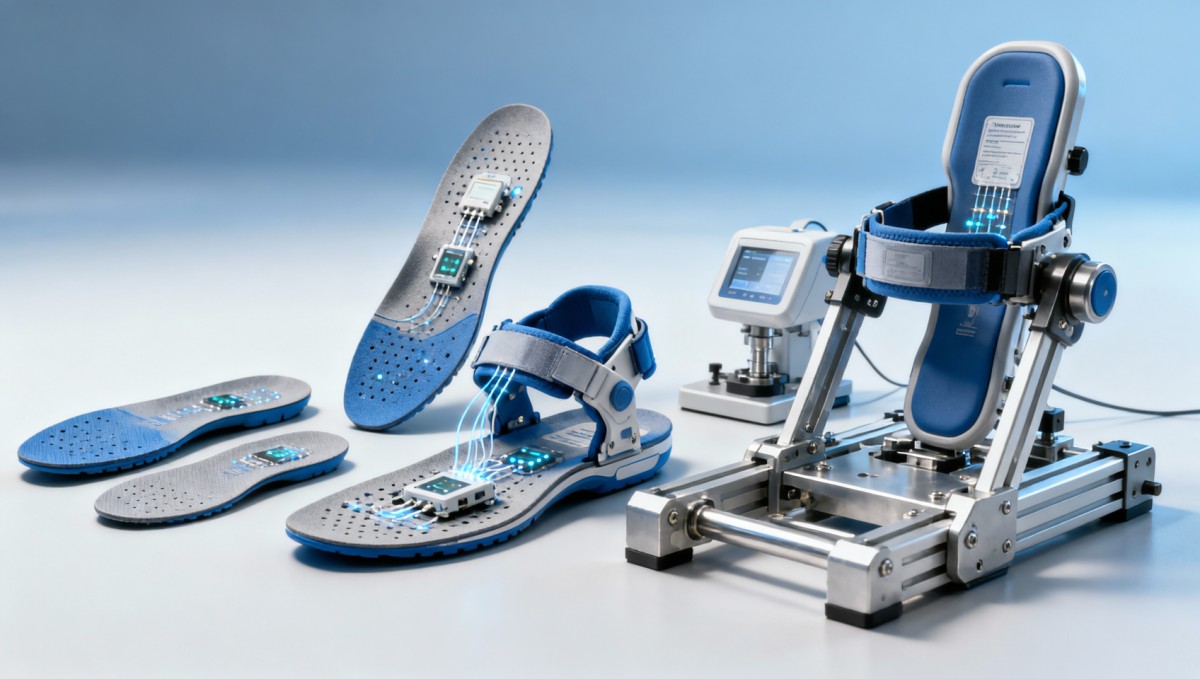
Smart orthotics are often presented as a single product category, but in practice they combine multiple subsystems. A connected ankle brace may include polymer structures, textile interfaces, inertial sensors, battery modules, Bluetooth transmission, and mobile analytics. Each layer introduces its own failure mode. A device can score well in one area, such as comfort during a 20-minute fitting, while still underperforming in signal consistency during an 8-hour wear period.
One common mistake is evaluating innovation claims without separating engineering claims from clinical claims. For example, “improved gait visibility” is not the same as validated stride parameter accuracy within a defined tolerance such as ±3% to ±5% against a reference system. Buyers and operators should request test boundaries, sample conditions, calibration frequency, and repeatability data before accepting broad performance statements.
Another problem is overreliance on controlled demonstrations. A device tested on 5 healthy users in a showroom does not represent post-stroke patients, diabetic foot monitoring programs, pediatric users, or bariatric rehabilitation pathways. Evaluation should account for at least 3 usage bands: low mobility, moderate mobility, and high variability gait. Without this, hospitals may procure a device that works in ideal settings but struggles in real clinical populations.
There is also a documentation gap. In smart orthotics, software updates, firmware versions, charging behavior, and data export formats can materially affect usability and compliance. Procurement teams sometimes focus on hardware samples yet overlook whether the supplier can maintain version traceability over 12–24 months. That is a major risk in environments where quality management and audit readiness matter.
The hidden complexity behind “wearable support” products
A smart orthotic is not just an orthopedic aid with electronics added on top. It is a medical device system. The structural frame must withstand repeated stress. The sensor layer must maintain signal stability despite sweat, movement, and micro-shifts in placement. The software layer must process data without introducing drift or misclassification. Any evaluation framework that ignores one of these layers creates blind spots.
Core variables that should always be checked
- Mechanical endurance under repeated load, ideally tracked over 50,000 to 100,000 cycles depending on intended use.
- Sensor repeatability after repositioning, because many wearable devices are removed and reapplied daily.
- Battery performance across full-shift use, commonly 8–12 hours for clinic and rehabilitation environments.
- Data continuity, packet loss rate, and export compatibility with hospital IT or research systems.
- Cleaning tolerance and material degradation after repeated sanitation procedures.
The table below shows how evaluation focus often differs from what long-term performance actually demands.
The key takeaway is simple: short demonstrations tend to reward surface-level usability, while real medical device evaluation must test what happens after repetition, cleaning, software updates, and patient variability. This is exactly where independent benchmarking adds value.
The most common medical device evaluation mistakes in smart orthotics
The first major mistake is treating smart orthotics like commodity support products rather than regulated medical technologies. A brace with integrated monitoring capability may affect therapy pathways, rehabilitation tracking, and patient risk management. As a result, evaluation should include device function, intended use boundaries, software dependency, and maintenance obligations. Procurement decisions based only on unit cost can miss downstream service burden and replacement risk.
The second mistake is failing to define test protocols before supplier comparison. If one vendor demonstrates a pressure-sensing insole over a 15-minute walk test and another provides data over 14 days of repeated use, those results are not directly comparable. A standardized protocol should specify sample size, activity type, environmental conditions, recalibration rules, and pass/fail thresholds. Even a basic 5-step protocol creates more reliable procurement evidence than ad hoc comparison.
A third mistake is ignoring operator workflow. Devices may appear technically strong yet place too much burden on technicians, physiotherapists, or nursing staff. If setup takes 12 minutes per patient instead of 3 minutes, adoption rates will fall. If charging, data syncing, and cleaning require multiple handoffs, the device may remain underused despite its engineering potential.
The fourth mistake is assuming compliance language equals compliance readiness. Mentioning MDR or IVDR alignment in sales material is not enough. Buyers should ask what evidence supports classification rationale, usability engineering, software version control, and risk management updates. For connected orthotics, cybersecurity and data integrity can also influence procurement acceptance, especially in multi-site hospital systems.
Five errors that repeatedly distort procurement decisions
- Using comfort as the primary selection metric without testing structural fatigue or sensor stability.
- Accepting supplier claims without a reference benchmark or independent lab comparison.
- Reviewing documentation only at the certificate level, not at the technical evidence level.
- Skipping workflow trials with actual operators across at least 2 or 3 care settings.
- Overlooking total lifecycle cost, including charging accessories, replacement liners, software support, and recalibration needs.
Typical risk signals during vendor review
If a supplier cannot clearly state measurement tolerance, expected battery runtime, sanitation compatibility, and update management process, the risk level rises quickly. The same is true when a product has strong visual design but weak traceability around test data. In high-accountability healthcare procurement, missing engineering detail is often a stronger warning sign than a high price.
The table below converts these common mistakes into practical review checkpoints for buyers, operators, and decision-makers.
When these checkpoints are applied early, procurement becomes less vulnerable to presentation bias and more anchored in technical integrity. That is particularly important for organizations sourcing at scale or under formal tender conditions.
What a stronger evaluation framework should include
A practical medical technology evaluation framework for smart orthotics should combine engineering tests, workflow review, and compliance validation. In many B2B healthcare settings, a 3-layer approach works well. Layer 1 verifies physical and sensing performance. Layer 2 tests use in realistic operating conditions. Layer 3 checks regulatory and documentation readiness. This structure reduces the chance that one attractive feature hides a broader reliability problem.
Engineering review should focus on measurable thresholds. Typical checkpoints include pressure sensor repeatability, angular measurement consistency, battery endurance, material fatigue, and closure-system wear. For example, if a device is intended for daily rehabilitation, test plans should consider repeated donning and doffing over at least 200 to 500 cycles, not just first-use appearance. If it is intended for outpatient monitoring, battery behavior across 8–12 hours becomes a minimum decision factor.
Workflow review should include setup time, fitting complexity, training needs, cleaning steps, and data export burden. A device that requires only 2 training sessions of 45 minutes each is fundamentally different from one that needs repeated troubleshooting or dedicated technical oversight. Operators and rehabilitation teams should be included early, because they often identify practical constraints that procurement documents miss.
Compliance review should go beyond headline claims. Buyers should check whether intended use, labeling consistency, software maintenance logic, and post-market feedback plans are aligned. In cross-border procurement, documentation completeness can be as important as hardware performance, especially when hospital groups or distributors need defensible records for internal quality review.
A workable 3-layer assessment model
- Layer 1: Technical performance. Validate signal quality, structural durability, fit retention, battery runtime, and cleaning tolerance.
- Layer 2: Real-world usability. Observe operator setup time, patient adherence, repositioning sensitivity, and data consistency during routine care.
- Layer 3: Documentation and compliance. Review intended use, risk files, version history, service responsibilities, and post-market controls.
Minimum evidence package to request from suppliers
For efficient sourcing, procurement teams should request a structured evidence package. This usually includes device specifications, environmental limitations, maintenance requirements, software release history, cleaning instructions, and validation summaries. Even if a supplier cannot disclose every internal report, they should be able to show a consistent chain of technical evidence across the device lifecycle.
The following table helps buyers translate broad performance claims into reviewable criteria.
A stronger framework does not necessarily make procurement slower. In many cases, it shortens the path to confident selection by removing ambiguity early. For organizations reviewing 3 to 5 vendors, this can prevent months of re-evaluation later.
Procurement, pilot testing, and benchmarking recommendations for decision-makers
For hospital procurement leaders and enterprise buyers, pilot testing should be treated as an evidence-generation step, not a sales demonstration. A useful pilot usually runs 2–4 weeks and includes at least 2 user groups, such as clinicians and patients, or technicians and rehabilitation staff. This creates more reliable feedback on setup time, wear compliance, battery handling, and data interpretation challenges.
Benchmarking is especially important when multiple smart orthotics appear similar on paper. Two devices may both claim gait insight, pressure mapping, or rehabilitation tracking, yet differ substantially in sensor placement stability, software transparency, or service responsiveness. Independent technical benchmarking helps separate marketing equivalence from measurable engineering differences.
Decision-makers should also distinguish between acquisition cost and lifecycle cost. A lower-priced device may require more replacements, more operator time, or more manual data handling over 12 months. In value-based procurement, the more relevant metric is often cost per usable clinical month or cost per completed patient pathway, not simply cost per unit at purchase.
VitalSync Metrics (VSM) supports this process by turning fragmented technical claims into comparable evidence. For buyers navigating complex MedTech selections, standardized benchmarking reports and engineering-focused reviews provide a more defensible basis for supplier qualification, especially where MDR/IVDR alignment, long-term reliability, and cross-functional stakeholder approval all matter.
A practical procurement sequence
- Define intended use, target patient group, and operating environment before vendor outreach.
- Set 4–6 evaluation criteria with measurable thresholds, including durability, usability, and data handling.
- Run a controlled pilot with documented wear time, setup time, and failure observations.
- Compare supplier evidence against benchmark results, not only against marketing claims.
- Review compliance documentation and service capacity before final commercial negotiation.
FAQ for buyers and operators
How long should a smart orthotics pilot last? In many healthcare procurement settings, 2–4 weeks is a practical minimum. Shorter pilots may reveal first-use comfort, but they often miss battery behavior, cleaning burden, and wear-related drift.
Which indicators matter most during evaluation? Start with 4 core metrics: sensor repeatability, fit retention, operator handling time, and documentation depth. For connected systems, add software update traceability and data export reliability.
Are smart orthotics suitable for every clinical setting? No. Some products fit rehabilitation and research environments well but create too much setup burden for high-throughput outpatient workflows. Matching device complexity to care setting is critical.
Why is independent benchmarking valuable? Because it standardizes comparison conditions. That helps decision-makers distinguish between a device that looks advanced in a controlled demo and one that maintains reliable performance under routine clinical stress.
Medical device evaluation mistakes in smart orthotics usually happen when teams move too quickly from innovation appeal to purchasing commitment. Better outcomes come from disciplined testing, structured benchmarking, and a clear link between clinical workflow, engineering evidence, and compliance readiness. For hospitals, MedTech developers, laboratory planners, and procurement leaders, that approach lowers uncertainty and improves long-term sourcing confidence.
If your organization is reviewing smart orthotics, wearable rehabilitation systems, or other connected medical technologies, VitalSync Metrics can help translate technical complexity into comparable decision evidence. Contact us to discuss benchmarking scope, obtain a tailored evaluation framework, or explore a more rigorous path to safer, smarter procurement.
- EMS
- ESS
- PPE
- patient monitoring
- EdTech
- procurement
- cybersecurity
- AR
- Cement
- material fatigue
- benchmarking
- healthcare procurement
- value-based procurement
- medical device reliability
- medical technology compliance
- medical technology
- technical integrity
- hospital procurement
- MDR IVDR
- technical benchmarking
- material fatigue
- long-term reliability
- global decision-makers
- sourcing confidence
- medical technology evaluation
- healthcare benchmarking
- medical device evaluation
- medical device testing
- medical device innovation
- Smart Orthotics
Recommended News
- 2026.04.17Hospital equipment standards shaping modern rehab devicesSarah Jenkins (Laboratory Infrastructure Consultant)
- 2026.04.17Laboratory equipment validation errors in sample storageDr. Hideo Tanaka (Imaging Systems Analyst)
- 2026.04.17Medical equipment certification delays in remote monitoringLydia Vancini (Regulatory Compliance Lead)
The VitalSync Intelligence Brief
Receive daily deep-dives into MedTech innovations and regulatory shifts.