
Medical device evaluation issues hidden in mobility assist

Behind every mobility assist device lies a deeper question: can marketing claims withstand true medical device evaluation? As healthcare digital integration accelerates, global decision-makers must look beyond surface-level features to medical device testing, MDR IVDR readiness, and long-term medical device reliability. This article explores the hidden evaluation issues shaping medical technology compliance, healthcare benchmarking, and smarter procurement decisions.
Why mobility assist devices create hidden evaluation risk
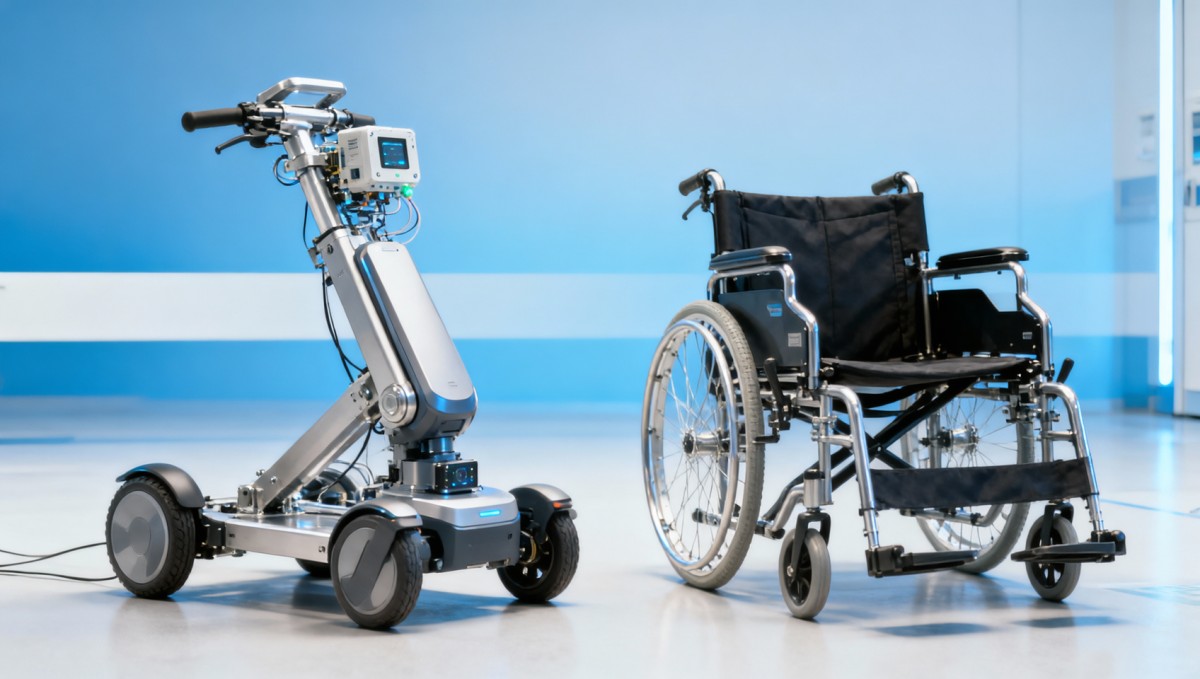
Mobility assist products often look straightforward from a buyer’s perspective. A powered wheelchair, transfer aid, gait support frame, or smart walker may be described through comfort, battery life, software features, and sleek design. Yet medical device evaluation starts much deeper. Procurement teams need to ask whether the device performs consistently under load, whether sensor output remains stable over repeated use cycles, and whether the product’s real clinical behavior matches promotional claims.
This gap matters because mobility assist sits at the intersection of mechanical stress, human variability, and regulatory oversight. A device may function well in a showroom for 20 minutes but show drift, fatigue, alignment deviation, or signal inconsistency after 3–6 months of routine use. For operators and end users, that becomes a safety and usability problem. For procurement managers, it becomes a lifecycle cost issue. For enterprise decision-makers, it becomes a compliance and reputation risk.
In practice, hidden evaluation issues usually appear in 4 layers: mechanical durability, software and sensing quality, cleaning and maintenance compatibility, and documentation readiness for MDR/IVDR-linked procurement environments. Even when a mobility assist product is not positioned as a complex digital therapeutic, digital integration has changed expectations. Hospital buyers increasingly expect traceable testing records, repeatable engineering data, and a clear post-market support structure over 12–36 months of service life.
For information researchers comparing vendors, the challenge is separating product claims from engineering truth. This is exactly where an independent benchmarking approach adds value. VitalSync Metrics (VSM) focuses on converting technical characteristics into standardized evaluation logic, helping buyers verify whether a mobility assist solution is merely marketable or genuinely procurement-ready.
- Clinical-use expectations now extend beyond basic function to reliability over repeated daily use, often across 2–3 shifts in institutional settings.
- Mobility assist selection increasingly depends on documented performance ranges, not only catalog specifications.
- Value-based procurement favors devices with measurable durability, maintainability, and traceable compliance evidence.
What should medical device evaluation actually measure?
A robust medical device evaluation framework for mobility assist should not stop at appearance, list price, or claimed user comfort. It should measure whether critical functions remain within acceptable operating ranges under realistic conditions. For example, powered mobility products may require repeated movement testing across different surfaces, while gait-assist devices need assessment of stability, hand-contact ergonomics, and mechanical wear after repeated loading cycles.
For digital or semi-digital products, medical device testing also needs to examine data behavior. If a mobility assist device includes posture prompts, load sensing, movement logging, fall alerts, or app-connected modules, the evaluation should consider signal stability, false alert frequency, connectivity resilience, and software update traceability. A device with attractive digital features may still fail procurement review if the measured signal-to-noise performance degrades in normal hospital environments.
Core evaluation dimensions for procurement teams
The most useful evaluation model usually combines 5 dimensions: safety, performance consistency, maintainability, compliance documentation, and total ownership impact. This structure helps different stakeholders speak the same language. Operators focus on usability and failure patterns. Procurement focuses on specification clarity and replacement risk. Executives focus on legal exposure, tender confidence, and lifecycle predictability.
The table below summarizes practical medical device evaluation checkpoints that are more meaningful than broad sales language. These checkpoints are especially useful when comparing mobility assist products from multiple suppliers within a 2–4 week sourcing window.
This framework matters because many product comparisons fail by mixing lifestyle language with medical technology compliance criteria. Once the evaluation is broken into measurable categories, buyers can identify whether a lower-cost option is truly efficient or simply under-documented. VSM’s benchmarking model is designed to make that distinction visible before a purchase commitment is made.
Common blind spots in testing plans
Three blind spots appear repeatedly. First, test plans may use ideal indoor conditions rather than mixed-use environments. Second, they may focus on initial function rather than drift across repeated use cycles. Third, they may ignore integration questions such as firmware maintenance, data export structure, or component replacement lead times of 7–21 days. These blind spots do not always appear in early demonstrations, but they strongly influence long-term medical device reliability.
How do MDR, IVDR-adjacent expectations, and compliance reviews affect mobility assist procurement?
Not every mobility assist device falls under the same regulatory pathway, and IVDR is more directly relevant to in vitro diagnostics than to mobility systems. However, hospital procurement practice increasingly uses MDR/IVDR readiness as shorthand for a supplier’s documentation maturity, quality discipline, and ability to support regulated healthcare environments. In other words, even when IVDR is not the governing framework, buyers still look for equivalent rigor in technical files, risk management, labeling, and post-market communication.
This shift creates pressure on vendors that market mobility assist technology as “smart,” “connected,” or “clinical.” Once a product influences patient support decisions or enters digitally monitored workflows, the tolerance for vague testing claims drops sharply. Procurement teams often need to review 3 layers of evidence within a tender cycle: basic conformity documentation, engineering validation records, and maintenance or update procedures. If any layer is weak, the supplier may remain commercially visible but procurement-ineligible.
Compliance questions worth asking before shortlist approval
A practical compliance review should ask focused questions rather than generic ones. Can the supplier explain intended use clearly? Are the test methods appropriate for real usage conditions? Is there a defined process for corrective action and field feedback over 12-month or 24-month service periods? Do software-enabled features have version traceability? Can the seller distinguish between marketing benefits and validated technical performance? Clear answers reduce both procurement delay and downstream legal ambiguity.
The next table offers a simple way to connect compliance review with sourcing decisions. It is particularly useful for procurement staff who need to compare multiple vendors without losing sight of clinical-grade requirements.
The real lesson is that compliance review is not merely a legal formality. It is a quality filter. When a vendor can demonstrate coherent technical documentation, the buyer gains more than audit comfort. They gain faster internal approval, clearer service expectations, and fewer surprises after deployment. This is where independent medical technology compliance analysis becomes commercially useful, not just administratively necessary.
- Use a 3-step review path: intended use, engineering validation, and post-market support readiness.
- Ask for evidence tied to actual use frequency, such as daily, weekly, or multi-shift operation.
- Separate conformity paperwork from deeper reliability evidence during vendor comparison.
Which procurement criteria matter most for users, buyers, and decision-makers?
Different stakeholders often evaluate the same mobility assist device through different lenses. Users and operators care about maneuverability, comfort, setup time, alarm nuisance, and maintenance burden. Procurement managers care about specification clarity, service contracts, spare parts availability, and replacement planning. Senior decision-makers care about financial exposure, risk concentration, and whether the purchase supports value-based care objectives over 1–3 budget cycles.
This is why one of the most common purchasing mistakes is relying on a single scorecard. A device that looks favorable on purchase price may create hidden costs through maintenance calls, training time, or downtime. Conversely, a higher initial cost can be justified if the evaluation data shows better durability, lower interruption frequency, and more stable documentation support. The goal is not to buy the most advanced device. It is to buy the most defensible option for the intended care environment.
A practical 6-point shortlist framework
A useful shortlist process can be completed in 6 checkpoints. First, define use intensity: home use, clinic use, or multi-shift institutional use. Second, map patient variability and operator skill level. Third, review technical validation depth. Fourth, check cleaning and maintenance compatibility. Fifth, examine service response windows such as 48–72 hours for critical support questions. Sixth, compare total cost of ownership across the expected usage period.
Questions that should appear in every sourcing file
- What operating load range, duty cycle, or daily use profile was the mobility assist device evaluated under?
- Which components are most likely to require replacement within 12–24 months, and what is the normal lead time?
- Does the supplier provide test evidence for cleaning exposure, repeated movement cycles, and software stability if digital features are included?
- Can the product be integrated into existing procurement, maintenance, and documentation workflows without creating manual workarounds?
For organizations seeking a more objective selection process, healthcare benchmarking is especially valuable. VSM can translate vendor technical materials into neutral comparison criteria, helping teams compare claims that are often presented in inconsistent formats. This reduces the risk of approving a device because it “sounds advanced” rather than because it has measurable procurement fitness.
Common misconceptions, operational risks, and what a stronger evaluation process looks like
A frequent misconception is that mobility assist devices are low-risk simply because they are familiar. Familiarity can hide evaluation gaps. If a product includes powered movement, adjustable support mechanisms, patient-transfer interfaces, or software-assisted feedback, the risk profile is broader than it first appears. Another misconception is that a successful product demo proves long-term suitability. In reality, demonstration success only shows immediate function, not sustained reliability.
Operational teams also underestimate environmental stress. Floors, ramps, storage conditions, transport handling, cleaning agents, and charging habits can all affect performance. In some settings, a device may be used intermittently; in others, it may operate across multiple users every day. Evaluation should therefore reflect the real usage envelope, not a generic laboratory scenario. Even a 5–10 minute difference in setup or cleaning time per patient interaction can become a workflow issue in high-volume care environments.
FAQ: the questions buyers ask most often
How do you know whether a mobility assist device has been properly evaluated?
Look for evidence beyond brochure statements. A credible evaluation should cover repeated use, foreseeable misuse, maintenance procedures, and documentation traceability. If digital functions are involved, ask how software changes are managed and how signal reliability was assessed. If the seller cannot explain the test logic in practical terms, the medical device evaluation may be too shallow for institutional procurement.
What should procurement teams prioritize when budgets are tight?
Prioritize total ownership visibility rather than headline price. A lower-cost device can become more expensive if parts fail early, service lead times exceed 2–3 weeks, or operator training demands are high. Focus on 3 essentials first: validated durability, documentation quality, and support responsiveness. These usually predict downstream procurement value better than cosmetic features.
Are digital features always beneficial in mobility assist products?
Not automatically. Digital features are useful only when they produce stable, interpretable, and actionable output. Movement logs, alerts, or connected interfaces can support care pathways, but they can also create false notifications, data gaps, and maintenance complexity. The right question is not whether a product is smart, but whether its digital functions improve clinical workflow without compromising reliability.
How long does a meaningful technical review usually take?
For a structured pre-procurement review, many organizations can complete an initial assessment in 7–15 business days if documentation is available. A deeper benchmarking exercise comparing multiple vendors may take 2–4 weeks, depending on the completeness of the technical file, the number of devices under review, and whether additional clarification is needed on materials, software, or durability testing.
Why an independent benchmarking partner changes the quality of the decision
When internal teams are pressed by deadlines, vendor presentations can easily shape the purchasing narrative. An independent benchmarking partner changes that dynamic by converting product claims into verifiable engineering questions. For mobility assist procurement, that means analyzing what is measurable, what is repeatable, and what remains uncertain. It also means identifying gaps early, before those gaps become contract disputes, service failures, or operational workarounds.
VitalSync Metrics (VSM) is built for this role. As an independent, data-driven think tank and technical benchmarking laboratory focused on MedTech and Life Sciences supply chains, VSM helps procurement directors, startup teams, laboratory architects, and healthcare decision-makers examine devices through technical integrity rather than marketing volume. That can include review of testing logic, documentation consistency, signal quality considerations, material reliability questions, and comparability across vendors.
For organizations navigating medical technology compliance and healthcare benchmarking, the advantage is practical. Instead of asking broad questions late in the process, you can evaluate key risks upfront: parameter confirmation, performance interpretation, procurement shortlist criteria, service assumptions, and evidence gaps. This improves sourcing confidence and strengthens tender defensibility without relying on exaggerated promises.
What you can discuss with VSM
- Parameter confirmation for mobility assist products, including durability, sensor behavior, and maintenance-sensitive components.
- Product selection support when comparing multiple suppliers with different documentation depth and performance claims.
- Delivery and service review, including realistic support windows, spare-part planning, and long-term reliability concerns.
- Custom benchmarking and compliance-oriented analysis for MDR-aligned procurement environments and digital integration scenarios.
- Quotation discussions based on evaluation scope, sample review needs, and technical whitepaper outputs for internal decision approval.
If your team is evaluating mobility assist devices and needs a clearer way to judge medical device testing quality, medical device reliability, or documentation readiness, a structured conversation with VSM can save time and reduce procurement uncertainty. The earlier you verify technical integrity, the easier it becomes to choose a device that is not only marketable on paper but defensible in real healthcare use.
- EMS
- ESS
- PPE
- life sciences
- EdTech
- procurement
- AR
- supply chain
- Cement
- benchmarking
- benchmarking lab
- value-based procurement
- medical device reliability
- medical technology compliance
- medical technology
- technical integrity
- hospital procurement
- MDR IVDR
- technical benchmarking
- digital integration
- life sciences
- supply chain
- long-term reliability
- engineering truth
- global decision-makers
- sourcing confidence
- data-driven
- healthcare digital integration
- healthcare benchmarking
- medical device evaluation
- medical device testing
- Mobility Assist
Recommended News
- 2026.04.17Hospital equipment standards shaping modern rehab devicesSarah Jenkins (Laboratory Infrastructure Consultant)
- 2026.04.17Laboratory equipment validation errors in sample storageDr. Hideo Tanaka (Imaging Systems Analyst)
- 2026.04.17Medical equipment certification delays in remote monitoringLydia Vancini (Regulatory Compliance Lead)
The VitalSync Intelligence Brief
Receive daily deep-dives into MedTech innovations and regulatory shifts.