
Which smart wheelchair features matter most in daily use?
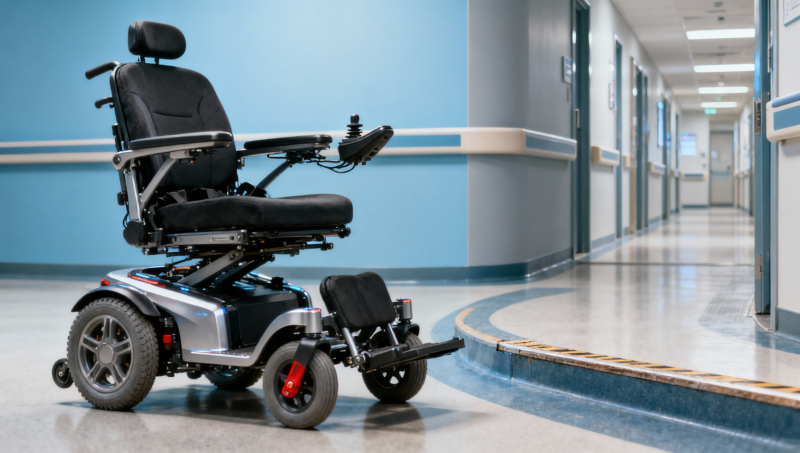
Daily usability defines whether a smart wheelchair truly improves mobility, safety, and independence. For buyers evaluating a smart wheelchair manufacturer, operators comparing healthcare equipment, or decision-makers focused on supply chain verification and medical technology verification, the key is separating practical features from marketing claims. This guide explores the functions that matter most in real-world use and how healthcare engineering insights support better purchasing decisions.
What matters most in a smart wheelchair during daily use?
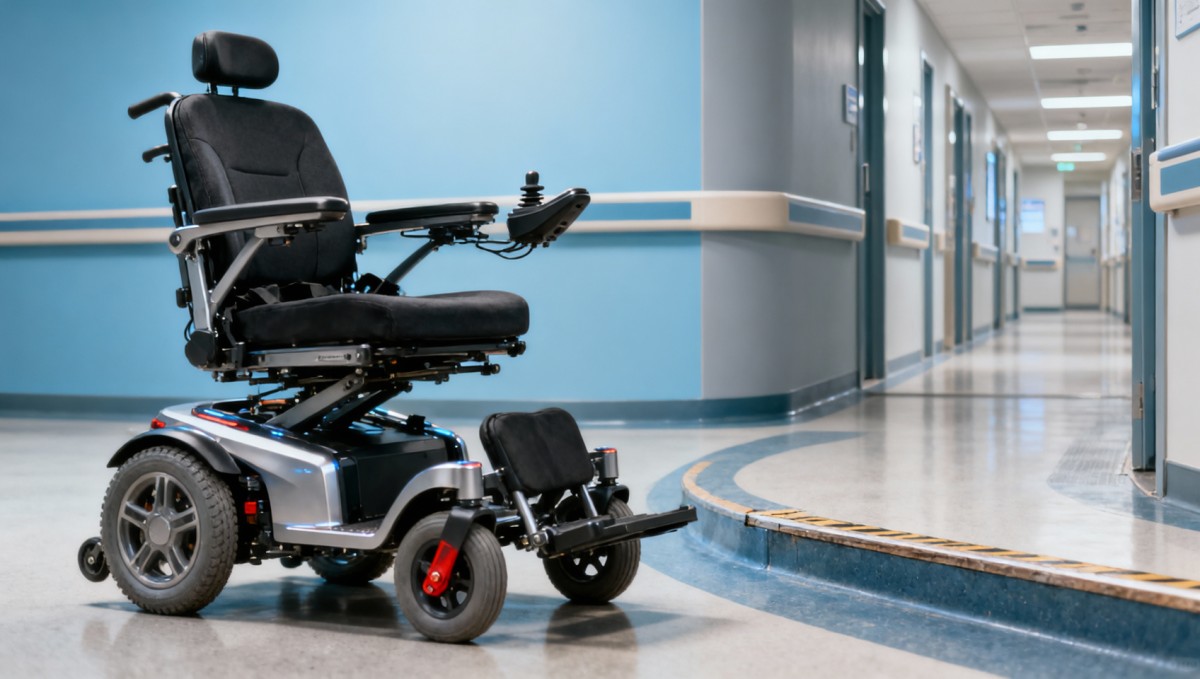
A smart wheelchair is not defined by the number of advertised features. In everyday use, the most important functions are the ones that reduce physical strain, improve driving confidence, simplify transfers, and keep performance stable over long operating periods. For home users, caregivers, rehabilitation teams, and procurement managers, the practical question is simple: which features continue to work reliably after weeks, months, and repeated charging cycles?
In most real environments, daily use includes narrow indoor turns, threshold crossings, ramps, lift access, crowded corridors, and repeated stop-start movement. That means maneuverability, seating stability, braking response, battery consistency, and control interface clarity usually matter more than promotional claims about intelligence. A smart wheelchair that performs well in a showroom but becomes unstable after 6–8 hours of mixed use creates operational risk rather than mobility support.
For procurement teams, feature evaluation should be grouped into 3 core layers: user control, mechanical reliability, and digital safety support. This structure helps compare products across brands without relying on vague language. It also supports value-based procurement, where the aim is not the longest feature list, but the best match between technical performance, compliance pathway, serviceability, and real-world use conditions.
VitalSync Metrics (VSM) approaches smart wheelchair evaluation from an engineering and benchmarking perspective. Instead of repeating sales language, VSM focuses on measurable factors such as control latency, turning envelope, charging behavior, duty-cycle consistency, and component durability. That approach is especially useful when hospital buyers, distributors, or healthcare equipment decision-makers need technical clarity before pilot procurement or supplier qualification.
- Daily mobility depends on repeatable control accuracy, not just maximum feature count.
- Safety support should assist the user without creating false confidence or unnecessary alarms.
- Battery, seating, and service access often determine long-term satisfaction more than advanced app functions.
- A useful smart wheelchair must perform across indoor, outdoor, and mixed-use scenarios within a predictable maintenance cycle.
The 5 feature groups that most directly affect daily mobility
When users report whether a smart wheelchair feels usable, their feedback usually clusters around 5 feature groups: drive control, seating and positioning, battery and charging, obstacle awareness, and maintainability. These categories cover both the operator experience and the procurement perspective. They also make it easier to compare devices intended for independent users versus caregiver-assisted use.
Drive control includes joystick sensitivity, acceleration smoothness, stopping predictability, and low-speed precision. Seating and positioning includes pressure management, back support, tilt or recline options, and transfer convenience. Battery and charging cover realistic runtime, charge duration, and performance decline over repeated cycles. Obstacle awareness includes anti-tip support, curb handling, and sensor-based alerts. Maintainability includes access to spare parts, firmware support, and inspection intervals such as monthly visual checks and quarterly functional reviews.
Which smart wheelchair features should users and buyers prioritize first?
The highest-priority smart wheelchair features usually depend on whether the device is intended for independent operation, caregiver-supported transport, rehabilitation use, or institutional deployment. Even so, several priorities remain consistent across these settings. First, the wheelchair must be controllable at low speed in tight spaces. Second, seating must support comfort for repeated daily sessions lasting 2–6 hours or more. Third, charging and service processes must fit actual care workflows rather than idealized brochure scenarios.
Many buyers initially focus on top speed, app connectivity, or visual design. In practice, these are secondary unless the core mechanics and interface are already proven. For example, if joystick dead zone tuning is poor, users may overcorrect during doorway entry. If footrest geometry is poorly matched, transfers become slower and less safe. If charging ports are hard to access, even a battery with acceptable nominal range can become inconvenient in daily care settings.
The table below summarizes the features that usually deserve first-line attention when evaluating a smart wheelchair for routine use, procurement comparison, or technical verification.
The most important takeaway is that feature relevance changes when measured under real duty cycles. A smart wheelchair used in a hospital discharge program may require quick recharge turnaround and simpler controls. A wheelchair used by an independent home user may require better terrain transitions and longer single-day runtime. Procurement teams should therefore document at least 4 use conditions before supplier comparison: operating duration, indoor-outdoor ratio, transfer frequency, and service response expectations.
Control precision usually outranks headline innovation
A common evaluation mistake is assuming that more software means a better smart wheelchair. In reality, a dependable control system with predictable response often delivers more value than a longer list of digital extras. Users notice control quality within the first 10–20 minutes of driving. They notice poor calibration even faster. This is why bench testing and scenario-based trials should be combined before purchase approval.
From a VSM-style benchmarking perspective, buyers should ask whether performance claims are supported by repeatable technical documentation. This includes battery discharge behavior under load, sensor reliability in variable lighting or cluttered spaces, and mechanical wear points over routine use intervals. These details help distinguish a credible smart wheelchair platform from a marketing-heavy offer with limited long-term evidence.
How do daily environments change the feature priority?
The same smart wheelchair can perform very differently across a private home, rehabilitation center, hospital corridor network, or assisted-living setting. Environment changes everything: turning space, floor transitions, charging routines, ramp frequency, and caregiver involvement. That is why feature selection should be scenario-led. A product that works well in one site can become difficult to use in another if threshold height, storage layout, or transport frequency were not considered during evaluation.
Home use often favors compact turning, intuitive controls, and easy charging. Rehabilitation use may place more emphasis on adjustability, training progression, and therapist-friendly configuration changes. Institutional use typically adds requirements around cleaning compatibility, fleet maintenance, replacement parts availability, and predictable documentation. Procurement teams should map these use patterns over a 12-month horizon rather than focusing only on first delivery.
The comparison below helps users and buyers align smart wheelchair features with operating context instead of relying on generic product language.
This comparison shows why one universal specification sheet is rarely enough. A smart wheelchair for mixed-use home mobility may need 8–12 hours of practical daily endurance with consistent low-speed steering. In an institutional setting, however, the decisive factor may be whether the battery can be recharged within a predictable service window and whether components can be inspected every quarter without long downtime.
Application-specific checks before approval
For users and operators
Check whether the smart wheelchair can navigate doorways, bathroom entries, bed-side positioning, and elevator turns without repeated correction. Test stop-start control on slight gradients. Verify whether seating remains comfortable after a continuous 60–90 minute session rather than only during a short demonstration.
For procurement and management teams
Request documentation for maintenance intervals, battery replacement pathway, spare-part lead time, and any software update dependency. Even where exact lead times vary by region, buyers should seek a defined support model covering setup, training, preventive inspection, and fault response within a clearly documented service process of at least 4 steps.
- Map the daily environment before feature ranking.
- Run a scenario trial instead of a static showroom check.
- Separate user comfort issues from technical reliability issues during evaluation.
- Confirm serviceability before placing volume orders.
What should procurement teams verify beyond the feature list?
A smart wheelchair should be evaluated as a healthcare technology system, not just a mobility product. That means procurement teams need to look beyond visible functions and review traceability, technical documentation, applicable regulatory pathway, service support, and consistency between claimed and testable performance. This is especially important in value-based procurement, where lifetime usability matters more than initial presentation quality.
For global buyers, compliance language must also be handled carefully. Depending on market and intended use, review may involve general medical device documentation, risk management records, labeling clarity, electrical safety alignment, software considerations, and jurisdiction-specific rules such as MDR or related registration pathways. A supplier that cannot explain how a smart wheelchair is documented, maintained, and updated may expose buyers to avoidable verification gaps.
The checklist below is useful when comparing smart wheelchair suppliers, shortlisting manufacturers, or preparing technical due diligence before pilot deployment.
A disciplined procurement process often works best in 4 stages: use-case definition, technical screening, supervised pilot, and contract-level service clarification. In many projects, this sequence takes 2–6 weeks depending on documentation completeness and the number of stakeholders involved. The goal is not to slow purchase decisions, but to reduce downstream problems such as user dissatisfaction, repeated maintenance events, or compliance uncertainty.
Why engineering verification changes the buying decision
VSM’s value in this process is its ability to translate technical parameters into decision-grade evidence. For smart wheelchair buyers, that can include structured benchmarking around component durability, controllability, battery behavior, and documentation quality. This is particularly useful when different suppliers describe similar functions with inconsistent terminology. A benchmarking lens helps procurement teams compare like with like.
This matters because many risks do not appear in first-contact sales material. They appear later, when field support is needed, when replacements are delayed, or when device behavior under repeated daily use differs from the nominal specification. Technical verification can narrow that gap before procurement commitment, especially in B2B healthcare sourcing where accountability extends well beyond the purchase order.
Common mistakes, FAQs, and how to make a better final decision
The most common mistake in smart wheelchair selection is confusing visible sophistication with practical usefulness. The second is ignoring serviceability until after delivery. The third is evaluating comfort and maneuverability in a short demonstration rather than over a realistic use period. In day-to-day mobility, small issues accumulate quickly: awkward controls, hard-to-reach charging ports, unstable seating, or inconsistent braking can each turn an advanced product into a daily frustration.
A better decision comes from combining 3 viewpoints: operator experience, technical verification, and procurement governance. Users can identify interface and comfort issues. Technical reviewers can check repeatable performance and documentation quality. Procurement teams can assess lifecycle implications, replacement access, and contract clarity. Together, these perspectives reduce the risk of selecting a smart wheelchair based only on appearance, price pressure, or incomplete claims.
FAQ: What do buyers and users ask most often?
How do I choose the right smart wheelchair for daily use?
Start with the actual use pattern, not the feature brochure. Define whether the chair will be used mainly indoors, outdoors, or in mixed settings; whether sessions typically last 2 hours or closer to a full day; and whether operation is independent or caregiver-supported. Then test control precision, seating comfort, battery practicality, and service access. These 4 checks usually reveal more than a long general specification sheet.
Which smart wheelchair features are often overrated?
Features are overrated when they look advanced but add little daily value. App-heavy functions, cosmetic interface complexity, or marketing-oriented autonomy claims can distract from core issues such as driving smoothness, transfer safety, and battery realism. If a feature cannot improve mobility, reduce effort, or support safer operation in a measurable way, it should not drive procurement decisions on its own.
What should institutions ask smart wheelchair suppliers before buying?
Ask for documentation on intended use, maintenance intervals, available spare parts, training support, software update process, and target-market compliance status. Also ask how long typical setup, operator training, and support escalation take. Even where exact timelines vary, a supplier should explain the service workflow clearly, often across 4–6 operational steps from configuration to after-sales support.
How long does evaluation usually take before procurement?
For a structured B2B review, a preliminary evaluation often takes 1–2 weeks if technical documentation is available. A more complete review with pilot checks, stakeholder feedback, and service clarification may take 2–6 weeks. The timeline depends on whether the buyer is reviewing one unit for direct use, a rehabilitation pathway, or a broader institutional procurement program.
Why choose VSM for smart wheelchair evaluation support?
VSM helps decision-makers move from marketing language to engineering truth. For smart wheelchair sourcing, that means support in parameter confirmation, technical comparison, supplier screening, and documentation review. Instead of asking buyers to trust broad claims, VSM emphasizes structured benchmarking, measurable performance factors, and practical procurement interpretation for healthcare and life sciences stakeholders.
If you are comparing smart wheelchair options, preparing a procurement shortlist, or validating supplier claims for clinical or institutional use, VSM can support discussions around feature prioritization, expected service process, delivery planning, compliance questions, and technical due diligence. You can engage VSM to clarify parameter ranges, compare candidate products, review verification gaps, discuss sample evaluation criteria, and align procurement decisions with real daily-use requirements.
- EMS
- ESS
- PPE
- healthcare technology
- life sciences
- procurement
- AR
- supply chain
- Cement
- benchmarking
- value-based procurement
- medical technology
- technical integrity
- life sciences
- supply chain
- engineering truth
- technical verification
- healthcare engineering
- healthcare technology
- healthcare equipment
- medical technology verification
- supply chain verification
- smart wheelchair manufacturer
Recommended News
- 2026.04.17Hospital equipment standards shaping modern rehab devicesSarah Jenkins (Laboratory Infrastructure Consultant)
- 2026.04.17Laboratory equipment validation errors in sample storageDr. Hideo Tanaka (Imaging Systems Analyst)
- 2026.04.17Medical equipment certification delays in remote monitoringLydia Vancini (Regulatory Compliance Lead)
The VitalSync Intelligence Brief
Receive daily deep-dives into MedTech innovations and regulatory shifts.