
How to compare wholesale medical endoscopes from China fairly
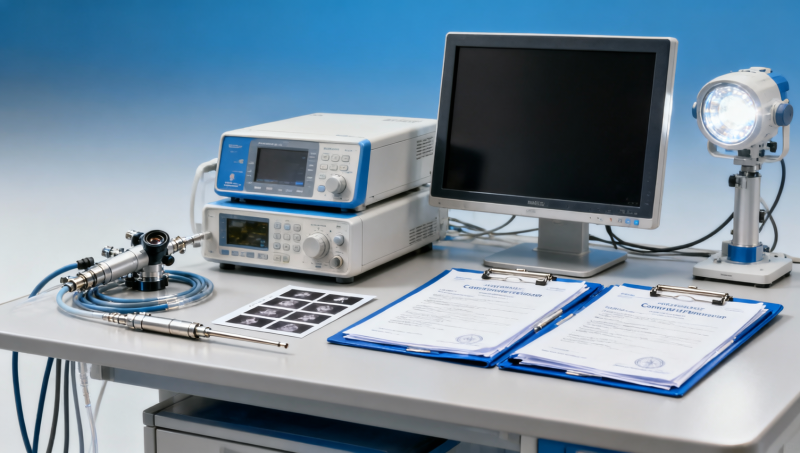
Comparing wholesale medical endoscopes China fairly requires more than price checks or catalog claims. Buyers need a repeatable framework built on endoscope image resolution benchmark data, healthcare compliance, medical device certification, and real-world reliability. This guide helps procurement teams, operators, and decision-makers evaluate suppliers with objective technical criteria, regulatory evidence, and hospital equipment standards in mind.
For hospitals, distributors, MedTech startups, and laboratory planners, a fair comparison process reduces two common risks: overpaying for features that do not improve clinical use, and under-specifying systems that later fail under workflow pressure. A structured review also makes supplier conversations more transparent, especially when quotations vary by 15%–40% across similar-looking configurations.
VitalSync Metrics (VSM) approaches this topic from an engineering and benchmarking perspective. Instead of relying on brochure language alone, procurement teams should compare image performance, compatibility, reprocessing design, compliance documents, service responsiveness, and total cost over a 3–5 year operating horizon. That is the basis of a fair decision.
Build a fair comparison framework before you request quotations
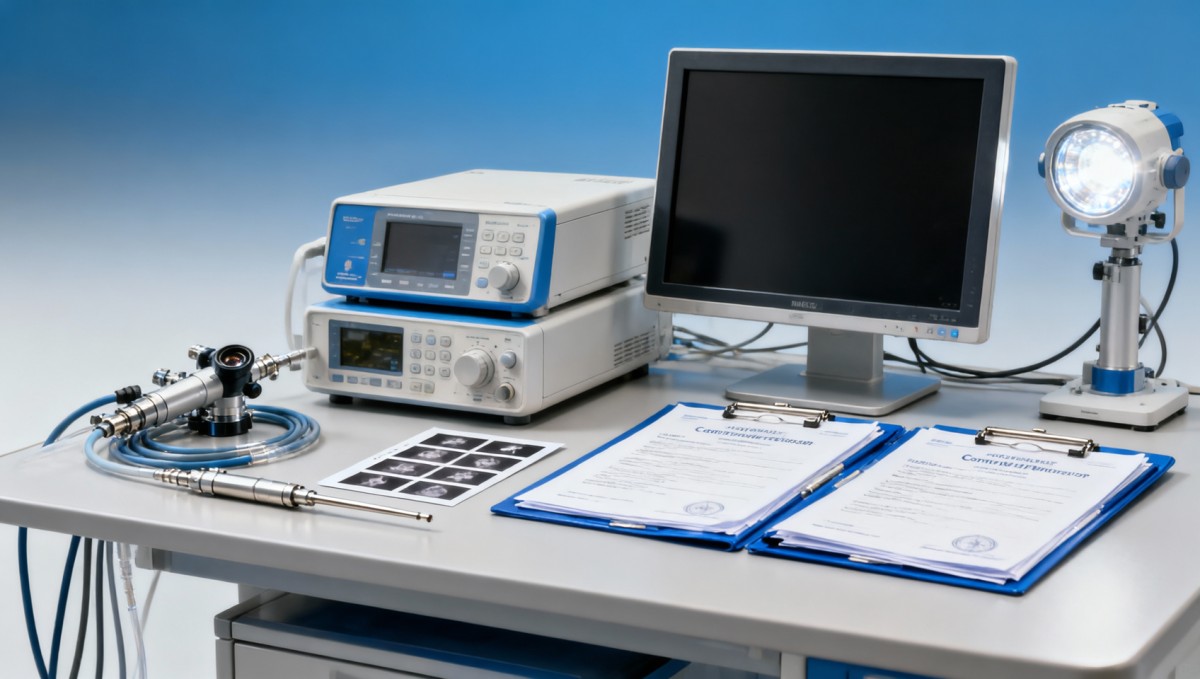
Many buyers begin by comparing unit price, included accessories, and delivery lead time. That approach is fast, but it rarely reflects actual clinical value. A fair comparison framework starts with use case definition: rigid or flexible endoscopy, diagnostic or interventional workflow, expected procedure volume per week, and the operator skill level. A unit used 5 times per week in a private clinic should not be judged by the same standard as a system running 20–30 procedures per day in a tertiary hospital.
The next step is to normalize what is being compared. Some suppliers quote only the insertion tube and control body, while others bundle camera control unit, light source, monitor, trolley, leak tester, and basic service kit. Unless the bill of materials is aligned line by line, a lower price can be misleading. Fairness requires a like-for-like structure, ideally across 4 dimensions: hardware scope, imaging quality, compliance evidence, and after-sales support.
It is also important to separate marketing terms from measurable attributes. Phrases such as “HD image,” “medical grade,” or “durable insertion tube” should be translated into testable indicators. For example, ask for image resolution output, color reproduction consistency, illumination uniformity, waterproofing level where relevant, bending section cycle test data, and repair turnaround commitment. If a supplier cannot define the claim in engineering terms, the claim should carry limited weight in evaluation.
In procurement committees, bias often appears when one department values only purchase price while another values only advanced features. A better method is to use a weighted scorecard. In practice, many teams use a 100-point model, with 30 points for imaging and handling, 25 points for compliance and documentation, 20 points for service capability, 15 points for durability and reprocessing design, and 10 points for commercial terms. The exact weighting can change, but the logic should stay consistent across all suppliers.
Core criteria that should be fixed before supplier outreach
- Define the clinical scenario: ENT, GI, urology, bronchoscopy, laparoscopy, or industrial-adjacent lab visualization where applicable.
- Set the required image baseline: for example, standard HD output, acceptable brightness range, and distortion tolerance.
- Confirm workflow needs: reusable versus single-use pathway, sterilization or high-level disinfection process, and expected weekly cycle count.
- List document requirements: declaration of conformity, applicable registration files, test reports, user manuals, and traceability records.
- Establish service expectations: spare parts availability, remote support window, and target repair turnaround such as 7–14 business days.
Why this step matters
Without a fixed framework, each supplier effectively defines the evaluation criteria for you. That makes comparison unfair by design. A procurement brief that specifies 8–12 mandatory checkpoints keeps the process evidence-based and reduces internal disagreement later, especially during technical clarification and final approval.
Compare technical performance using measurable endoscope benchmarks
Technical comparison should begin with image output, but it should not end there. For wholesale medical endoscopes from China, real differentiation often appears in consistency rather than headline specification. Two systems may both claim HD imaging, yet show different edge sharpness, white balance stability, low-light usability, and response during motion. Ask suppliers for standardized demonstration files captured under the same setup, or run a controlled bench evaluation using the same monitor, light source settings, and target charts.
Image quality can be assessed through practical indicators such as central and peripheral clarity, contrast in wet field conditions, glare control, and color fidelity. For flexible scopes, tip articulation precision, insertion tube flexibility, and latency between manipulation and on-screen response also matter. In operator environments, even a 100–200 millisecond delay can influence comfort and targeting during repetitive tasks.
Durability is another major fairness issue. A lower-priced device may perform adequately on day 1 but degrade after 6–12 months if seals, bending rubber, channels, or connectors are weak. Buyers should request expected maintenance intervals, common failure modes, and test information on bending cycles, cable strain, and leak resistance. This is especially important for fleets of 10 units or more, where downtime compounds quickly.
Usability should be benchmarked in the hands of actual operators, not only sales engineers. A 20-minute handling assessment can reveal whether the grip causes fatigue, whether buttons are accessible with gloves, and whether cleaning access points are well designed. In many facilities, these practical details influence adoption more than incremental feature upgrades.
Technical checkpoints worth scoring
The table below shows a practical benchmark structure for comparing multiple suppliers. It can be adapted for rigid or flexible endoscope procurement and helps procurement teams move from claims to measurable evidence.
The key takeaway is that “same category” does not mean “same performance.” Buyers should always compare under controlled conditions and request evidence that can be reviewed by both users and procurement staff. If possible, require a pilot sample or supervised evaluation period of 1–2 weeks before placing volume orders.
A note on single-use versus reusable systems
Fair comparison also means not mixing cost models. A single-use scope may appear expensive per procedure, while a reusable scope may appear cheaper at purchase but require disinfection equipment, training, consumables, and repairs. Evaluate them separately using cost per procedure, expected annual volume, reprocessing burden, and infection control priorities.
Verify compliance, documentation, and manufacturing controls
In cross-border medical procurement, documentation quality is often the dividing line between a workable supplier and a risky one. For wholesale medical endoscopes from China, buyers should verify whether the supplier can provide coherent technical files, labeling, traceability information, and declarations aligned with the destination market. This is particularly important for organizations working under MDR, IVDR-adjacent procurement governance, hospital accreditation rules, or internal quality systems.
A fair review should not assume that all certificates have equal value. Buyers need to inspect scope, issuing body, product coverage, and whether the documentation actually matches the quoted configuration. In practice, mismatches often happen when one accessory or processor is substituted late in the quotation stage. Even a small change in camera unit, monitor, or sterile barrier component can affect acceptance.
Manufacturing control matters as much as the certificate itself. Ask how the supplier manages incoming inspection, in-process testing, final inspection, and serial number traceability. A supplier serving stable export markets should be able to explain at least 4 control points, retain records, and clarify how nonconforming units are handled. If they cannot describe these basics, long-term consistency is harder to trust.
Documentation review should also include instructions for use, cleaning guidance, storage conditions, packaging integrity, and spare parts policy. These details affect real deployment. A technically good scope with unclear reprocessing instructions can still create operational and compliance problems after installation.
Documents and controls to verify during supplier assessment
The following checklist helps distinguish between a supplier that can support regulated procurement and one that only looks competitive at quotation stage.
A supplier that provides complete, consistent documentation often creates fewer delays during registration review, customs clearance, incoming inspection, and clinical onboarding. Documentation quality is not just an administrative issue; it is a predictor of process maturity.
Questions buyers should ask directly
- Can you provide the exact document set for the quoted configuration within 48–72 hours?
- What are your final inspection checkpoints before shipment?
- How do you manage changes in key components or sub-suppliers?
- What is your traceability process for returned or repaired devices?
Evaluate total cost of ownership, service response, and supply reliability
The fairest way to compare wholesale medical endoscopes from China is to move beyond purchase price and calculate total cost of ownership. Over a 3-year period, the cost structure may include spare parts, repair frequency, shipping for service, backup unit needs, training time, software updates where applicable, and downtime impact. A quotation that is 18% lower upfront can become more expensive if repair rates are higher or service support is slow.
Service capacity should be assessed with operational questions, not generic promises. Ask how many service engineers support export markets, whether remote troubleshooting is available within 24 hours, and what the target turnaround is for common failures. For active hospital environments, a practical benchmark is 7–14 business days for standard repair assessment and a clearly defined escalation path for critical faults.
Supply reliability also matters in wholesale procurement. Buyers placing orders of 20, 50, or 100 units need to know whether quality stays stable from batch to batch. Ask about production planning, final testing capacity, packaging controls, and the supplier’s approach to component substitution. A fair supplier comparison should include a pilot lot review before large-scale rollout.
Commercial terms should be interpreted in context. Faster lead time is valuable only if documentation is correct and quality release is controlled. A 2-week shipment promise that causes rework or missing accessories may be less useful than a 4-week schedule with complete acceptance records and stable packaging performance.
Practical total cost factors to compare
- Expected repair incidence over 12 months and whether preventive maintenance is recommended every 6 or 12 months.
- Availability of local partners or regional service hubs for replacement parts and troubleshooting.
- Training package scope, including operator onboarding, cleaning instruction, and technical documentation.
- Warranty inclusions and exclusions, especially for wear parts, articulation damage, connectors, and fluid ingress.
- Backup strategy if one unit fails in a department with high daily utilization.
A simple procurement formula
Many teams use a basic model: total ownership cost = unit price + estimated repair cost + logistics cost + training cost + downtime risk allowance. Even if each assumption is only directional, the model improves decision quality. It also helps explain to finance teams why the “lowest quote” is not always the best-value option.
Run a structured trial, avoid common comparison errors, and make the final decision
After technical review and document verification, the final stage should be a controlled evaluation. This can be done through bench testing, supervised user trials, or a small pilot order. In many cases, a 5-step process works well: define acceptance criteria, receive sample units, run image and handling tests, verify cleaning and service response, then finalize the scoring sheet. This prevents late surprises after purchase order approval.
One common error is comparing a fully bundled system from one supplier against a partial system from another. Another is allowing subjective brand perception to outweigh measured evidence. A third is skipping operator feedback. Procurement teams should include at least 3 voices in the review: a user or clinician, a biomedical or technical reviewer, and a procurement lead. This cross-functional model usually produces a more defensible decision.
Another avoidable mistake is ignoring the reprocessing burden. A scope that performs well in a demo may be difficult to clean, store, or inspect between procedures. Over time, this affects labor, damage rates, and compliance. For facilities processing multiple scopes daily, even 5 extra minutes per cycle can become significant across a month.
Finally, keep written records of why the winning supplier was selected. A documented matrix covering 8–10 criteria improves internal governance, supports audit readiness, and makes future reorder decisions easier. It also creates a baseline for post-purchase review after the first 90 or 180 days of use.
A sample decision sequence
- Screen suppliers using mandatory compliance and document requirements.
- Normalize quotations into the same configuration structure.
- Score technical performance using standardized tests and operator review.
- Compare service capability, warranty scope, and 3-year ownership cost.
- Run a pilot or sample validation before confirming wholesale volume.
FAQ: short answers buyers often need
How long does a typical wholesale procurement cycle take? For regulated export purchases, 4–8 weeks is common when technical review, document verification, and sample evaluation are included. Complex tenders or multi-site rollouts may take longer.
What is the most overlooked comparison point? Service and repair logistics. Many buyers focus on image quality but underestimate downtime, shipping cost, and spare parts lead time.
Should buyers always request a sample? If the order value is significant or clinical use is sensitive, yes. A short evaluation period can reveal usability and maintenance issues that do not appear in brochures or video calls.
Fair comparison of wholesale medical endoscopes from China depends on disciplined evaluation, not assumptions. Buyers who standardize technical benchmarks, verify compliance documents, assess service readiness, and compare total cost over time are far more likely to select a supplier that performs reliably in real healthcare settings. For procurement teams, operators, and decision-makers seeking an evidence-based assessment model, VitalSync Metrics can help translate technical data into a clear sourcing framework. Contact us to discuss a tailored benchmarking approach, request evaluation criteria, or explore more MedTech sourcing solutions.
Recommended News
- 2026.04.22Gulf Green Packaging Pact Affects Sterilization Systems ExportersDr. Alistair Thorne (Senior Biomedical Engineer)
- 2026.04.22PMDA Opens AI Ultrasound Metrics Fast-Track for Chinese FirmsLydia Vancini (Regulatory Compliance Lead)
- 2026.04.22China Customs Launches Smart Clearance for IVD & Centrifugation DevicesDr. Hideo Tanaka (Imaging Systems Analyst)
The VitalSync Intelligence Brief
Receive daily deep-dives into MedTech innovations and regulatory shifts.