
Is wholesale medical endoscopes China still cost-effective?
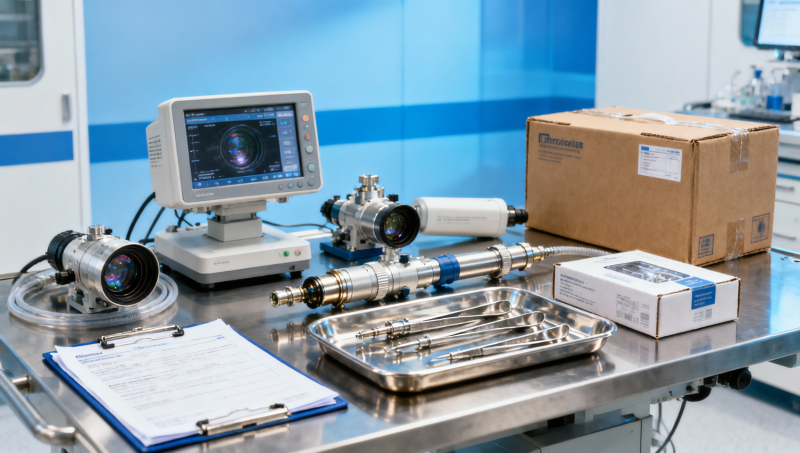
Is sourcing wholesale medical endoscopes China still a smart move in today’s value-driven healthcare market? For procurement leaders, operators, and MedTech decision-makers, the answer depends on more than price—it requires supply chain verification, IVDR certification awareness, and proven healthcare engineering. This article explores how independent think tank insights and medical technology verification help buyers balance cost, compliance, and long-term reliability.
Why buyers still look at wholesale medical endoscopes from China
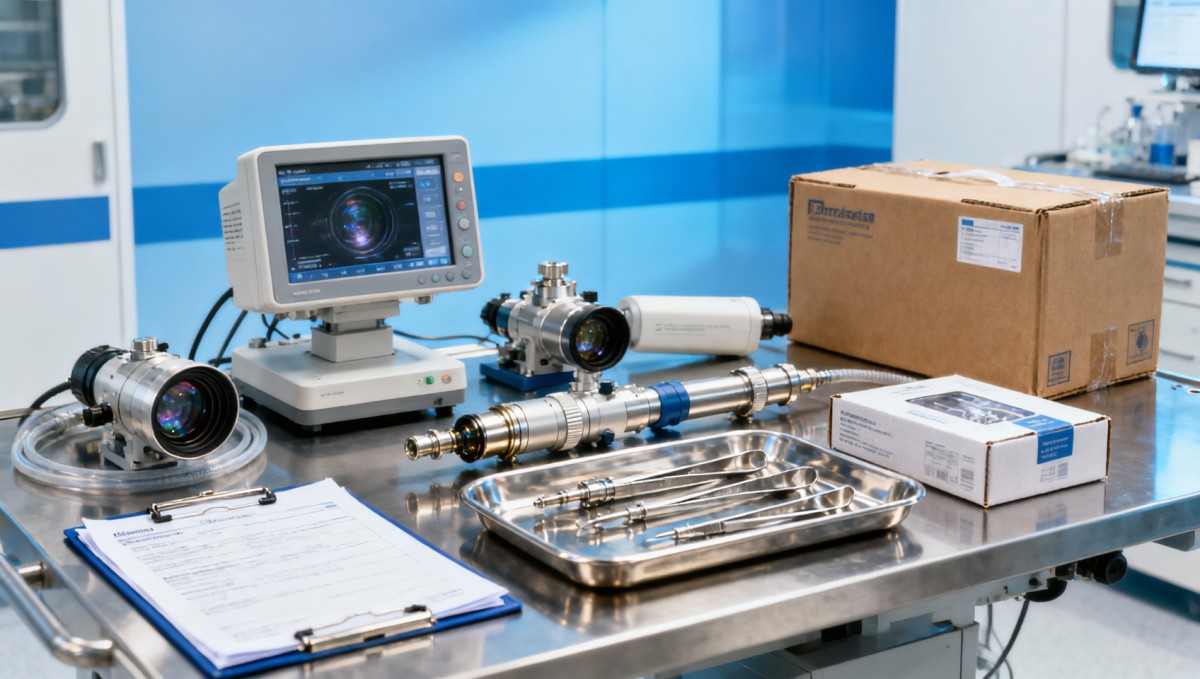
China remains a major sourcing base for wholesale medical endoscopes because it offers broad manufacturing capacity, flexible production volumes, and faster commercial response than many mature markets. For hospitals, distributors, and device startups, the attraction is not simply a lower quote. It is the ability to compare rigid endoscopes, flexible endoscope components, camera systems, light sources, and accessory bundles across multiple supply tiers within a 2–8 week quotation and sample evaluation cycle.
That said, cost-effectiveness has changed. Ten years ago, buyers could focus on unit price and acceptable image quality. Today, procurement teams must also review regulatory readiness, sterilization compatibility, service documentation, repairability, and lot-to-lot consistency. A low purchase price can quickly lose its value if image degradation appears after repeated cycles, if spare parts are unavailable within 30–60 days, or if technical files are too weak for market access planning.
For information researchers and enterprise decision-makers, the key question is no longer “Is China cheap?” but “Which supplier structure in China delivers verified value?” This is where an engineering-led approach matters. VitalSync Metrics (VSM) helps separate commercial claims from measurable performance by translating manufacturing variables into benchmark-oriented procurement evidence that non-engineering buyers can actually use.
In practical terms, cost-effective sourcing today means balancing 4 dimensions: acquisition cost, clinical usability, compliance readiness, and lifecycle risk. If one of these four is weak, the apparent savings may disappear during validation, service, or tender review.
What has changed in the value equation?
- Procurement has shifted from one-time purchasing to lifecycle planning, often over 3–5 years rather than one budget quarter.
- Regulatory and documentation expectations are higher, especially where MDR, IVDR-adjacent workflows, and importer responsibilities influence device acceptance.
- Operators increasingly expect stable optics, ergonomic handling, and repeatable cleaning compatibility, not just basic visualization.
- Supply chain resilience matters more, with buyers checking component origin, lead times, and replacement support before issuing larger purchase orders.
When is sourcing from China truly cost-effective, and when is it not?
Wholesale medical endoscopes China can be highly cost-effective in several sourcing scenarios. The first is standardized procurement, where the buyer already knows the required scope diameter, working length, visualization chain, and accessory interface. The second is OEM or private-label development, where the buyer has internal technical staff and can control verification steps. The third is regional distribution, where a partner needs price flexibility across small, medium, and high-volume purchasing bands.
It becomes less cost-effective when buyers treat all suppliers as interchangeable. In the endoscope market, a visually similar product may hide major differences in lens assembly, insertion tube durability, sealing integrity, connector precision, or service documentation. These differences often emerge after 50–200 sterilization or usage cycles, not during a short demo. Operators may notice reduced clarity, harder maneuverability, or inconsistent illumination before procurement teams understand the real cause.
Another weak point is underestimating after-sales cost. If a supplier offers attractive pricing but cannot support spare parts, repair protocols, inspection images, or remote troubleshooting within 48–72 hours, downtime can become more expensive than the original savings. This matters especially for facilities with high utilization schedules and limited backup inventory.
The table below shows how procurement teams can judge whether a China sourcing option is economically sound beyond the headline quote.
The main takeaway is simple: wholesale medical endoscopes from China remain cost-effective when the buyer manages verification before scaling. Savings are strongest when the supplier is matched to a clearly defined use case, a documented compliance path, and a realistic service plan.
A practical 4-step sourcing filter
- Define the clinical or operational use case in measurable terms, including expected usage frequency per week and sterilization method.
- Request technical files, bill-of-material logic, and quality process summaries before sample shipment.
- Evaluate sample units over a short but structured period, often 2–4 weeks, with operator feedback and incoming inspection notes.
- Scale only after confirming documentation quality, service response path, and repeatability across at least 2 production lots if possible.
What technical and compliance checkpoints should buyers verify first?
For wholesale medical endoscopes China sourcing, technical verification should begin with use-condition stability, not brochure language. Buyers should confirm image transmission consistency, optical clarity across the intended field, shaft or tube integrity, connector fit, and resistance to the cleaning or sterilization methods used in their facility. A product that performs well in a static showroom can fail quickly in high-frequency clinical rotation.
For operators and biomedical teams, 5 checks are especially useful during evaluation: visual clarity at working distance, light uniformity, handling comfort, sealing confidence after reprocessing, and compatibility with existing towers or accessory systems. Even basic structured scoring over 10–20 procedures or training sessions can reveal whether performance is stable enough for rollout.
Compliance review is equally important. Endoscopes and related systems may fall under different regulatory routes depending on market, classification, and intended use. Buyers should not assume that a supplier’s general export experience equals strong documentation. Technical files, labeling consistency, traceability, sterilization or cleaning validation relevance, and post-market support logic all affect procurement risk. In Europe-focused programs, awareness of MDR and adjacent documentation expectations is essential even before formal importer activities begin.
VSM adds value here by benchmarking technical integrity rather than repeating supplier claims. That matters when the buyer is comparing 3–6 factories that appear similar on price sheets but differ materially in process control, inspection discipline, and failure risk.
Core checkpoints before committing to volume orders
The table below outlines a practical verification matrix for procurement teams, operators, and technical reviewers assessing wholesale medical endoscopes from China.
This matrix helps turn a price discussion into a risk-adjusted sourcing decision. Buyers who document these 5 checkpoints usually gain stronger internal alignment between procurement, users, quality teams, and executive approvers.
Typical ranges buyers should ask about
- Sample lead time: often 7–21 days depending on standard versus modified configuration.
- Production lead time: often 3–8 weeks depending on volume, components, and packaging requirements.
- Service response expectation: initial technical feedback within 24–72 hours is a practical benchmark for serious suppliers.
- Evaluation scope: at least 1 sample unit, 1 documentation review, and 1 operator feedback cycle before scale-up.
How should procurement teams compare China suppliers against other sourcing options?
A fair comparison is not China versus non-China in the abstract. It is supplier model versus supplier model. Some buyers compare a China OEM, a regional trader, and a premium branded manufacturer using only unit price. That approach often misses the real commercial variables: development flexibility, documentation depth, consistency at volume, and total support cost over 12–36 months.
China-based sourcing often wins where buyers need configurable solutions, moderate pricing, and scalable manufacturing. Premium legacy brands may still lead in established service networks or validated accessory ecosystems. Local resellers can be useful for quick access, but they may add markup without improving factory transparency. Each model has a place; the right answer depends on the use case, the budget structure, and the buyer’s internal technical capacity.
For enterprise decision-makers, this means procurement should compare total operational fit, not just invoice cost. A supplier with a 15% lower price but poor documentation may create months of delay. Another with a 10% higher quote but organized change control and stable lead times may reduce long-term friction across quality, service, and regulatory review.
The comparison below helps teams frame that decision in business terms rather than assumptions.
This comparison does not suggest one universal winner. It shows that wholesale medical endoscopes China can still be the best value when technical review, supplier transparency, and service planning are handled with discipline.
Questions to ask before final supplier selection
- Can the supplier explain process controls and inspection logic in a way your technical team can audit?
- What changes between sample stage and mass production, and how are those changes documented?
- What is the expected spare part availability window for the next 12–24 months?
- Who handles complaint feedback, replacement decisions, and root-cause review after delivery?
How VSM helps buyers reduce hidden risk in endoscope sourcing
VitalSync Metrics (VSM) is positioned for buyers who do not want to choose between marketing language and guesswork. In the medical endoscope supply chain, that means helping procurement leaders, MedTech startups, and technical decision-makers evaluate whether a proposed source can support real-world performance, regulatory planning, and operational continuity. Independent benchmarking is especially useful when internal teams are commercial or clinical in background but need engineering-grade clarity.
VSM’s value is not limited to pass-or-fail judgments. The stronger benefit is structured interpretation. Two suppliers may both submit acceptable samples, yet one may show better process stability, clearer traceability, or more credible service logic. Those differences matter when moving from 10 units to 100 units, from a local trial to cross-border rollout, or from a pilot channel to a formal procurement framework.
For decision-makers under budget pressure, VSM can also clarify where to spend verification resources first. In many projects, 3 areas drive most downstream risk: technical integrity, documentation strength, and lifecycle support. Focusing on those areas early usually produces better sourcing outcomes than negotiating a lower quote before the fundamentals are proven.
This kind of technical filtering is increasingly relevant as healthcare procurement becomes more value-based. Buyers need evidence that can survive internal review, external distribution expectations, and long-term usage reality, not just an attractive first impression.
Where independent review adds practical value
For information researchers
You can turn scattered supplier data into a comparable framework, reducing time wasted on superficial vendor shortlists.
For operators and users
You gain a clearer voice in evaluation by linking handling and visualization feedback to measurable acceptance criteria.
For procurement teams
You can defend supplier selection through documented checkpoints instead of relying only on price comparison tables.
For enterprise leaders
You reduce the probability of scaling a supplier that looks cost-effective initially but creates hidden service or compliance expense later.
FAQ: what buyers often ask before ordering wholesale medical endoscopes from China
How long does sourcing usually take?
For standard configurations, sample preparation may take 7–21 days, while batch production often falls within 3–8 weeks. If private labeling, packaging customization, or technical document alignment is required, timelines can extend further. Buyers should separate sample lead time, documentation review time, and mass production time instead of treating procurement as one single schedule.
What is the biggest mistake in evaluating wholesale medical endoscopes China?
The most common mistake is choosing by quote and visual appearance alone. A short demonstration cannot fully show durability, reprocessing compatibility, or documentation quality. Buyers should evaluate at least 3 layers: product performance, compliance readiness, and service structure. Skipping any one of those layers increases total cost risk.
Are low-cost alternatives always a bad idea?
Not necessarily. Lower-cost sources can be effective for training, selected distribution markets, pilot deployment, or controlled-use scenarios. The issue is fit, not price alone. If the intended environment requires high-frequency use, complex reprocessing, or strict registration preparation, then a lower upfront price must be supported by stronger verification.
What documents should buyers ask for early?
Start with product specifications, labeling samples, instructions for use, traceability logic, available quality records, and a clear summary of any relevant regulatory support. If the supplier struggles to provide organized materials at the quotation stage, larger problems may appear during importer review, customer audit, or complaint handling later.
Why choose VSM when you need a clearer sourcing decision?
If you are assessing whether wholesale medical endoscopes from China are still cost-effective for your organization, VSM can help you move beyond price-led comparison. Our role is to support sourcing decisions with engineering logic, benchmarking discipline, and practical procurement interpretation. That is especially useful when you are comparing multiple factories, preparing for regulated markets, or trying to reduce lifecycle uncertainty before issuing a larger order.
You can consult VSM on specific issues such as parameter confirmation, supplier comparison, documentation gaps, delivery cycle evaluation, sample review logic, and risk points in OEM or private-label projects. We also help clarify what questions should be asked before procurement teams commit to volume, and which technical signals deserve the closest attention in endoscope sourcing.
For hospitals, distributors, MedTech startups, and healthcare project leaders, a better buying decision usually starts with a better filter. If your team needs support on product selection, compliance-oriented review, sample validation, quotation alignment, or sourcing strategy, VSM can provide a more structured path to decision confidence.
Reach out with your current specification set, target market, expected order volume, and timeline. From there, the discussion can focus on concrete topics: technical parameters, supplier suitability, delivery expectations, certification-related concerns, sample support, and the most realistic path to a dependable procurement result.
- mass production
- EMS
- ESS
- PPE
- EdTech
- procurement
- AR
- supply chain
- Cement
- benchmarking
- healthcare procurement
- medical technology
- technical integrity
- supply chain
- long-term reliability
- independent think tank
- technical verification
- healthcare engineering
- IVDR certification
- medical technology verification
- supply chain verification
- Packaging
- wholesale medical endoscopes china
Recommended News
- 2026.04.17Hospital equipment standards shaping modern rehab devicesSarah Jenkins (Laboratory Infrastructure Consultant)
- 2026.04.17Laboratory equipment validation errors in sample storageDr. Hideo Tanaka (Imaging Systems Analyst)
- 2026.04.17Medical equipment certification delays in remote monitoringLydia Vancini (Regulatory Compliance Lead)
The VitalSync Intelligence Brief
Receive daily deep-dives into MedTech innovations and regulatory shifts.