
Automation Solutions That Reduce Downtime, Not Just Labor
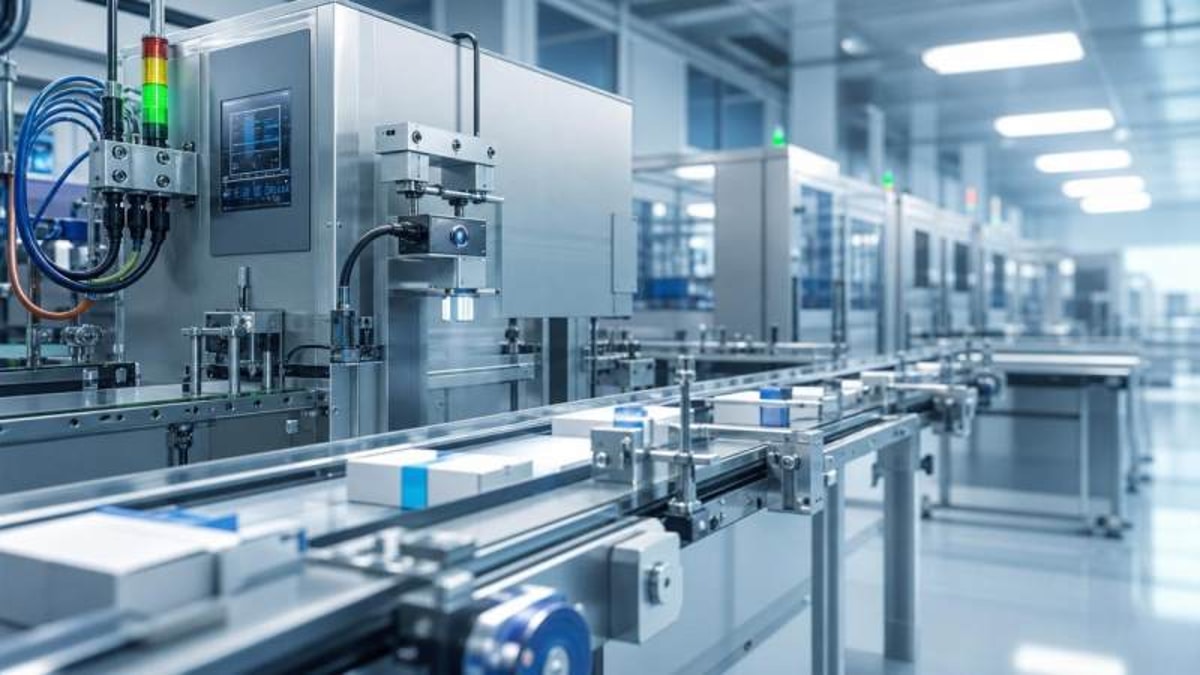
For after-sales maintenance teams, uptime matters more than headline labor savings. Industrial & Manufacturing automation solutions can do far more than streamline routine tasks—they can detect failures earlier, stabilize performance, and reduce service interruptions across complex healthcare and lab environments. In an industry where reliability, compliance, and engineering accuracy directly affect outcomes, the right automation strategy helps maintenance professionals move from reactive repairs to predictive control.
Why are Industrial & Manufacturing automation solutions gaining attention beyond labor reduction?
Many maintenance professionals first encounter automation through a cost-saving narrative: fewer manual checks, faster workflows, and lower staffing pressure. That framing is incomplete. In healthcare manufacturing, diagnostic labs, sterile processing, and device assembly environments, downtime is usually the more expensive problem. A halted filling line, an unstable sensor calibration station, or a packaging bottleneck can delay clinical supply, disrupt validation schedules, and create compliance risk that far exceeds labor costs.
This is why Industrial & Manufacturing automation solutions are increasingly evaluated through a reliability lens. Good automation does not simply replace human motion. It structures data capture, standardizes machine behavior, and makes maintenance conditions visible before a breakdown becomes operationally critical. For after-sales teams, that means fewer emergency dispatches, more accurate fault isolation, and stronger service planning across installed equipment fleets.
In highly regulated sectors, this shift also supports documentation discipline. When alarms, cycle parameters, vibration signatures, and component histories are recorded automatically, service teams can trace root causes with more confidence. That matters to procurement leaders and engineering managers who need evidence, not assumptions, when assessing long-term equipment integrity.
How do these automation systems actually reduce downtime in real maintenance scenarios?
Industrial & Manufacturing automation solutions reduce downtime by improving detection, response, and recovery at the same time. In practice, this usually happens through several layers working together rather than one feature alone.
- Condition monitoring: Sensors track temperature drift, pressure fluctuation, vibration, motor load, flow instability, and cycle deviation before a component fails completely.
- Alarm prioritization: Better automation distinguishes between nuisance alarms and true intervention events, helping technicians respond faster to issues that threaten uptime.
- Automated diagnostics: PLC and control systems can localize faults to specific modules, reducing time spent searching across wiring, drives, actuators, or software dependencies.
- Remote visibility: Service teams can review trends, logs, and performance exceptions without waiting for a full on-site inspection.
- Standardized recovery sequences: Controlled restart logic shortens post-fault recovery and reduces secondary errors after maintenance intervention.
For example, in a laboratory automation setting, repeated pump cavitation may not stop operations immediately, but it can slowly compromise precision and eventually trigger a shutdown. With the right monitoring architecture, maintenance staff can identify the trend early, schedule replacement around workload, and prevent an emergency event. That is a very different outcome from discovering the issue only after test throughput is interrupted.
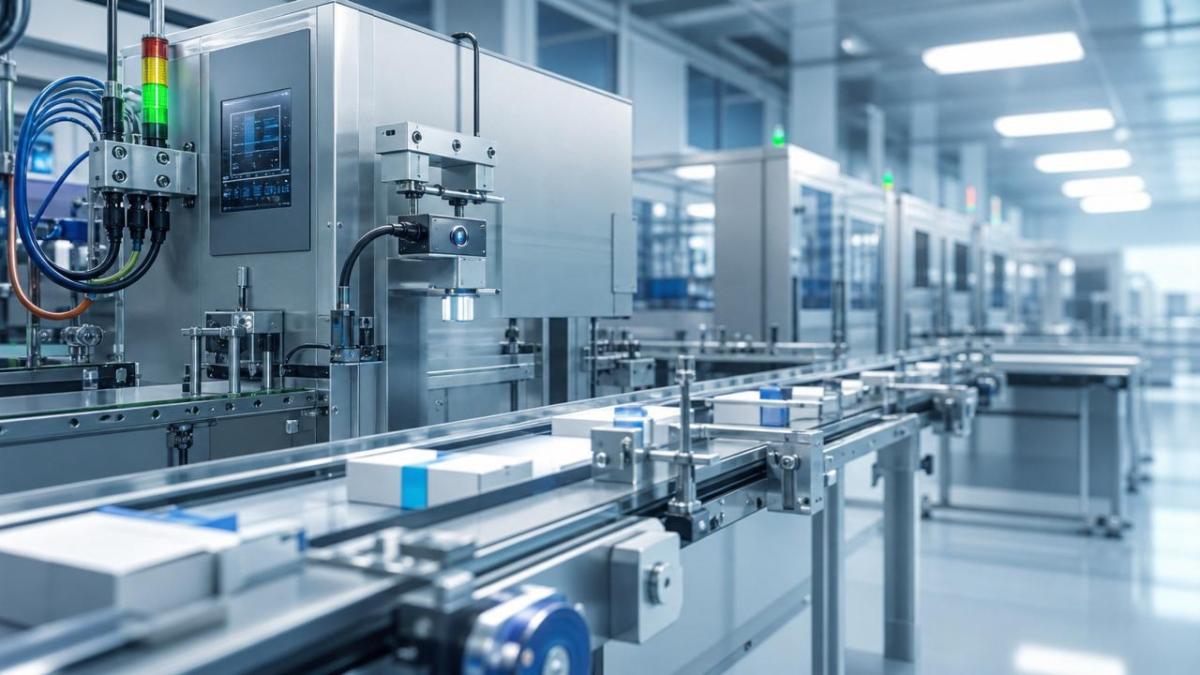
Which environments benefit most from Industrial & Manufacturing automation solutions focused on uptime?
Not every site needs the same level of automation, but environments with high reliability demands benefit the most. In the healthcare and life sciences supply chain, after-sales teams often support systems that must perform consistently under strict operational and regulatory expectations. In these settings, downtime affects not only productivity but also traceability, validation confidence, and service reputation.
The strongest fit usually includes:
- Medical device production lines with repeated cycle control requirements
- Laboratory automation platforms where throughput interruptions affect sample timing
- Packaging and labeling cells that require accurate serialization and low error tolerance
- Cleanroom operations where unplanned access and repair events can create wider disruption
- Sterile or sensitive handling systems where restart quality is as important as restart speed
For maintenance teams, the key question is not whether the equipment is advanced, but whether failure costs are cumulative. If one fault can trigger delayed batches, retesting, operator idle time, field service escalation, or quality investigation, then Industrial & Manufacturing automation solutions are usually justified as resilience tools rather than convenience upgrades.
What should after-sales maintenance teams check first before recommending an automation upgrade?
A common mistake is to start with features instead of failure patterns. Before recommending any automation investment, maintenance teams should examine where downtime really comes from. Is the issue recurring component wear, weak diagnostics, slow parts replacement, unstable environmental conditions, software blind spots, or operator-dependent setup variation? Without that baseline, even technically impressive systems can miss the real bottleneck.
A practical evaluation should cover:
This is also where independent benchmarking becomes valuable. Organizations such as VitalSync Metrics emphasize technical integrity over promotional claims, which helps buyers and service teams compare systems using measurable performance signals instead of brochure language. For uptime-focused decisions, engineering truth matters more than feature volume.
How can you tell whether an automation solution is improving reliability or just adding complexity?
This is one of the most important questions in the market. Some Industrial & Manufacturing automation solutions promise visibility but introduce fragmented dashboards, non-standard components, and maintenance procedures that are harder to support over time. If a platform adds layers without improving diagnostic clarity, it can shift problems rather than solve them.
A reliability-oriented system usually shows a few recognizable traits. First, it makes abnormal behavior easier to interpret. Second, it reduces dependence on tribal knowledge by documenting alarms and recovery paths clearly. Third, it uses components and interfaces that maintenance teams can actually support across the equipment lifecycle. Fourth, it produces service-relevant data, not just operator-facing data.
In other words, the best Industrial & Manufacturing automation solutions simplify maintenance decisions even when the underlying equipment is sophisticated. If your technicians need more time to navigate software than to correct faults, the system may be digitally advanced but operationally weak.
What are the most common mistakes companies make when selecting automation for maintenance performance?
Several selection mistakes appear repeatedly across industrial and healthcare-adjacent environments.
- Overvaluing labor savings: A system may reduce manual effort while still failing to prevent the outages that damage operations most.
- Ignoring data quality: Poor sensor placement, low-resolution logging, or incomplete event history weakens predictive maintenance from the start.
- Underestimating integration burden: New automation must work with existing controls, CMMS workflows, spare-parts strategy, and service procedures.
- Assuming all alerts are useful: Alarm overload can delay the right response and increase technician fatigue.
- Skipping lifecycle support review: If firmware, replacement modules, and technical documentation are not stable, downtime risk may increase later.
For after-sales teams, a disciplined selection process should include field maintainability, documentation depth, component traceability, and training requirements. In regulated operations, it should also include evidence that the automation design supports validation and long-term change control, not just initial commissioning.
How should maintenance teams compare two Industrial & Manufacturing automation solutions in a practical way?
A practical comparison should focus on service outcomes rather than brand reputation alone. Ask both vendors to show how the system behaves under real fault conditions, not just ideal demos. Maintenance value becomes visible when the equipment is stressed, drifting, or partially degraded.
Useful comparison points include mean time to detect, mean time to diagnose, mean time to recover, spare-parts transparency, remote support capability, and the quality of maintenance documentation. It is also worth examining whether the supplier can translate manufacturing parameters into standardized technical reports that procurement, engineering, and compliance teams can all use. That cross-functional clarity reduces friction long after installation.
For organizations operating in MedTech or lab infrastructure, benchmarking matters especially when marketing claims exceed available evidence. Independent test-based comparison can reveal whether a solution’s reliability performance is repeatable, whether component fatigue is acceptable, and whether control consistency supports long-term deployment.
What should be clarified before moving forward with implementation, procurement, or vendor discussions?
Before committing to any Industrial & Manufacturing automation solutions, after-sales maintenance teams should help define the operational questions that matter most. Start with current downtime patterns, service response pain points, and the equipment conditions that are hardest to detect early. Then clarify what data the future system must capture, how alerts should be prioritized, and who will use the information day to day.
It is also smart to confirm implementation scope, validation responsibilities, training depth, parts availability, and support escalation paths. In healthcare-related environments, teams should ask how the solution aligns with documentation discipline, regulatory expectations, and long-term technical reliability. If a supplier cannot explain these points with measurable evidence, caution is justified.
Ultimately, the strongest automation strategy is not the one with the most features. It is the one that helps maintenance teams prevent service interruptions, verify equipment behavior, and sustain uptime with confidence. If you need to confirm a specific solution, parameter range, rollout timeline, budget path, or collaboration model, begin by discussing failure history, diagnostic depth, compliance traceability, and lifecycle support commitments before anything else.
Recommended News
- 2026.05.05IEC 62304:2026 Published — AI Model Traceability for Vital Sign SensorsLydia Vancini (Regulatory Compliance Lead)
- 2026.05.05SASO Mandates IEC 61000-6-4:2026 EMC Certification for Medical Centrifuges in Saudi ArabiaDr. Hideo Tanaka (Imaging Systems Analyst)
- 2026.05.05CMEF Shenzhen 2026: Robotics & Smart Orthotics Lead MEA/LATAM OrdersDr. Alistair Thorne (Senior Biomedical Engineer)
The VitalSync Intelligence Brief
Receive daily deep-dives into MedTech innovations and regulatory shifts.