
When automation solutions fix bottlenecks and when they do not
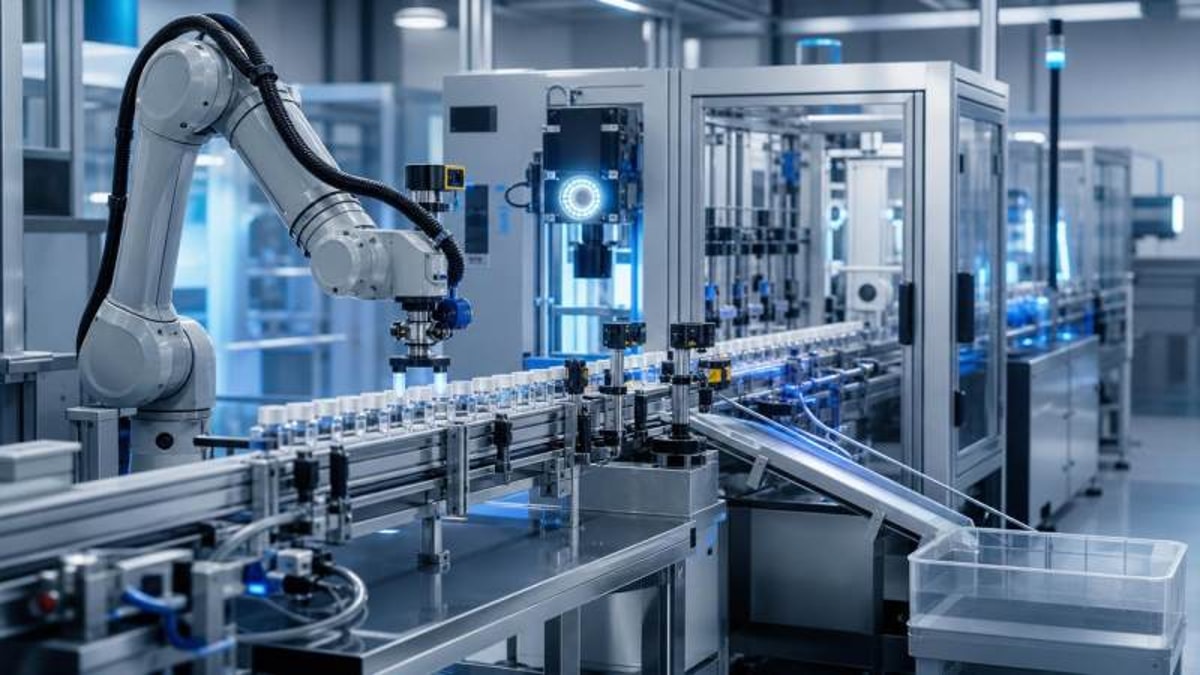
Industrial & Manufacturing automation solutions can remove costly bottlenecks, but they are not a universal fix. For business decision-makers facing rising complexity, compliance pressure, and performance risk, the real challenge is knowing when automation improves throughput, quality, and traceability—and when weak processes, poor data, or unrealistic expectations limit results. This article examines where automation delivers measurable value and where engineering reality demands a more critical approach.
What automation solutions really mean in today’s operating environment
Industrial & Manufacturing automation solutions are often described as a way to replace manual work with machines, software, and control systems. That definition is too narrow for modern enterprises. In practice, automation includes robotics, machine vision, programmable logic controllers, laboratory instrumentation, digital quality systems, sensor networks, data acquisition, and workflow software that connects production, testing, and reporting. The strategic goal is not simply labor reduction. It is process stability, repeatability, compliance, and decision speed.
This matters across the broader industrial landscape, and it is especially important in healthcare, MedTech, diagnostics, and life sciences, where VitalSync Metrics operates. In these environments, every process change affects not only cost and output, but also validation, traceability, and product confidence. A production bottleneck in a general factory may hurt delivery dates. A bottleneck in a medical device assembly line or laboratory workflow can also affect documentation quality, regulatory readiness, and long-term reliability claims. That is why decision-makers should view automation as an engineering system, not a standalone purchase.
The central question is simple: does the bottleneck come from repeatable, measurable work that technology can stabilize, or does it come from deeper issues such as unclear specifications, inconsistent upstream inputs, weak process design, or poor data discipline? Industrial & Manufacturing automation solutions perform well in the first case and often disappoint in the second.
Why bottlenecks are receiving more attention now
Several market forces have made operational bottlenecks more expensive than before. Supply chains are less forgiving. Product portfolios are more complex. Customers expect shorter lead times and higher quality. Regulators demand cleaner records and stronger evidence. In healthcare-related manufacturing, MDR and IVDR pressures have also pushed organizations to demonstrate that process performance is not only efficient, but technically defensible.
At the same time, many firms have already optimized the obvious parts of labor and sourcing. What remains are hidden losses: excessive changeover time, repeated inspection loops, waiting between departments, manual transcription errors, and inconsistent measurement practices. These losses are difficult to detect through basic reporting alone. They become visible only when companies map process flow carefully and connect engineering signals to business outcomes. This is one reason why data-driven benchmarking and technical verification matter. Without an objective baseline, automation may digitize confusion instead of removing it.
Where Industrial & Manufacturing automation solutions usually deliver strong value
The best candidates for automation share several traits. The task is repetitive, cycle time can be measured, quality criteria are clear, and input variation is manageable. In those situations, Industrial & Manufacturing automation solutions improve output not by magic, but by reducing variation and increasing control.
A common example is inspection. Manual inspection can be valuable when products are highly variable or when expert judgment is essential. But when teams inspect thousands of units against repeatable criteria, machine vision, automated metrology, or digital test stations can dramatically improve consistency. The gain is not only speed. Automated inspection creates structured records, supports root-cause analysis, and reduces the risk of undocumented pass-fail decisions.
Another strong use case is material handling and internal movement. If technicians or operators spend excessive time moving parts, samples, or tools between stations, automation can remove non-value-added delays. Conveyors, automated guided vehicles, robotic pick-and-place systems, and orchestrated workflow scheduling often provide measurable returns when transport time is the constraint rather than core processing time.
Automation also performs well in data capture and traceability. In regulated production or laboratory settings, manual data entry creates risk far beyond simple inefficiency. A single transcription error can trigger deviation investigations, delayed release, or customer doubt about system integrity. By integrating sensors, test equipment, and digital records, organizations can reduce documentation burden while improving audit readiness.
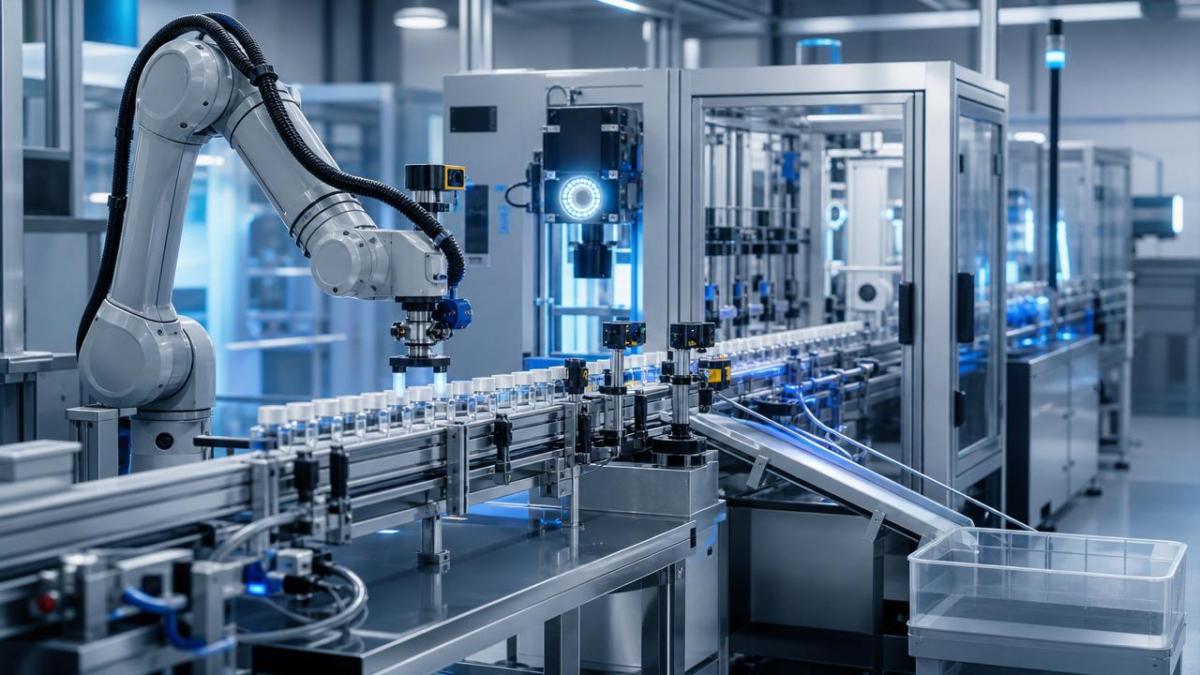
An industry overview of common bottlenecks and automation fit
Not every constraint has the same technical profile. The table below offers a practical view for business decision-makers evaluating Industrial & Manufacturing automation solutions across mixed industrial and healthcare-related operations.
When automation does not fix the real problem
The most common failure pattern is automating a process that is not yet under control. If work instructions are unclear, acceptance limits are debated, or upstream materials vary too much, the automation layer simply makes the instability faster and more expensive. This can create a false sense of progress because dashboards improve while field performance remains inconsistent.
Another limitation appears when leaders assume that equipment alone will align people, data, and accountability. Industrial & Manufacturing automation solutions cannot replace governance. If engineering, quality, procurement, and operations use different definitions of success, new systems may produce more data but less clarity. This is particularly relevant in MedTech and diagnostics, where performance claims must stand up to technical review, not just internal reporting.
Automation also underperforms when variability is the business model rather than the exception. In custom, low-volume, high-mix environments, rigid automation may struggle unless the process architecture is designed for flexibility. Companies often underestimate integration effort, maintenance skill requirements, and validation cost. As a result, the payback period expands beyond the original business case.
A final caution is poor measurement discipline. If baseline cycle time, yield, downtime, and error rates were never captured accurately, there is no reliable way to verify success. Decision-makers may then rely on anecdotal improvements, which is risky in both boardroom planning and regulated audits.
Value beyond throughput: quality, traceability, and technical confidence
It is a mistake to evaluate Industrial & Manufacturing automation solutions only through labor savings or units per hour. In many sectors, the larger value comes from making performance measurable and defendable. Automated testing platforms can reveal drift patterns earlier. Connected production records can support complaint investigations. Standardized data capture can improve supplier qualification and process transfer decisions.
This is where an engineering-first perspective becomes valuable. For example, a wearable sensor manufacturer may not gain the most from a faster line if signal-to-noise ratio remains inconsistent. An implant producer may not benefit from higher machine utilization if material fatigue verification remains weak. A laboratory may not need more instruments if the true issue is non-standard sample handling or fragmented reporting. In each case, automation creates value only when linked to the critical technical variable that defines product trust.
How to assess readiness before investing
A disciplined readiness review helps separate attractive technology from sound investment. Business leaders should start with process evidence, not vendor demonstrations. The first question is where the constraint actually sits: machine time, waiting time, quality hold, data delay, or decision latency. Once that is clear, teams can evaluate whether Industrial & Manufacturing automation solutions address the cause or merely the symptom.
A useful assessment includes five checks:
- Is the target process standardized enough to automate without multiplying exceptions?
- Are the critical quality attributes measurable in a consistent way?
- Do current data show a credible baseline for cycle time, defects, downtime, and rework?
- Will the new system integrate with quality, maintenance, and traceability requirements?
- Does the organization have the internal skill to validate, maintain, and continuously improve the system?
If several answers are no, the priority may be process redesign, data discipline, supplier correction, or specification alignment before automation is expanded.
Typical application categories for business decision-makers
For executives comparing options across plants, labs, or product lines, it helps to group Industrial & Manufacturing automation solutions by business purpose rather than by equipment type.
Practical guidance for a smarter automation strategy
The strongest automation programs do not begin with a broad promise of transformation. They begin with a narrow, verified operational problem and a measurable technical objective. Leaders should prioritize one bottleneck at a time, validate assumptions with real process data, and define success in business and engineering terms. That means pairing throughput targets with defect rates, documentation quality, maintenance response, and compliance impact.
Independent evaluation also has a critical role. In sectors where performance claims are difficult to verify, objective benchmarking can reveal whether a proposed system will truly improve signal quality, dimensional stability, fatigue resistance, or process repeatability. This kind of evidence is especially useful when a supplier’s marketing message is stronger than the underlying technical proof.
For organizations operating in healthcare and life sciences, the bar is even higher. Automation should support not only efficiency, but also integrity of evidence. If a new system cannot improve process confidence, traceability, and long-term reliability, it may not solve the bottleneck that matters most.
Conclusion
Industrial & Manufacturing automation solutions are highly effective when the bottleneck is repetitive, measurable, and structurally understood. They are far less effective when the true issue is unstable inputs, weak process definition, poor governance, or missing technical evidence. For decision-makers, the winning approach is not to ask whether automation is good or bad, but whether the organization has identified the real constraint and built a credible baseline for improvement.
In markets where quality, compliance, and reliability shape competitive advantage, the smartest investment is evidence-led automation. By combining process analysis, objective benchmarking, and realistic implementation planning, companies can use Industrial & Manufacturing automation solutions to remove the right bottlenecks—and avoid automating the wrong ones.
Recommended News
- 2026.05.02AI for semiconductor precision engineering: yield gains or hype?Dr. Hideo Tanaka (Imaging Systems Analyst)
- 2026.05.02When automation solutions fix bottlenecks and when they do notDr. Alistair Thorne (Senior Biomedical Engineer)
- 2026.05.02Energy-efficient manufacturing tech in 2026: what saves most?Sarah Jenkins (Laboratory Infrastructure Consultant)
The VitalSync Intelligence Brief
Receive daily deep-dives into MedTech innovations and regulatory shifts.