
When automation solutions look efficient but cost more later
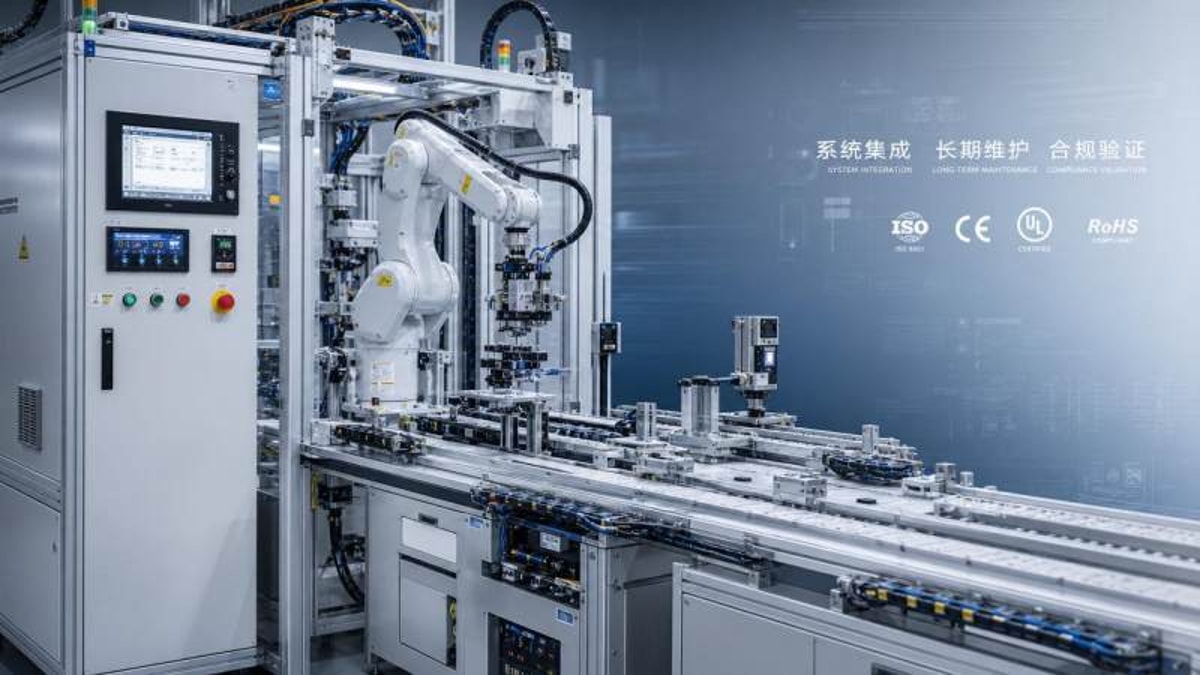
Industrial & Manufacturing automation solutions often promise faster workflows, lower labor costs, and seamless scalability. Yet for enterprise decision-makers, the real risk appears after deployment—when hidden integration issues, compliance gaps, maintenance burdens, and performance limits begin to erode ROI. In complex sectors like healthcare and life sciences, choosing automation requires more than vendor claims; it demands technical validation, long-term reliability assessment, and procurement decisions grounded in measurable engineering evidence.
Why efficient-looking automation solutions often become expensive later
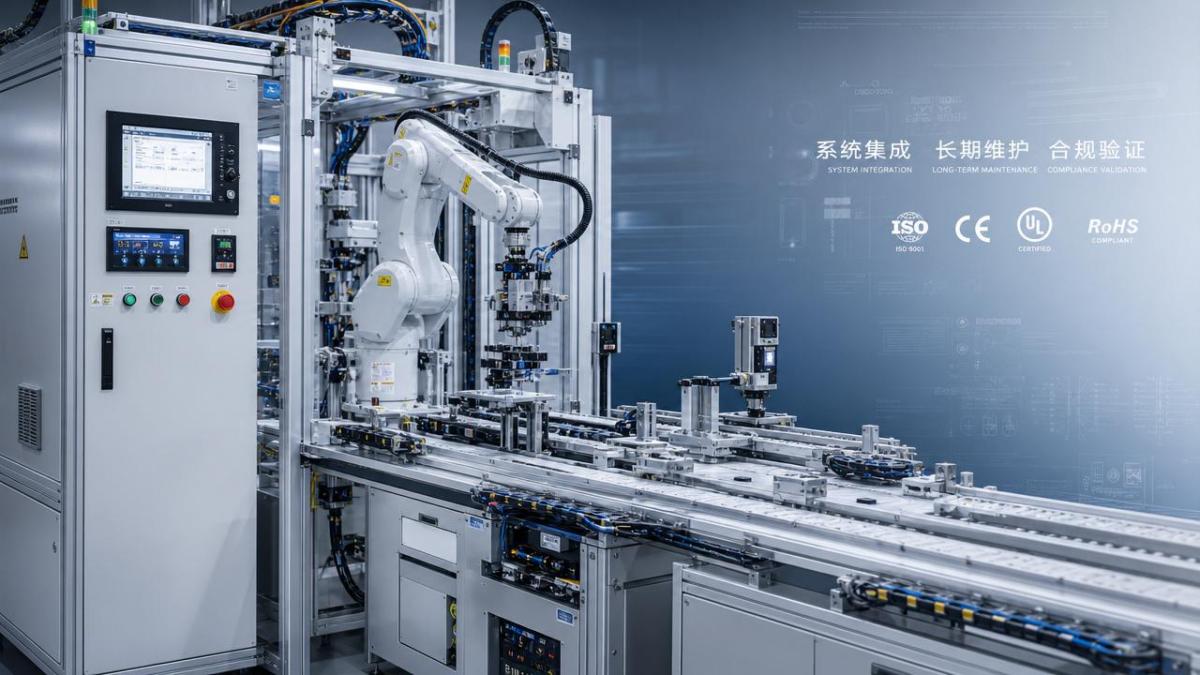
Many Industrial & Manufacturing automation solutions are sold through a simple business case: reduce manual work, improve throughput, and standardize quality. That logic is attractive, especially when leadership teams face labor shortages, cost pressure, and demands for digital transformation. The problem is that the visible purchase price rarely captures the full operational burden that follows deployment.
In healthcare and life sciences environments, this gap is even wider. A production line, laboratory workflow, device assembly process, or test bench may require traceability, calibration discipline, validation records, cleanroom compatibility, and regulatory alignment. If an automation platform was designed for generic industrial output rather than controlled technical performance, the long-term cost can rise through rework, downtime, documentation retrofits, and delayed approvals.
For enterprise buyers, the central question is not whether automation can improve efficiency. It is whether the selected system can sustain performance under real operating conditions, integrate into existing quality systems, and remain supportable over the full asset life cycle.
- The upfront quote may exclude interfaces, validation support, operator retraining, and process redesign.
- Throughput claims may be based on ideal conditions rather than actual production variance, contamination controls, or changeover requirements.
- Software and hardware dependencies can create future lock-in, making upgrades or compliance updates more expensive than expected.
Where enterprise decision-makers misjudge automation ROI
A weak automation decision rarely fails because the concept is wrong. It fails because the evaluation model is incomplete. Decision-makers often compare Industrial & Manufacturing automation solutions on speed, labor reduction, and purchase price, while underweighting process fit, validation effort, and engineering transparency.
The most common hidden cost drivers
The table below highlights where a low-friction sales narrative can diverge from post-installation reality in regulated and technically sensitive environments.
This pattern matters because automation ROI is cumulative. A system that appears cheaper at purchase can become more expensive after twelve to twenty-four months if it consumes engineering labor, slows quality release, or forces future redesign. In healthcare-related supply chains, that penalty can extend beyond cost to procurement risk and market delay.
How Industrial & Manufacturing automation solutions should be evaluated in regulated sectors
For hospital procurement groups, MedTech startups, diagnostic manufacturers, and laboratory architects, the right evaluation framework must go beyond generic industrial metrics. VitalSync Metrics (VSM) addresses this by translating engineering claims into benchmarkable evidence. Instead of relying on brochures, buyers need normalized technical comparisons, failure-risk indicators, and documentation that aligns with real procurement scrutiny.
A practical screening checklist before vendor selection
- Define the process-critical output. Is the goal cycle speed, repeatability, signal integrity, assembly consistency, contamination control, or digital traceability?
- Map interface dependencies. Include sensors, PLCs, software layers, test instruments, labeling systems, and quality records.
- Identify compliance touchpoints. Review whether the automation design affects MDR, IVDR, validation expectations, risk files, or change control procedures.
- Request evidence under non-ideal conditions. Ask how the system performs during shift changes, batch transitions, maintenance windows, and abnormal loads.
- Assess support sustainability. Determine spare-part sourcing, update frequency, documentation quality, and expected service response timelines.
This process reduces the chance of selecting Industrial & Manufacturing automation solutions that look impressive in isolated demonstrations but fail to hold value in validated, high-accountability environments.
Comparing low-cost automation with evidence-based procurement
Not all automation decisions should favor the highest-specification system. The better choice depends on process criticality, compliance burden, and upgrade horizon. However, enterprise buyers need a comparison method that separates low entry price from low lifetime cost.
The table below can help teams compare Industrial & Manufacturing automation solutions in a way that reflects both technical and commercial reality.
In many cases, the evidence-based option is not simply more expensive. It is more predictable. Predictability is critical for enterprise decision-makers because it improves capital planning, reduces internal friction between procurement and engineering, and lowers the chance of costly post-award corrections.
What technical performance data should buyers request?
A frequent weakness in automation sourcing is that buyers ask for features before they ask for test conditions. Industrial & Manufacturing automation solutions should be evaluated using measurable technical evidence linked to the intended use case. A robotic handling cell for sterile consumables, for example, should not be judged by the same metrics as a packaging line or a wearable sensor test station.
Key evidence categories
- Repeatability and tolerance stability across realistic duty cycles, not just short demonstrations.
- Error rates under variable loads, environmental shifts, operator interventions, or high-mix production conditions.
- Maintenance intervals tied to actual component wear, replacement logistics, and skill requirements.
- Data integrity architecture, including logging, traceability, exception capture, and software revision control.
- Material compatibility, especially where cleaning agents, sterilization workflows, or laboratory reagents are involved.
VSM’s role is especially valuable here because independent benchmarking helps procurement teams compare claims on a normalized basis. When buyers can review engineering parameters in standardized whitepaper form, discussions move away from general marketing language and toward technical suitability, risk, and long-term value.
Compliance, validation, and why generic automation can fail in healthcare workflows
In the healthcare and life sciences supply chain, automation cannot be treated as an isolated productivity upgrade. It influences documentation pathways, supplier qualification, process validation, change management, and sometimes device or diagnostic performance. That is why enterprise teams must review automation through both an engineering and compliance lens.
Common compliance-sensitive areas
The table below summarizes where Industrial & Manufacturing automation solutions often require closer review in regulated settings.
Buyers do not need every vendor to be a regulatory consultant. They do, however, need evidence that the automation supplier understands compliance-sensitive deployment. Independent technical review becomes a practical safeguard when internal teams must justify procurement choices to quality, engineering, and executive leadership at the same time.
Which application scenarios deserve extra caution?
Some applications can tolerate adaptation costs. Others cannot. Enterprise teams should apply a stricter review process when automation affects product integrity, measurable clinical performance, or regulated data capture.
High-risk use cases for under-evaluated automation
- Medical device assembly steps where force control, alignment, or material handling consistency directly affects device reliability.
- Laboratory automation workflows where sample traceability, contamination prevention, and process timing influence result integrity.
- Sensor manufacturing or test automation where signal-to-noise ratio, calibration repeatability, and environmental stability determine usable output.
- Packaging and labeling systems tied to serialized tracking, lot control, or multilingual compliance labeling requirements.
In these cases, “good enough” automation can become a hidden liability. VSM helps decision-makers filter options by technical integrity rather than sales momentum, which is especially useful when the cost of a wrong choice includes both operational disruption and downstream compliance exposure.
FAQ: what enterprise buyers ask before selecting Industrial & Manufacturing automation solutions
How should we compare automation proposals from different vendors?
Use a common evaluation sheet that includes integration effort, documentation quality, sustained throughput, downtime assumptions, operator training needs, and maintenance dependencies. If one proposal looks significantly cheaper, confirm whether validation support, interface configuration, and spare parts are included or shifted to your internal team.
Which metrics matter most beyond speed?
Focus on repeatability, failure rates under realistic conditions, data traceability, recovery time after faults, and supportability across the expected service life. For healthcare-oriented workflows, also review document readiness, software change control, and environmental compatibility.
Are Industrial & Manufacturing automation solutions suitable for smaller or growing MedTech firms?
Yes, but only when scalability is real rather than assumed. Smaller firms should prioritize modular systems, clear interface standards, and evidence that future validation or line expansion will not force a full redesign. Growth-stage companies are often most exposed to hidden costs because budgets are tight and engineering resources are limited.
What is the biggest procurement mistake?
Treating automation as a one-time equipment purchase instead of a life-cycle operating system. The buying team should involve engineering, quality, operations, and data stakeholders early. When those functions review the same evidence set, the organization is less likely to inherit expensive surprises after installation.
Why choose us for technical due diligence and sourcing confidence
VitalSync Metrics (VSM) supports enterprise decision-makers who need more than vendor brochures when assessing Industrial & Manufacturing automation solutions. Our value is not generic consulting language. It is disciplined engineering review, independent benchmarking, and structured technical interpretation for healthcare and life sciences procurement.
- We help clarify which parameters truly drive process success, from signal quality and material behavior to reliability and maintainability.
- We support evidence-based product selection by translating manufacturing and performance data into comparable decision inputs.
- We help procurement, engineering, and quality teams align on realistic evaluation criteria before commercial commitment.
- We provide a neutral technical filter for questions involving MDR/IVDR relevance, long-term reliability, and implementation risk.
If your team is comparing automation options, preparing a sourcing review, or trying to verify whether a lower-cost system will remain viable after deployment, contact VSM for a focused discussion. You can consult us on parameter confirmation, product selection logic, delivery-risk review, documentation expectations, compliance-sensitive deployment questions, sample evaluation pathways, and budget-versus-reliability tradeoffs. That conversation can prevent an efficient-looking purchase from becoming a costly operational correction later.
Recommended News
- 2026.05.07GMEA’s First Green Certification for Methanol Fuel Cells Backed by UNEPDr. Hideo Tanaka (Imaging Systems Analyst)
- 2026.05.07IEC 60601-2-57:2026 Raises Ultrasound Metrics Laser Safety to Class 1MLydia Vancini (Regulatory Compliance Lead)
- 2026.05.07CMEF 2026 Shenzhen: Robotics Zone Hits $1.27B in SigningsDr. Alistair Thorne (Senior Biomedical Engineer)
The VitalSync Intelligence Brief
Receive daily deep-dives into MedTech innovations and regulatory shifts.