
When automation solutions solve output but create maintenance risk
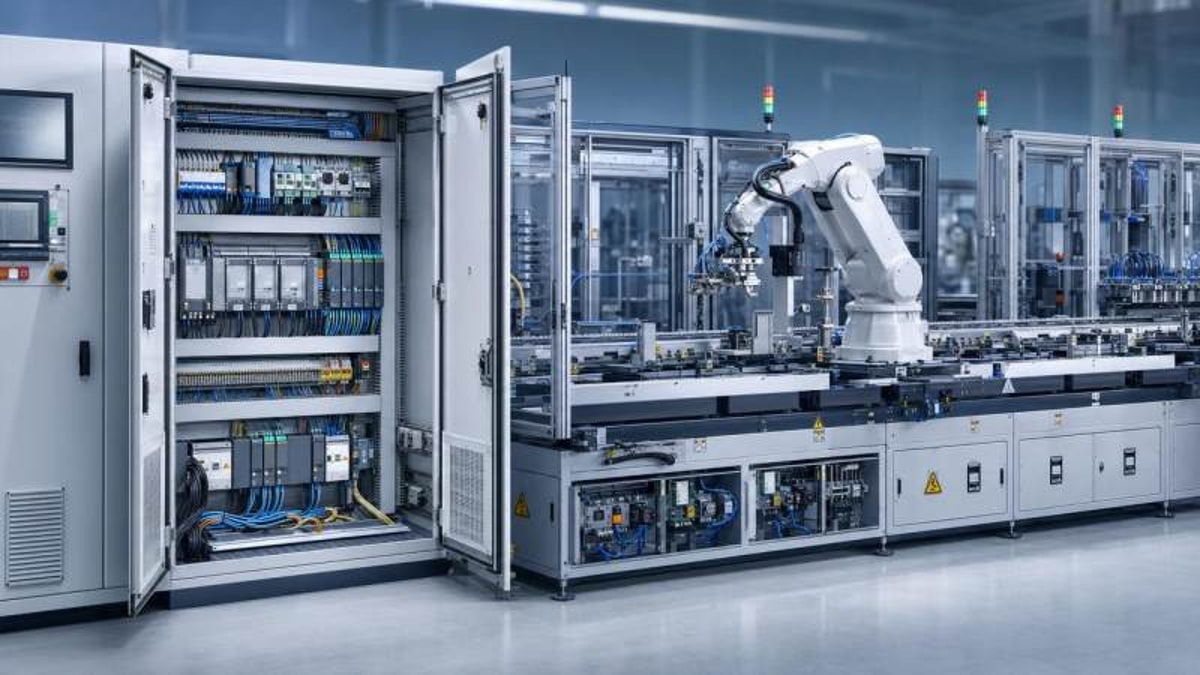
Industrial & Manufacturing automation solutions can boost output, consistency, and speed, but for after-sales maintenance teams, hidden risks often emerge after deployment. When systems are difficult to service, poorly documented, or built without long-term reliability in mind, downtime and support costs rise fast. This article explores how to evaluate automation performance alongside maintainability, compliance, and lifecycle stability.
A visible shift: output is no longer the only metric that matters
Across industries, the conversation around Industrial & Manufacturing automation solutions is changing. For years, automation buying decisions focused on throughput, labor substitution, and process consistency. That logic still matters, but it is no longer enough. Maintenance teams now face a different reality: highly productive systems can become long-term liabilities when service access is poor, spare parts are locked into one vendor, software updates are unclear, or compliance records are incomplete.
This shift is especially important in environments influenced by healthcare-grade expectations, where reliability, traceability, and documented performance increasingly affect procurement decisions. VitalSync Metrics (VSM), as an engineering-focused benchmarking and technical evaluation platform, reflects a wider market movement: buyers are asking tougher questions about what happens after installation, not just what happens during demonstrations. For after-sales maintenance personnel, this means their role is moving from reactive repair to strategic lifecycle risk control.
In practical terms, Industrial & Manufacturing automation solutions are now judged on a broader set of criteria: serviceability, software support horizon, component transparency, validation readiness, and resilience under continuous operation. The trend is clear. The market is moving away from “high output at any cost” toward “stable output with predictable maintenance.”
Why this change is accelerating now
Several forces are driving this transition. First, automation stacks have become more layered. Mechanical assemblies, embedded electronics, industrial networks, remote diagnostics, machine vision, and software orchestration now interact in ways that make troubleshooting harder. When one layer fails, the root cause may sit elsewhere. Maintenance teams are therefore spending more time on diagnosis, vendor coordination, and configuration recovery than on classic part replacement.
Second, procurement standards are rising. In regulated or quality-sensitive sectors, documentation quality is no longer a secondary issue. Equipment owners increasingly expect evidence of component provenance, software version control, calibration logic, and change management records. This is one reason why engineering truth matters more than marketing claims. A fast machine with weak lifecycle documentation can create operational and audit risk long after commissioning.
Third, labor dynamics are reshaping service expectations. Many organizations cannot rely on large in-house maintenance teams with deep platform-specific expertise. That means Industrial & Manufacturing automation solutions must be easier to diagnose, easier to train on, and less dependent on one individual or one external supplier. If service knowledge is trapped inside a single integrator, maintenance risk rises immediately.
Where maintenance risk is being created inside modern automation projects
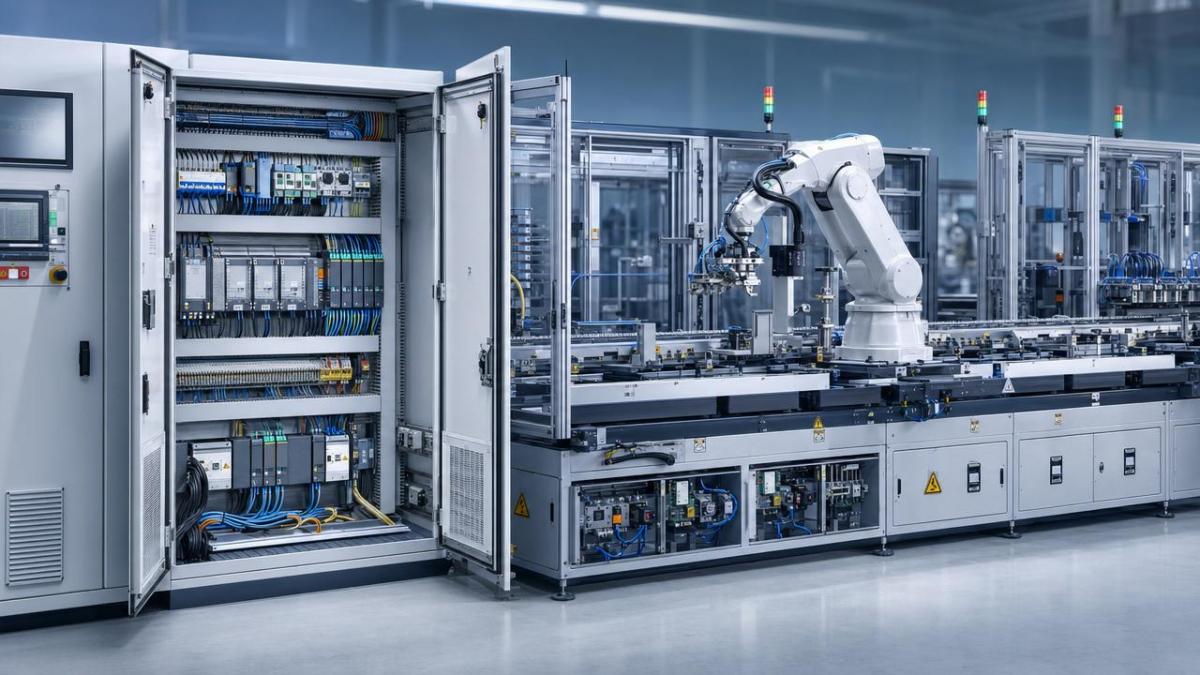
The most common problem is not poor automation in principle. It is misaligned design priorities. Many Industrial & Manufacturing automation solutions are optimized for acceptance testing, not for five years of field support. A system may pass output targets while remaining difficult to open, difficult to isolate, and difficult to restore after a fault. That creates a gap between installation success and operational sustainability.
One major risk area is documentation quality. If electrical schematics do not match the installed revision, if software backups are incomplete, or if parameter maps are poorly labeled, even experienced after-sales teams lose time. Another risk area is proprietary dependency. Custom boards, exclusive connectors, closed software tools, or service passwords can delay recovery and inflate total support cost.
A third risk is hidden complexity. Integrators sometimes stack features to win projects: advanced vision, remote dashboards, predictive modules, automatic changeovers. These functions may be useful, but if they are not supported by robust training, lifecycle documentation, and clear failure logic, they increase service burden. Maintenance teams then inherit systems that are productive under ideal conditions but fragile under real operating conditions.
The strongest market signal: maintainability is becoming a procurement issue
A notable trend is that maintainability is moving upstream into supplier evaluation. This is highly relevant for sectors shaped by healthcare procurement logic, where technical integrity and long-term reliability increasingly define purchasing confidence. In the past, after-sales maintenance concerns were often raised only after repeated service incidents. Now, buyers are more likely to ask before purchase: How modular is the design? Can field-replaceable units be swapped without full revalidation? Is there a documented spare-parts roadmap? How are software changes controlled?
This matters because Industrial & Manufacturing automation solutions are becoming capital assets with compliance consequences. If a platform cannot be maintained in a traceable, repeatable way, its cost extends beyond downtime. It can affect output confidence, quality records, and even customer trust. Maintenance personnel should recognize this as a strategic opportunity. Their field knowledge is now valuable input during vendor selection, factory acceptance planning, and service-level negotiation.
Questions that are appearing earlier in the buying cycle
- Can common failures be diagnosed without proprietary engineering access?
- Are critical components standard, substitute-ready, or vendor-locked?
- Is the control architecture documented well enough for third-party support?
- How are firmware, recipes, calibration data, and backups managed?
- What happens when a component reaches obsolescence during the asset life?
Who feels the impact most strongly
The consequences of poorly maintainable Industrial & Manufacturing automation solutions are not evenly distributed. After-sales technicians feel them first, but the impact spreads quickly across operations, quality, procurement, and executive planning. Understanding that chain of impact helps maintenance teams communicate risk in business terms instead of only technical terms.
What after-sales teams should evaluate beyond output claims
For maintenance professionals, the key trend is not to resist automation but to evaluate it with a wider lens. Industrial & Manufacturing automation solutions should be reviewed as service ecosystems, not just machines. A useful framework begins with five areas: access, documentation, modularity, digital governance, and lifecycle support.
Access means physical and logical service access. Can technicians safely reach wear components? Can alarms be interpreted without obscure codebooks? Documentation means current schematics, revision logs, maintenance procedures, and parts lists that match the installed machine. Modularity means faults can be isolated and corrected without destabilizing unrelated functions. Digital governance covers software backups, user permissions, update protocols, and remote support security. Lifecycle support means realistic spare-parts planning, obsolescence notices, and training continuity.
This broader evaluation aligns with the VSM mindset of turning technical parameters into decision-grade evidence. If maintainability cannot be described, tested, and compared, it will remain underestimated during purchasing and overpaid during service.
A practical evaluation checklist
- Record whether common faults can be resolved at line side or require engineering escalation.
- Map every proprietary component and identify substitute risk.
- Verify that preventive maintenance tasks are realistic for the available workforce.
- Audit software backup, restore, and version-control procedures before go-live.
- Check whether service documentation remains usable after upgrades or modifications.
A likely next phase: from reactive support to reliability intelligence
The next evolution in Industrial & Manufacturing automation solutions will likely be less about adding features and more about making installed systems observable and supportable over time. This does not simply mean “more data.” It means data that helps maintenance teams separate symptom from cause, compare failure patterns across sites, and predict where design choices are increasing service burden.
In this environment, after-sales teams become reliability intelligence contributors. They can identify recurring weak points, document service friction, and feed those findings back into procurement standards and supplier reviews. Over time, organizations that do this well will stop treating maintenance as the cost of automation and start treating it as a source of engineering governance.
That is also where technical benchmarking gains value. Independent, evidence-based evaluation helps organizations compare not only what systems can produce, but how sustainably they can keep producing. For sectors influenced by MDR/IVDR thinking, traceability and repeatability are already familiar ideas. Those same principles increasingly apply to broader automation decision-making.
How to respond now without slowing modernization
The right response is not to delay automation adoption. It is to adopt smarter selection and service criteria. Organizations reviewing Industrial & Manufacturing automation solutions should create acceptance standards that include maintenance evidence alongside performance evidence. That means service manuals should be reviewed before purchase, not after installation. Backup and restore procedures should be tested during commissioning. Obsolescence strategy should be discussed before the first spare part is needed.
For after-sales maintenance teams, the most effective action is to document patterns. Which vendors create the most repeat calls? Which platforms require excessive password escalation? Which upgrades break documentation continuity? These are not isolated annoyances. They are trend signals that reveal where future risk is accumulating.
A stronger internal response also includes cross-functional communication. Maintenance findings should reach procurement, quality, operations, and engineering. When lifecycle risk is translated into downtime probability, training dependency, and compliance exposure, it becomes easier for leadership to understand why the cheapest or fastest automation option may not be the most resilient one.
Final judgment: high output is only valuable when support remains stable
The market direction is becoming more disciplined. Industrial & Manufacturing automation solutions will continue expanding, but the winning systems will not be defined by speed alone. They will be defined by how clearly they can be maintained, validated, updated, and supported across their full operating life. For after-sales maintenance personnel, this is a critical shift in influence. Their field experience is no longer just operational feedback; it is decision intelligence.
If an organization wants to judge whether automation is creating future maintenance risk, it should confirm a few questions early: Is technical documentation current and serviceable? Is support knowledge transferable? Are spare parts and software governance sustainable? Can compliance and reliability survive upgrades and repairs? Those answers now matter as much as cycle time and output. In the next wave of industrial decision-making, maintainability is not a secondary feature. It is a strategic requirement.
Recommended News
- 2026.05.01New Maritime Code Tightens Liability for Ultra-Low-Temp Bio-Sample TransportDr. Hideo Tanaka (Imaging Systems Analyst)
- 2026.05.01CAICT Releases Zero Trust White Paper for Remote Monitoring DevicesLydia Vancini (Regulatory Compliance Lead)
- 2026.05.01Gulf Green Packaging Agreement Takes Effect May 1, 2026Dr. Julian Rossi (RehabTech Specialist)
The VitalSync Intelligence Brief
Receive daily deep-dives into MedTech innovations and regulatory shifts.