
EMC testing for medical electronics: which failures appear most?
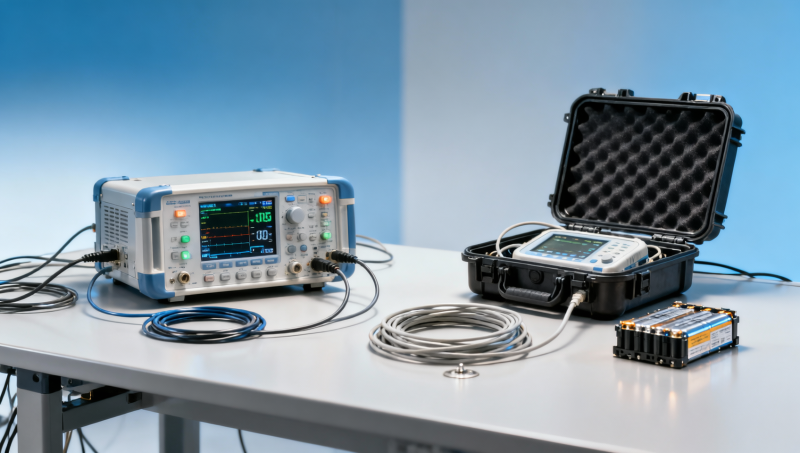
In EMC testing for medical electronics, the most common failures often stem from weak shielding, poor grounding, unstable signal integrity, and battery-related interference. For buyers, engineers, and clinical operators, understanding these risks is as critical as reviewing iso 13485 audit requirements, fda mdr compliance checklist, or lfp battery safety for medical devices—because compliance means little if real-world performance breaks down under electromagnetic stress.
For hospitals, MedTech startups, and laboratory planners, EMC performance is not a narrow engineering issue. It affects procurement risk, device uptime, patient safety, alarm reliability, and regulatory readiness. A device that passes basic functional checks can still fail in a crowded clinical environment where wireless systems, imaging platforms, chargers, and IT infrastructure create constant electromagnetic noise.
This article explains which EMC test failures appear most often in medical electronics, why they happen, how they affect different stakeholders, and what decision-makers should verify before sourcing or approving a product. The goal is practical: reduce rework, shorten validation cycles, and improve confidence in real-world clinical deployment.
The EMC failures that appear most often in medical devices
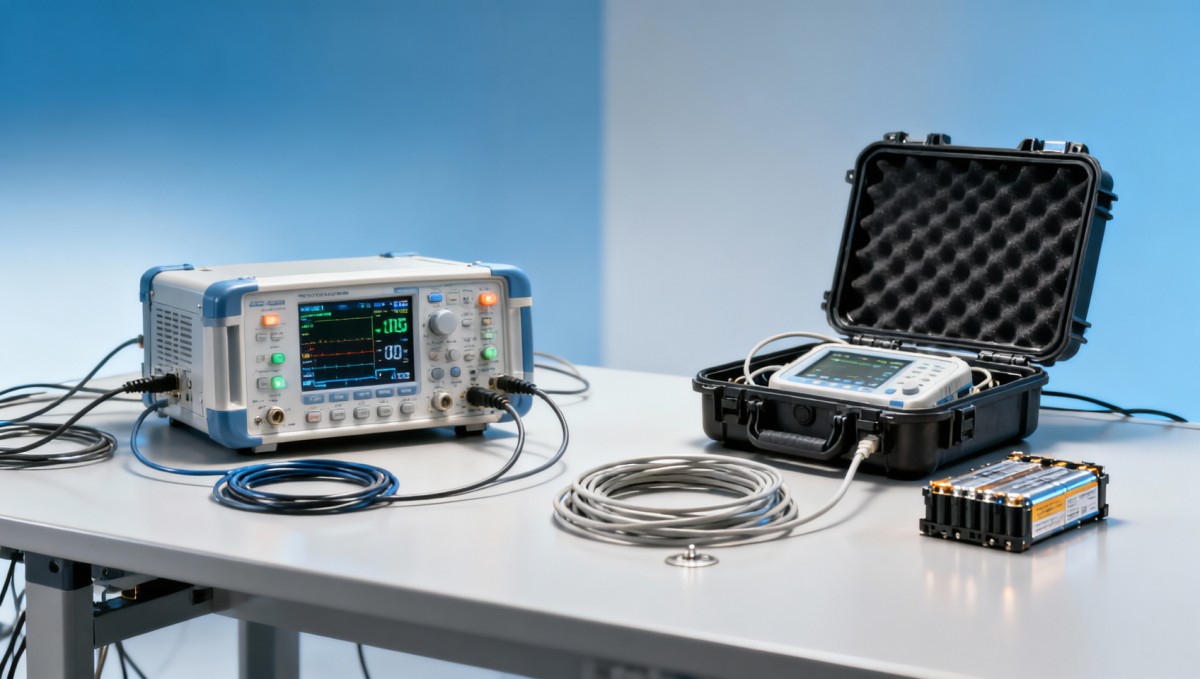
Across wearable monitors, patient bedside devices, diagnostic instruments, and portable systems, the most frequent EMC failures usually fall into 4 categories: radiated emissions, conducted emissions, immunity failures, and performance degradation during transient events. In practice, many failures are not dramatic shutdowns. They appear as data drift, intermittent resets, false alarms, touchscreen instability, or unstable sensor readings.
Medical electronics are especially vulnerable because they often combine sensitive analog front ends, compact enclosures, wireless modules, switching power supplies, and battery charging circuits in a small footprint. When one subsystem generates noise in the 150 kHz to 30 MHz range, or when radiated coupling increases above 80 MHz, weak design margins quickly become visible during compliance testing.
For procurement teams, the key issue is not whether failures happen during development. Failures are common. The real issue is whether the supplier can identify root causes, document corrective actions, and preserve performance under typical hospital conditions such as multiple devices operating within 1 to 3 meters, repeated charging cycles, and exposure to mobile communications equipment.
Typical failure patterns by device architecture
Portable and battery-powered devices often show trouble during ESD and radiated immunity testing because their compact PCB layouts leave limited room for proper return paths and shielding partitions. Devices with long leads, sensor cables, or external probes are more likely to fail conducted immunity and burst tests, especially when cable shielding termination is inconsistent.
Equipment with displays, touch interfaces, and embedded wireless connectivity may also pass emissions limits but still experience unacceptable functional upset. In medical use, a 2-second display freeze, a 1-time false alarm, or a temporary loss of waveform fidelity can be more serious than a simple numerical emissions exceedance.
The table below summarizes the failure modes that buyers and technical reviewers encounter most often during EMC evaluation of medical electronics.
A common pattern is that EMC failure is rarely caused by one flaw alone. It is usually the result of 3 to 5 small weaknesses combining: a floating shield, a noisy power stage, an unprotected connector, and marginal software recovery logic. That is why robust benchmarking matters more than a single pass result.
Why shielding, grounding, and signal integrity break down
Weak shielding remains one of the most visible EMC problems in medical electronics. In compact enclosures, teams often focus on weight, airflow, and industrial design, but overlook seam leakage, cable entry treatment, and the shielding effectiveness of plastic housings with partial conductive coating. A shield that performs well at low frequency may still leak significantly at higher harmonics above 300 MHz.
Grounding is equally misunderstood. Many failures come from mixed grounding references between power, digital, chassis, and analog domains. When return currents are forced to take longer paths, noise couples into ECG front ends, SpO2 circuits, pressure sensors, and data buses. In testing, the symptoms may include increased baseline noise, communication dropouts, or unstable alarms rather than total failure.
Signal integrity issues often surface after a design becomes denser. Routing high-speed clocks near sensitive analog traces, placing switching regulators too close to acquisition channels, or allowing long internal cable runs without enough filtering can all reduce EMC margin. In medical products, even a small drift such as a repeated offset under transient stress can create a serious validation issue.
Design-stage causes that often go undetected
- Shield termination applied at one end only, leaving high-frequency leakage paths.
- Ground stitching vias spaced too far apart, reducing containment around noisy sections.
- Shared power rails for sensitive analog blocks and high-current wireless or motorized modules.
- Connector placement that exposes patient-connected circuits to stronger external coupling.
- Insufficient separation between battery charging circuitry and low-level sensing electronics.
Battery-related EMC is rising in portable healthcare devices
Battery-related interference is increasingly important because more devices now operate in transport carts, home care kits, ambulatory monitoring, and mobile diagnostics. Switching frequencies in chargers and DC-DC converters commonly fall in ranges that generate harmonics affecting measurement channels. If filtering is minimal, noise can change when state of charge moves from 20% to 80%, or when the device switches from battery mode to mains charging mode.
This is why engineering teams and buyers should not review battery safety alone. They should examine charging-mode EMC behavior, ripple control, cable emissions, and performance stability during 2 to 4 hour continuous operation. For portable products, EMC robustness under battery cycling is a procurement question, not only a lab question.
The following table shows how specific design weaknesses map to common test failures and practical countermeasures.
For technical due diligence, the key takeaway is simple: if shielding, grounding, and signal integrity are reviewed only at the end of the project, correction costs rise sharply. A redesign after formal testing can add 4 to 10 weeks, while an early pre-compliance cycle may resolve issues in 5 to 10 working days.
How EMC failures affect procurement, compliance, and clinical use
For procurement directors, EMC failure increases more than certification cost. It can delay market entry, slow pilot programs, create installation restrictions, and increase service calls after deployment. A supplier may claim compliance readiness, but if performance collapses when the device is placed near Wi-Fi routers, infusion pumps, imaging peripherals, or charging trolleys, the real cost appears downstream in support and user dissatisfaction.
Clinical operators experience EMC issues as unreliable behavior. They do not describe the problem as “radiated immunity failure.” They describe screen flicker, false alarm bursts, missing data packets, unstable readings after plugging in a charger, or connection loss during bedside movement. These are workflow issues that affect trust, training burden, and adoption speed across departments.
For enterprise decision-makers, EMC is closely linked to compliance maturity. Reviewing MDR or IVDR documentation without checking engineering evidence leaves a blind spot. A device can look documentation-ready yet still need repeated hardware changes if EMC margins are narrow. That is why an independent benchmarking perspective is valuable when comparing vendors or qualifying emerging MedTech suppliers.
What buyers should verify before approving a supplier
- Ask whether EMC testing included both mains-powered and battery-charging operating modes.
- Confirm if the device was evaluated with all intended accessories, cables, probes, and communication modules attached.
- Review whether performance criteria covered data integrity, alarm continuity, and measurement stability, not only power-on survival.
- Check how many pre-compliance iterations were completed before formal testing; 2 to 3 cycles are often more reassuring than a single last-minute test.
- Request evidence of root-cause correction rather than a generic statement that “the issue was resolved.”
Decision criteria for B2B sourcing
When benchmarking suppliers, technical integrity should be scored alongside price, lead time, and quality system maturity. In many sourcing projects, a 5-point checklist works better than a long unstructured review. It helps teams compare established OEMs, startup manufacturers, and contract design houses on a consistent basis.
The table below is a practical procurement matrix for screening EMC readiness in medical electronics programs.
This kind of matrix is especially useful in value-based procurement. It helps distinguish between a low initial quote and a lower total project risk. In medical electronics, the cheaper option can become more expensive if EMC problems trigger repeated validation, installation limits, or field support escalation within the first 6 to 12 months.
A practical roadmap to reduce EMC risk before formal testing
The strongest EMC programs start early and move in stages. Instead of waiting for final design freeze, effective teams review enclosure strategy, grounding architecture, cable management, and power noise in the concept phase. That shortens the number of redesign loops and improves the probability of a stable first formal submission.
For medical electronics, a realistic roadmap usually involves 3 stages: architecture review, pre-compliance screening, and formal qualification support. Each stage should be linked to measurable checkpoints such as emissions trend reduction, immunity recovery behavior, and stable sensor performance during worst-case operation.
Independent laboratories and benchmarking organizations can add value here by translating engineering observations into decision-ready documents. For buyers and executives, that means fewer vague statements and more standardized evidence: where the weakness lies, what parameter changed, what retest condition was used, and what residual risk remains.
Recommended 5-step implementation path
- Map the full operating profile, including battery mode, charging mode, wireless activity, sensor load, and accessory combinations.
- Review layout, shielding, and grounding before tooling release or final PCB spin.
- Run pre-compliance scans on the most noise-sensitive and highest-current states.
- Document corrective actions with photos, schematics, and before-and-after test observations.
- Repeat validation under clinically relevant conditions, including at least one extended run of 2 to 8 hours.
Common mistakes that extend project timelines
One common mistake is testing the device without all accessories connected. Another is validating only nominal operating mode while ignoring charging mode or wireless peak activity. A third is focusing on emissions numbers while overlooking temporary functional degradation. In medical environments, a device that “recovers automatically” may still be unacceptable if the upset interrupts a measurement or operator workflow.
A second mistake is treating EMC as separate from reliability. In reality, EMC resilience, battery behavior, connector durability, and software fault recovery influence each other. Decision-makers should evaluate them together, especially for portable systems, connected diagnostics, and patient-adjacent electronics where the environment changes constantly.
FAQ for buyers, engineers, and healthcare decision-makers
Which medical devices are most likely to face repeated EMC issues?
Portable monitors, wearable sensing platforms, compact diagnostic units, and devices with wireless plus charging functions are common candidates. Their design density is high, their operating modes vary, and they often combine analog sensing with switching power electronics. Products with long patient leads or external probes also face higher susceptibility risk.
How many test rounds are usually needed before formal certification?
There is no fixed number, but 2 to 3 focused pre-compliance rounds are common for complex medical electronics. Simpler devices may need only 1 round, while compact connected systems may need more. What matters is not the count alone, but whether each round addresses a clear root cause and closes the gap with measurable improvement.
What should operators report if they suspect an EMC-related field issue?
Operators should note the exact symptom, the nearby equipment, whether the unit was charging, the time of occurrence, and whether the event repeated in the same location. Even simple observations over a 24 to 72 hour period can help engineering teams distinguish EMI from software or mechanical faults.
Is a compliance certificate enough for procurement approval?
Not always. A certificate is necessary, but buyers should still ask about test configuration, accessory coverage, operating modes, and corrective action history. For strategic purchases, especially where uptime and signal fidelity matter, engineering evidence is often more informative than a pass statement alone.
The most common EMC failures in medical electronics are rarely random. They usually trace back to predictable weaknesses in shielding, grounding, signal integrity, and battery-related power behavior. For sourcing teams, that means vendor evaluation should go beyond brochures and compliance claims. For engineers and operators, it means focusing on real-world stability under electromagnetic stress, not only on bench-top functionality.
VitalSync Metrics (VSM) supports this process by turning engineering detail into decision-grade benchmarking that procurement leaders, laboratory architects, MedTech teams, and healthcare enterprises can actually use. If you need a clearer view of EMC risk, technical integrity, or comparative supplier readiness, contact us to obtain a tailored evaluation framework, request deeper benchmarking insight, or explore more medical device performance solutions.
Recommended News
- 2026.05.14ISO Launches Revision of Material Biocompatibility Standard with Nano-Coating Degradation Toxicity AssessmentDr. Julian Rossi (RehabTech Specialist)
- 2026.05.14FDA Warning Letters Target Centrifugation Tech Firms Over Batch-Level Biocompatibility RecordsDr. Hideo Tanaka (Imaging Systems Analyst)
- 2026.05.14IEC 60601-2-66:2026 Released: Vital Sign Sensors Require Multimodal Physiological Signal SynchronizationLydia Vancini (Regulatory Compliance Lead)
The VitalSync Intelligence Brief
Receive daily deep-dives into MedTech innovations and regulatory shifts.