 Get Insights

Healthcare digital integration problems in remote monitoring
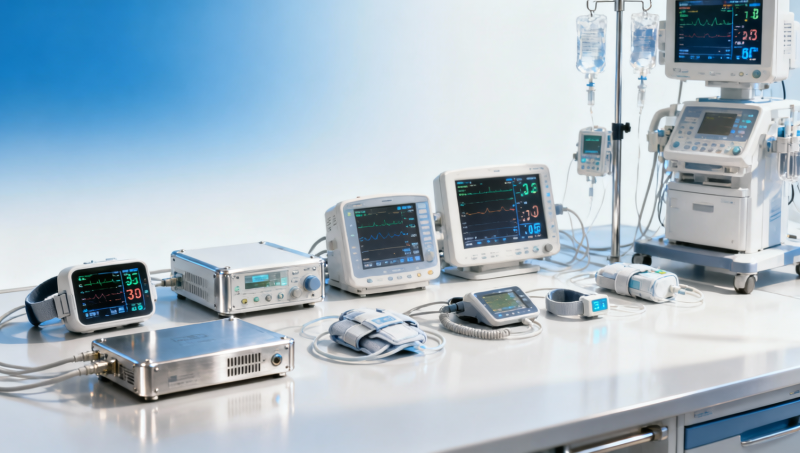
Remote monitoring promises better outcomes, yet healthcare digital integration often breaks down where medical device innovation meets real-world deployment. For global decision-makers, procurement teams, and operators, the challenge is proving medical device testing, medical device evaluation, and MDR IVDR alignment while maintaining medical device reliability and medical equipment compliance. This article examines the core integration problems, benchmarking gaps, and practical paths to stronger medical technology assessment.
In practice, remote monitoring is not a single technology purchase. It is a chain of hardware, firmware, connectivity, data models, clinical workflows, cybersecurity controls, and post-market surveillance. A failure at any point can reduce signal quality, delay clinical decisions, or create procurement risk that only becomes visible after deployment.
For hospitals, laboratories, MedTech startups, and supply-chain leaders, the question is no longer whether digital integration matters. The question is how to verify that a device performs consistently across 12- to 36-month operating cycles, supports regulatory expectations, and integrates into real clinical environments without excessive rework. That is where rigorous benchmarking and engineering-led evaluation become decisive.
Why Remote Monitoring Integration Fails in Real Clinical Environments
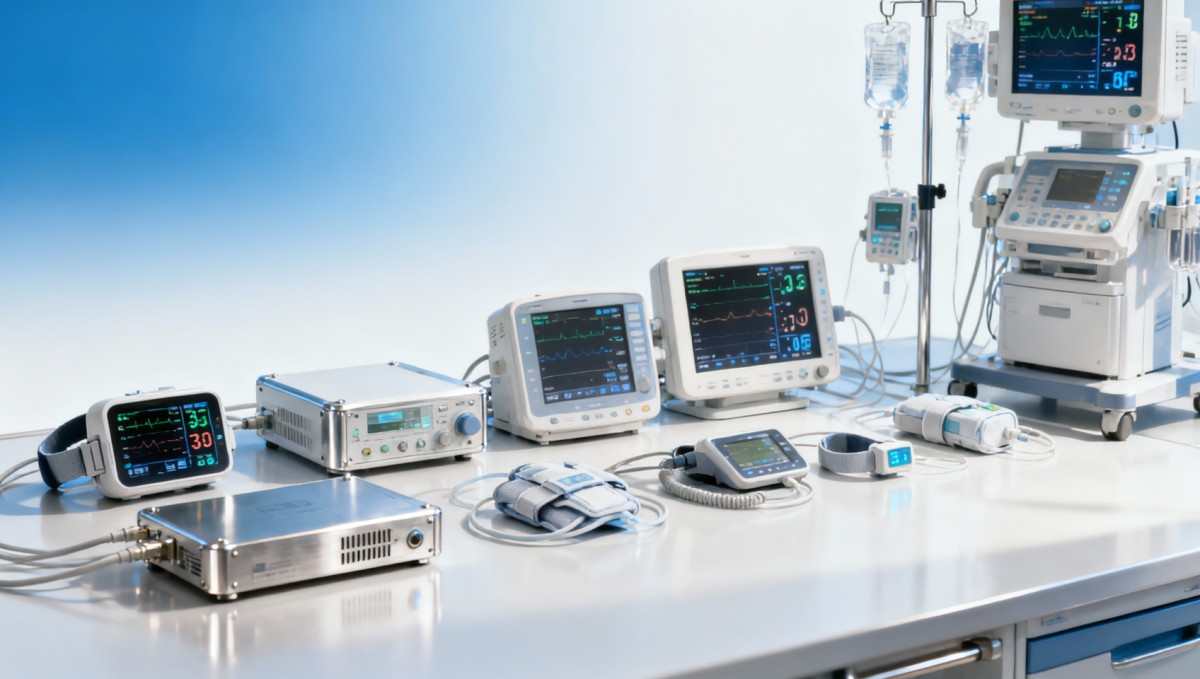
Many remote monitoring programs begin with strong clinical intent but weak technical alignment. A wearable sensor may show acceptable performance in a controlled test bench, yet fail in a hospital ward because of motion artifacts, low battery discipline, unstable wireless coverage, or incompatible data interfaces. These are not edge cases. They are common deployment barriers that affect both device reliability and operator confidence.
The first integration gap is usually between marketing claims and measured performance. Vendors often present battery life, transmission range, or accuracy values under ideal conditions. However, field deployment exposes temperature variation, body-position shifts, packet loss, and cross-platform interoperability issues. A sensor claiming 98% data continuity may deliver materially less when used across mixed Wi-Fi, LTE, and Bluetooth environments over 24-hour cycles.
The second gap is workflow mismatch. Operators need devices that can be applied in under 3 to 5 minutes, calibrated with minimal retraining, and cleaned or replaced without disrupting ward throughput. Procurement teams, by contrast, often review unit cost, lead time, and certificate status first. If workflow fit is not tested before purchase, hidden labor costs can exceed the initial device savings within 6 to 12 months.
A third failure point is fragmented accountability. In remote monitoring, the device maker, software provider, cloud platform, hospital IT team, and clinical users may all own different parts of the system. When an alarm delay occurs, root cause analysis becomes slow. Was the issue sensor drift, API latency, time synchronization, or dashboard configuration? Without clear technical benchmarking, every supplier can claim partial compliance while the care team absorbs the operational risk.
Typical breakdown points before and after go-live
- Data packet loss above 2% to 5% during peak network traffic, reducing trend reliability.
- Sensor performance drift after repeated use cycles, especially in wearable or adhesive-based devices.
- Manual data reconciliation caused by incompatible HL7, FHIR, or proprietary interfaces.
- Alarm fatigue created by poor threshold tuning or delayed signal filtering.
- Maintenance gaps when replacement intervals, firmware updates, and cleaning protocols are not defined.
Operational impact by stakeholder group
For operators, the immediate pain is usability and trust. If false alerts occur even 3 to 4 times per shift, staff quickly develop workarounds. For procurement leaders, the burden is lifecycle cost. For executives, the risk is strategic: a remote monitoring platform that cannot scale across 2, 5, or 10 facilities weakens digital transformation goals and increases vendor lock-in exposure.
The Benchmarking Gaps That Distort Medical Device Evaluation
Remote monitoring systems are often evaluated with incomplete criteria. Technical reviews may focus on headline specifications such as battery duration, sampling rate, or dashboard features, while missing signal stability, calibration retention, and interoperability under mixed-use conditions. That creates a distorted medical technology assessment process, especially in tenders where multiple suppliers describe performance differently.
A stronger evaluation framework should compare devices across at least 4 dimensions: signal integrity, workflow fit, regulatory documentation, and lifecycle support. Signal integrity includes noise tolerance, artifact rejection, and continuity over extended use. Workflow fit covers attachment time, training burden, and reset frequency. Regulatory review includes MDR or IVDR documentation pathways where relevant, while lifecycle support looks at update management, spare parts, and service response windows.
The table below summarizes practical benchmarking criteria that are more useful than generic product claims. These criteria help information researchers and procurement teams translate engineering performance into purchasing decisions.
The key conclusion is simple: better medical device evaluation requires testable definitions. If a tender document asks for “high reliability” but does not define continuity targets, artifact tolerance, or service response conditions, procurement will compare narrative claims instead of technical evidence.
What evidence should buyers request?
Buyers should request validation records that show how the device performs over repeated use cycles, under realistic interference conditions, and across software version changes. For example, battery performance should be reviewed not just on day 1, but after aging, recharge, or storage exposure. A 10% to 20% decline in field endurance can materially change staffing and replacement plans.
It is also wise to request a benchmarking summary that converts engineering parameters into operational risk. That type of whitepaper helps bridge the language gap between laboratory teams, hospital procurement, and executive leadership.
Regulatory and Compliance Friction in Digital Healthcare Integration
Remote monitoring cannot be treated as a pure IT rollout. Devices that capture, transmit, or influence clinical decision-making operate in a compliance-sensitive environment. The practical challenge is that many organizations assess device approval status and software integration as separate tracks, even though operational compliance depends on both. A technically capable system can still fail adoption if documentation, traceability, and change control are incomplete.
For teams working across European markets, MDR and IVDR alignment matters not only at the point of sale, but throughout the product lifecycle. Procurement directors should understand how intended use, software updates, data processing, and accessory changes affect documentation obligations. Even relatively small integration changes can trigger reassessment needs, especially when performance claims are expanded or new clinical workflows are introduced.
Compliance also extends to medical equipment reliability in service. A remote monitoring program should include device traceability, preventive maintenance intervals, calibration checks where applicable, cybersecurity patch procedures, and incident escalation rules. Without these controls, organizations may appear digitally connected while operating with weak post-deployment governance.
Key compliance checkpoints for deployment teams
- Confirm intended use and ensure integration does not create unsupported clinical claims.
- Review technical documentation updates after software revisions or interface changes.
- Define cybersecurity ownership, including patch timing and vulnerability response within 24, 48, or 72 hours.
- Map post-market feedback channels so field failures, false alarms, and data anomalies are recorded consistently.
- Ensure service providers and integrators follow the same document control and change approval rules.
Where compliance review often goes wrong
A common mistake is to equate certificate presence with deployment readiness. Certification may confirm a regulatory path, but it does not verify integration quality across local networks, dashboards, nurse workflows, and asset management systems. Another mistake is underestimating software change impact. Quarterly updates can improve functionality, but if regression testing is weak, they may alter alert timing, synchronization, or interoperability behavior.
That is why medical equipment compliance should be reviewed as a live operating model, not a static file set. Reliable digital integration requires a documented process for updates, incidents, service logs, and acceptance criteria over the full contract term, often 24 to 60 months in institutional settings.
How Procurement Teams Can Compare Remote Monitoring Solutions More Accurately
Procurement decisions fail when the comparison model is too narrow. Unit cost remains important, but in remote monitoring the total cost of ownership depends on replacement rates, integration effort, service dependency, staff time, and data quality. A cheaper device that causes 15 extra minutes of operator work per patient per week can become more expensive than a higher-priced option within one budget cycle.
A disciplined sourcing process should score solutions across technical, operational, and commercial dimensions. At minimum, buyers should define 5 to 7 weighted criteria before issuing final evaluations. Weighting might differ by organization, but reliability, interoperability, documentation quality, service responsiveness, and deployment burden should all be measured explicitly.
The following table can be adapted for tenders, pilot programs, or supplier reviews. It is designed to help enterprise decision-makers move beyond feature lists toward evidence-based procurement.
This comparison model shifts the discussion from vendor promises to measurable procurement outcomes. It also helps operators contribute to selection decisions, since usability and maintenance are built into the scoring process rather than treated as secondary concerns.
A practical 5-step sourcing sequence
- Define the clinical workflow and list the 3 to 5 most critical failure modes.
- Set measurable acceptance thresholds for signal continuity, setup time, and interface behavior.
- Run a pilot for 2 to 6 weeks with operator feedback and technical logging.
- Compare lifecycle support terms, including replacement windows and update governance.
- Convert pilot findings into a weighted procurement score before final award.
When this process is followed, procurement teams are better positioned to identify where a remote monitoring solution is clinically viable, where it is operationally costly, and where additional benchmarking is required before scale-up.
Implementation Roadmap: From Pilot Validation to Scalable Digital Integration
Successful deployment requires a staged implementation model. In most healthcare settings, remote monitoring should move through 3 phases: controlled validation, limited operational pilot, and scaled production rollout. Skipping the first two phases often creates a false sense of readiness because the system has not been tested against real user behavior, network variability, and maintenance conditions.
During the validation phase, teams should verify core engineering assumptions. That includes signal quality under realistic use, battery endurance under target sampling frequency, data transmission stability, and compatibility with existing platforms. This stage may last 2 to 4 weeks and should produce documented pass or fail criteria rather than informal impressions.
The pilot phase should then test operator adoption. Measure attachment time, false alert burden, patient compliance, help-desk demand, and replacement consumption. A reliable pilot does not need hundreds of users. Even a structured cohort can reveal whether workflow friction is manageable or likely to multiply at scale.
The final rollout phase should formalize service ownership. Teams should define who manages device inventory, software updates, user training refreshers, calibration checks if needed, and incident review. Without these agreements, a system that performs well for 30 days can degrade significantly over 12 months.
Recommended implementation checklist
- Establish baseline KPIs such as data continuity, setup time, and alert resolution speed.
- Validate network behavior across all intended care areas, including lower-coverage zones.
- Train operators with role-based instructions and refresh sessions every 3 to 6 months.
- Document firmware version control and approval rules before updates are released.
- Review post-market feedback monthly during the first quarter after go-live.
FAQ: questions buyers and operators ask most often
How long does remote monitoring integration usually take?
For a focused pilot with one device class and one primary interface, 4 to 8 weeks is a common planning range. Broader multi-site programs may require 3 to 6 months when workflow redesign, documentation review, and service alignment are included.
What should be tested before signing a larger contract?
At minimum, test signal stability, battery consistency, interoperability with target systems, operator setup time, and incident escalation behavior. Buyers should also review spare part availability and update governance, because these become critical after the first deployment quarter.
Which mistake is most common in medical device integration?
The most common mistake is assuming laboratory performance automatically predicts clinical usability. In remote monitoring, the real challenge is not only whether a device can measure, but whether it can measure consistently across people, environments, and support processes.
Healthcare digital integration problems in remote monitoring are rarely caused by a single defective component. More often, they emerge from weak benchmarking, incomplete medical device evaluation, unclear compliance ownership, and procurement models that prioritize headline features over operational evidence. Stronger outcomes depend on measuring what actually affects deployment: signal quality, workflow fit, service readiness, and lifecycle governance.
For organizations that need a clearer path from innovation claims to procurement confidence, VitalSync Metrics supports evidence-based assessment through independent benchmarking, engineering-focused whitepapers, and technical review frameworks tailored to MedTech and Life Sciences supply chains. To reduce integration risk, strengthen medical technology assessment, and evaluate remote monitoring solutions with greater precision, contact VSM to discuss your use case, request a tailored benchmarking scope, or explore a customized evaluation roadmap.
- medical technology assessment
- medical device reliability
- medical equipment compliance
- medical technology
- medical equipment
- hospital procurement
- MDR IVDR
- technical benchmarking
- digital integration
- life sciences
- supply chain
- global decision-makers
- healthcare digital integration
- medical device evaluation
- medical device testing
- healthcare integration
- medical device innovation
- Remote Monitoring
Recommended News
- 2026.10.15Medical Packaging Heat Seal Testing: Seal Strength vs. Seal Integrity TestsDr. Julian Rossi (RehabTech Specialist)
- 2026.10.14Clinic Supplier Comparison: Evaluating Cost, Delivery Reliability, and SupportDr. Alistair Thorne (Senior Biomedical Engineer)
- 2026.10.13Engineering Performance Testing Services: Evaluating Test Methods and AccuracyDr. Alistair Thorne (Senior Biomedical Engineer)
The VitalSync Intelligence Brief
Receive daily deep-dives into MedTech innovations and regulatory shifts.