 Get Insights

Where IoT integration pays off first in smart agriculture
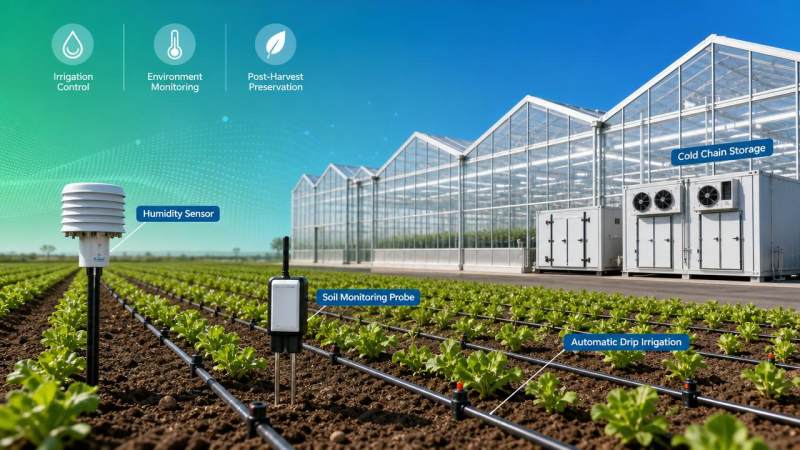
In smart agriculture, early gains rarely come from digitizing everything at once. They come from focused deployment where field visibility is weak, inputs are expensive, and timing drives yield.
That is why IoT integration for smart agriculture often pays off first in irrigation, environmental monitoring, equipment tracking, and post-harvest control. These areas convert data into action quickly.
The strongest business case appears when connected sensors, gateways, and dashboards reduce waste, shorten response time, and improve operational consistency across mixed agricultural environments.
For organizations used to evidence-based evaluation, the lesson is familiar. Value comes from measurable performance, not broad digital claims. Smart agriculture follows the same rule.
Why early ROI depends on the agricultural scenario
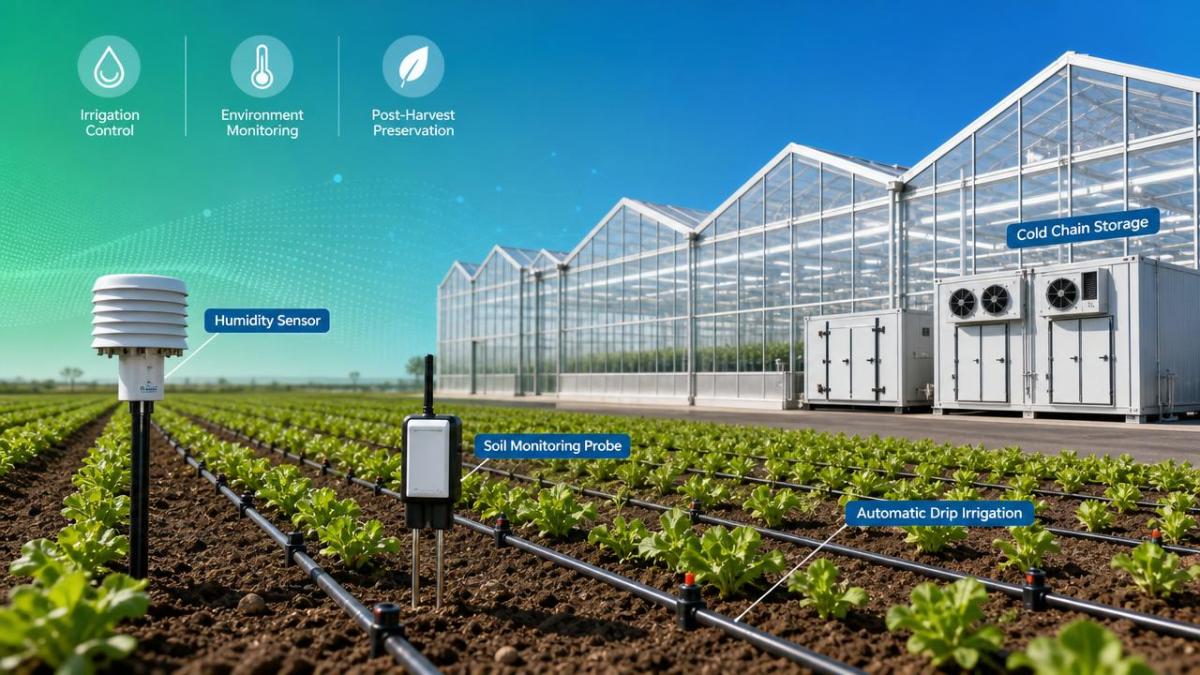
Not every farm operation benefits equally from connected systems. IoT integration for smart agriculture creates faster returns where conditions change often and manual checks are inconsistent.
A greenhouse has different priorities than open-field crops. A dairy unit needs continuous equipment and animal data. A cold chain needs alerts before product quality drops.
The first decision is not which device to buy. It is which process loses money today through delay, uncertainty, overuse, or avoidable downtime.
When that process is identified clearly, IoT integration for smart agriculture becomes a practical operating tool instead of a broad transformation slogan.
Scenario 1: Irrigation control is usually the first high-impact win
Water management often delivers the quickest payback. Soil moisture sensors, weather feeds, and automated valves can reduce over-irrigation within one growing cycle.
This is especially true in regions with water scarcity, high pumping costs, or uneven field conditions. Real-time decisions outperform calendar-based watering routines.
Core judgment points
- Water cost is significant relative to crop margin.
- Irrigation schedules rely on manual observation.
- Field variability causes dry spots or runoff.
- Pump energy usage is difficult to optimize.
In this scenario, IoT integration for smart agriculture supports immediate visibility. Teams see moisture trends, rainfall patterns, and valve performance before stress affects crop development.
Scenario 2: Greenhouse climate monitoring creates fast operational clarity
Controlled environments gain value quickly from connected monitoring. Temperature, humidity, CO2, light, and ventilation data directly influence growth quality and disease risk.
A greenhouse does not need a massive platform first. It needs accurate sensing, alert thresholds, and a response workflow that operators actually follow.
Where the payoff appears first
- Reduced crop loss from overnight temperature swings.
- Lower energy waste from unnecessary heating or ventilation.
- Faster disease prevention through humidity alerts.
- More consistent output across production zones.
For greenhouse operations, IoT integration for smart agriculture pays off first when it stabilizes environmental control and reduces the cost of variability.
Scenario 3: Equipment monitoring matters when downtime is expensive
Connected machinery becomes valuable when failure interrupts planting, spraying, milking, or harvesting. In these moments, downtime costs more than the sensor system itself.
Telematics, vibration monitoring, fuel tracking, and maintenance alerts help predict problems before a critical machine stops during a narrow operating window.
Best-fit conditions
- Seasonal timing makes delays costly.
- The fleet is spread across large areas.
- Fuel and maintenance costs are rising.
- Breakdowns are discovered too late.
In these cases, IoT integration for smart agriculture starts by protecting uptime, not by building a full autonomous fleet strategy.
Scenario 4: Livestock and storage environments reward continuous sensing
Animal housing, feed storage, and post-harvest rooms depend on stable environmental conditions. Temperature, humidity, ammonia, water flow, and feed inventory all affect outcomes.
These settings benefit from alerts because deviations can escalate quickly. A failed fan, leaking water line, or warming storage area becomes expensive within hours.
Here, IoT integration for smart agriculture pays off first through loss prevention. It protects biological conditions that are difficult to recover once disrupted.
Scenario 5: Post-harvest cold chain visibility often outperforms field-first expansion
Many organizations begin in the field, but post-harvest monitoring can deliver faster value. Quality loss in storage or transport destroys margin after production costs are already locked in.
Connected temperature and humidity tracking helps preserve shelf life, improve traceability, and support quality compliance across warehouses and distribution routes.
When spoilage claims, inconsistent cooling, or delivery disputes are common, IoT integration for smart agriculture should start after harvest, not before it.
How needs differ across smart agriculture scenarios
Practical fit recommendations before scaling IoT integration for smart agriculture
- Start with one process where losses are already visible in cost or quality data.
- Choose metrics that operators can influence daily, not only strategic indicators.
- Validate connectivity conditions before expanding sensor count.
- Prefer alert logic tied to action steps, not passive dashboards.
- Measure payback through saved inputs, protected output, and avoided downtime.
- Scale only after data quality and response discipline are proven.
This approach makes IoT integration for smart agriculture easier to justify and easier to maintain across diverse operating conditions.
Common mistakes that delay returns
One common mistake is starting with a technology catalog instead of a loss scenario. More devices do not guarantee more value.
Another mistake is ignoring sensor accuracy, calibration, and placement. Bad data can create false confidence and poor operational decisions.
Some projects also fail by overbuilding analytics too early. In many cases, simple alerts and trend views produce faster results than advanced modeling.
A final oversight is weak integration between field data and response routines. IoT integration for smart agriculture works only when data changes behavior.
Next steps for choosing the right first-use case
Map operations where uncertainty causes waste, delay, or quality variation. Rank them by cost impact and speed of measurable improvement.
Then define a narrow pilot with clear thresholds, baseline data, and a short review cycle. The best first deployment should prove action, not just connectivity.
When evaluated this way, IoT integration for smart agriculture becomes a disciplined investment decision. It starts small, learns fast, and scales where evidence is strongest.
Organizations that prioritize the right scenario first usually capture the earliest returns and build a stronger foundation for broader digital agriculture programs.
Recommended News
- 2026.10.15Medical Packaging Heat Seal Testing: Seal Strength vs. Seal Integrity TestsDr. Julian Rossi (RehabTech Specialist)
- 2026.10.14Clinic Supplier Comparison: Evaluating Cost, Delivery Reliability, and SupportDr. Alistair Thorne (Senior Biomedical Engineer)
- 2026.10.13Engineering Performance Testing Services: Evaluating Test Methods and AccuracyDr. Alistair Thorne (Senior Biomedical Engineer)
The VitalSync Intelligence Brief
Receive daily deep-dives into MedTech innovations and regulatory shifts.