 Get Insights

Why smart street lighting cuts costs beyond energy savings
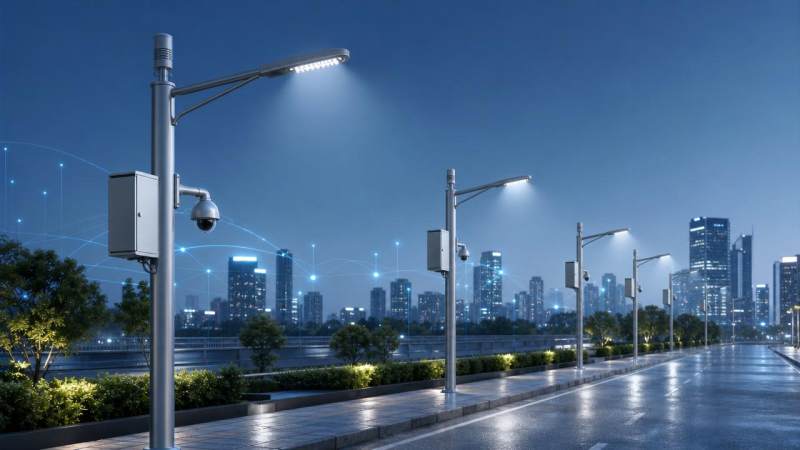
For finance approvers, the value of smart street lighting goes far beyond lower electricity bills. Smart street lighting energy-saving solutions also reduce maintenance costs, extend asset life, improve outage response, and support better budget forecasting through real-time data. This article explores how these systems deliver measurable financial returns while strengthening operational efficiency and long-term infrastructure planning.
What makes smart street lighting more than an energy project?
Many projects start with a simple goal: cut power use. That is important, but incomplete.
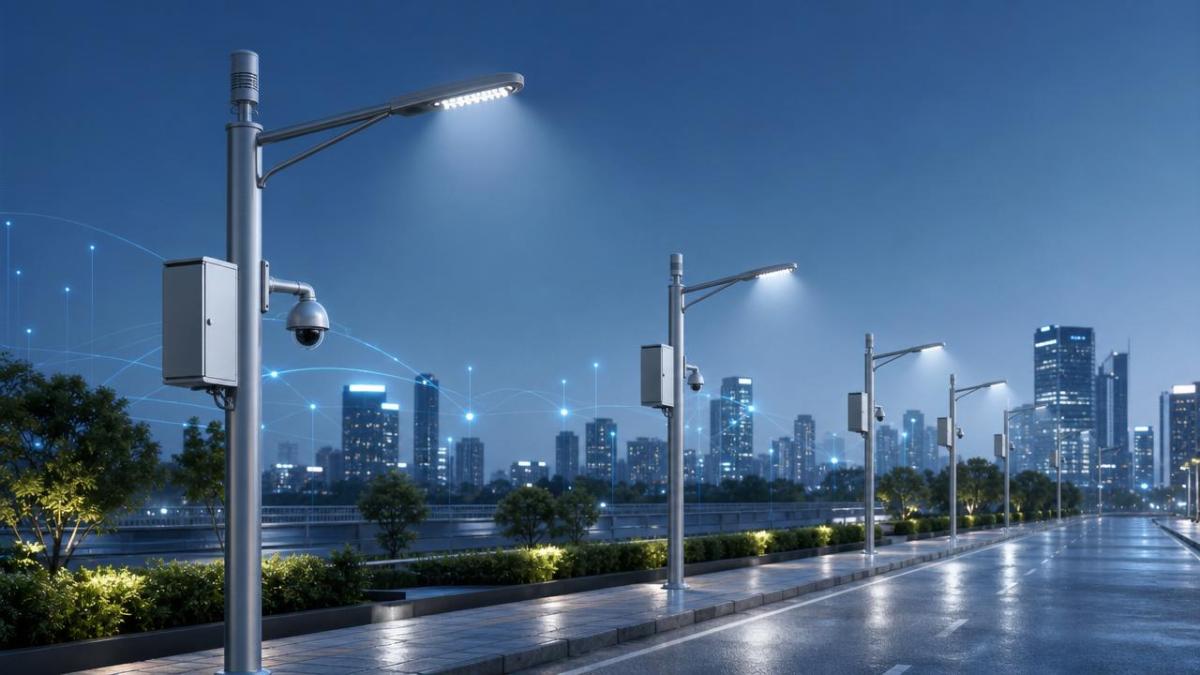
Smart street lighting energy-saving solutions combine LED fixtures, networked controllers, sensors, and management software into one operating system.
This system changes lighting from a fixed utility expense into a measurable infrastructure asset.
Traditional street lights often run at full output all night. Faults are found late. Crews respond after complaints.
Smart systems dim by schedule, traffic flow, weather, or location risk. They also report failures automatically.
That means lower energy consumption, fewer emergency callouts, and better service continuity.
For broad infrastructure planning, the bigger value lies in data. Every pole becomes a source of operational evidence.
Usage patterns, driver behavior, burn hours, and outage history can all inform future budget decisions.
In other words, smart street lighting energy-saving solutions support cost control far beyond the utility bill.
How do smart street lighting energy-saving solutions reduce maintenance costs?
Maintenance savings are often underestimated during project evaluation. In many cases, they are financially decisive.
Conventional networks rely on manual inspections, citizen reports, or routine night patrols to detect failures.
That process creates hidden costs in labor, fuel, scheduling, and traffic disruption.
Smart street lighting energy-saving solutions enable remote fault detection. Teams know which fixture failed and where.
This prevents time lost checking healthy lights and reduces unnecessary truck rolls.
Better diagnostics also improve first-visit repair rates. Crews can arrive with the right parts and tools.
Predictive maintenance adds another layer of savings. Performance trends can reveal driver issues before full failure.
That helps avoid emergency repairs, overtime costs, and safety complaints.
Common maintenance cost reductions include:
- fewer night inspections
- reduced field troubleshooting time
- fewer repeat visits
- lower vehicle and fuel use
- less reactive maintenance
These savings may look operational, but they directly influence total cost of ownership.
Can smart controls extend asset life and delay capital replacement?
Yes, and this benefit deserves closer attention in budget reviews.
Lighting assets fail because of heat, electrical stress, environmental exposure, and poor operating conditions.
Smart dimming lowers average operating intensity. Lower intensity often means lower thermal stress.
That can preserve LED performance, drivers, and other components over longer periods.
Burn-hour tracking is equally useful. Asset managers gain a clearer picture of actual usage instead of estimates.
This allows replacement cycles based on real condition, not generic schedules.
The result is more accurate capital planning and fewer premature replacements.
Smart street lighting energy-saving solutions therefore create two financial advantages at once.
They reduce current operating expense and protect long-term infrastructure value.
This matters across mixed environments, including roads, campuses, industrial zones, logistics yards, and public spaces.
Why does real-time data improve financial forecasting?
Forecasting becomes stronger when assumptions are replaced by system evidence.
Traditional lighting budgets often depend on average burn hours, estimated failures, and historical utility rates.
Those estimates are useful, but they can mask site-specific inefficiencies.
Smart street lighting energy-saving solutions provide live and historical performance data.
This data helps model energy demand, maintenance timing, outage trends, and seasonal operating patterns.
Better forecasting supports several practical outcomes:
- more accurate annual budgeting
- clearer return-on-investment tracking
- improved contract performance review
- stronger justification for phased upgrades
Data visibility also reduces disputes around expected savings.
When every control action and outage event is logged, performance conversations become evidence-based.
That is especially valuable when multiple sites use different operating profiles.
What hidden savings are often missed during project evaluation?
The largest mistake is focusing only on kilowatt-hour reduction.
Energy savings are visible and easy to calculate. Secondary savings are harder, but often substantial.
These hidden benefits can include lower insurance exposure, fewer dark-area complaints, and reduced service interruption risk.
Faster outage response may also improve safety perception and reduce reputational pressure.
In commercial and industrial settings, lighting precision can support productivity, loading operations, and site compliance.
Another overlooked factor is scalability. Smart infrastructure can support sensors, cameras, or environmental monitoring later.
That future-readiness can avoid duplicate civil works and shorten deployment time for new services.
The table below summarizes direct and indirect value areas.
How should decision-makers compare smart street lighting options?
A low fixture price does not guarantee a low lifecycle cost.
Smart street lighting energy-saving solutions should be compared through technical, operational, and financial criteria together.
Start with dimming capability, communications reliability, and software usability.
Then review fault reporting detail, cybersecurity controls, integration flexibility, and warranty structure.
It is also important to test how reporting supports audits, savings validation, and service benchmarking.
Key comparison questions include:
- Can the system verify actual energy reduction by site?
- Does it identify exact failure points remotely?
- Can schedules adapt to traffic and local conditions?
- Will the platform scale without replacing hardware?
- Are maintenance reports easy to export and review?
A disciplined review avoids the common trap of buying smart hardware without useful management intelligence.
What risks and misconceptions should be addressed early?
One misconception is that all smart lighting systems produce the same savings.
Actual outcomes depend on baseline conditions, dimming strategy, network quality, and maintenance workflow discipline.
Another risk is poor data governance. If alerts are ignored, the intelligence value disappears.
Some projects also underestimate commissioning complexity, especially across mixed legacy infrastructure.
The best approach is phased deployment with clear metrics before full expansion.
Those metrics should include energy use, outage duration, maintenance response time, and failure recurrence.
In technical evaluation, evidence matters more than claims.
That principle reflects the same engineering discipline used in healthcare benchmarking and regulated performance review.
Reliable infrastructure choices should be guided by measurable system behavior, not marketing language.
Quick FAQ table: common questions and practical answers
Why smart street lighting cuts costs beyond energy savings is now a measurable question, not a theoretical one.
Smart street lighting energy-saving solutions can lower operating expense, reduce service disruption, and improve capital timing.
The strongest projects treat lighting as connected infrastructure with data-backed accountability.
The next step is simple: review current outage patterns, maintenance costs, and control limitations before comparing upgrade options.
When evaluation follows evidence, long-term savings become easier to prove and easier to sustain.
Recommended News
- 2026.10.15Medical Packaging Heat Seal Testing: Seal Strength vs. Seal Integrity TestsDr. Julian Rossi (RehabTech Specialist)
- 2026.10.14Clinic Supplier Comparison: Evaluating Cost, Delivery Reliability, and SupportDr. Alistair Thorne (Senior Biomedical Engineer)
- 2026.10.13Engineering Performance Testing Services: Evaluating Test Methods and AccuracyDr. Alistair Thorne (Senior Biomedical Engineer)
The VitalSync Intelligence Brief
Receive daily deep-dives into MedTech innovations and regulatory shifts.