 Get Insights

Mining equipment choices that reduce safety risks early
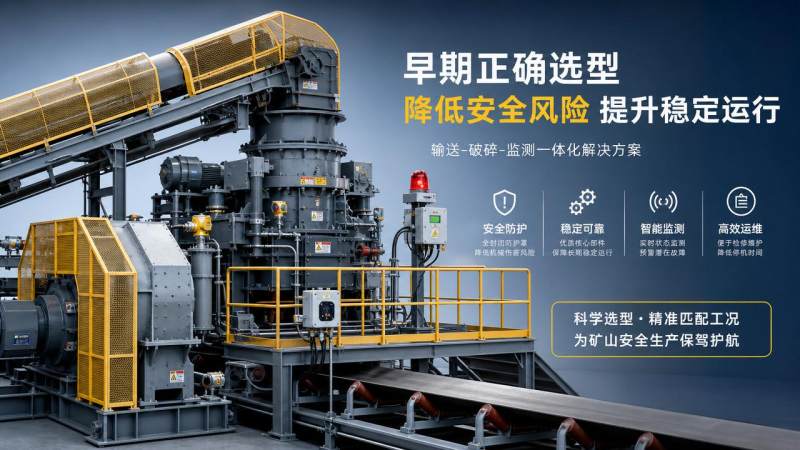
Choosing the right Industrial & Manufacturing equipment for mining industry operations is one of the fastest ways to reduce safety risks before they escalate. For quality control and safety management teams, early equipment decisions affect machine reliability, hazard exposure, compliance readiness, and long-term operating stability. This article explores how smarter equipment selection can strengthen prevention strategies, improve site safety outcomes, and support more dependable performance from day one.
For teams responsible for inspection, incident prevention, and supplier review, the first equipment shortlist often determines whether a site will face repeated shutdowns, unsafe maintenance access, or avoidable operator exposure within the first 6 to 12 months.
That is why early evaluation should not focus only on output capacity or acquisition cost. It should also test guarding design, fault visibility, spare-part consistency, environmental tolerance, and how easily the equipment fits into a documented quality and safety management process.
Why early mining equipment choices shape safety outcomes
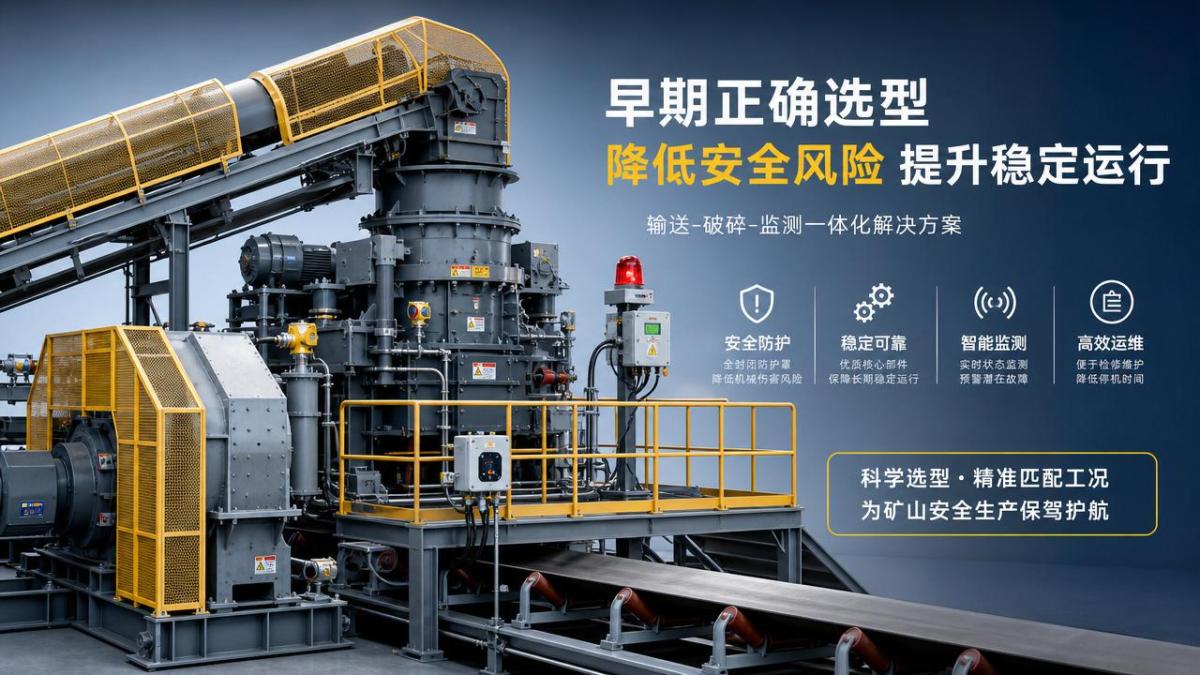
In mining environments, many hazards are built into the operating context: dust, vibration, heat, moisture, unstable ground, heavy loads, and 24/7 production pressure. When Industrial & Manufacturing equipment for mining industry use is selected without a risk-based review, these conditions can multiply failure points quickly.
A poorly matched conveyor, crusher, screen, pump, drill, or material handling unit can increase three major safety burdens at once: more manual intervention, more emergency maintenance, and more unpredictable stoppages. Each of those raises the likelihood of injury exposure during inspection or restart activities.
The hidden cost of selecting by price alone
A lower purchase price may appear attractive during tendering, but quality control teams often see the downstream effect within 90 to 180 days. Components with short wear life, weak sealing, or inconsistent tolerances can force maintenance intervals from every 12 weeks to every 4 weeks.
That pattern matters because every extra maintenance event creates another lockout-tagout cycle, another confined or elevated access task, and another chance for procedural drift. In many sites, reducing intervention frequency by even 20% to 30% can meaningfully lower frontline risk exposure.
Safety starts before commissioning
The safest equipment is not simply the machine with the most features. It is the machine whose design aligns with the site’s material profile, duty cycle, operator skill level, and maintenance resources. A machine rated correctly from day one usually requires fewer workarounds later.
For example, if a dewatering pump is selected for ideal flow instead of real slurry conditions, abrasive wear can rise sharply. If a haulage or loading system is sized without accounting for 15% to 25% peak surge variation, spillage and emergency clearing tasks often increase.
Common early-stage safety indicators to review
- Guarding coverage at pinch points, rotating shafts, and belt transfer areas
- Safe access for inspection within 3 to 5 routine checkpoints per shift
- Noise and dust control provisions around loading, crushing, and screening zones
- Maintenance intervals for wear parts, seals, liners, and hydraulic components
- Alarm visibility, sensor placement, and fault-code clarity for operators
- Compatibility with site lockout, permitting, and preventive maintenance procedures
The table below shows how early selection decisions influence frontline safety performance across typical mining equipment categories.
The key lesson is simple: early procurement decisions directly affect how often people must enter risk zones. Equipment that reduces manual correction, frequent wear replacement, and unplanned access delivers safety value long before productivity gains are measured.
Selection criteria quality and safety managers should apply
When reviewing Industrial & Manufacturing equipment for mining industry procurement, quality and safety managers should work from a structured scorecard. In practice, 4 to 6 evaluation dimensions are usually enough to identify whether a machine is safe, maintainable, and fit for the duty profile.
1. Match the equipment to real operating conditions
Nameplate performance is only a starting point. The review should include ore characteristics, moisture range, abrasive content, particle size variation, elevation, ambient temperature, and expected shift pattern. A machine rated for 8 hours of moderate use may behave very differently under 20-hour daily operation.
QC teams should request duty assumptions in writing. If a supplier cannot define load range, wear expectations, or recommended inspection frequency, the equipment may not be ready for controlled deployment in a high-risk mining setting.
2. Verify maintainability before purchase
A safe machine is one that can be serviced without improvisation. Review whether common maintenance points can be accessed within normal reach, whether lifting points are clearly marked, and whether wear components can be changed with standard tools in predictable time windows such as 30, 60, or 90 minutes.
If a routine task requires removing multiple guards, entering awkward positions, or using nonstandard hardware, the site will eventually absorb that risk. Good maintainability lowers both downtime and behavioral shortcuts.
3. Review control logic and fault transparency
Operators and safety teams need fast fault recognition. Equipment should provide visible alarms, understandable code structures, and condition signals for heat, overload, vibration, or pressure instability. A 10-second alert can prevent a 2-hour failure escalation if the signal is actionable.
This matters especially for pumps, crushers, and conveyors where minor drift can trigger spillage, seizure, or overheating. Fault data should support root-cause analysis, not just shutdown notification.
Practical procurement checklist
- Define 5 to 7 critical operating conditions specific to the site.
- Request component life ranges under comparable duty cycles.
- Check guarding, access platforms, and isolation points during review.
- Confirm spare-part lead times, ideally within 7 to 21 days for key consumables.
- Review documentation quality, including manuals, diagrams, and maintenance steps.
- Score each supplier on technical fit, safety design, support response, and consistency.
The next table can help teams compare suppliers beyond price and throughput.
A scorecard like this helps procurement teams avoid a common mistake: selecting equipment with strong production claims but weak field maintainability. For mining operations, technical clarity is often a stronger safety predictor than headline capacity.
How to implement a lower-risk equipment approval process
Safer equipment selection depends on process discipline. A practical approval workflow usually has 3 stages: prequalification, technical risk review, and controlled acceptance. This structure reduces the chance that urgent production needs override preventable design concerns.
Stage 1: Prequalify the equipment and supplier
Before site trials or purchase orders, review basic fit. Confirm operating envelope, support capability, documentation completeness, and wear-part availability. For critical assets, a missing spare with a 6- to 8-week lead time can turn a minor issue into a major safety and continuity problem.
Stage 2: Run a technical safety review
This step should involve safety, maintenance, operations, and QC in one session. The goal is to identify whether the equipment introduces unnecessary exposure during use, cleaning, isolation, or repair. Many review teams use a checklist with 10 to 15 points covering access, guarding, alarms, lifting, and housekeeping impact.
The strongest reviews also examine foreseeable misuse. If blockages, overloading, or wet material are likely at least once per week, then those conditions should be treated as normal risk scenarios, not rare exceptions.
Stage 3: Validate during commissioning and early operation
The first 30 to 60 days after installation often reveal whether the machine is truly manageable in field conditions. Track intervention frequency, recurring alarm types, cleaning burden, and near-miss observations. If repeated manual clearing or access difficulty appears early, corrective action should be immediate.
Useful acceptance metrics for the first operating window
- Number of unplanned stoppages per week
- Average time needed for safe isolation and restart
- Frequency of manual cleaning or blockage removal
- Repeat faults affecting heat, pressure, vibration, or alignment
- Percentage of inspections completed without special access measures
For organizations that rely on technical benchmarking and evidence-based procurement, this process aligns well with the broader decision logic used by VitalSync Metrics: strip away marketing language, compare measurable performance factors, and convert technical detail into reliable sourcing decisions.
Although VSM is rooted in healthcare and life sciences benchmarking, the underlying procurement discipline is highly transferable. In mining, the same principles apply: verify integrity, evaluate long-term reliability, and translate technical risk into a standardized selection framework that quality and safety teams can defend.
Common mistakes that increase equipment-related safety risk
Even experienced buying teams can overlook risk signals when schedules are tight. In many projects, the most serious equipment-related safety issues are not caused by one dramatic design flaw, but by several small decisions that reduce control over time.
Mistake 1: Overestimating operator adaptation
If a machine is difficult to inspect or isolate, teams often assume training will solve the issue. Training matters, but it cannot permanently compensate for poor access, weak visibility, or repetitive manual correction. Design should remove exposure first, then training should reinforce the safe method.
Mistake 2: Ignoring total intervention burden
Two machines may have similar output, but one may require twice as many weekly touchpoints. If one unit needs 8 manual checks per shift and another needs 3, the difference is not only labor efficiency. It is a direct difference in exposure hours around moving, hot, dusty, or pressurized systems.
Mistake 3: Treating documentation as an afterthought
Incomplete manuals, unclear parts lists, and vague maintenance steps delay safe response. Good documentation shortens troubleshooting time, supports consistency across crews, and improves audit readiness. In regulated or heavily monitored environments, poor documentation can also weaken internal compliance performance.
Risk reduction habits worth adopting
- Make maintainability a scored procurement criterion, not an informal comment.
- Ask for realistic service intervals under mining conditions, not ideal lab conditions.
- Review access and guarding with maintenance staff before final approval.
- Track first-quarter intervention data to validate supplier claims.
- Standardize acceptance forms so future purchases improve from prior findings.
For quality control and safety managers, the objective is not to eliminate all operational risk. It is to remove predictable, repeated, equipment-driven exposure that can be prevented through better early decisions.
Choosing Industrial & Manufacturing equipment for mining industry operations with a structured, evidence-based method leads to better reliability, fewer unplanned interventions, and stronger site safety performance from the first operating cycle. If your team is refining supplier reviews, building technical scorecards, or improving procurement controls, now is the right time to strengthen the process. Contact us to discuss a tailored evaluation framework, request a customized equipment selection approach, or learn more about practical risk-focused sourcing solutions.
Recommended News
- 2026.10.15Medical Packaging Heat Seal Testing: Seal Strength vs. Seal Integrity TestsDr. Julian Rossi (RehabTech Specialist)
- 2026.10.14Clinic Supplier Comparison: Evaluating Cost, Delivery Reliability, and SupportDr. Alistair Thorne (Senior Biomedical Engineer)
- 2026.10.13Engineering Performance Testing Services: Evaluating Test Methods and AccuracyDr. Alistair Thorne (Senior Biomedical Engineer)
The VitalSync Intelligence Brief
Receive daily deep-dives into MedTech innovations and regulatory shifts.