 Get Insights

Calibration Weights Explained: Accuracy Classes, Materials, and Lab Use Cases
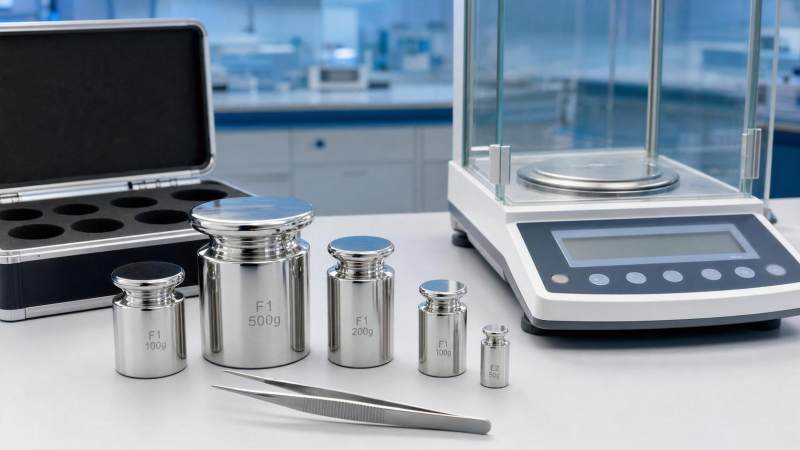
Calibration Weights Explained: Accuracy Classes, Materials, and Lab Use Cases
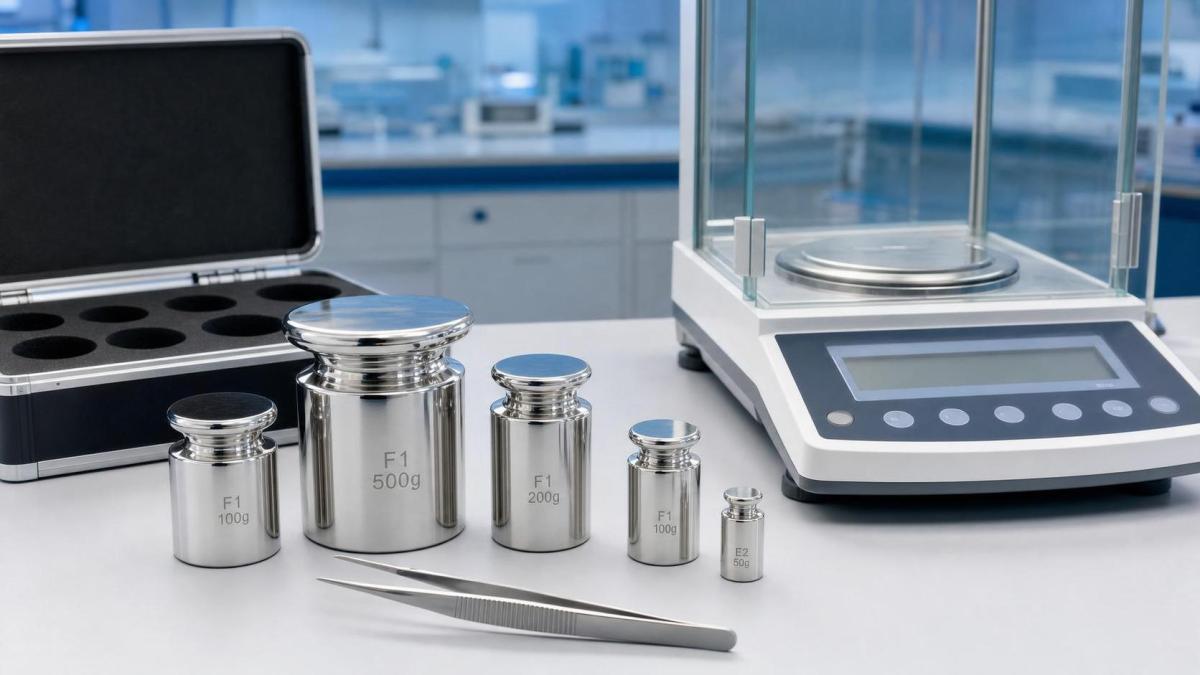
In quality control and safety-critical lab environments, calibrationweights are far more than metal pieces with a stamped value.
They support traceable accuracy, instrument confidence, and clean audit trails across regulated workflows.
That matters even more when measurement data affects release decisions, safety checks, or validation records.
From a practical standpoint, the right calibrationweights reduce uncertainty, limit drift-related surprises, and simplify routine balance verification.
This is also where procurement quality and laboratory design start to overlap.
A low-cost weight that sheds particles or lacks traceability can create larger downstream risks than expected.
VitalSync Metrics approaches this topic from an engineering and compliance perspective.
The goal is simple: choose calibrationweights that fit the instrument, the environment, and the quality system without guesswork.
Why calibrationweights matter in real laboratory control
Every weighing result depends on reference integrity.
If the reference is wrong, the balance may appear stable while producing unreliable measurements.
In pharmaceutical labs, medical device assembly, and sterile production support areas, that risk is rarely acceptable.
Good calibrationweights help verify linearity, repeatability, corner loading response, and daily performance before problems spread into records.
They also support defensible compliance with ISO, GMP, GLP, and internal metrology programs.
More importantly, they create a common reference language between operators, auditors, and suppliers.
- Confirm balance performance before critical batches or tests.
- Document traceability for regulated inspections and supplier reviews.
- Detect drift caused by vibration, contamination, or mishandling.
- Reduce rework linked to avoidable weighing errors.
Understanding calibrationweights accuracy classes
Accuracy class is the first technical filter when selecting calibrationweights.
Most laboratories refer to OIML classes such as E1, E2, F1, F2, M1, and lower classes for industrial use.
Each class defines permissible error, construction expectations, and suitable application ranges.
The tighter the class, the lower the allowed uncertainty.
That does not mean the highest class is always the best buy.
It means the class must match the balance resolution and the process risk.
Common classes and typical fit
A common mistake is using lower-class calibrationweights because the nominal value looks correct.
In reality, nominal mass alone never confirms suitability.
How to match calibrationweights to balance resolution
Selection should begin with the instrument, not the catalog.
Check the balance readability, capacity, intended test points, and internal quality procedure.
For analytical balances, calibrationweights often need tighter uncertainty and cleaner handling controls.
For bench scales in receiving or staging, more robust classes may be acceptable.
This also affects ownership cost.
Higher-class calibrationweights need more careful storage, transport, and recalibration management.
- Identify the balance readability and tolerance window.
- Define whether the task is calibration, verification, or routine check.
- Choose calibrationweights with uncertainty suitable for that purpose.
- Review the certificate, traceability path, and recalibration interval.
- Confirm environmental controls support the selected class.
Materials used in calibrationweights and why they matter
Material choice affects corrosion resistance, magnetic behavior, wear, cleanability, and long-term stability.
That is why calibrationweights should never be treated as interchangeable hardware.
In healthcare-adjacent labs, surface integrity and contamination control can be just as important as nominal accuracy.
Stainless steel
Stainless steel is the most common material for precision calibrationweights.
It offers strong corrosion resistance, stable surfaces, and compatibility with clean laboratory handling.
High-grade nonmagnetic alloys are especially valuable around sensitive balances.
Nickel-plated or chrome-plated options
These are often used in lower-cost or industrial calibrationweights.
They can perform well in less demanding environments but may be less ideal for strict contamination-sensitive applications.
Cast iron
Cast iron calibrationweights are common for heavy industrial scales.
They are durable, but generally unsuitable for precision laboratory workflows.
Key laboratory use cases for calibrationweights
Use case should drive specification.
The same set of calibrationweights may be excessive in one lab and insufficient in another.
Analytical chemistry and formulation
Small mass errors can distort concentration targets, batch records, or method validation outcomes.
E2 or F1 calibrationweights are often selected, depending on balance performance and procedure requirements.
Medical device component inspection
Device parts, coatings, and micro-assemblies may require repeatable weighing during incoming inspection or process validation.
Stable calibrationweights help maintain consistency across shifts and suppliers.
Environmental monitoring and support labs
Routine checks often need practical, durable calibrationweights with documented traceability and easy handling.
In these settings, fit-for-purpose selection usually beats overspecification.
Safety-critical production support
Where weighing influences release, dosing, or labeled content, calibrationweights become part of the risk-control framework.
That is where documented integrity matters as much as technical specifications.
Handling, storage, and recalibration best practices
Even premium calibrationweights degrade in value if handled poorly.
Finger oils, abrasion, dust, and magnetic exposure can all change performance over time.
This is one reason audit findings often point to process discipline rather than product defects.
- Use forceps, gloves, or dedicated tools for smaller calibrationweights.
- Store sets in protective cases within stable temperature and humidity conditions.
- Clean only with approved methods for the material and class.
- Separate routine-use sets from higher-level reference sets.
- Track recalibration dates and certificate status in the quality system.
When performance drift appears, replace or recalibrate calibrationweights before investigating the balance alone.
What to review before buying calibrationweights
Purchasing decisions should go beyond list price and nominal value coverage.
A credible supplier should provide technical transparency, traceable certificates, and consistent manufacturing quality.
This is especially relevant for organizations aligning procurement with MDR, IVDR, and broader supplier qualification expectations.
- Declared OIML class and allowable tolerance.
- Material grade and magnetic characteristics.
- Traceability chain and calibration certificate detail.
- Surface finish, case quality, and handling accessories.
- Service support for recalibration and replacement.
From a lifecycle view, better calibrationweights often lower total risk and administrative friction.
That tradeoff becomes clearer once deviations, retesting, and audit response time are considered.
A practical path to better measurement confidence
The best calibrationweights strategy is rarely the most expensive one.
It is the one that aligns class, material, environment, and use case with documented quality needs.
For teams building reliable laboratory systems, that alignment supports stronger data and calmer audits.
Calibrationweights should therefore be reviewed as controlled measurement assets, not basic accessories.
If your current program shows unclear class selection, inconsistent storage, or weak traceability, start there.
Tightening those basics often improves performance faster than changing instruments.
In real laboratory operations, better calibrationweights decisions usually translate into safer workflows, cleaner documentation, and more dependable results.
Recommended News
- 2026.09.14How to Plan Medical Equipment Validation and Qualification for ISO 13485 ReadinessDr. Julian Rossi (RehabTech Specialist)
- 2026.09.13ISO 13485 Audit Preparation: Cost Factors That Drive Budget and TimelineDr. Julian Rossi (RehabTech Specialist)
- 2026.09.12How Clinics Can Choose Imaging Systems That Fit Workflow, Space, and BudgetLydia Vancini (Regulatory Compliance Lead)
The VitalSync Intelligence Brief
Receive daily deep-dives into MedTech innovations and regulatory shifts.