 Get Insights

Why machinery price lists often fail budget planning
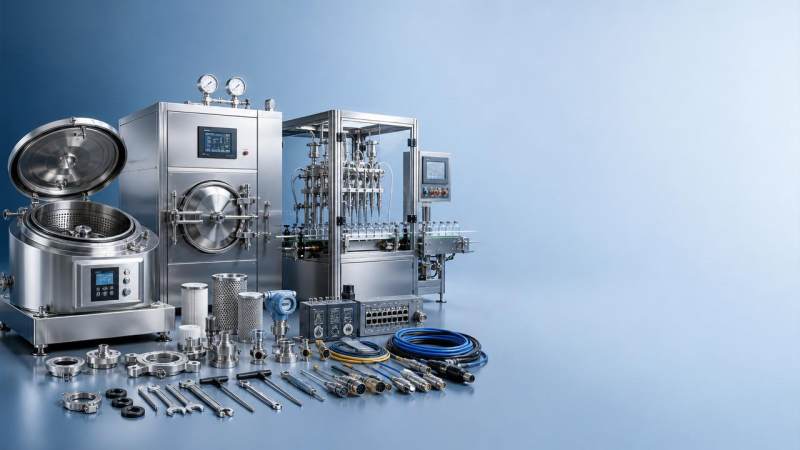
An Industrial & Manufacturing machinery price list may look like a solid starting point for capital planning, but for finance approvers it often hides the real cost drivers behind a project. In healthcare and life sciences procurement, pricing without validated performance data, compliance context, lifecycle risk, and integration requirements can quickly distort budgets. Understanding why listed prices fail is the first step toward more defensible, technically sound investment decisions.
For finance teams reviewing capital expenditure in hospitals, labs, and MedTech operations, the listed purchase price is rarely the full economic picture. A centrifuge, sterilization unit, imaging subsystem, or automated filling line may be presented with a clean quotation, yet the actual budget impact often expands by 15% to 40% once qualification, installation, training, data integration, and maintenance are included.
This gap is especially important when an Industrial & Manufacturing machinery price list is used for early-stage approvals. In regulated healthcare environments, performance validation, MDR/IVDR alignment, calibration intervals, and downtime exposure can affect not only cost, but also patient safety, lab throughput, and audit readiness. For approvers, better budgeting starts with seeing beyond list pricing.
Why a listed machinery price rarely reflects the true project budget
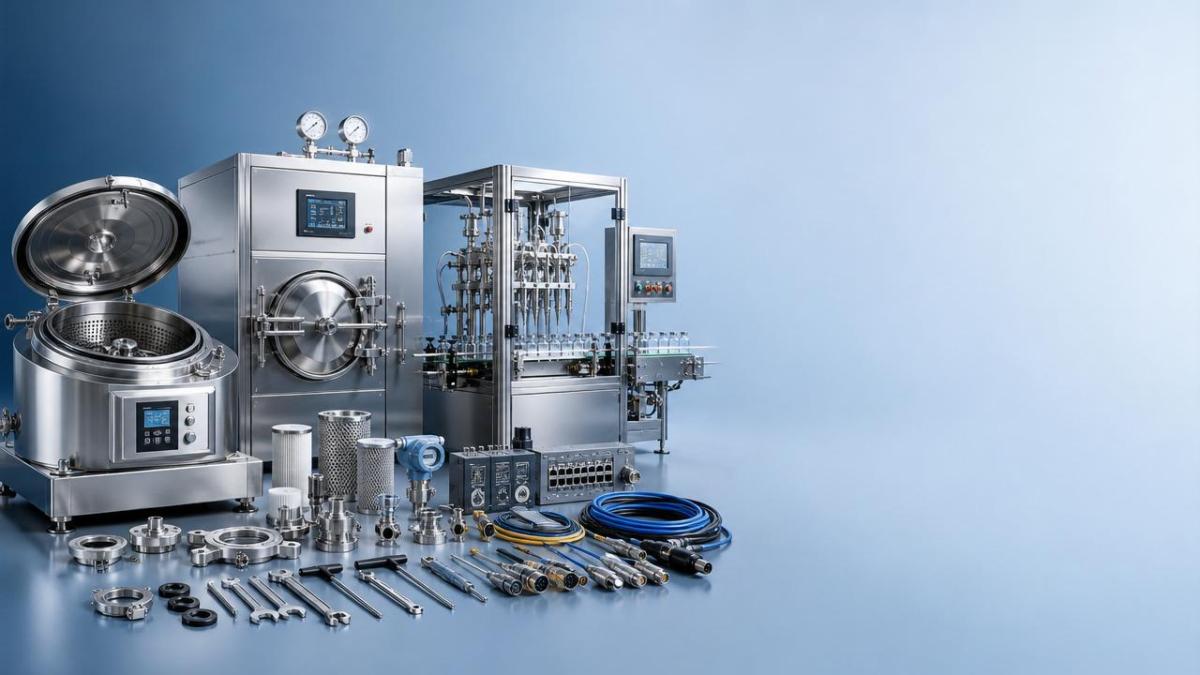
A standard Industrial & Manufacturing machinery price list usually captures the base unit, sometimes a limited accessory set, and occasionally freight. It often excludes the 5 to 8 cost layers that matter most in healthcare and life sciences environments: site preparation, validation, software compatibility, consumables, preventive maintenance, operator training, compliance documentation, and service response obligations.
Finance approvers are therefore exposed to a predictable budgeting problem. The number visible on the quotation appears precise, while the surrounding technical and operational costs remain variable. That imbalance creates approval risk, especially for equipment that must run 12 to 24 hours per day, integrate with digital quality systems, or operate under temperature, sterility, or traceability constraints.
Base price versus validated operating cost
In many procurement cycles, suppliers publish a machinery price list based on a standard configuration. Yet healthcare buyers often need optional modules such as data logging, alarm redundancy, cleanroom-compatible finishes, low-vibration design, or higher-grade sensor packages. Each item may add 5% to 20% to the final spend, depending on specification depth.
Validation also changes the cost profile. Installation Qualification, Operational Qualification, and Performance Qualification can extend project timelines by 2 to 6 weeks and add internal labor hours that rarely appear on the price sheet. For finance reviewers, the true comparison is not unit price against unit price, but validated output against validated output.
Typical hidden cost categories
The table below shows why an Industrial & Manufacturing machinery price list often underestimates total project exposure in regulated technical environments.
The practical takeaway is simple: a price list is often a sales artifact, not a budget model. If the project depends on regulated use, data connectivity, or tightly controlled performance thresholds, the visible number may capture only 60% to 80% of real first-year cost.
Why healthcare procurement is more exposed than general industrial buying
In less regulated sectors, a machine can sometimes be compared on output, power draw, and installation footprint alone. In healthcare and life sciences, that approach is incomplete. Procurement decisions must account for traceability, repeatability, contamination control, documentation quality, and whether performance claims can be independently benchmarked.
This is where finance approvers benefit from technical benchmarking. When a supplier claims lower operating cost or faster throughput, the more useful question is whether those claims hold under equivalent load, environmental conditions, and maintenance intervals. Without that evidence, an attractive machinery price list can become a weak foundation for approval.
The four budget distortions finance approvers should test before approval
Not every listed machinery price fails for the same reason. In practice, budget overruns tend to come from 4 recurring distortions: incomplete scope, compliance omissions, lifecycle underestimation, and integration complexity. Testing these areas before sign-off can reduce later change orders and improve investment discipline.
1. Incomplete scope at quotation stage
A supplier may provide a narrow commercial scope to keep the initial number competitive. For instance, the quotation may exclude utilities mapping, operator certification, spare kits, qualification protocols, or FAT/SAT support. Each excluded line may look manageable on its own, but together they can materially shift the capex request.
- Check whether the quotation defines included accessories and excluded options line by line.
- Ask for a 12-month and 36-month cost view, not only a shipment price.
- Require clarity on training hours, spare parts package, and acceptance responsibilities.
2. Compliance cost omitted from commercial comparison
In healthcare projects, compliance is not an optional overhead. If equipment touches diagnostic workflows, controlled manufacturing, or quality data systems, MDR/IVDR implications, calibration records, validation evidence, and change control handling may all require resourcing. Those obligations can add 8% to 25% depending on the system category and internal quality burden.
A low number on an Industrial & Manufacturing machinery price list can therefore be misleading if the supplier provides limited technical files, weak documentation, or poorly structured support during audits. Finance should treat compliance support as a budget item with measurable value, not as an administrative afterthought.
3. Lifecycle assumptions that are too optimistic
A machine with a 10% lower purchase price may become more expensive within 24 months if it requires quarterly calibration, higher consumable usage, or extended downtime during part replacement. This is common when the buying team compares list prices but not maintenance frequency, mean time between service events, or replacement lead times.
For finance approvers, a better discipline is to evaluate 3-year total cost of ownership. In many healthcare settings, the decision margin is shaped less by purchase price and more by uptime, support responsiveness, and the operational effect of one missed production or diagnostic cycle.
4. Digital integration is treated as a later issue
A machinery price list often assumes standalone operation. Yet modern hospitals, laboratories, and manufacturing environments increasingly require data export, audit trails, user access control, and connection to digital platforms. Integration work can range from a simple interface setup to a 3-step validation process involving IT, quality, and external vendors.
If these requirements are postponed until after approval, the original budget becomes unreliable. Finance teams should request a defined integration scope before release of funds, especially where cybersecurity review, system qualification, or data integrity controls are mandatory.
How to evaluate an Industrial & Manufacturing machinery price list more accurately
A more reliable review process does not require finance teams to become engineers. It requires a structured approval framework that converts technical uncertainty into decision-ready cost categories. The goal is to replace a single headline price with a more complete investment map.
Use a five-part approval screen
Before approving any machinery price list, finance leaders should ask for evidence across 5 areas: performance, compliance, implementation, support, and integration. If any one area is undefined, the quotation should be treated as provisional rather than budget-final.
- Performance: Are throughput, accuracy, stability, and operating conditions clearly stated?
- Compliance: What documentation, validation support, and quality records are included?
- Implementation: What is the timeline for delivery, installation, testing, and training?
- Support: What are response times, spare part lead times, and maintenance intervals?
- Integration: What software, interfaces, and data controls are needed on day 1?
A practical review matrix for finance approvers
The following matrix can be used to challenge an Industrial & Manufacturing machinery price list before it enters final budget approval.
This matrix helps move the conversation from “What is the machine price?” to “What is the approved cost of a compliant, usable, supportable system?” That shift is critical for defensible finance decisions.
Benchmark claims before approving spend
When two suppliers appear close on price, the better decision often comes from benchmarking performance claims under comparable conditions. In healthcare procurement, this may include sensor accuracy drift over 6 months, material fatigue limits under repeated cycles, noise or vibration behavior, or throughput under actual cleaning and changeover conditions.
VitalSync Metrics supports this decision model by translating manufacturing parameters into standardized technical evidence. For procurement and finance stakeholders, that means less dependence on promotional claims and more confidence that the approved budget aligns with measurable operating reality.
What finance approvers should request before releasing capital
A stronger capital approval package should contain more than a supplier quotation and a projected payback period. In healthcare and life sciences settings, finance approvers should request a documentation bundle that makes cost, risk, and operational readiness visible from the start.
Minimum documentation package
- A line-by-line commercial scope, including excluded items and optional modules.
- A 3-year ownership estimate covering service, calibration, consumables, and critical spares.
- A draft implementation plan with delivery window, installation duration, and acceptance steps.
- Technical validation evidence or third-party benchmarking where performance claims drive the business case.
- A compliance and integration statement defining regulatory, data, and quality responsibilities.
Questions that improve approval quality
Before signing off, ask 3 simple but powerful questions. First, what assumptions make the listed price possible? Second, what costs begin only after delivery? Third, what technical claims have been independently verified? These questions often reveal whether the machinery price list is decision-grade or merely a starting quote.
Where budgets are tight, this discipline does more than avoid overspend. It helps direct capital toward equipment that is compliant, resilient, and operationally aligned. For organizations under pressure to support value-based procurement, that is a materially better outcome than choosing the lowest visible figure.
A well-presented Industrial & Manufacturing machinery price list can be useful for market scanning, but it should never stand alone in healthcare capital planning. Finance approvers need a broader lens that includes technical validation, regulatory readiness, lifecycle cost, and digital fit. That is how budget approvals become more accurate, more defensible, and more aligned with long-term operational value.
VitalSync Metrics helps procurement leaders, lab planners, and finance stakeholders cut through price ambiguity with data-driven benchmarking and engineering-focused evaluation. If you need a clearer basis for machinery investment decisions, contact us to discuss a tailored review, request technical benchmarking support, or learn more about solutions built for confident healthcare sourcing.
Recommended News
- 2026.10.15Medical Packaging Heat Seal Testing: Seal Strength vs. Seal Integrity TestsDr. Julian Rossi (RehabTech Specialist)
- 2026.10.14Clinic Supplier Comparison: Evaluating Cost, Delivery Reliability, and SupportDr. Alistair Thorne (Senior Biomedical Engineer)
- 2026.10.13Engineering Performance Testing Services: Evaluating Test Methods and AccuracyDr. Alistair Thorne (Senior Biomedical Engineer)
The VitalSync Intelligence Brief
Receive daily deep-dives into MedTech innovations and regulatory shifts.