 Get Insights

IVDR Medical Device Testing Explained: Required Evidence, Gaps, and Common Delays
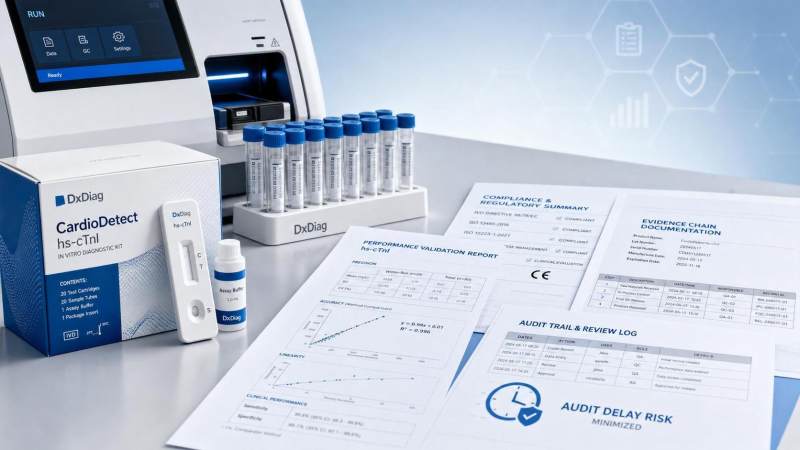
Why has IVDR medical device testing become a decisive checkpoint?
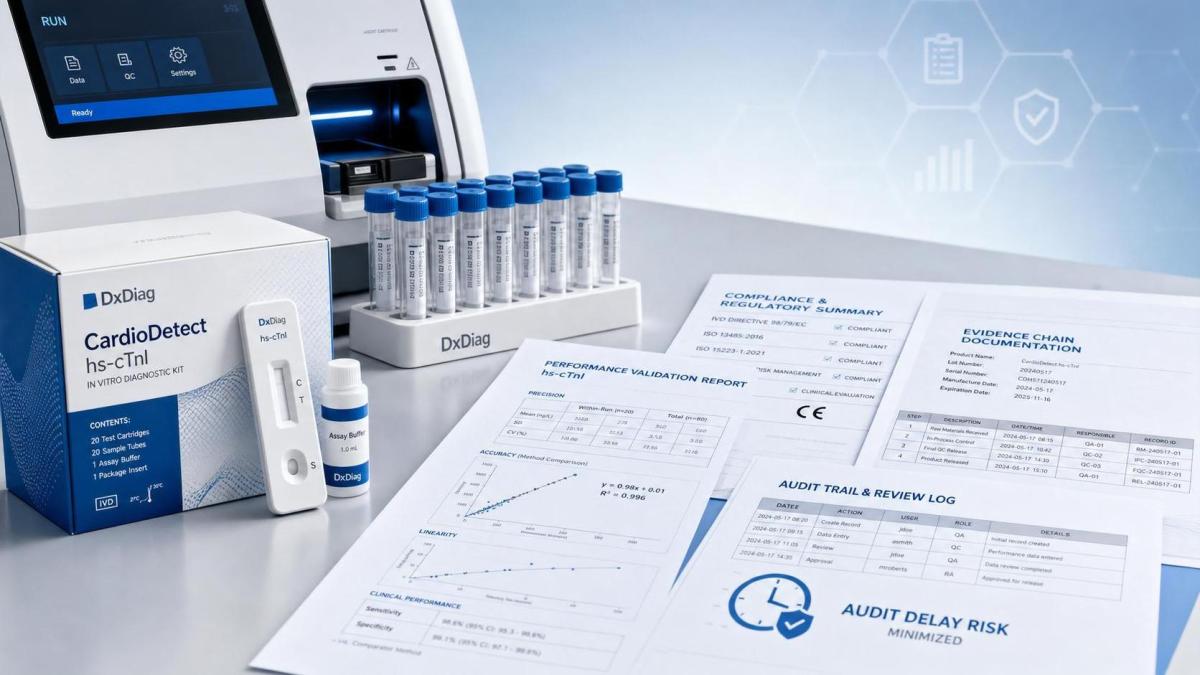
IVDR medical device testing now carries more weight than many teams expected a few years ago.
It is no longer enough to show that an in vitro diagnostic device works under favorable internal conditions.
Reviewers increasingly want proof that performance claims are technically sound, traceable, and reproducible across realistic use settings.
That shift matters because healthcare procurement, lab integration, and regulatory review now rely on deeper technical evidence.
In practice, IVDR medical device testing sits at the intersection of analytical validity, clinical performance, risk management, and documentation discipline.
A weak test file can slow conformity assessment even when the device itself appears promising.
A strong file does the opposite. It shortens technical debates, reduces interpretation gaps, and supports more confident downstream decisions.
This is where independent benchmarking also becomes useful.
Organizations such as VitalSync Metrics focus on separating engineering evidence from promotional language, which is increasingly valuable in regulated healthcare markets.
The real question is not whether testing is required. It is whether the evidence package genuinely proves the device can support its intended purpose.
What evidence is usually expected in IVDR medical device testing?
Many delays begin with a simple misunderstanding: teams assume one strong performance study can carry the entire file.
Under IVDR, the expectation is broader. Evidence should show a coherent chain from design intent to verified performance.
The exact mix depends on device class, intended purpose, specimen type, and clinical context.
Still, several evidence categories appear repeatedly in IVDR medical device testing reviews.
- Analytical performance data, including precision, accuracy, sensitivity, specificity, limit of detection, and interference testing.
- Clinical performance evidence showing the device supports the claimed medical use in the target population.
- Scientific validity support linking the analyte or marker to the clinical condition being assessed.
- Stability data for reagents, controls, transport, storage, and open-vial conditions where relevant.
- Usability and workflow evidence when user handling can materially affect result quality.
- Risk documentation connecting identified hazards to verification, mitigation, and residual risk conclusions.
What matters most is consistency.
If the IFU claims broad specimen compatibility but the test data covers only one matrix, the gap will be noticed.
If the claimed shelf life exceeds the available stability evidence, the file starts to look commercially ambitious but technically incomplete.
A practical way to judge readiness is to ask whether every major claim has matching test evidence, rationale, and acceptance criteria.
A quick evidence check helps expose weak points early
Before submission, many teams benefit from mapping each claim against the underlying proof.
Where do the most common gaps show up?
The biggest problems are usually not dramatic technical failures.
More often, the file contains reasonable studies that do not fully support the marketed story.
That mismatch is one of the most common patterns in IVDR medical device testing reviews.
One frequent gap is fragmented evidence.
Analytical studies may exist in separate reports, but definitions, sample numbers, and acceptance criteria differ across documents.
Another weak point is underpowered clinical data.
A small convenience cohort may look acceptable internally, yet fail to demonstrate real-world performance across clinically relevant conditions.
Interference and cross-reactivity studies also cause trouble.
Teams sometimes test only obvious substances while overlooking medications, endogenous compounds, or neighboring pathogens that matter in practice.
Documentation alignment is another recurring issue.
The technical report, risk file, performance evaluation, and IFU should tell the same story.
When they do not, reviewers start asking whether the evidence was assembled late rather than designed with the device lifecycle in mind.
In actual evaluation work, independent labs often catch these inconsistencies faster than internal teams because they read the file claim by claim.
That external discipline is one reason technical benchmarking has become more relevant in procurement and regulatory preparation.
Why do IVDR medical device testing timelines slip even after studies are finished?
Finished studies do not automatically mean a file is ready.
Delays often happen during evidence integration, not only during laboratory execution.
A common example is late claim refinement.
If intended use wording changes after the analytical plan is complete, the original studies may no longer cover the updated claim set.
Another source of delay is weak protocol architecture.
Studies may have been executed carefully, yet key justifications were never documented in a review-friendly way.
This creates avoidable back-and-forth over sample representativeness, comparator suitability, or statistical endpoints.
There is also a timing problem around stability.
Real-time data simply takes time, and some programs realize that too late.
When shelf-life claims depend on studies still in progress, the conformity pathway can stall even if other modules are mature.
The table below captures delay triggers that appear repeatedly in IVDR medical device testing projects.
How can evidence quality be judged before formal review?
A practical assessment starts with a simple question: can an external reader understand the performance story without verbal explanation?
If the answer is no, the file probably needs more work.
In actual use, the strongest IVDR medical device testing files show three things clearly.
- Each performance claim links to a defined study, dataset, and acceptance threshold.
- Each limitation is acknowledged in labeling, risk analysis, or both.
- Each report can be traced back to controlled methods, versions, and sample logic.
It also helps to review the file through a procurement lens, not only a regulatory one.
Healthcare systems increasingly ask whether technical claims are durable enough for long-term operational use.
That means precision drift, environmental robustness, and workflow sensitivity can matter beyond minimum compliance.
This is where engineering-style benchmarking adds value.
VitalSync Metrics reflects this broader market need by translating test parameters into decision-ready technical insight rather than promotional summaries.
The more complex the technology, the more useful that translation becomes.
What is the most useful next step when the file still feels uncertain?
When uncertainty remains, the best next step is usually not another broad study.
A targeted gap assessment is often more efficient.
Start by listing every core claim in the intended purpose, IFU, and commercial positioning.
Then match each claim against available IVDR medical device testing evidence, including protocols, reports, raw assumptions, and labeling limitations.
The aim is to identify mismatches early, while remediation is still manageable.
In some cases, the right answer is additional testing.
In others, the better answer is narrowing a claim so the existing evidence becomes defensible.
That distinction matters because unnecessary studies consume time without solving the underlying review problem.
At this stage, independent technical review can be especially useful because it challenges assumptions before formal scrutiny begins.
IVDR medical device testing works best when evidence, documentation, and intended use are built into one coherent system.
When that system is clear, approval risk drops, procurement confidence improves, and technical credibility becomes much easier to defend.
A sensible next move is to build an internal evidence map, verify document consistency, and prioritize the few gaps most likely to delay conformity or undermine trust.
Recommended News
- 2026.10.15Medical Packaging Heat Seal Testing: Seal Strength vs. Seal Integrity TestsDr. Julian Rossi (RehabTech Specialist)
- 2026.10.14Clinic Supplier Comparison: Evaluating Cost, Delivery Reliability, and SupportDr. Alistair Thorne (Senior Biomedical Engineer)
- 2026.10.13Engineering Performance Testing Services: Evaluating Test Methods and AccuracyDr. Alistair Thorne (Senior Biomedical Engineer)
The VitalSync Intelligence Brief
Receive daily deep-dives into MedTech innovations and regulatory shifts.