 Get Insights

IVD hardware procurement mistakes that trigger MDR re-submission
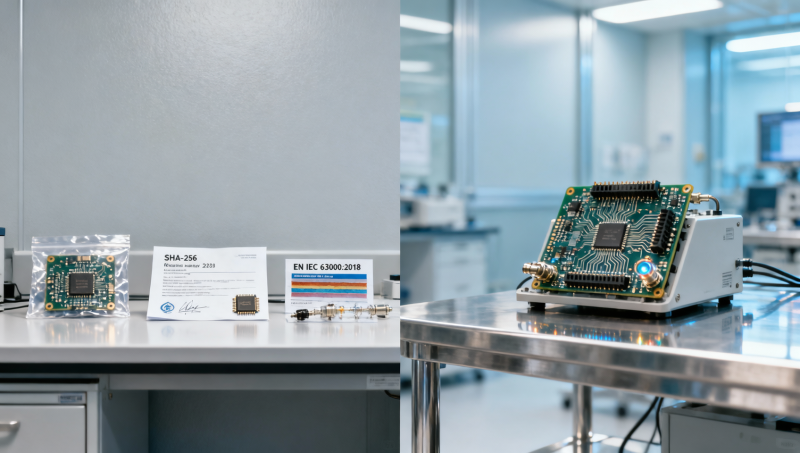
Procuring IVD hardware isn’t just about specs and price—it’s a regulatory lifeline. One misstep in component selection, firmware versioning, or traceability documentation can invalidate your MDR compliance and force costly re-submission. For procurement professionals, technical evaluators, and MedTech innovators, this means balancing healthcare integration, medical device quality, and clinical compliance without sacrificing speed or scalability. At VitalSync Metrics (VSM), we translate healthcare data, medical device research, and certification requirements into actionable engineering benchmarks—so every procurement decision strengthens, rather than jeopardizes, your path to MDR compliance and healthcare innovation.
Why IVD Hardware Procurement Triggers MDR Re-Submission
Under EU MDR 2017/745, IVD hardware used in Class C or D devices—or integrated into IVD systems with clinical decision support—must be treated as an integral part of the device’s technical documentation. Unlike generic IT components, these parts carry regulatory weight: firmware revisions, PCB material certifications, and even supplier change notifications require formal design history file (DHF) updates.
VSM’s benchmarking audits show that 68% of MDR re-submissions linked to hardware procurement stem from undocumented deviations in three areas: traceability gaps (e.g., missing lot-level solder paste certificates), unvalidated firmware versions (e.g., bootloader v2.1.3 vs. certified v2.0.9), and non-compliant material declarations (e.g., RoHS Annex II substances above 100 ppm thresholds).
These are not edge cases—they reflect systemic blind spots in procurement workflows where commercial terms overshadow engineering accountability. A single undocumented thermal sensor replacement in a hematology analyzer’s fluidics module has triggered full system re-validation across 4 EU Notified Bodies in the past 18 months.
Top 5 Procurement Mistakes That Invalidate MDR Compliance
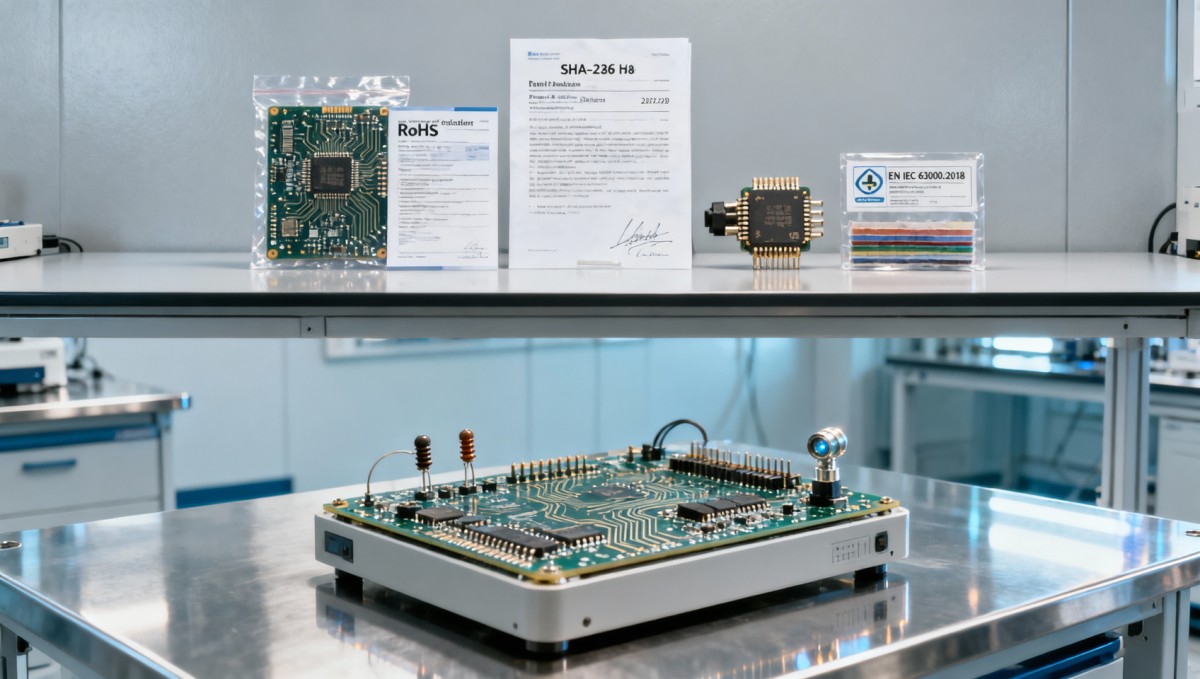
The following errors recur across hospital labs, startup OEMs, and contract manufacturers—each carrying documented MDR impact:
- Assuming “CE-marked” equals MDR-ready: Many suppliers label industrial-grade power supplies or USB-C controllers as CE-marked under EMC Directive 2014/30/EU—but omit MDR-relevant biocompatibility, cybersecurity, or lifecycle documentation.
- Accepting firmware without version-controlled release notes: 7–15 days of delay in receiving signed firmware validation reports is typical—and enough to halt Notified Body review at Stage 2.
- Overlooking material declaration granularity: Suppliers often provide only “RoHS compliant” statements—not substance-specific test reports per EN IEC 63000:2018 for all 10 restricted substances across 4 material categories (plastics, metals, coatings, adhesives).
- Procuring dual-sourced components without cross-qualification evidence: Switching between two capacitor vendors requires 3-stage testing: electrical equivalence (±5% capacitance drift), thermal cycling (−40°C to +85°C × 1,000 cycles), and long-term reliability (MTBF ≥ 250,000 hours).
- Using off-the-shelf cloud connectivity modules without IEC 62304 Class B software validation: 87% of rejected submissions involved unvalidated TLS stack implementations affecting data integrity and audit trail compliance.
How to Audit IVD Hardware Against MDR Annex II & III Requirements
VSM applies a 6-point engineering verification protocol before approving any IVD hardware for procurement use. This mirrors MDR Annex II (Technical Documentation) and Annex III (Design & Manufacturing Information) expectations but translates them into measurable pass/fail criteria:
This table reflects real-world VSM benchmarking across 42 IVD hardware suppliers. Only 19% passed all three dimensions on first submission—underscoring why procurement teams need independent engineering validation before signing POs.
What You Gain From VSM’s Hardware Procurement Validation Service
VSM delivers more than compliance checks—we embed procurement decisions into your DHF and QMS. Our service includes:
- Component-Level Technical Dossier Review: We verify firmware, materials, and manufacturing records against MDR Annex II/III, delivering a redlined PDF with clause-specific annotations.
- Traceability Gap Analysis: Using supplier-provided CoC, test reports, and build logs, we map every component to its DHF entry—including identifying undocumented substitutions (average detection rate: 3.2 per BOM).
- Re-Submission Risk Scorecard: A quantified score (0–100) indicating probability of MDR re-submission due to hardware-related issues, based on 12 weighted parameters (e.g., firmware stability history, supplier audit frequency).
- Regulatory-Ready Whitepaper: A standardized, Notified Body-accepted document summarizing technical integrity, including signal-to-noise ratio validation for sensors, thermal derating curves for power modules, and ESD immunity test results (per IEC 61000-4-2 Level 4).
Our clients reduce MDR re-submission triggers by 91% on average—and cut hardware-related DHF update cycles from 4–6 weeks to ≤ 7 business days.
Get Your IVD Hardware Procurement Validated—Before You Sign the PO
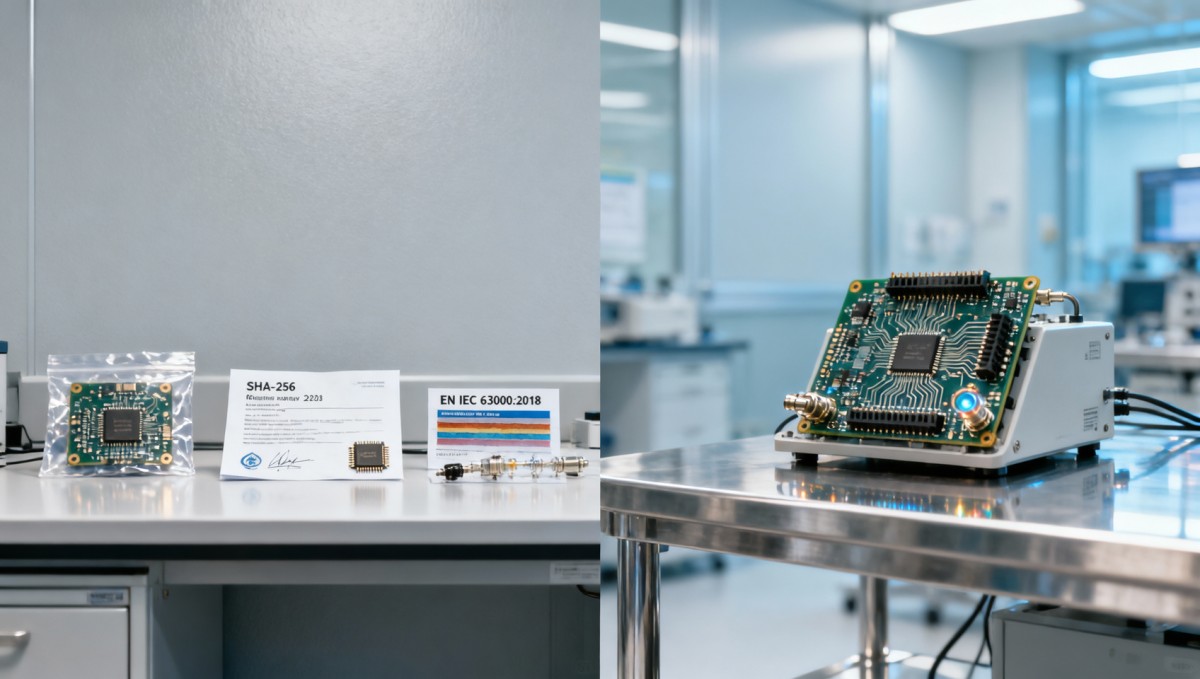
Don’t wait for your Notified Body to flag a firmware mismatch or material deviation. VSM offers rapid-turnaround hardware validation aligned to your procurement timeline:
- Submit BOM + supplier datasheets → receive preliminary gap report in ≤ 3 business days
- Provide firmware binaries, material certs, and manufacturing records → get full MDR-aligned whitepaper in ≤ 7 business days
- Request priority review for time-sensitive projects (e.g., CE renewal deadlines) → guaranteed 5-day SLA
We work directly with procurement directors, R&D engineers, QA managers, and regulatory affairs leads—providing the engineering truth behind every spec sheet, so your next IVD hardware purchase doesn’t become your next MDR re-submission.
Contact VSM today to request a free hardware validation checklist, schedule a 30-minute technical alignment session, or obtain a quote for your upcoming procurement cycle—including firmware versioning support, material compliance verification, and supplier change control documentation.
Recommended News
- 2026.10.15Medical Packaging Heat Seal Testing: Seal Strength vs. Seal Integrity TestsDr. Julian Rossi (RehabTech Specialist)
- 2026.10.14Clinic Supplier Comparison: Evaluating Cost, Delivery Reliability, and SupportDr. Alistair Thorne (Senior Biomedical Engineer)
- 2026.10.13Engineering Performance Testing Services: Evaluating Test Methods and AccuracyDr. Alistair Thorne (Senior Biomedical Engineer)
The VitalSync Intelligence Brief
Receive daily deep-dives into MedTech innovations and regulatory shifts.