 Get Insights

Medical diagnostic equipment for clinics: buy or lease?
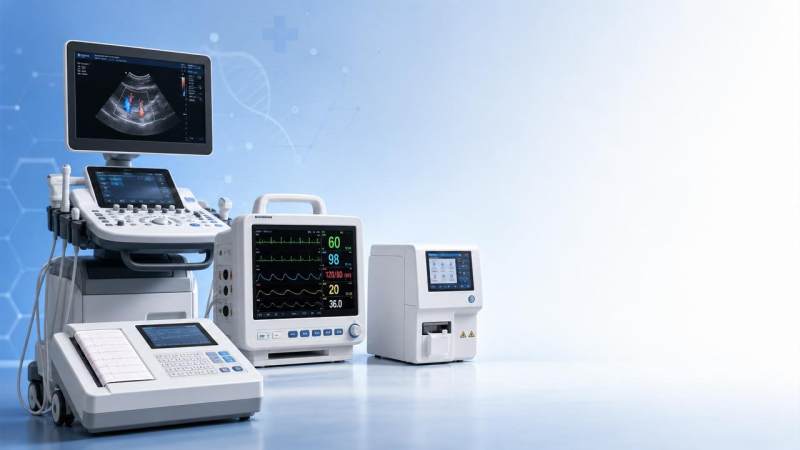
When evaluating Medical diagnostic equipment for clinics, the purchase price is only one part of the decision.
A clinic must compare lifecycle cost, uptime, compliance exposure, service access, and future technology shifts.
For many facilities, the choice between buying and leasing shapes cash flow, care continuity, and operational resilience.
In today’s market, Medical diagnostic equipment for clinics must also meet stricter regulatory, cybersecurity, and interoperability expectations.
That makes financial comparison inseparable from technical verification and long-term performance evidence.
Medical diagnostic equipment for clinics: core decision framework

Medical diagnostic equipment for clinics includes imaging, monitoring, point-of-care testing, laboratory analyzers, and digital diagnostic platforms.
Examples include ultrasound systems, ECG units, hematology analyzers, spirometers, patient monitors, and connected screening devices.
Buying means the clinic owns the asset and controls depreciation, upgrade timing, and residual value strategy.
Leasing means the clinic pays for use over time, often with bundled service, scheduled replacement, or software support.
The right path depends on utilization rate, reimbursement stability, service complexity, and expected technology obsolescence.
Medical diagnostic equipment for clinics should never be evaluated as a standalone asset without workflow and compliance context.
Key cost elements to compare
- Acquisition or monthly lease payments
- Installation, calibration, and validation costs
- Preventive maintenance and emergency repair exposure
- Software licenses, cybersecurity updates, and connectivity fees
- Training, downtime risk, and operator productivity
- Residual value, disposal, and replacement timing
Current market signals affecting the buy-or-lease decision
The market for Medical diagnostic equipment for clinics is changing quickly under value-based care and digital integration pressure.
Advanced devices now promise automation, cloud analytics, and faster workflows, but technical claims vary widely.
Independent benchmarking has become more important because brochure specifications do not always reflect field performance.
This is where an engineering-focused perspective matters.
VitalSync Metrics supports evidence-based evaluation by turning performance variables into comparable technical insights.
That approach is useful when selecting Medical diagnostic equipment for clinics with long service lives and compliance obligations.
Business value of buying Medical diagnostic equipment for clinics
Buying can be attractive when Medical diagnostic equipment for clinics has predictable demand and a long useful life.
Ownership may reduce total cost over several years, especially for mature technologies with modest upgrade pressure.
It also gives greater control over maintenance providers, customization, and replacement timing.
For certain diagnostic categories, owned systems can support better budgeting after the initial investment period ends.
When buying often makes sense
- High daily utilization with consistent patient volume
- Equipment category has slow innovation cycles
- Internal technical support is available
- Strong confidence exists in long-term serviceability
- Asset ownership supports tax or accounting strategy
Still, buying shifts more performance risk onto the clinic if failure rates, parts availability, or software support prove weaker than expected.
That is why verified engineering data is critical before capital commitment.
Business value of leasing Medical diagnostic equipment for clinics
Leasing can work well when Medical diagnostic equipment for clinics evolves quickly or when preserving liquidity is a priority.
Monthly payments spread cost over time and may align better with operating revenue patterns.
Many lease structures also include maintenance, calibration, or replacement clauses that simplify planning.
This can reduce surprise expenses and lower administrative burden around service coordination.
When leasing often makes sense
- Technology refresh is expected within three to five years
- Demand is growing but still uncertain
- Service complexity is high
- Cybersecurity and software updates are frequent
- Capital expenditure must be limited
However, leasing may cost more over the full term if utilization is high and the equipment remains clinically relevant for many years.
Contract language also matters.
Exit fees, usage restrictions, and service exclusions can change the economics significantly.
Typical equipment categories and preferred evaluation path
Not all Medical diagnostic equipment for clinics should be judged through the same financial lens.
A basic ECG unit differs from a connected analyzer with recurring software validation needs.
Practical evaluation criteria before signing any agreement
A sound decision on Medical diagnostic equipment for clinics should combine finance, engineering, and operational evidence.
It helps to use a structured review checklist before approving either ownership or lease terms.
- Verify performance claims with independent test data, not only vendor marketing documents.
- Confirm MDR or IVDR relevance, plus service documentation and traceability records.
- Model total cost over the expected usage period, including downtime and training.
- Review software support windows, cybersecurity patch policy, and interoperability standards.
- Check spare parts lead times and the realistic availability of field service.
- Assess whether patient volume justifies ownership or favors flexible access.
For high-dependency systems, reliability data should carry as much weight as price.
A cheaper device with unstable calibration can create hidden cost through repeats, delays, and trust erosion.
A balanced next step for clinics evaluating equipment strategy
There is no universal answer to whether Medical diagnostic equipment for clinics should be bought or leased.
Buying often fits stable, proven systems with long service relevance and strong utilization.
Leasing often fits fast-moving technologies, uncertain demand, and environments where service complexity is rising.
The most reliable decision comes from comparing total lifecycle economics against verified technical performance.
For Medical diagnostic equipment for clinics, that means combining budget analysis with compliance review, uptime evidence, and upgrade planning.
A practical next move is to build a side-by-side matrix for top device categories, then validate assumptions with independent benchmarking data.
That process reduces procurement risk and supports better long-term clinical and financial outcomes.
Recommended News
- 2026.10.15Medical Packaging Heat Seal Testing: Seal Strength vs. Seal Integrity TestsDr. Julian Rossi (RehabTech Specialist)
- 2026.10.14Clinic Supplier Comparison: Evaluating Cost, Delivery Reliability, and SupportDr. Alistair Thorne (Senior Biomedical Engineer)
- 2026.10.13Engineering Performance Testing Services: Evaluating Test Methods and AccuracyDr. Alistair Thorne (Senior Biomedical Engineer)
The VitalSync Intelligence Brief
Receive daily deep-dives into MedTech innovations and regulatory shifts.