 Get Insights

Technical Drawing Basics: How to Read Dimensions, Tolerances, and Symbols
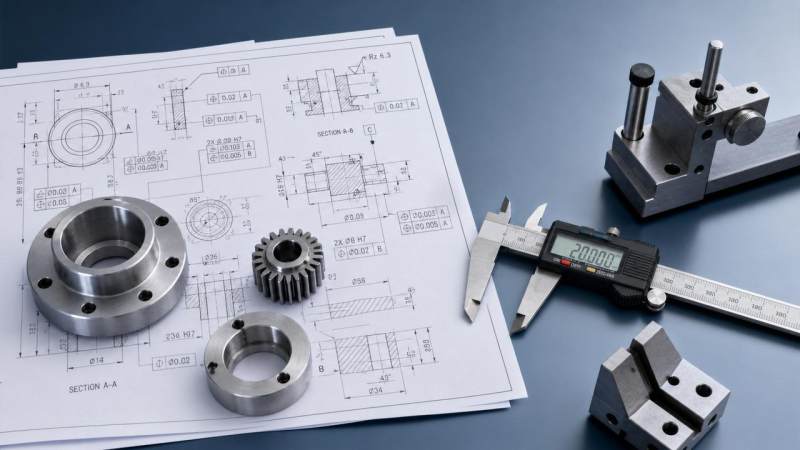
Technical drawing remains one of the clearest ways to verify how a part, device, or assembly should be made and inspected. When dimensions, tolerances, and symbols are misread, the result is rarely a minor paperwork issue. In healthcare, MedTech, and other quality-driven sectors, it can affect fit, performance, validation, and compliance. A solid reading of technical drawing conventions helps turn design intent into something measurable, comparable, and trustworthy.
Why technical drawing still matters in precision industries
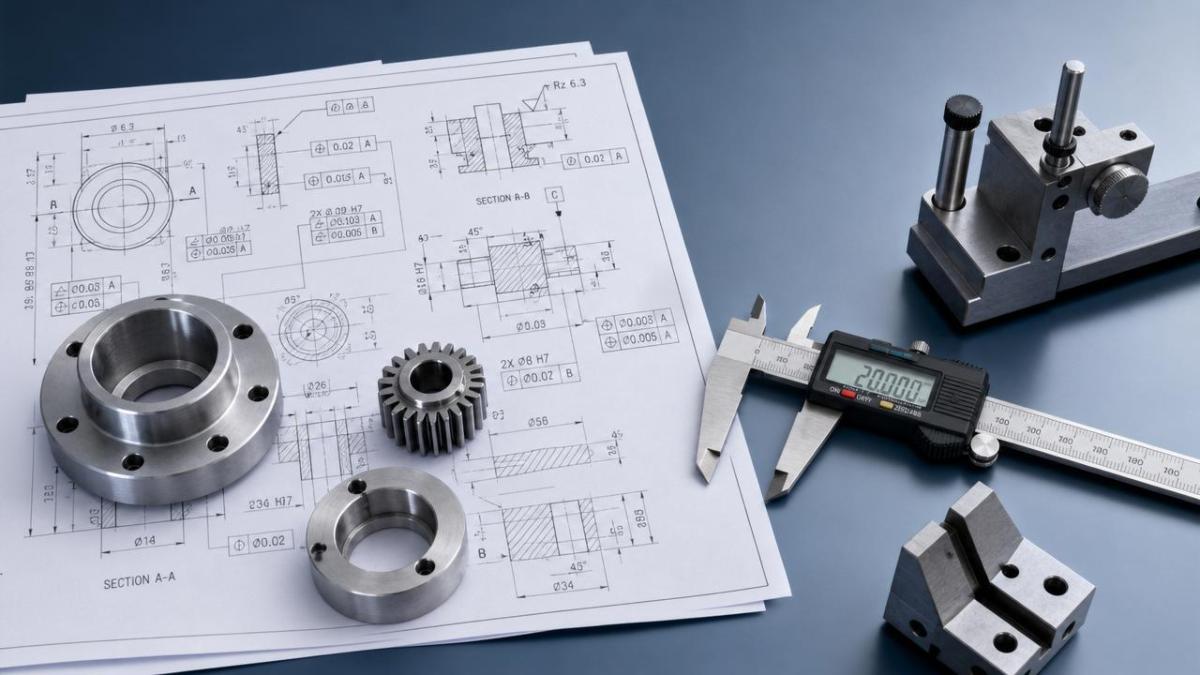
A modern product file may include 3D models, simulation outputs, and digital records, yet the technical drawing often remains the contractual reference. It defines what is acceptable on the shop floor and during inspection.
That matters even more where procurement is shifting toward evidence-based decisions. In MedTech and Life Sciences, a drawing is not only a manufacturing aid. It is also a traceable statement of technical integrity.
This is where the broader VSM perspective becomes relevant. When VitalSync Metrics evaluates engineering claims against measurable performance, drawing literacy supports the same goal: separating presentation language from controlled specification.
A supplier can promise precision, durability, or repeatability. A technical drawing shows whether those claims are backed by defined dimensions, realistic tolerances, material notes, and inspection logic.
What a technical drawing is really communicating
At its core, a technical drawing communicates design intent in a controlled visual language. It tells a manufacturer what geometry must exist, how accurate it must be, and which features matter most.
That language is built from several linked elements:
- views that show shape and orientation
- dimensions that define size and location
- tolerances that define allowable variation
- symbols that define surfaces, datums, threads, welds, or finishes
- notes that add material, process, or regulatory requirements
The important point is that no single feature should be read in isolation. A hole diameter, for example, may seem simple until its position tolerance, datum reference, and finish callout are considered together.
Reading dimensions without missing the design intent
Dimensions are usually the first thing people look at, but they are often the most oversimplified. A number on a drawing is not just a measurement. It is part of a manufacturing and inspection strategy.
Start with the reference structure
Before checking values, identify the drawing views, scale, units, projection method, and revision status. A dimension only makes sense inside that context.
It also helps to distinguish between basic, reference, and driving dimensions. Basic dimensions are theoretically exact and often work with geometric tolerances. Reference dimensions provide information but are not usually used for acceptance.
Look for function, not just size
A 10 mm feature may matter because it seals against another part, aligns a sensor, or creates clearance for sterilization assembly. Function explains why a dimension is tightly or loosely controlled.
In medical devices, that difference is critical. Dimensions tied to patient-contact surfaces, fluid paths, or mating interfaces usually deserve more attention than purely cosmetic edges.
Why tolerances deserve more attention than nominal size
Nominal dimensions describe the target. Tolerances describe what can actually be made and still work. For risk, cost, and quality, tolerances often matter more than the base number.
A drawing that calls for extremely tight tolerances may indicate a critical feature. It may also indicate higher machining cost, slower throughput, stricter inspection, or increased scrap risk.
That is why reading tolerances is useful beyond engineering. It supports technical due diligence, supplier comparison, and manufacturability review.
Common tolerance formats
A practical reading habit is to compare tight tolerances with feature function. If a noncritical feature is tightly controlled, it may signal outdated drafting, unnecessary cost, or hidden process risk.
Symbols that change the meaning of the drawing
Many technical drawing errors happen because symbols are treated like decoration. In reality, symbols often carry the highest-value information on the page.
Geometric dimensioning and tolerancing
GD&T symbols define how a feature may vary in form, orientation, location, or runout. They are especially useful when conventional size tolerances cannot fully control functional geometry.
Position, flatness, perpendicularity, concentricity, and profile symbols often appear on critical interfaces. In assemblies, they help maintain repeatable alignment across multiple parts.
Datum systems
Datums establish the reference frame for measurement. Without understanding datums, it is easy to misread whether a feature is centered, aligned, or correctly located.
This becomes important when evaluating molded housings, machined connectors, implant components, or sensor fixtures. A feature may meet its size requirement and still fail its positional requirement.
Surface and process symbols
Surface finish, thread, weld, and material treatment symbols tell you how the part should behave in use, not just how it should look. In healthcare products, finish can affect cleaning, wear, friction, and biocompatibility support processes.
Where drawing interpretation affects business decisions
Technical drawing knowledge is often associated with design teams, but its business value is much broader. It helps clarify whether a specification is robust, testable, and realistic.
For a benchmarking organization such as VSM, drawing review fits naturally into a larger evidence framework. It complements lab data, whitepapers, and manufacturing assessments by showing how product claims are encoded into controlled specifications.
Several situations make this especially relevant:
- comparing suppliers that appear similar on brochures but differ in tolerance discipline
- reviewing prototypes before pilot production or validation builds
- checking whether MDR or IVDR documentation aligns with technical specifications
- identifying parts that may create recurring nonconformance or inspection delays
- verifying that critical-to-quality features are explicitly controlled
In other words, a technical drawing can reveal whether quality is being designed in or merely claimed after the fact.
A practical way to review a technical drawing
A useful review process does not require advanced drafting expertise. It requires a disciplined reading order and attention to feature relationships.
A simple review checklist
- Confirm units, revision level, and applicable standard.
- Identify the part’s functional interfaces first.
- Check which dimensions are critical to fit, sealing, alignment, or load.
- Review all explicit tolerances and compare them with process capability.
- Read symbols and datum references before drawing conclusions.
- Look for notes on material, finish, heat treatment, or inspection method.
- Flag any missing, conflicting, or unusually tight requirements.
This kind of structured reading is helpful across industries, but it has particular value in healthcare supply chains where performance, documentation, and traceability are tightly linked.
What to look at next
Once the basics of technical drawing are clear, the next step is not memorizing every symbol. It is learning how to connect drawing details with manufacturing evidence, inspection results, and regulatory expectations.
A strong evaluation process usually compares the drawing against process capability, test data, and revision control. That approach makes it easier to judge whether a specification is practical, stable, and suitable for long-term supply.
For anyone assessing technical products in MedTech, Life Sciences, or other precision sectors, technical drawing literacy creates a more reliable starting point. It helps frame better questions, spot hidden risk earlier, and evaluate engineering claims with more confidence.
From there, the most useful move is to build a review habit: examine critical features, compare tolerance logic, and check whether the drawing supports the performance story being presented. That is often where informed decisions begin.
Recommended News
- 2026.09.19Fashion Branding: The Core Elements That Make a Label Recognizable and ConsistentDr. Alistair Thorne (Senior Biomedical Engineer)
- 2026.09.18How Hospitals Can Vet Medical Supplier Marketplaces for Quality and ComplianceDr. Julian Rossi (RehabTech Specialist)
- 2026.09.17How to Evaluate Durable Centrifuge Systems for High-Throughput Clinical LabsDr. Hideo Tanaka (Imaging Systems Analyst)
The VitalSync Intelligence Brief
Receive daily deep-dives into MedTech innovations and regulatory shifts.