 Get Insights

Why MRI scanners cost more than the sticker price?
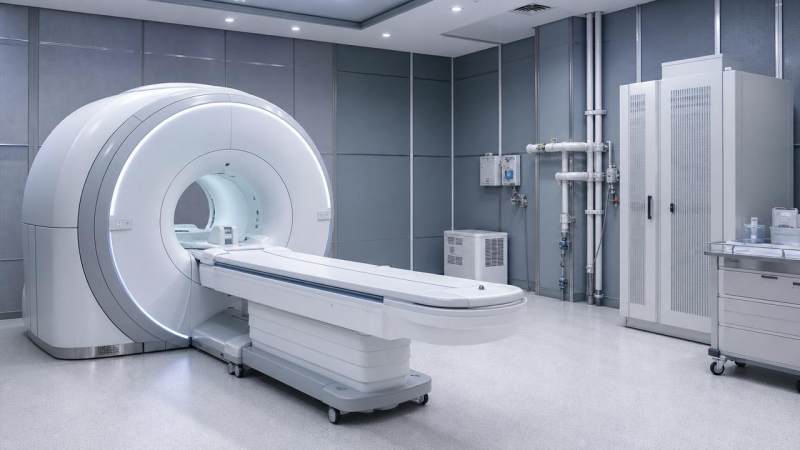
For financial approvers, the real question is not what MRI scanners cost on the purchase order, but what they demand across their full operational life.
Installation, shielding, service contracts, uptime risk, software licensing, staffing, compliance, and energy consumption can turn an attractive sticker price into a long-term capital burden.
Understanding these hidden cost drivers is essential for value-based procurement, especially when clinical performance and reliability must be verified beyond vendor claims.
Why MRI Scanners Cost More in Real-World Hospital Scenarios
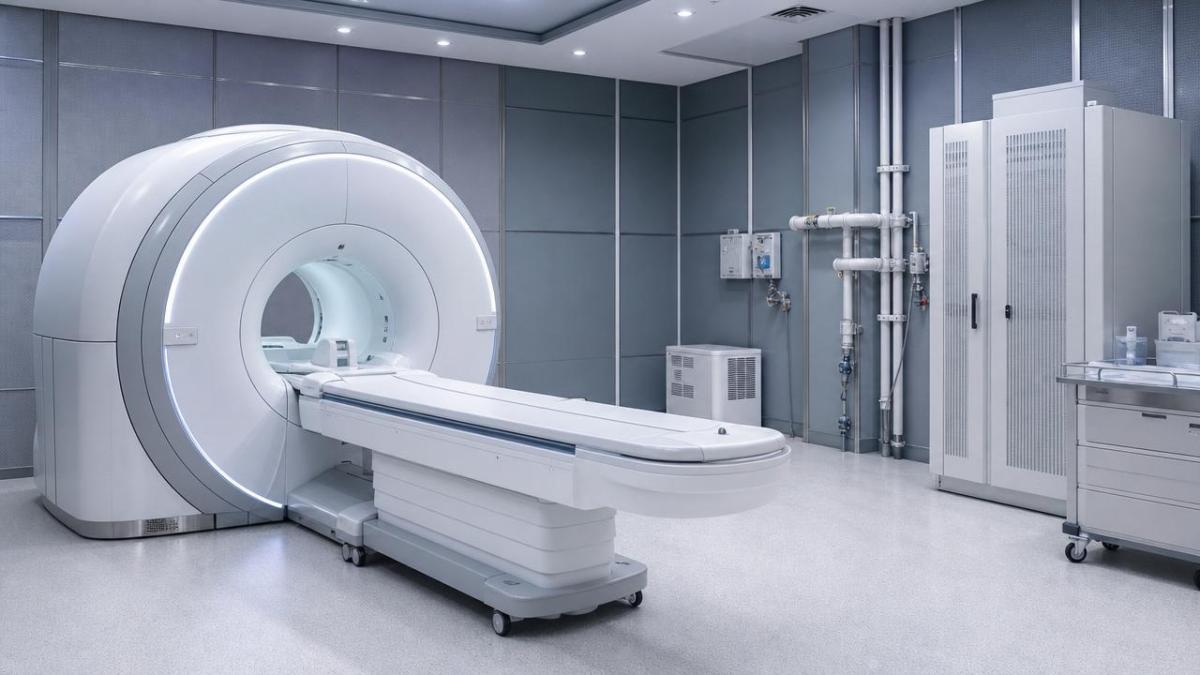
The visible quotation usually covers the magnet, gradients, coils, console, and basic software package.
Yet MRI scanners cost more when the room, workflow, safety controls, and long-term service model are included.
A 1.5T system may appear financially safer than a 3T system.
However, the total economics depend on case mix, scan volume, uptime targets, and available technical infrastructure.
This is where sticker-price thinking fails.
A lower acquisition price can become expensive when coil coverage is limited, sequences are locked, or service response is slow.
VitalSync Metrics views MRI scanners cost as an engineering and lifecycle question, not only a financial question.
The correct benchmark connects image quality, throughput, facility load, reliability, regulatory readiness, and vendor transparency.
Scenario Background: Different Clinical Environments Create Different Cost Signals
MRI scanners cost differently because MRI rooms are not interchangeable.
An outpatient imaging center values speed, schedule density, and predictable maintenance windows.
A tertiary hospital may prioritize neurological, cardiac, oncology, or pediatric protocols that demand stronger performance margins.
A research-linked site may require advanced sequences, raw data access, or software extensibility.
A rural facility may need remote diagnostics, simplified operation, and resilient uptime support.
Each scenario changes the cost baseline.
The same scanner can be overbuilt in one location and underpowered in another.
That mismatch is often where MRI scanners cost more than expected.
Scenario One: New MRI Suite Construction and Site Preparation
New construction exposes the largest hidden spending category: the room itself.
MRI scanners cost more when shielding, floor loading, HVAC, oxygen monitoring, and quench pipe routing are underestimated.
Radiofrequency shielding must match the magnet environment and expected clinical sensitivity.
Poor shielding can degrade image quality and create expensive rework after installation.
Magnetic fringe fields also shape room layout, access control, and safety zoning.
A technically sound site plan reduces operational risk before the system is energized.
The practical judgment is simple.
If civil work is vague, the real MRI scanners cost estimate is incomplete.
Scenario Two: High-Volume Outpatient Imaging
In outpatient settings, revenue depends on schedule reliability and scan throughput.
Here, MRI scanners cost should be measured against exams per day, repeat scan rate, and patient changeover time.
A system with faster reconstruction, automated planning, and efficient coils can reduce labor pressure.
It may justify a higher upfront price if utilization remains consistently high.
The key risk is buying a system that looks affordable but slows routine workflows.
When appointment slots are lost, MRI scanners cost rises through opportunity cost, not invoice cost.
Scenario-fit evaluation should include protocol timing, coil switching, table movement, reporting integration, and downtime history.
Scenario Three: Advanced Clinical Programs Requiring Higher Performance
Advanced imaging programs need more than routine anatomy coverage.
Neuro, cardiac, breast, oncology, and musculoskeletal imaging can demand stronger gradients, better coils, and refined sequences.
In this scenario, MRI scanners cost more because performance options are not cosmetic upgrades.
They can directly affect diagnostic confidence, exam duration, and repeatability.
The decision should compare measured signal-to-noise ratio, gradient duty cycle, artifact behavior, and protocol stability.
Marketing terms such as “premium imaging” should be converted into measurable acceptance criteria.
Without technical verification, MRI scanners cost may be justified by claims rather than clinical-grade evidence.
Scenario Four: Replacement of an Aging MRI System
Replacement projects look easier because an MRI room already exists.
Yet legacy infrastructure can hide expensive incompatibilities.
Older shielding, power capacity, chilled water systems, or access routes may not support the new platform.
MRI scanners cost more when downtime extends during demolition, rigging, validation, or staff retraining.
Replacement planning should calculate lost scanning days and temporary referral leakage.
The most useful question is not whether the old room can physically fit the new magnet.
The better question is whether the full operational environment still meets modern performance and safety requirements.
Scenario Five: Mobile MRI and Space-Constrained Facilities
Mobile or compact MRI deployment changes the cost equation again.
The scanner may avoid permanent construction, but logistics, contracts, staffing, and scheduling complexity increase.
MRI scanners cost should include transport arrangements, site utilities, safety barriers, connectivity, and contingency plans.
Mobile solutions can be valuable when demand is uncertain or capital approval is limited.
They can also become costly if utilization is too low or clinical scope is too restricted.
The central judgment is whether flexibility offsets reduced control.
That balance determines whether MRI scanners cost less in practice or only appear to cost less initially.
Different Scenario Requirements That Change MRI Scanners Cost
This comparison shows why MRI scanners cost cannot be normalized by magnet strength alone.
A total-cost model must follow the clinical scenario, infrastructure condition, and expected operating pattern.
Service Contracts and Uptime: The Costs That Continue After Installation
Service terms often reshape the lifecycle budget more than minor acquisition discounts.
MRI scanners cost more when parts availability, engineer response time, and software support are weak.
A cheaper service plan can expose the site to longer outages.
Every lost scanning day has clinical, operational, and financial impact.
The evaluation should include guaranteed response windows, preventive maintenance frequency, coil replacement rules, and helium management responsibilities.
Software updates also deserve attention.
If cybersecurity patches, AI reconstruction tools, or advanced sequences require recurring licenses, MRI scanners cost expands beyond hardware ownership.
Scenario Adaptation Checklist for Better Procurement Decisions
- Define the dominant clinical scenario before comparing quotes.
- Request a full site assessment before treating the price as final.
- Compare MRI scanners cost by lifecycle year, not only purchase date.
- Require measured image quality data for priority protocols.
- Model utilization, staffing, energy consumption, and expected downtime.
- Separate mandatory clinical options from optional convenience features.
- Check MDR, IVDR-adjacent workflow implications, cybersecurity, and documentation control.
- Verify upgrade paths before accepting a lower initial configuration.
This checklist protects decisions from narrow capital comparisons.
It also helps translate technical specifications into measurable operational value.
Common Misjudgments That Make MRI Scanners Cost More
Misjudgment One: Treating Magnet Strength as the Whole Decision
Field strength matters, but it is not the full answer.
Coil design, gradient performance, software, and protocol efficiency can change clinical productivity substantially.
Misjudgment Two: Ignoring Room and Utility Constraints
A quote without facility verification is incomplete.
Electrical upgrades, shielding repairs, cooling changes, and rigging paths can materially increase MRI scanners cost.
Misjudgment Three: Underestimating Software Licensing
Modern MRI platforms increasingly depend on licensed reconstruction, automation, and specialty protocol tools.
A low sticker price may exclude capabilities needed for the intended clinical scenario.
Misjudgment Four: Accepting Vendor Claims Without Benchmarking
Performance claims should be tested against standardized technical evidence.
VitalSync Metrics focuses on converting vendor specifications into comparable engineering benchmarks.
That approach makes MRI scanners cost easier to judge against reliability, throughput, and clinical-grade performance.
How to Build a Practical Total-Cost Model
A useful model should start with the scanner price, but never stop there.
It should include construction, shielding, utilities, delivery, rigging, acceptance testing, training, service, licenses, energy, and downtime.
The model should also assign value to throughput and diagnostic confidence.
A system that completes more reliable exams may reduce downstream costs.
For each scenario, calculate cost per exam, cost per uptime hour, and cost per clinically accepted protocol.
These metrics reveal whether MRI scanners cost aligns with the service mission.
They also expose when a discount is masking weak performance, limited scalability, or future dependency.
Action Path: Move From Quotation Review to Evidence-Based Selection
The next step is to convert every quotation into a scenario-based lifecycle comparison.
List the intended protocols, expected scan volume, facility constraints, uptime expectations, and required software capabilities.
Then request technical evidence for every performance claim that affects patient flow or diagnostic quality.
VitalSync Metrics supports this discipline through independent benchmarking and engineering-focused analysis.
The goal is not to choose the cheapest scanner.
The goal is to understand why MRI scanners cost what they do, and which cost creates durable clinical value.
When the hidden variables are visible, capital planning becomes clearer, risk becomes measurable, and procurement decisions become defensible.
Recommended News
- 2026.10.15Medical Packaging Heat Seal Testing: Seal Strength vs. Seal Integrity TestsDr. Julian Rossi (RehabTech Specialist)
- 2026.10.14Clinic Supplier Comparison: Evaluating Cost, Delivery Reliability, and SupportDr. Alistair Thorne (Senior Biomedical Engineer)
- 2026.10.13Engineering Performance Testing Services: Evaluating Test Methods and AccuracyDr. Alistair Thorne (Senior Biomedical Engineer)
The VitalSync Intelligence Brief
Receive daily deep-dives into MedTech innovations and regulatory shifts.