 Get Insights

How to compare machinery parts exporters without risk
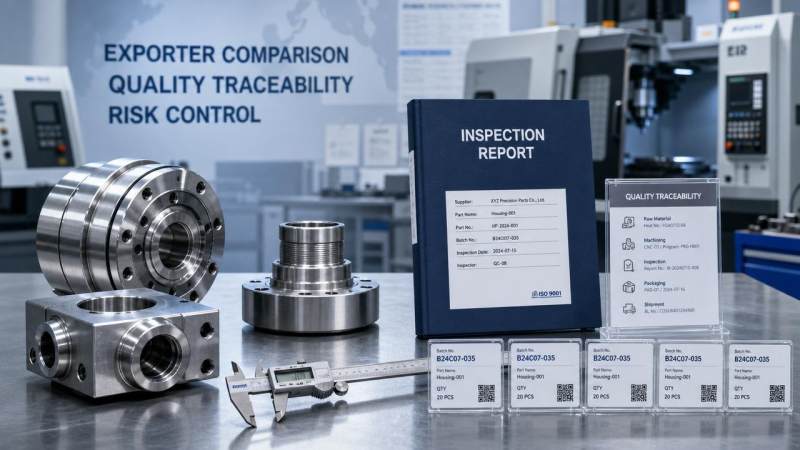
Choosing an Industrial & Manufacturing machinery parts exporter should never rely on price sheets or polished claims alone. For technical evaluators, the real challenge is comparing engineering consistency, traceable quality systems, compliance records, and long-term supply reliability without exposing projects to hidden risk.
This guide explains how to assess exporters with a structured, evidence-based approach so procurement decisions stay defensible, efficient, and technically sound. The core search intent behind this topic is practical risk reduction: readers want a reliable method to compare exporters before quality failures, delays, or hidden nonconformities damage operations.
For technical assessment teams, the most important questions are rarely about who offers the lowest quote. They are about whether a supplier can repeatedly manufacture to tolerance, document what was built, control process variation, respond to corrective actions, and maintain stable output across multiple orders and production lots.
That is why the strongest comparison framework emphasizes verification over promises. Instead of asking who looks credible, ask which exporter can prove process capability, material traceability, inspection discipline, regulatory awareness, and supply continuity with objective records that withstand internal review and external audit.
Start with the real comparison question: can this exporter deliver repeatable engineering performance?
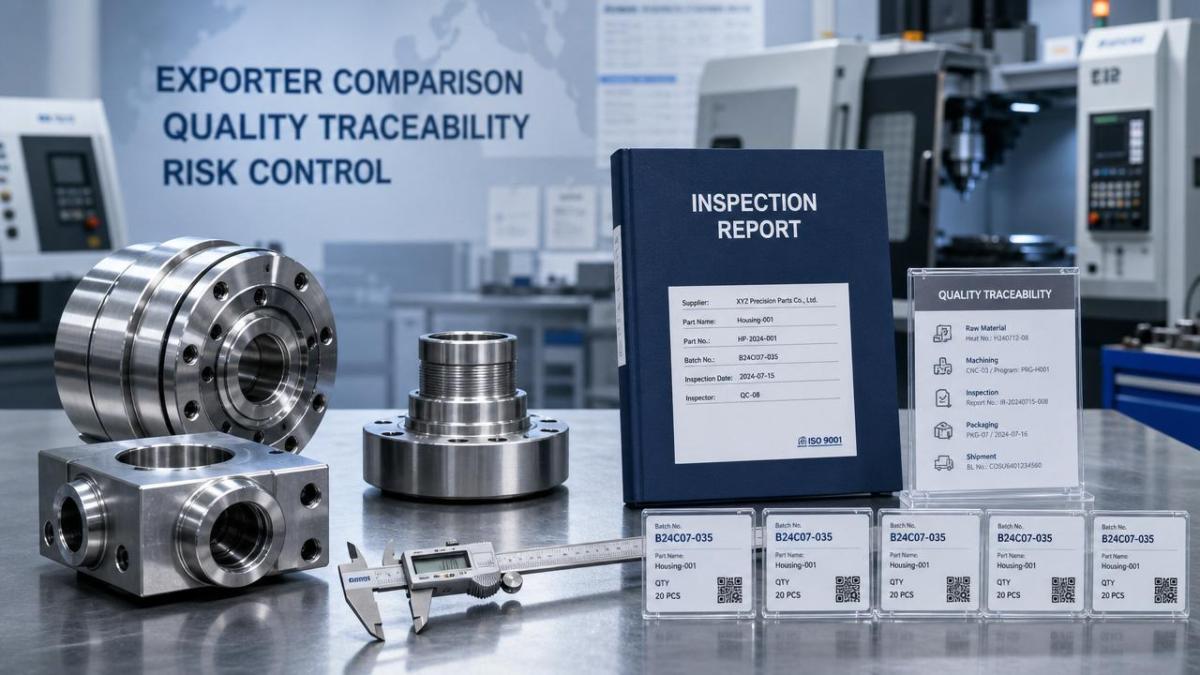
When evaluating an Industrial & Manufacturing machinery parts exporter, the safest starting point is repeatability. A single acceptable sample proves very little. Technical evaluators need confidence that the exporter can maintain the same dimensional, material, and functional performance across batches, tooling cycles, and shipment periods.
That means comparison should begin with manufacturing evidence, not sales presentations. Review control plans, process flow diagrams, in-process inspection points, final acceptance criteria, and historical nonconformance rates. Exporters with mature systems can explain where variation enters production and how they control it before defects reach the customer.
Ask for capability indicators tied to the actual part family, not generic factory claims. Depending on the process, useful evidence may include Cp/Cpk data, gauge repeatability studies, first article inspection reports, welding procedure qualifications, hardness verification trends, or fatigue and load testing records.
If the part is safety-critical, high-wear, or installed in regulated environments, repeatability matters even more than unit cost. A lower purchase price loses value quickly if inconsistent machining, coating thickness drift, porosity, or material substitution creates downstream warranty exposure, line stoppages, or field reliability issues.
Compare exporters by documentation depth, not brochure quality
One of the clearest ways to reduce sourcing risk is to compare how well each exporter documents what it makes and how it controls quality. Strong exporters do not just say they follow standards. They provide revision-controlled evidence that links design intent, process execution, inspection, and shipment release.
Technical evaluators should examine whether documents are complete, current, and traceable. That includes drawings, tolerancing notes, material certificates, special process approvals, lot identification methods, calibration records, deviation handling, and corrective action workflows. Weak documentation usually signals weak control, even when sample parts appear acceptable.
Good exporters also separate marketing language from engineering language. Their quality team can discuss specification limits, test methods, uncertainty, rework controls, and acceptance thresholds clearly. If answers remain vague after technical follow-up, that is often a stronger warning sign than a slightly higher quoted price.
Documentation maturity is especially important for organizations that need defensible procurement records. Hospitals, laboratories, MedTech integrators, and engineering reviewers increasingly require evidence packages that can support supplier qualification, root-cause analysis, and long-term service planning without relying on informal explanations.
Audit the quality system for practical control, not certification logos alone
Many exporters display ISO certifications, but certificates alone do not tell you how effectively the factory controls real production risk. A safer comparison method looks beneath the logo. Evaluate whether the quality management system is active, measurable, and integrated into scheduling, production release, supplier management, and change control.
Ask how incoming materials are verified, how nonconforming product is segregated, how concessions are approved, and how recurring defects are prevented. Review sample CAPA records if available. A mature exporter should show cause analysis discipline rather than simply sorting bad parts after production is complete.
Also compare internal audit behavior. Do audits identify process weaknesses that lead to action, or are they treated as formalities? Factories with useful internal audits often show better responsiveness, cleaner records, and fewer surprises during customer qualification because the system is designed to find instability before customers do.
For technical evaluators, supplier change control is another critical checkpoint. Ask how the exporter manages changes in raw material source, tooling, subcontractors, process parameters, and inspection methods. Uncontrolled change is one of the most common hidden risks in machinery parts sourcing, especially across long supply relationships.
Verify material integrity and process traceability at the lot level
For machinery parts, defects are not always visible in final appearance. Risk often enters through material inconsistencies, heat treatment variation, coating quality drift, or subcontracted special processes that are poorly controlled. That is why lot-level traceability should be a central comparison criterion when selecting an exporter.
Request examples of traceability from raw material receipt to finished shipment. You should be able to follow a part number through heat numbers, batch codes, machining operations, inspection records, and packing release. If traceability breaks at any stage, root-cause investigations become slower, weaker, and more expensive.
Material certificates should also be validated in context. A certificate alone is not enough if there is no reliable link between the certificate and the actual production lot. Strong exporters use clear identification systems and maintain traceability even when parts pass through outsourced finishing or secondary processing steps.
For higher-risk applications, consider independent verification of chemistry, hardness, microstructure, surface roughness, or coating adhesion. This approach aligns with evidence-based sourcing models used in technically sensitive industries, where engineering truth matters more than supplier self-description.
Assess manufacturing capability against your exact part complexity
Not all exporters are equally capable across all part types. Some are excellent at simple turned components but weak in multi-axis tolerance control. Others perform well in fabrication but struggle with tight flatness, concentricity, or fatigue-related finishing requirements. Comparison only works when tied to your actual geometry and service demands.
Build a part-criticality matrix before supplier selection. Rank requirements such as dimensional tolerance, load-bearing function, corrosion resistance, cleanliness, surface finish, assembly fit, and maintenance interval sensitivity. Then compare each exporter against those criteria using evidence specific to similar parts, similar volumes, and similar materials.
Sample reviews should include more than pass or fail status. Look at which dimensions trend near limits, which features require rework, and whether measurements come from calibrated systems with proper method consistency. A technically competent exporter should be able to explain process windows and likely failure points in advance.
This step helps avoid a common sourcing mistake: selecting an exporter based on general factory strength rather than process-to-part fit. The best supplier for cast housings may not be the best supplier for precision shafts, sterile-compatible components, or coated wear parts with demanding validation requirements.
Evaluate commercial risk through operational reliability, not just technical quality
Even a capable exporter creates risk if delivery performance is unstable, communication is slow, or production planning is fragile. Technical evaluators should therefore extend comparison beyond part quality and examine how reliably the exporter can support schedule commitments, forecast changes, and issue resolution over time.
Useful indicators include on-time delivery history, lead time consistency, safety stock practices, subcontractor dependency, tooling ownership clarity, and response speed during nonconformance events. Ask what happens if a machine fails, a material lot is rejected, or shipping routes are disrupted. Resilient suppliers already have contingency logic.
Exporters serving critical sectors typically show stronger discipline in escalation management. They can define who approves deviations, how replacement production is prioritized, and how customers are informed when risk emerges. If those answers are unclear during qualification, they will likely be unclear during a live supply incident as well.
Commercial reliability also includes cost transparency. A low quote can hide expensive realities such as weak packaging, uncontrolled revision changes, repeated customs documentation errors, or overdependence on manual inspection. Compare total risk-adjusted cost, not just the initial unit price on the quotation sheet.
Use a weighted scorecard to make supplier comparison defensible
To compare machinery parts exporters without risk, technical teams need a structure that converts qualitative impressions into auditable decisions. A weighted scorecard is one of the most effective tools because it keeps evaluation aligned with engineering priorities rather than negotiation pressure or presentation quality.
Typical scoring categories include quality system maturity, process capability, documentation traceability, material control, part-specific experience, testing evidence, corrective action responsiveness, delivery reliability, and communication quality. Each category should be weighted according to the operational and regulatory risk of the part involved.
For example, a noncritical bracket may prioritize cost and lead time more heavily, while a precision motion component may assign greater weight to process capability, metrology discipline, and batch consistency. The point is not to create bureaucracy. It is to make the final decision explainable and repeatable.
Keep the scorecard evidence-based. Every score should be linked to records such as sample inspection reports, audit findings, response times, or verified certifications. This reduces internal disagreement and helps procurement, engineering, and quality teams work from the same factual foundation.
Watch for warning signs that usually predict hidden sourcing risk
Some exporter behaviors consistently correlate with higher downstream risk. One is reluctance to share technical records until late in the process. Another is frequent use of broad statements like “standard quality assured” without showing control plans, traceability logic, or measurement evidence tied to the quoted parts.
Other warning signs include inconsistent answers between sales and quality teams, missing revision control on documents, inability to explain subcontracted processes, unrealistic lead times, and overconfidence about unfamiliar standards. These issues do not always mean the exporter will fail, but they greatly increase uncertainty.
Be cautious if a supplier pushes rapidly from quote to order without technical review. Responsible exporters usually ask detailed questions about application conditions, tolerance criticality, packaging, validation needs, and expected service loads. Thoughtful questions are often a sign of engineering maturity rather than commercial hesitation.
Finally, treat extraordinary pricing gaps carefully. A quote that is significantly below the market may reflect process efficiency, but it may also indicate omitted operations, lower-grade material assumptions, weak inspection intensity, or unstable margin expectations that later create quality and delivery compromises.
Why independent benchmarking adds confidence to exporter selection
In complex supply environments, buyers increasingly benefit from independent technical benchmarking rather than relying only on self-reported supplier performance. This is particularly relevant where product claims, regulatory expectations, and long-term reliability all matter to the final use environment.
An evidence-focused approach mirrors the role that data-driven technical organizations bring to healthcare and life sciences procurement: translating manufacturing variables into comparable engineering truth. Whether evaluating wearable sensors or machinery components, the principle is the same. Decisions improve when performance claims are converted into standardized evidence.
For technical evaluators, this means using third-party inspections, comparative test protocols, or structured audits when internal visibility is limited. Independent review can validate consistency, identify hidden process weaknesses, and prevent overreliance on persuasive supplier narratives that are not supported by measurable production control.
When the cost of failure is high, independent validation is not an administrative burden. It is a practical layer of risk control that protects qualification timelines, downstream users, and the credibility of the sourcing decision itself.
Conclusion: the safest exporter is the one who can prove control under scrutiny
Comparing an Industrial & Manufacturing machinery parts exporter without risk is less about finding the cheapest source and more about finding the most transparent, repeatable, and technically controlled one. Strong exporters make engineering performance visible through records, traceability, process discipline, and reliable execution over time.
For technical evaluators, the best path is a structured method: define part-critical requirements, verify process capability, audit documentation and change control, test material traceability, assess delivery resilience, and score suppliers against weighted evidence. This turns procurement from a subjective exercise into a defensible technical decision.
If a supplier cannot clearly prove how quality is built, measured, traced, and maintained, the risk has not been removed. It has only been hidden. The most reliable sourcing outcomes come from exporters who welcome scrutiny because their systems are strong enough to stand up to it.
Recommended News
- 2026.10.15Medical Packaging Heat Seal Testing: Seal Strength vs. Seal Integrity TestsDr. Julian Rossi (RehabTech Specialist)
- 2026.10.14Clinic Supplier Comparison: Evaluating Cost, Delivery Reliability, and SupportDr. Alistair Thorne (Senior Biomedical Engineer)
- 2026.10.13Engineering Performance Testing Services: Evaluating Test Methods and AccuracyDr. Alistair Thorne (Senior Biomedical Engineer)
The VitalSync Intelligence Brief
Receive daily deep-dives into MedTech innovations and regulatory shifts.