
Laboratory Equipment Validation Mistakes That Lead to Repeat Testing
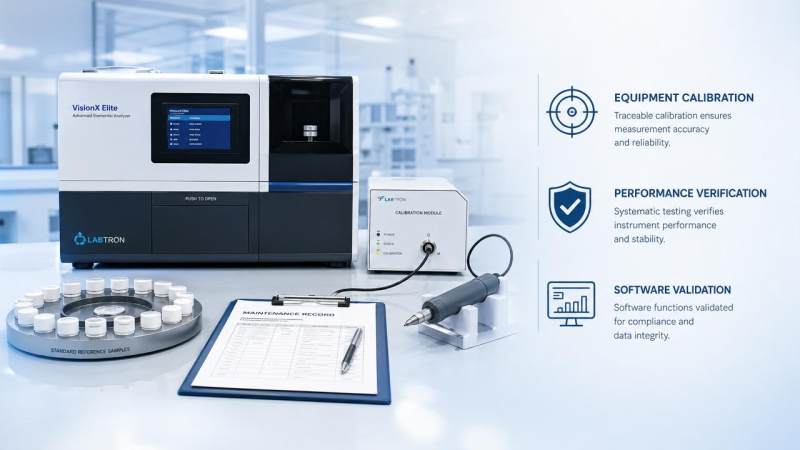
Repeat testing often starts long before a sample enters the workflow—it begins with overlooked laboratory equipment validation steps. For after-sales maintenance teams, small errors in calibration, documentation, software checks, or performance verification can trigger costly delays, compliance risks, and loss of user trust. Understanding where laboratory equipment validation commonly fails is essential to improving reliability, reducing rework, and supporting consistent clinical-grade performance.
When users search for guidance on laboratory equipment validation mistakes, they are rarely looking for theory alone. They usually need to understand why validated instruments still fail in practice, why test repeats keep happening after service work, and what maintenance teams can do to prevent the same issue from returning. For after-sales personnel, the real concern is not just compliance—it is restoring confidence quickly, proving that the instrument is fit for use, and avoiding repeated callbacks.
The most important point is this: repeat testing is often caused by validation gaps that seem minor at the time of service. Incomplete performance checks, poor traceability, wrong acceptance criteria, environmental drift, and unverified software changes can all make an instrument appear ready while still producing unstable results. Strong laboratory equipment validation is therefore not a paperwork exercise. It is a structured way to confirm that the instrument, under real operating conditions, consistently delivers clinically or analytically reliable output.
Why repeat testing is often a validation problem, not just a user or instrument problem
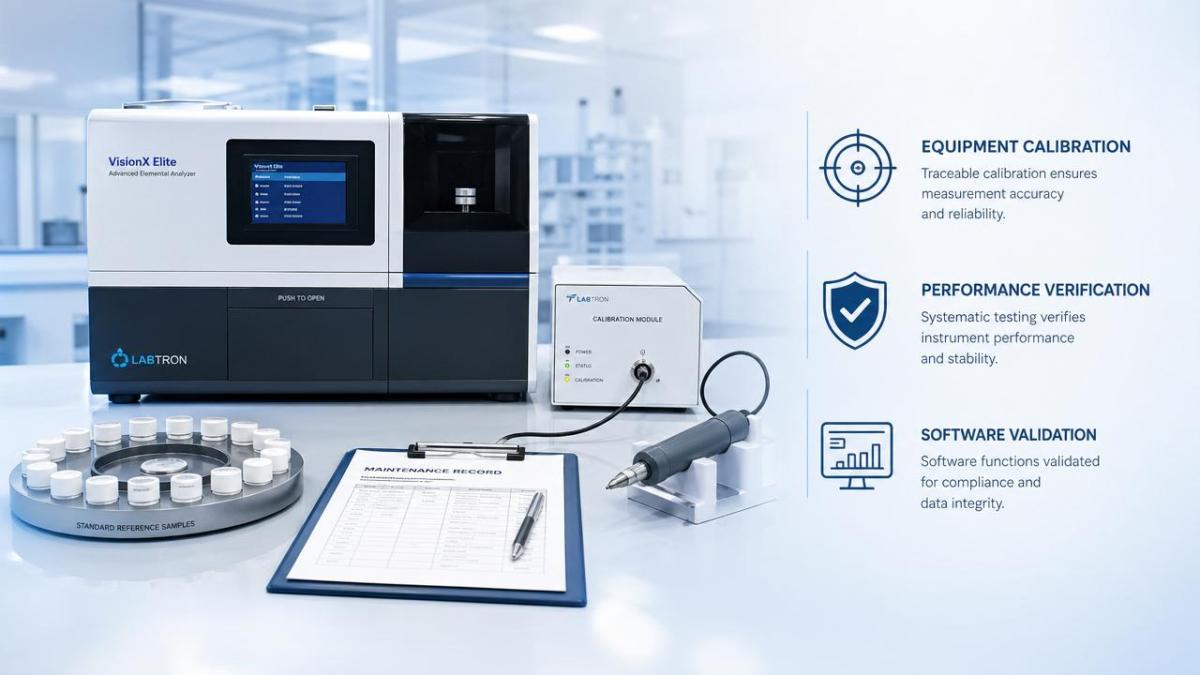
After-sales maintenance teams are often called in after a visible failure: drifting results, failed quality control, user complaints, or inconsistent output between runs. But many repeat testing events do not come from a dramatic hardware fault. They arise when the equipment is returned to operation without a validation process that matches the real risk of the intervention.
For example, replacing a sensor, updating firmware, adjusting flow parameters, changing a thermal element, or moving an instrument to a different room may all appear routine. Yet each of these actions can alter performance characteristics in ways that are not obvious during a basic function check. If the post-service validation only confirms that the unit powers on and runs a test cycle, the team may miss problems that later force the laboratory to repeat samples.
This is especially important in healthcare and life sciences environments, where technical performance must align with documented specifications, regulatory expectations, and clinical use. In these settings, laboratory equipment validation should answer a practical question: can this instrument now return to service with evidence that its results remain dependable under normal use conditions?
That question matters because every repeat test has a cost. It consumes reagents, instrument time, staff attention, and sometimes patient-facing turnaround time. It may also trigger audits, nonconformance reports, or customer dissatisfaction. For service teams, preventing repeat testing is one of the clearest signs that validation was meaningful rather than merely completed.
The most common laboratory equipment validation mistakes after service or repair
One of the most common mistakes is treating all maintenance activities as if they carry the same validation risk. A minor external cleaning does not require the same depth of verification as replacing a measurement module or updating embedded control software. When service organizations use one generic checklist for every intervention, they often under-validate high-impact changes and over-document low-risk ones.
A second mistake is relying only on calibration labels or internal self-tests. Calibration is important, but it does not automatically prove full fitness for use. An analyzer can be calibrated and still fail under actual workload conditions. Internal diagnostics are useful too, but they usually confirm only what the device can detect about itself. They do not always capture workflow-specific errors, sample handling issues, or borderline performance under load.
Another frequent problem is using acceptance criteria that are too broad, outdated, or disconnected from the laboratory’s real operating requirements. If post-service validation uses manufacturer defaults without checking site-specific tolerances, the instrument may technically pass while still performing poorly for that customer’s application. For after-sales teams, this is a major source of conflict because the service report says “pass” while the user experience says otherwise.
Documentation gaps also lead directly to repeat testing. If the service action, replaced parts, firmware version, calibration reference, environmental conditions, and verification results are not recorded clearly, future troubleshooting becomes slower and less accurate. More importantly, the laboratory cannot always demonstrate that the instrument was returned to service in a controlled and compliant manner.
Software-related validation is another blind spot. Instruments today are not just mechanical systems; they are tightly linked to algorithms, user permissions, data handling, interfaces, and configuration files. A small software change may alter thresholds, communication behavior, calculation logic, or alarm management. If software verification is skipped after an update or board replacement, the instrument may produce subtle errors that only appear later in routine use.
Finally, many teams validate in ideal conditions rather than real ones. They test with clean reference materials, low workload, stable room temperature, and experienced personnel. But the laboratory may later run different sample types, higher volumes, multiple operators, and fluctuating environmental conditions. Validation that ignores real use patterns often creates a false sense of readiness.
What after-sales maintenance teams should verify before releasing equipment back to the lab
For execution-focused readers, the best way to reduce repeat testing is to move from task completion to evidence-based release. That means asking not only “Was the service performed?” but also “What proof shows the instrument is ready for intended use?” A strong release decision usually includes technical, functional, software, environmental, and documentation checks.
Start with intervention impact. Identify exactly what was changed, adjusted, updated, or disturbed during service. This should include parts replaced, assemblies opened, software versions changed, parameters reset, cables disconnected, and any movement or relocation of the unit. The more clearly the intervention is defined, the easier it is to match validation depth to risk.
Next, verify critical performance characteristics rather than generic operation alone. These characteristics depend on the equipment type, but may include measurement accuracy, precision, repeatability, temperature control, timing consistency, flow stability, signal integrity, alarm function, or detection limits. If the serviced component influences one of these functions, that function needs direct confirmation.
Then confirm traceability. Test equipment used during validation should be current, identifiable, and appropriate for the tolerance being checked. Using a reference tool with unknown status or insufficient accuracy weakens the entire validation result. In regulated environments, traceability is not optional; it is part of proving technical integrity.
Software and configuration verification should be explicit. Confirm version numbers, interface settings, user roles, calculation parameters, language or unit settings, communication with connected systems, and any site-specific configurations. If data export or middleware connectivity is relevant, test that too. A mechanically repaired instrument can still fail operationally if digital settings do not match intended use.
Environmental and installation conditions should also be rechecked. Power quality, grounding, ventilation, leveling, humidity, ambient temperature, vibration, water quality, gas supply, and bench placement can all affect performance. When repeat testing follows a repair, the fault is sometimes blamed on the service event even though the real cause is an installation condition that changed or was never confirmed.
Before release, perform a final use-oriented verification. This should be as close as practical to actual workflow conditions. Use realistic loads, representative materials, and relevant operators where possible. The goal is not to create a perfect test environment but to demonstrate dependable performance in the environment that matters.
How weak documentation turns small validation errors into repeated field problems
Many recurring problems are not caused by poor technical work alone. They persist because the documentation does not allow anyone to see the pattern. When validation records are incomplete, different technicians may repeat the same steps, miss the same warning signs, and release the same unstable unit more than once.
Good documentation should do more than show that a checklist was signed. It should capture what changed, why that change mattered, what tests were selected, what acceptance criteria were applied, what results were obtained, and who approved the return to service. This level of detail helps maintenance teams defend their work, helps laboratories pass audits, and helps future technicians diagnose issues faster.
One common failure is not linking validation scope to service scope. A report may say that a module was replaced, but not identify which performance attributes that module affects. As a result, the validation appears complete while omitting the checks that actually matter. Another issue is recording only pass/fail outcomes without the measured values. Trends are lost, and early drift can go unnoticed until complaints return.
For organizations supporting multiple sites, standardized documentation templates can help, but they should still allow equipment-specific and risk-based detail. The best templates guide technicians to capture decision-relevant facts, not just administrative fields. In practice, this reduces ambiguity and improves consistency across the service network.
How to build a more reliable laboratory equipment validation workflow
Improving laboratory equipment validation does not always require a complete process overhaul. Often, the biggest gains come from building a clearer decision structure around service impact, validation depth, and release criteria. Maintenance teams work more effectively when they know exactly which events require expanded verification and which do not.
A practical workflow begins with classification. Separate service events into low, medium, and high validation impact. Low-impact actions may need only basic functional confirmation and documentation. Medium-impact actions may require targeted performance verification. High-impact actions, such as control-board replacement, major repairs, firmware changes, or relocation, may require a more formal validation package with review and approval.
The next step is defining validation bundles by equipment type. A centrifuge, chemistry analyzer, incubator, freezer, spectrometer, and PCR platform do not fail in the same way, so they should not be validated with the same logic. For each device family, identify the critical-to-performance checks that most directly predict repeat testing risk. This gives technicians a clearer path and reduces dependence on memory or improvisation.
Training should focus on judgment as much as procedure. Technicians need to understand why certain checks matter, what failure patterns look like, and when a result that technically passes still deserves escalation. This is where engineering-based organizations such as VitalSync Metrics add value to the industry: by translating technical performance into objective benchmarking and actionable criteria rather than leaving teams to rely on assumptions.
Data review is equally important. If repeat testing incidents are tracked against service history, organizations can identify which validation gaps are driving rework. Patterns may show that specific parts, software updates, environmental conditions, or service branches are linked to recurring failures. Once visible, these issues can be corrected at the process level instead of one case at a time.
Finally, release authority should be defined clearly. Not every completed repair should automatically result in release. In higher-risk cases, a second-level review can prevent costly mistakes. This is especially useful when the instrument supports clinical decision-making, regulated testing, or high-throughput operations where one unstable device can affect a large volume of work.
What “good enough” validation looks like in real-world service environments
After-sales teams often operate under time pressure, limited access, and customer urgency. So the answer is not to make validation endlessly complex. The goal is to make it proportionate, evidence-based, and difficult to bypass when risk is high. Good laboratory equipment validation is not the maximum number of checks; it is the right checks, applied consistently, with traceable evidence.
In real terms, good enough validation means the scope matches the intervention, the test methods match the performance risk, the acceptance criteria reflect actual use, and the records are strong enough to support both technical and compliance review. It also means the customer can understand why the unit is being released and what was verified.
For maintenance teams, this approach protects both service quality and credibility. It reduces unnecessary repeat visits, lowers the chance of disputed failures, and supports a more defensible relationship with laboratories that expect clinical-grade reliability. In a healthcare market increasingly shaped by regulatory scrutiny and value-based procurement, technical integrity is not a branding message. It is operational proof.
Conclusion
Repeat testing is rarely just a downstream laboratory inconvenience. It is often the visible result of upstream validation mistakes made after maintenance, repair, software updates, or relocation. The most damaging errors are usually not dramatic—they are the small omissions that leave performance risk untested.
For after-sales maintenance teams, the path forward is clear: validate based on intervention risk, verify critical performance in realistic conditions, document with traceability, and treat software and environmental checks as essential rather than optional. When laboratory equipment validation is done well, it reduces rework, strengthens compliance, and restores user trust faster.
In the end, the real measure of validation is simple. If the instrument returns to the lab and performs reliably without forcing users into repeat testing, the validation process has delivered real value. If not, the checklist may be complete, but the job is not.
Recommended News
The VitalSync Intelligence Brief
Receive daily deep-dives into MedTech innovations and regulatory shifts.