 Get Insights

What makes NAMSA biocompatibility testing costs rise?
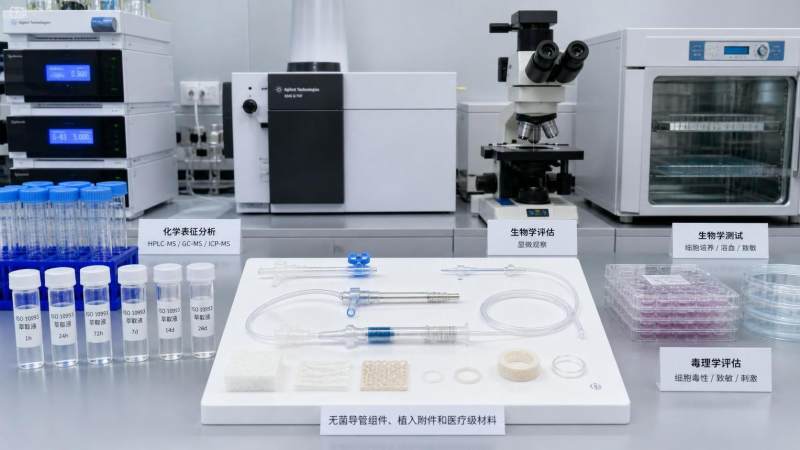
A sourcing review can look straightforward until the biocompatibility quote arrives. A device team may have expected a limited set of evaluations for a new catheter component, wearable housing, surgical instrument, or implant accessory. Instead, the laboratory proposal includes chemical characterization, toxicological assessment, extraction work, multiple biological endpoints, protocol amendments, and possible repeat testing. The headline number is higher than expected, but the more difficult question is whether the cost is justified or whether the scope has expanded because the project was poorly defined.
This is a familiar problem for procurement personnel working between engineering, quality, regulatory, and external laboratories. A low initial quote can become expensive when materials are not fully disclosed, intended use changes late, or the regulatory submission needs evidence that was not included in the original plan. In discussions around NAMSA biocompatibility testing, the cost is rarely driven by a laboratory name alone. It is shaped by the evidence needed to support a particular device, its patient contact profile, and the quality of the information supplied before work begins.
The quote increased, but the scope may have changed first
When a testing budget rises, teams sometimes treat it as a purchasing issue: ask for a discount, compare another provider, or remove “nonessential” studies. Those actions may be reasonable, but they should come after a more basic review. The laboratory is typically pricing uncertainty as well as laboratory work. If uncertainty is high, the proposed program becomes broader, more cautious, and more difficult to schedule.
A simple example is a device described as having “indirect skin contact.” That description may not be enough to determine the appropriate biological evaluation approach. Is the device used once or repeatedly? Does it contact intact skin only? Can a fluid path introduce patient exposure to extractables? Is it supplied sterile? Does a coating, adhesive, lubricant, colorant, or cleaning residue remain on the finished device? Each answer can alter the evidence needed.
Cost growth often appears later because those questions were not resolved when the first quote was requested. The original proposal may have covered a narrow group of tests, while the final regulatory position requires a wider assessment of the finished, clinically representative device. Procurement can reduce surprises by treating the first quote as a scope hypothesis, not a fixed cost commitment.
Four drivers that commonly push testing budgets upward
1. The contact category is more demanding than originally described
Biocompatibility planning begins with the nature and duration of body contact. A device with limited contact and a device intended for prolonged or permanent contact do not carry the same evidence burden. Contact with intact skin, mucosal membranes, circulating blood, tissue, bone, dentin, or an indirectly communicating fluid path can lead to different assessment considerations.
Duration matters as much as location. A component that is only briefly used during a procedure may need a different rationale from one that remains in place for days, weeks, or longer. A procurement request that merely says “patient-contacting device” forces the laboratory to seek clarification or assume a more conservative scope. Either route can increase cost and delay the proposal.
It is also important to separate intended contact from plausible contact. A connector may not be designed to touch the patient, but if it forms part of a fluid pathway, its material and processing residues may still need evaluation. Internal disagreement on this point is a frequent cause of re-scoping.
2. The material story is incomplete
Material names are not always sufficient. Saying that a component is “silicone,” “stainless steel,” “polyurethane,” or “medical-grade polymer” does not automatically reveal its final biological risk profile. Formulations can differ by additives, pigments, catalysts, plasticizers, stabilizers, fillers, surface treatments, and residual processing aids. The risk assessment may also depend on suppliers, grades, and manufacturing conditions.
A laboratory may need to understand every patient-contacting material, including coatings, inks, adhesives, overmolds, lubricants, and packaging-related transfers where relevant. If a bill of materials only identifies the base resin but omits a colorant masterbatch or bonding agent, the testing plan may be revised after the gap is discovered.
Changes introduced for supply continuity deserve particular attention. A seemingly equivalent resin grade, alternate metal finishing vendor, revised cleaner, or new curing process can affect the rationale for using prior evidence. Buyers should not assume that a supplier’s “equivalent material” statement automatically supports the existing biological evaluation.
3. Chemical characterization and toxicological work become necessary
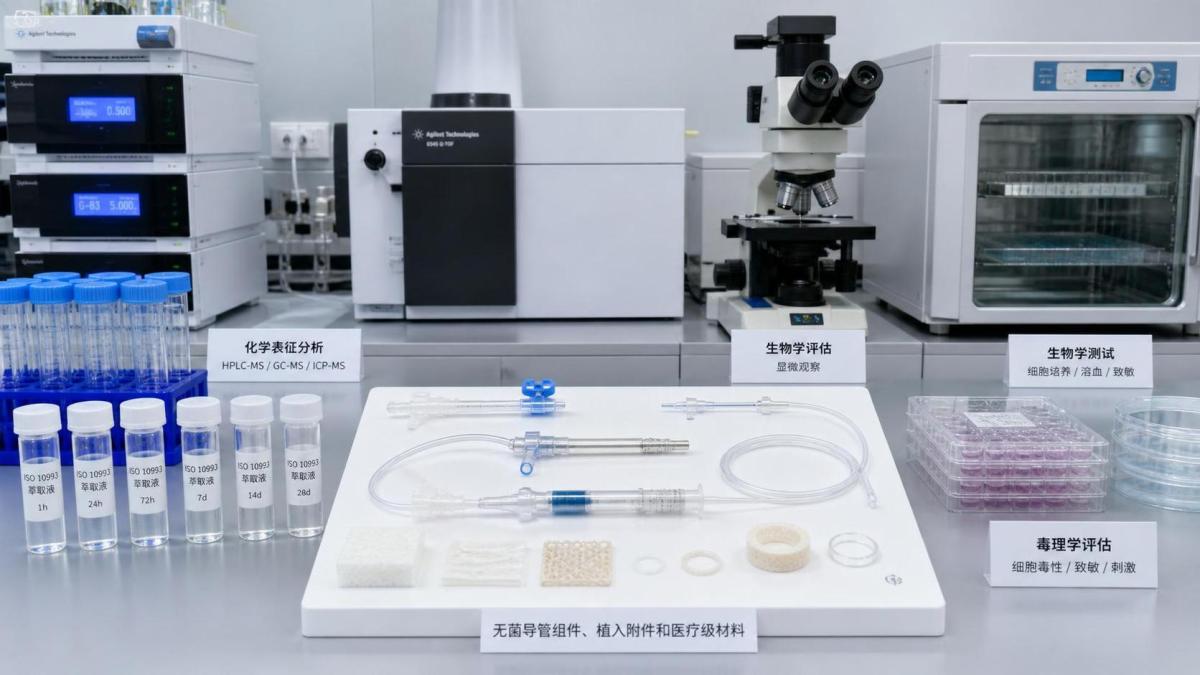
Many teams expect biocompatibility to mean only a set of biological tests. In practice, the testing strategy may include chemical characterization of the finished device or representative materials, followed by toxicological assessment of identified or detected substances. This work can require carefully chosen extraction conditions, analytical methods, data interpretation, and a documented rationale.
Costs rise when extraction conditions must reflect challenging clinical use, when the device has complex geometry, or when low-level substances require further investigation. A result that cannot be confidently identified may generate additional analytical work. Likewise, a substance found in an extract does not automatically mean the device is unacceptable; it may require an exposure-based toxicological evaluation. That review takes technical effort and depends heavily on data quality.
For procurement comparison, ask whether the quote includes the analytical phase, interpretation, and any expected reporting boundaries. One proposal may look cheaper because it covers sample analysis only, while another includes a fuller assessment package. These are not equivalent purchases.
4. The device submitted for testing is not representative
Testing a development sample that differs from the commercial configuration can create a costly loop. The sample may have a different supplier, incomplete assembly, temporary adhesive, nonproduction sterilization cycle, or laboratory-scale cleaning process. If the final device changes after testing, the organization may need to justify why the evidence remains applicable or conduct additional work.
The term “worst case” is often used too casually. A larger component is not always the most challenging sample. The relevant worst case may be the configuration with the highest surface area-to-volume ratio, the greatest additive concentration, the longest contact duration, the most aggressive sterilization exposure, or the most extensive patient-contacting material set. The rationale should come from engineering and risk-based reasoning rather than convenience.
Where procurement comparisons often go wrong
When reviewing proposals for NAMSA biocompatibility testing or any comparable laboratory program, comparing total price alone can produce a misleading ranking. A detailed comparison should identify what each provider assumes, excludes, and treats as a change order.
For example, a quote may state that it covers a specific endpoint but not protocol development, sample preparation, shipping coordination, extraction method development, toxicological review, repeat testing, or responses to questions raised during documentation review. Another quote may include some of those activities but rely on the manufacturer to supply extensive material evidence. Neither approach is inherently better. The practical choice depends on what your internal team can provide and how mature the device documentation is.
Turnaround time should be read the same way. A stated laboratory duration may start only after sample receipt, protocol approval, purchase authorization, and confirmation that documents are complete. If materials are delayed or the test article is rejected as nonrepresentative, the calendar impact can be much larger than the advertised laboratory window.
A better way to request and compare scope
Before sending requests for quotation, assemble a concise technical packet. It does not need to be a finished regulatory submission, but it should allow a laboratory to understand the product without guessing. Procurement can coordinate this packet, while technical owners validate its content.
- Device description: intended purpose, user population, clinical use setting, reusable or single-use status, and all configurations being considered.
- Contact profile: type of body contact, direct or indirect exposure, contact duration, and whether blood or a fluid path is involved.
- Finished-device composition: patient-contacting materials, coatings, inks, adhesives, lubricants, colorants, and relevant processing residues.
- Manufacturing information: assembly, cleaning, curing, passivation, sterilization, packaging, and any steps that can alter surface chemistry.
- Change history: differences from previously evaluated versions, alternate suppliers, formulation updates, and planned design changes.
- Existing evidence: prior reports, material supplier data, chemical information, literature support where appropriate, and known gaps.
This is not a compliance checklist to complete mechanically. It is a way to expose unknowns before they become paid amendments. If the organization cannot supply a material disclosure because a contract manufacturer will not release formulation details, that issue should be visible during sourcing. It may affect the choice of supplier or require a different evidence strategy.
Questions worth asking before approving a purchase order
A productive laboratory discussion is more useful than a generic request for “all required testing.” Ask the provider to explain the proposed biological evaluation logic in plain terms. Which conclusions are based on existing information, which are based on new testing, and which assumptions must remain true for the plan to hold?
Also ask whether the quote is for a screening-oriented package or for documentation intended to support a defined regulatory pathway. Different markets and reviewers may expect different levels of detail, and the device’s classification, intended use, and available equivalence evidence matter. A quote cannot replace regulatory judgment, but it should make the planned deliverables clear.
Useful commercial questions include:
- What exact device configuration and sample condition does the proposal cover?
- Are protocol preparation, study reporting, and scientific review included?
- Which activities trigger additional charges: sample changes, extractions, unidentified substances, retesting, or reviewer questions?
- What information must the manufacturer provide before work can start?
- Does the proposal account for sterilized, aged, or production-equivalent samples where relevant?
- What is the process if the assessment identifies a gap that cannot be resolved by the originally quoted tests?
Written answers matter. A procurement file should preserve the scope basis, not only the commercial total. This record helps when a project manager later asks why an added study or analysis is necessary.
When paying more can reduce total program risk
The lowest testing quote can be appropriate when the device is simple, the materials are well characterized, the manufacturing process is stable, and the requested scope is clearly aligned with the intended regulatory use. In that situation, a narrow and disciplined proposal may reflect efficient planning rather than missing work.
However, a higher quote may be commercially sensible when it addresses uncertainties early. This is especially true for devices with multiple material interfaces, novel coatings, long-term contact, reusable processing, sterilization effects, or incomplete supplier documentation. Spending on a well-defined assessment can be less disruptive than discovering a material gap after engineering has frozen the design or after submission documents are being assembled.
The decision is not “more testing versus less testing.” It is whether the proposed evidence matches the residual uncertainty. Procurement personnel can add real value by asking technical teams to distinguish known facts from assumptions. If an assumption cannot be supported, it should be budgeted as a risk rather than hidden in a low quote.
Keeping costs from climbing again on the next project
Organizations that manage biological evaluation costs well tend to start earlier, not necessarily test more. Material and process decisions should be recorded while suppliers, engineering, and quality teams still have access to the relevant details. A controlled material inventory, traceable supplier declarations, and documented change review can prevent expensive reconstruction of the device history later.
It also helps to involve the testing laboratory before finalizing a major material, coating, sterilization, or manufacturing change. The goal is not to outsource every decision. It is to understand whether the change may affect existing evidence before production samples and budgets are committed.
For a buyer reviewing NAMSA biocompatibility testing costs, the practical signal is not simply whether a proposal is high or low. Look for a quote that identifies the device assumptions, ties work to an intelligible evaluation rationale, states the deliverables, and makes uncertainty visible. That level of clarity gives the internal team a better basis for negotiating scope, preparing samples, and avoiding preventable rework.
Recommended News
- 2026.10.18Choosing a Mobility Aid Manufacturer: Safety Testing, Lead Times, and Spare PartsSarah Jenkins (Laboratory Infrastructure Consultant)
- 2026.10.17Choosing a Laboratory Centrifuge Manufacturer: Safety, Warranty, and ServiceDr. Hideo Tanaka (Imaging Systems Analyst)
- 2026.10.16Wearable Medical Sensors: When Is FDA Clearance or Approval Required?Lydia Vancini (Regulatory Compliance Lead)
The VitalSync Intelligence Brief
Receive daily deep-dives into MedTech innovations and regulatory shifts.