 Get Insights

Which eco-friendly building materials hold up best over time
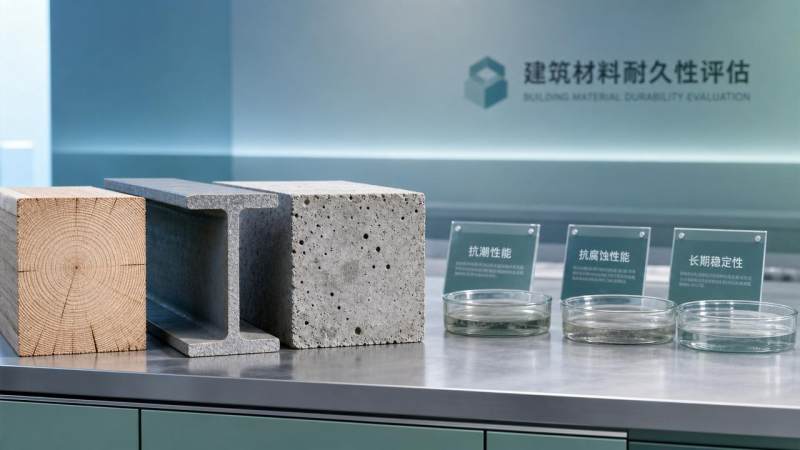
For technical evaluators, choosing eco-friendly building materials for sustainable construction is not just about lowering environmental impact—it is about verifying durability, lifecycle performance, and material consistency under real-world conditions. From engineered timber to recycled steel and low-carbon concrete, the key question is which options retain structural integrity, resist degradation, and deliver measurable long-term value in demanding projects.
That question matters even more in healthcare-adjacent environments, including laboratories, diagnostic facilities, clean utility rooms, and medical manufacturing spaces, where material failure can affect hygiene control, service continuity, and long-term operating cost. For technical reviewers working within procurement, design validation, or facility planning, the evaluation criteria should go beyond embodied carbon and include fatigue resistance, moisture behavior, maintenance cycles, and compliance with project-specific performance thresholds.
In practice, the best eco-friendly building materials for sustainable construction are rarely defined by a single metric. A material with 20% lower carbon impact may still be the wrong choice if it requires replacement in 8 years instead of 25, or if it introduces dimensional instability in tightly controlled environments. The goal is to identify materials that perform consistently over a 15- to 50-year service horizon while supporting procurement transparency and risk-managed specification.
How Technical Evaluators Should Define “Holds Up Best Over Time”
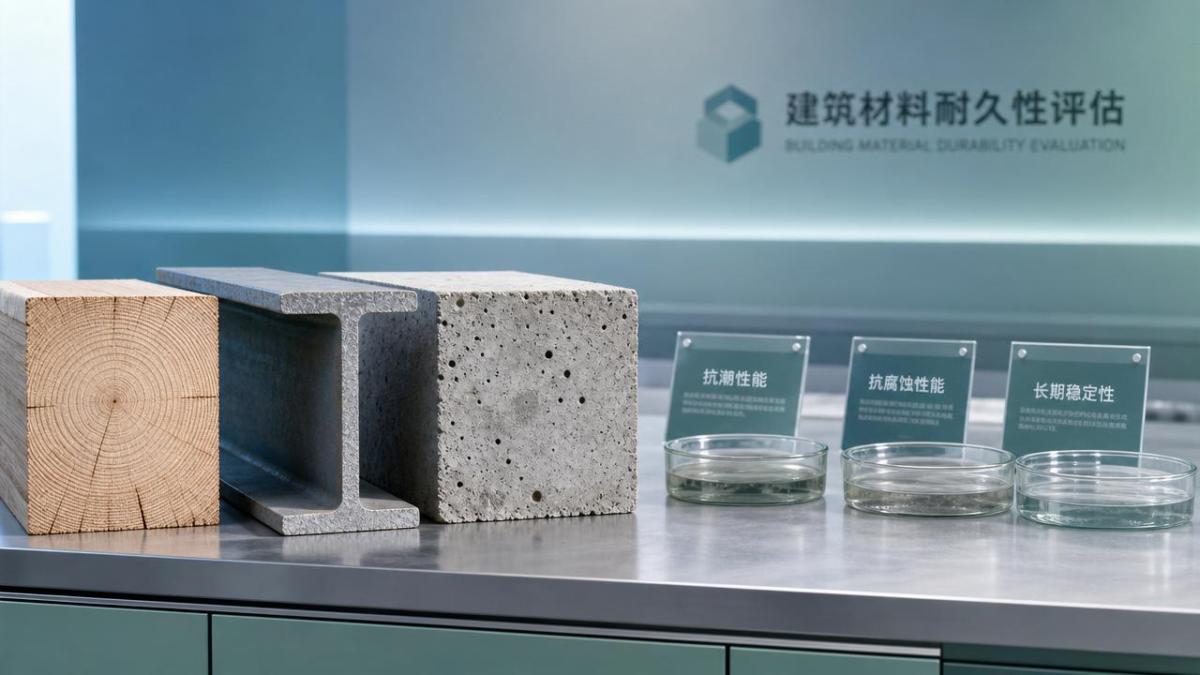
Durability in sustainable construction should be defined through measurable criteria rather than marketing language. For most commercial and institutional projects, long-term performance can be assessed across at least 5 dimensions: structural retention, moisture resistance, thermal cycling tolerance, maintenance burden, and end-of-life recoverability.
In healthcare and life-science settings, a sixth factor often becomes critical: surface stability under frequent cleaning. Materials exposed to daily disinfection, rolling loads, HVAC fluctuations, or humidity swings of 40% to 70% must maintain form and function without premature degradation.
Key performance indicators that matter in real projects
- Expected service life in years, typically 20, 30, or 50-year planning windows
- Resistance to corrosion, rot, UV exposure, abrasion, and microbial growth
- Dimensional stability under repeated wet-dry or hot-cold cycles
- Maintenance frequency, such as annual sealing versus 7- to 10-year interventions
- Repairability and replacement complexity during occupied operation
- Consistency across batches, especially where tight tolerances or prefabrication apply
Why lifecycle thinking changes the ranking
A material with modest upfront sustainability credentials can outperform a lower-carbon alternative if it lasts 2 to 3 times longer and demands fewer replacements. Technical evaluators should therefore compare whole-life value, not only initial embodied carbon or purchase price.
For example, replacing a wall, decking, or structural component twice within a 30-year span may erase much of the environmental benefit achieved at installation. This is why eco-friendly building materials for sustainable construction should be screened using both environmental and engineering criteria from the start.
Which Eco-Friendly Materials Typically Deliver the Best Long-Term Performance
No single material leads in every condition. The best long-life choice depends on load profile, exposure, cleaning regime, and maintenance access. Still, several material categories consistently rank well when durability and sustainability are evaluated together.
Comparative view of common sustainable material options
The table below compares widely specified eco-friendly building materials for sustainable construction using technical criteria that matter in institutional and high-performance buildings. Ratings are directional and should be validated against project specifications, local climate, and installation quality.
From a pure lifespan perspective, recycled steel and low-carbon concrete usually perform best in demanding structural applications, while engineered timber can be highly durable if the moisture design is disciplined. Bamboo-based products can be effective, but they are more dependent on application limits and environmental control.
Material-by-material durability considerations
Engineered timber
Cross-laminated timber and other engineered wood systems can hold up exceptionally well in enclosed assemblies. Their long-term success depends less on the wood itself than on detailing around joints, penetrations, vapor control layers, and drainage paths. A moisture content drift above project tolerances during installation can create performance issues later.
For technical evaluators, the main question is whether the project can guarantee dry-chain logistics, controlled storage, and fast enclosure. If those conditions are weak, a theoretically sustainable specification may become a maintenance-heavy liability within 5 to 10 years.
Recycled steel
Steel with high recycled content remains one of the most durable sustainable structural materials available. It performs well under predictable loading, allows tight fabrication tolerances, and supports modular construction. In technical settings such as plant rooms or lab support structures, these attributes reduce alignment issues and retrofit disruption.
Its weak point is corrosion exposure. Protective coatings, galvanization strategy, and inspection access are more important than recycled content alone. In aggressive environments, a coating review cycle every 3 to 7 years may be more relevant to durability than the base metal specification.
Low-carbon concrete
Low-carbon concrete, often using supplementary cementitious materials, can provide excellent long-term durability when mix design, curing, and exposure conditions are properly aligned. It is especially strong in slabs, equipment pads, and service cores where compressive performance and thermal mass add value.
However, lower-clinker mixes may develop strength on a different timeline than conventional concrete. Evaluators should verify 7-day and 28-day performance requirements, crack control methods, and curing procedures rather than assuming all low-carbon mixes behave the same.
Where Material Performance Can Fail Despite Good Sustainability Claims
In many projects, early degradation results from mismatched application rather than flawed material chemistry. A strong sustainability narrative can overshadow critical engineering limits, particularly when value-engineering compresses specification review timelines from 6 weeks to 10 days.
Common failure points technical teams should screen
- Moisture exposure exceeding the material’s stable operating range
- Incompatible cleaning agents in healthcare or laboratory environments
- Poor joint detailing that accelerates water ingress or movement
- Insufficient curing, coating, or commissioning time before occupancy
- Batch inconsistency from suppliers with limited process control
Why installation quality matters as much as the material itself
A sustainable material specified at the right performance grade can still underperform if it is installed outside recommended tolerances. A 2 mm joint deviation, an incomplete seal, or a rushed cure cycle can shorten service life more than a small difference in recycled content or carbon intensity.
For this reason, technical evaluators should review the full chain: material declaration, fabrication method, site handling, installation sequencing, and maintenance instructions. Long-term durability is a systems outcome, not a brochure feature.
A Practical Selection Framework for Procurement and Design Review
A structured selection process helps teams compare eco-friendly building materials for sustainable construction without over-weighting any single criterion. In B2B procurement, especially for mission-critical facilities, a weighted review model is often more reliable than a simple price-versus-carbon comparison.
Recommended evaluation matrix
The following matrix can support early-stage screening and supplier discussions. Weightings can be adjusted, but technical durability should usually represent at least 30% to 40% of the total decision score for high-demand environments.
This type of matrix helps prevent a common procurement error: selecting a low-impact material with insufficient evidence for the actual operating environment. It also supports clearer discussion between design teams, facility managers, and sourcing stakeholders.
Four questions to ask before approval
- What is the realistic service interval before major refurbishment or recoating?
- Which failure mode is most likely: corrosion, swelling, cracking, abrasion, or delamination?
- What evidence exists for performance under cleaning, humidity, and mechanical use?
- How difficult is replacement if the material underperforms after 5, 10, or 15 years?
Best Practices for High-Accountability Projects
For evaluators in healthcare-related or other regulated infrastructure, the strongest approach is evidence-led specification. That means requiring not only sustainability declarations but also engineering documentation that proves the material can perform over the full operating lifecycle.
What to verify during technical review
Start with 3 checkpoints: material composition, installation controls, and maintenance assumptions. Then confirm whether the supplier can provide batch-level consistency, relevant test data, and clear environmental limitations. For projects with strict uptime requirements, maintenance windows and replacement complexity should be discussed before award, not after handover.
This is where a data-driven review model becomes valuable. Organizations such as VitalSync Metrics, which emphasize technical benchmarking and standardized evaluation logic, reflect a broader procurement shift: buyers increasingly need verifiable performance evidence, not just sustainability narratives. That mindset applies as much to building materials as it does to MedTech components, sensors, and laboratory infrastructure.
Most durable choices in typical scenarios
If the project is structural and exposed to high loads, recycled steel and properly designed low-carbon concrete often provide the best long-term reliability. If carbon reduction, prefabrication speed, and dry interior use are priorities, engineered timber can be a strong candidate. For finish layers and non-structural components, bamboo composites and recycled-content panels should be limited to environments where humidity, impact, and cleaning chemistry are compatible.
The eco-friendly building materials for sustainable construction that hold up best over time are those matched carefully to exposure conditions, installation quality, and maintenance realities. Technical evaluators should prioritize service-life evidence, risk-specific performance, and supplier consistency rather than broad sustainability claims alone.
For teams responsible for procurement confidence, specification review, or facility planning, a disciplined comparison framework can reduce lifecycle cost, avoid premature replacement, and improve project resilience. If you need a more rigorous evaluation approach for sustainable materials, performance benchmarking, or technical procurement screening, contact us to discuss your requirements, request a tailored assessment framework, or learn more solutions for evidence-based selection.
Recommended News
- 2026.10.15Medical Packaging Heat Seal Testing: Seal Strength vs. Seal Integrity TestsDr. Julian Rossi (RehabTech Specialist)
- 2026.10.14Clinic Supplier Comparison: Evaluating Cost, Delivery Reliability, and SupportDr. Alistair Thorne (Senior Biomedical Engineer)
- 2026.10.13Engineering Performance Testing Services: Evaluating Test Methods and AccuracyDr. Alistair Thorne (Senior Biomedical Engineer)
The VitalSync Intelligence Brief
Receive daily deep-dives into MedTech innovations and regulatory shifts.