 Get Insights

Chemical Logistics Explained: Storage, Segregation, Labeling, and Transport Risks
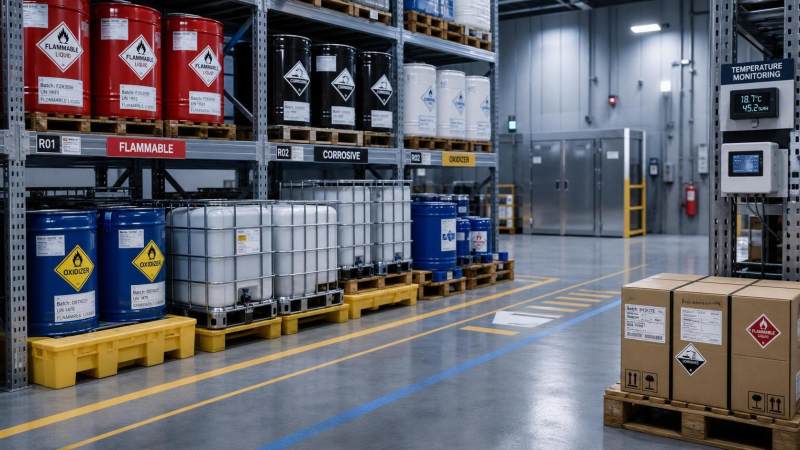
Why does chemical logistics matter far beyond shipping?
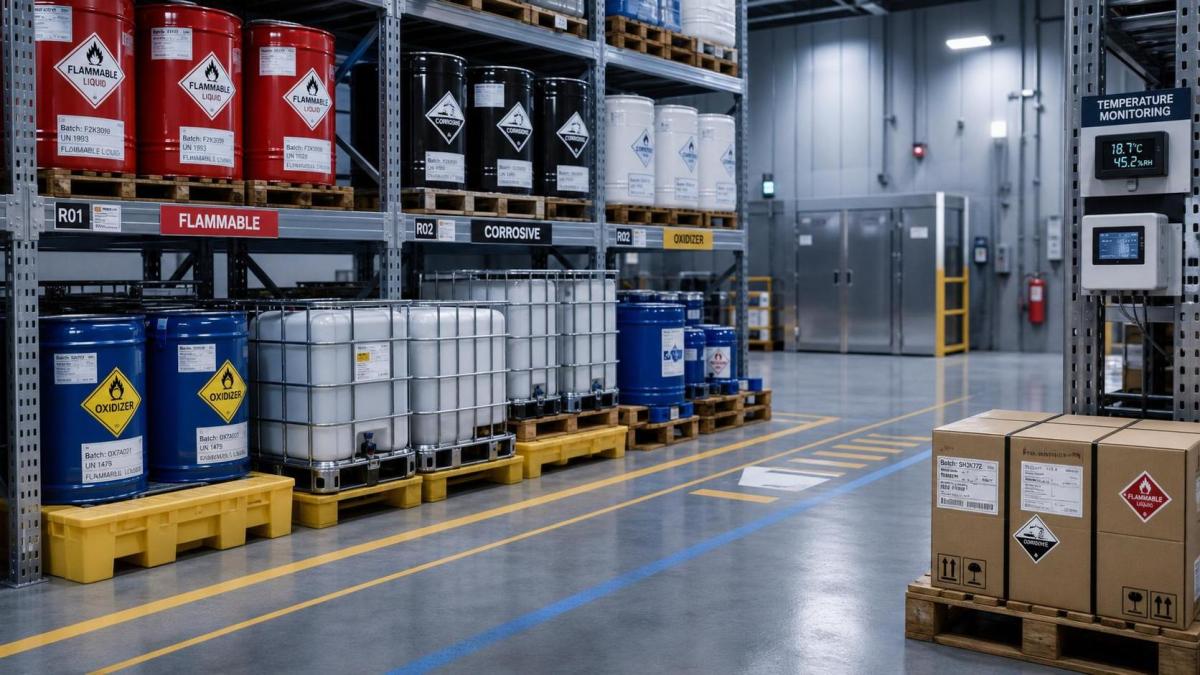
Chemical logistics is often mistaken for transport alone. In practice, it starts with receiving, continues through storage, and only ends after documented delivery.
That broader view matters because most incidents do not begin on the road. They begin with poor segregation, damaged packaging, unclear labels, or uncontrolled temperature exposure.
For healthcare, laboratory, and industrial environments, the stakes are higher. A mislabeled disinfectant, solvent, reagent, or compressed gas can disrupt testing, maintenance, sterilization, and clinical support.
This is why chemical logistics is really a discipline of traceability and risk control. Movement is only one part of the system.
In data-led supply chains, the real question is not whether a shipment arrived. The better question is whether the material remained compliant, identifiable, and safe at every handoff.
That approach aligns with the way technical benchmarking groups such as VitalSync Metrics examine supply integrity. Performance claims mean little if handling conditions compromise the material before use.
What usually counts as chemical logistics, and where do people misjudge the risk?
A practical definition includes storage, internal transfer, packaging, labeling, documentation, segregation, loading, transport, and emergency response readiness.
The common mistake is treating all chemicals as one category. Chemical logistics depends on hazard class, compatibility, container type, shelf life, and route conditions.
Some materials are flammable. Others are corrosive, oxidizing, toxic, reactive with water, or sensitive to light and temperature. Each property changes how the material should be handled.
Another misjudgment is assuming compliant packaging solves everything. It does not. A compliant drum stored next to an incompatible acid or oxidizer still creates serious exposure risk.
In real operations, risk usually builds quietly through small errors:
- secondary containers without full labels
- SDS versions that are outdated
- temporary storage becoming permanent practice
- mixed pallets with poor visual separation
- temperature excursions not recorded or reviewed
Chemical logistics becomes reliable when those routine details are controlled before an incident forces attention.
How should storage and segregation actually be judged on site?
The shortest answer is this: store by compatibility, not convenience. Physical proximity should never be decided by shelf space alone.
Segregation means preventing dangerous interaction if a leak, break, or vapor release occurs. That may require distance, barriers, cabinets, or separate ventilation zones.
A useful first check is whether the storage map reflects chemical behavior. If flammables, oxidizers, acids, alkalis, and toxics share one logic-free area, the system is already weak.
The table below helps turn that check into a quick site review.
In healthcare-related supply chains, this matters even for low-volume materials. Small containers can still trigger contamination, downtime, or reporting obligations.
A sensible review also checks near-use storage. Many organizations manage the warehouse well, then lose control in labs, clean utility rooms, or maintenance areas.
Is labeling just a compliance task, or does it change operational safety?
It changes safety directly. In chemical logistics, labeling is the fastest control available during receiving, picking, transfer, and emergency response.
A label should do more than satisfy regulation. It should help a person make a correct decision within seconds.
That means identification must remain readable after condensation, abrasion, chemical splash, and transport vibration. A perfect label design is useless if it fails physically.
More advanced chemical logistics programs connect labels to digital records. Batch number, receipt date, expiry, storage condition, and incident history become easier to verify.
In regulated sectors, this traceability supports more than safety. It also supports audits, deviation reviews, and root-cause analysis when material performance is questioned.
A practical labeling checklist usually includes:
- product name and concentration
- hazard pictograms and signal wording
- batch or lot traceability
- receipt, opening, or expiry date
- special storage instructions
- owner or area responsibility when decanted
The weak point is usually secondary labeling. Once material leaves the original container, control often depends on local discipline. That is where many avoidable mistakes appear.
Where do transport risks really come from?
Transport risk is not only about collision or spill during transit. It also includes route delays, loading sequence, vibration, weather exposure, and incomplete shipping documents.
For many materials, the journey changes the risk profile. A stable package in storage may become unstable after repeated handling, stacking pressure, or thermal cycling.
This is especially relevant when chemicals support diagnostics, device maintenance, sterilization, or laboratory workflows. Material integrity affects downstream performance, not just delivery status.
More careful chemical logistics planning usually examines four points before dispatch:
- whether packaging matches the actual hazard and transport mode
- whether the route creates temperature or delay exposure
- whether documents match labels and emergency instructions
- whether receiving staff can verify condition on arrival
A frequent blind spot is handoff quality. Every transfer between warehouse, courier, staging area, and end use increases the chance of misplacement or condition loss.
That is why strong chemical logistics relies on chain-of-custody records, exception logging, and clear acceptance criteria at receipt.
How can a site tell whether its chemical logistics controls are strong enough?
A useful test is whether the system stays clear under pressure. Busy days reveal the truth faster than policy binders do.
Start with a short maturity review. Look at what happens when deliveries arrive late, containers are repacked, or a label becomes unreadable.
If the response depends on memory, workarounds, or one experienced person, the control is fragile.
More reliable chemical logistics usually shows these signs:
- documented segregation rules linked to actual inventory
- routine audits of labels, containers, and storage conditions
- clear escalation for spills, excursions, and unknown material
- training based on tasks, not generic awareness only
- traceable review of incidents and near misses
In more technical environments, benchmarking helps separate assumptions from evidence. That is one reason engineering-focused review models have become more valuable across healthcare and life sciences supply chains.
When handling conditions can affect reliability, operational data deserves the same attention as product claims.
What are the most practical next steps if improvement is overdue?
Do not begin with a full rewrite of procedures. Begin with the points where chemical logistics most often fails: visibility, compatibility, condition control, and handoff discipline.
A manageable improvement cycle can look like this:
- Map all chemical touchpoints from receipt to use or dispatch.
- Flag incompatible storage and weak secondary labeling first.
- Review transport packaging and temperature exposure by route.
- Set acceptance checks for damaged, expired, or unclear materials.
- Use audit findings to update training and documented controls.
The value of chemical logistics is not only fewer incidents. It also improves inventory confidence, audit readiness, and consistency across technical operations.
If the goal is safer and more reliable handling, focus on evidence. Check how materials are stored, separated, labeled, and transported in reality, then compare that with the risk you believe you control.
That gap is usually where the next improvement should start.
Recommended News
- 2026.10.15Medical Packaging Heat Seal Testing: Seal Strength vs. Seal Integrity TestsDr. Julian Rossi (RehabTech Specialist)
- 2026.10.14Clinic Supplier Comparison: Evaluating Cost, Delivery Reliability, and SupportDr. Alistair Thorne (Senior Biomedical Engineer)
- 2026.10.13Engineering Performance Testing Services: Evaluating Test Methods and AccuracyDr. Alistair Thorne (Senior Biomedical Engineer)
The VitalSync Intelligence Brief
Receive daily deep-dives into MedTech innovations and regulatory shifts.