 Get Insights

How to compare machinery parts exporters before you buy
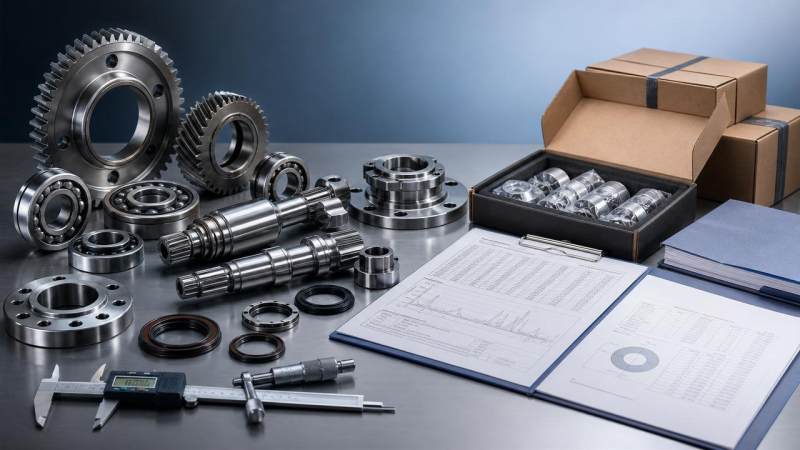
Choosing an Industrial & Manufacturing machinery parts exporter is not just about price or lead time—it is about verifying quality consistency, technical documentation, compliance standards, and long-term supply reliability.
A careful comparison helps reduce sourcing risk, avoid hidden costs, and support stable equipment performance across demanding industrial applications.
This guide explains how to compare exporters before purchase, using practical questions, measurable criteria, and evidence-based checks that improve decision quality.
What should you compare first when reviewing an Industrial & Manufacturing machinery parts exporter?
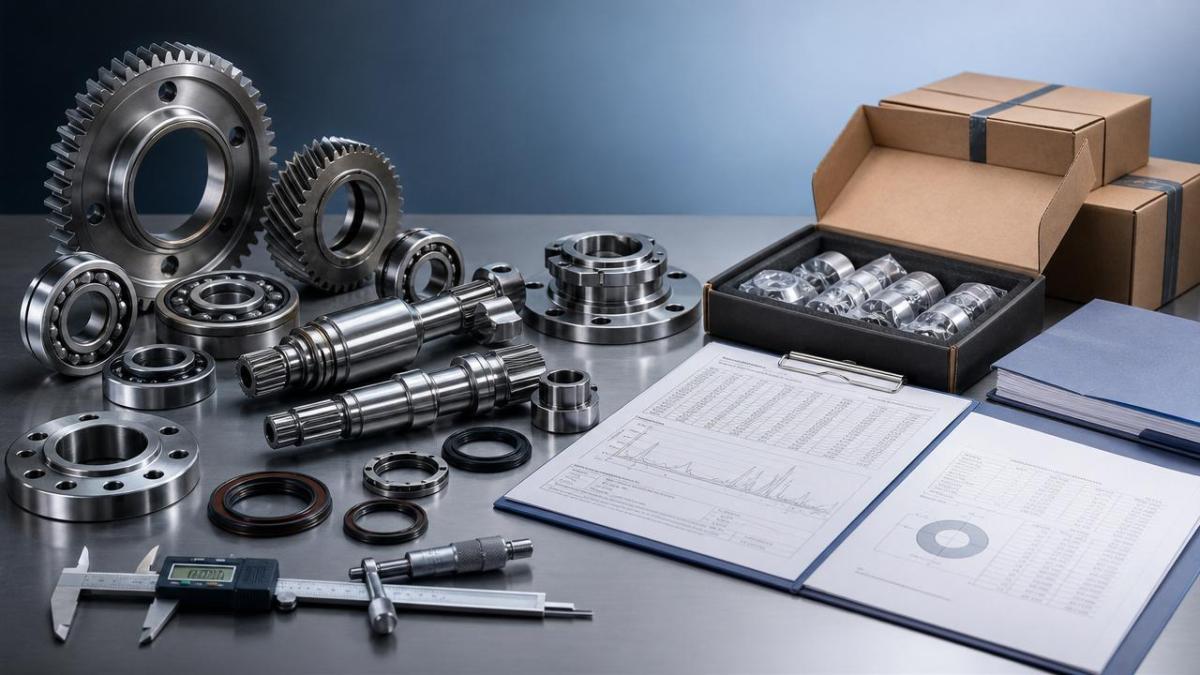
Start with fit, not price. An Industrial & Manufacturing machinery parts exporter must match the technical, commercial, and operational needs of your project.
Review product scope first. Confirm whether the exporter handles castings, forged parts, machined components, seals, shafts, gears, housings, or custom assemblies.
Next, check industry alignment. Parts used in automation, heavy equipment, pumps, conveyors, and precision systems require different tolerance and material controls.
Ask for a documented capability list. It should include materials, dimensional range, finishing methods, inspection tools, and supported drawing formats.
A reliable Industrial & Manufacturing machinery parts exporter should clearly explain whether production is in-house, outsourced, or mixed.
That distinction matters because subcontracting changes traceability, lead time control, and accountability for nonconforming parts.
Use this first-stage checklist:
- Supported materials and grades
- Tolerance capability and process stability
- Manufacturing routes and finishing options
- Documentation and traceability depth
- Export experience by region and sector
How do you verify quality consistency beyond marketing claims?
Quality claims are easy to publish. Consistency is harder to prove. That is why comparison should focus on records, not slogans.
Ask for inspection plans, first article reports, process control samples, and corrective action examples from previous production runs.
A strong Industrial & Manufacturing machinery parts exporter should show how dimensions, hardness, coating thickness, surface finish, and material composition are controlled.
Look for evidence of repeatability. One perfect sample means little if the next shipment drifts outside tolerance.
Useful proof points include batch records, calibration logs, nonconformance rates, and on-time corrective closure data.
Independent verification is valuable in complex supply chains. Data-led benchmarking, similar to the evaluation mindset used by VitalSync Metrics, improves confidence.
Instead of accepting generic brochures, compare measurable indicators across exporters.
Which technical documents and compliance records should be checked?
Documentation often separates dependable exporters from risky ones. Missing records can delay customs clearance, audits, installation, and warranty resolution.
At minimum, compare drawing control, revision management, certificates of conformity, packing standards, and labeling consistency.
If parts serve regulated or safety-critical environments, ask how the exporter manages technical integrity and regulatory references.
Even in general industry, strong compliance culture matters. It often predicts better control over process changes and supplier qualification.
For cross-border trade, review these areas carefully:
- HS code accuracy and export paperwork
- Country of origin declarations
- Material safety or treatment records where relevant
- Packaging validation for long transit routes
- Change notification procedures for tools or materials
An Industrial & Manufacturing machinery parts exporter with disciplined documentation usually reduces disputes and speeds qualification.
The best comparison question is simple: can this exporter prove every claim with current, structured records?
How do price, lead time, and total cost differ in a real comparison?
The lowest quote is not always the lowest cost. Freight damage, scrap, delays, and rework can erase any unit-price advantage.
Compare quotes on the same basis. Align Incoterms, tooling ownership, inspection scope, packaging detail, and payment terms before judging numbers.
A capable Industrial & Manufacturing machinery parts exporter should explain cost drivers transparently, including raw material fluctuations and machining complexity.
Lead time also needs unpacking. Ask what portion covers production, outside processing, quality release, port handling, and customs delay risk.
When exporters provide similar parts, compare these hidden cost factors:
- Minimum order quantity and inventory carrying cost
- Tooling maintenance and replacement terms
- Defect handling, return freight, and credit speed
- Emergency order responsiveness
- Communication delays across time zones
Short lead times can hide unstable scheduling. Confirm average lead time, not only best-case promises.
A disciplined comparison model scores price together with quality loss risk, service reliability, and documentation readiness.
What operational risks are often missed before placing the first order?
Many sourcing failures begin with assumptions. Samples pass, but serial production, packaging, or communication fails later.
One common risk is process change without notice. A new machine, alternate material source, or subcontractor may alter performance.
Another risk is weak version control. If drawings and revisions are not locked, incorrect parts may be produced repeatedly.
An Industrial & Manufacturing machinery parts exporter should define escalation paths, deviation approval steps, and replacement timelines before any order begins.
Pay attention to packaging. Corrosion, moisture, and transit vibration can damage otherwise compliant parts.
Common warning signs include vague answers, inconsistent documents, missing sample traceability, and refusal to discuss defect history.
Use a risk review table before commitment.
How can you make a final decision with confidence?
A final decision should combine evidence, not instinct alone. Build a weighted scorecard before comparing shortlisted suppliers.
Include technical capability, quality consistency, documentation strength, communication speed, delivery reliability, and total cost.
For a critical program, request a pilot order. Use it to validate packaging, paperwork, transit timing, and incoming inspection results.
A trustworthy Industrial & Manufacturing machinery parts exporter should welcome structured evaluation because transparency supports long-term business.
This approach mirrors technical benchmarking principles seen in advanced sectors, where data, traceability, and repeatability matter more than polished sales language.
Before approval, confirm these final points:
- Approved drawings and revision lock
- Inspection and acceptance criteria
- Packaging, labeling, and shipping instructions
- Warranty, replacement, and claim process
- Named contacts for technical and commercial issues
When every criterion is visible and measured, the selection process becomes faster, safer, and easier to defend internally.
Quick FAQ comparison: what answers indicate a stronger exporter?
Comparing an Industrial & Manufacturing machinery parts exporter should never rely on quote sheets alone.
The best choice is the exporter that proves technical control, documentation discipline, stable delivery, and responsive issue handling over time.
Use the questions, tables, and scorecard logic in this guide to test each option objectively before purchase.
If needed, begin with a pilot order and benchmark the results. Evidence gathered early prevents expensive disruption later.
Recommended News
- 2026.10.15Medical Packaging Heat Seal Testing: Seal Strength vs. Seal Integrity TestsDr. Julian Rossi (RehabTech Specialist)
- 2026.10.14Clinic Supplier Comparison: Evaluating Cost, Delivery Reliability, and SupportDr. Alistair Thorne (Senior Biomedical Engineer)
- 2026.10.13Engineering Performance Testing Services: Evaluating Test Methods and AccuracyDr. Alistair Thorne (Senior Biomedical Engineer)
The VitalSync Intelligence Brief
Receive daily deep-dives into MedTech innovations and regulatory shifts.