 Get Insights

How to compare machinery parts exporters with less risk
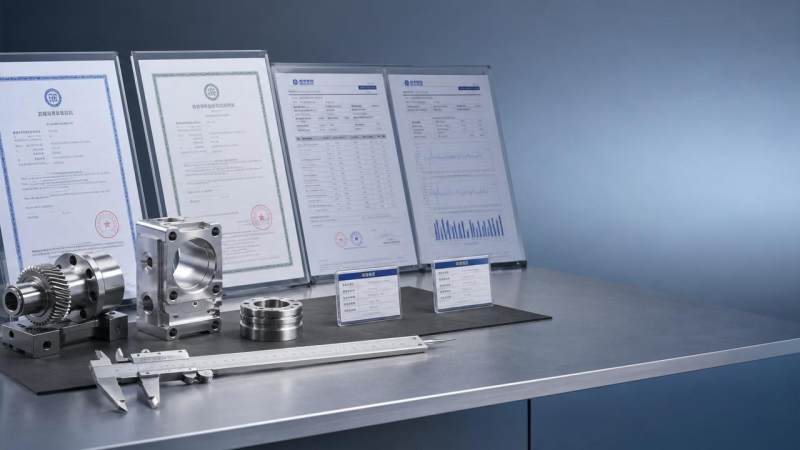
Choosing an Industrial & Manufacturing machinery parts exporter involves more than price checks or catalog claims. For quality control and safety managers, reducing risk means verifying manufacturing consistency, compliance records, material traceability, and long-term performance data. This guide outlines practical ways to compare exporters with greater confidence, helping you identify dependable partners before quality issues, safety failures, or supply chain disruptions affect operations.
Why exporter comparison is a risk-control task, not just a sourcing exercise
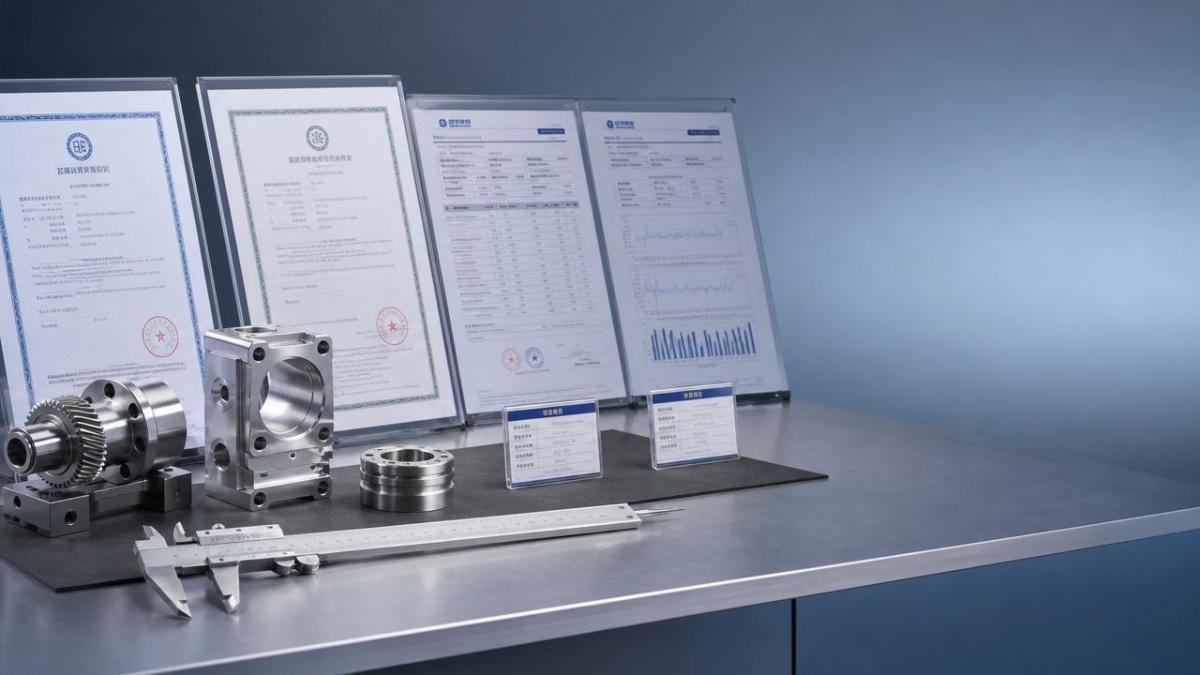
When you compare an Industrial & Manufacturing machinery parts exporter, the real question is not who can ship parts fastest. The real question is which supplier can maintain process discipline, material integrity, and documented conformity across repeated orders.
For quality control and safety managers, this matters because one weak batch can trigger rework, equipment downtime, operator exposure, or nonconformance investigations. In regulated healthcare and life sciences environments, risk spreads quickly from one component to the entire system.
VitalSync Metrics (VSM) approaches supplier evaluation from an engineering evidence perspective. Instead of relying on promotional claims, VSM focuses on benchmarkable inputs such as tolerance stability, fatigue behavior, process repeatability, inspection discipline, and documentation quality.
- A low quote may hide uncontrolled subcontracting, weak incoming material controls, or limited process validation.
- A polished website does not prove dimensional capability, batch traceability, or corrective action maturity.
- A supplier with strong documents but weak change control can still introduce unacceptable product drift over time.
That is why comparing exporters with less risk requires a structured method. You need to assess process capability, compliance readiness, field-use suitability, and communication transparency together, not in isolation.
What should quality and safety teams check first?
Before reviewing prices or delivery promises, create a first-pass screen. This helps remove exporters that cannot support safety-critical or performance-sensitive applications. It is especially useful when procurement teams are handling multiple geographies and compressed timelines.
Initial screening criteria for an Industrial & Manufacturing machinery parts exporter
- Material traceability: Can the exporter link each batch to heat numbers, certificates, and process records?
- Manufacturing consistency: Are machining, casting, molding, finishing, or assembly steps controlled with documented work instructions?
- Inspection coverage: Does the supplier define critical dimensions, sampling plans, calibration intervals, and final release criteria?
- Compliance readiness: Can the exporter support documentation relevant to ISO systems, MDR or IVDR supply expectations, or customer-specific audits when machinery parts enter healthcare production environments?
- Change control: Is there a formal method to notify buyers before tooling, source material, process, or subcontractor changes?
These basics reveal whether a supplier can support stable quality over time. If the answers are vague, delayed, or inconsistent, the risk usually becomes larger after the first shipment, not smaller.
How to compare exporters side by side using measurable criteria
A structured comparison table helps cross-functional teams align. It also prevents decision-making from being dominated by unit price alone. The table below highlights practical evaluation points for any Industrial & Manufacturing machinery parts exporter serving demanding operational environments.
This type of comparison improves sourcing discipline. It turns exporter evaluation into a repeatable quality process and makes it easier to explain supplier selection decisions during audits, internal reviews, or post-incident investigations.
Which technical documents reduce risk before the first order?
Document review is one of the fastest ways to detect supplier weakness early. A reliable Industrial & Manufacturing machinery parts exporter should be able to provide consistent technical records before production starts, not only after a complaint appears.
Key records to request
- Drawing review confirmation, including critical tolerances, surface finish, and functional interfaces.
- Material certificates tied to purchase lots and manufacturing batches.
- Inspection reports showing actual values, not only pass or fail marks.
- Calibration status for key measurement tools used on critical characteristics.
- Nonconformance and corrective action workflow, including escalation contacts.
In healthcare-linked manufacturing, documentation quality often predicts production quality. VSM’s benchmarking perspective is useful here because it translates technical paperwork into evidence categories that procurement, engineering, and compliance teams can assess consistently.
If an exporter cannot clearly explain how process data, lot identity, and final inspection results are connected, traceability risk remains high. That risk becomes serious when parts are used inside diagnostic devices, laboratory automation, sterilization systems, or support equipment near patients and operators.
How do compliance and healthcare-grade expectations affect exporter selection?
Not every machinery component is a medical device part, but many parts still enter healthcare-adjacent systems where reliability and documentation expectations are elevated. In these situations, an Industrial & Manufacturing machinery parts exporter should understand that technical adequacy and regulatory readiness often overlap.
For example, parts used in lab automation frames, pump housings, sensor brackets, fluid path supports, or diagnostic assembly fixtures may require stronger control over cleanliness, dimensional repeatability, labeling, and supplier change management than ordinary industrial applications.
The table below outlines practical compliance-related checkpoints that quality and safety managers can use when comparing exporters for healthcare and life sciences supply chains.
These checks do not replace formal regulatory assessment, but they help identify whether an exporter can operate within stricter quality expectations. VSM’s role is especially relevant when buyers need independent technical interpretation rather than supplier-led narratives.
What are the most common hidden risks when comparing machinery parts exporters?
Risk 1: Stable samples, unstable production
Some exporters present acceptable prototype samples but lack the controls needed for repeat production. This often appears when special attention is given to pre-sale samples, while later batches are routed through different equipment, operators, or subcontractors.
Risk 2: Certificates without process depth
A document may look complete yet still fail to prove real conformity. Generic material certificates, copied inspection templates, and undocumented rework are warning signs. Quality managers should match paperwork against process logic, not appearance alone.
Risk 3: Incomplete understanding of end use
A capable general exporter may still be a poor fit if it does not understand vibration loads, sterilization exposure, corrosion risks, cleanability, or safety-critical interfaces in healthcare-related equipment.
Risk 4: Weak escalation during deviations
When nonconformities occur, response speed matters. Delayed containment, incomplete root-cause analysis, and unclear ownership increase downtime risk and can compromise operator safety or system performance.
- Ask whether the exporter separates concession approval from shipping release.
- Confirm whether subcontractors are included in the same quality controls.
- Review how rejected batches are quarantined, documented, and dispositioned.
A practical procurement workflow for lower-risk exporter selection
The safest approach is a staged evaluation model. It limits exposure while still moving sourcing projects forward. This is useful when delivery pressure is high but quality consequences are also significant.
Recommended sequence
- Define critical-to-quality and critical-to-safety features before contacting any Industrial & Manufacturing machinery parts exporter.
- Request technical documentation, process summaries, and sample inspection records.
- Compare shortlisted exporters using a weighted scorecard that includes quality, documentation, engineering responsiveness, and supply resilience.
- Run a pilot order or first article review before approving full-volume business.
- Set ongoing review points for defect trends, delivery performance, and change notifications.
VSM adds value in this workflow by converting supplier claims into benchmarkable evidence. That can include review of technical comparability, documentation sufficiency, and application-specific performance concerns relevant to healthcare and life sciences buyers.
FAQ: questions buyers often ask before approving an exporter
How do I know whether an Industrial & Manufacturing machinery parts exporter is truly traceable?
Ask for a sample traceability path from raw material to shipped lot. A lower-risk exporter should show how part numbers, lot numbers, process records, inspection data, and shipping documents connect without gaps.
What matters more: certification, sample quality, or process control?
Process control usually matters most over time. Certifications and samples are useful, but repeatability depends on how the exporter manages operators, machines, tooling wear, in-process inspections, and controlled changes.
When should quality managers request a pilot order?
A pilot order is strongly recommended when parts have tight tolerances, safety implications, complex surface requirements, or healthcare-related end use. It reveals whether the exporter can reproduce sample quality under normal production conditions.
Can a low-cost exporter still be the right choice?
Yes, but only if low cost comes from process efficiency rather than reduced controls. Compare total risk, including inspection burden, scrap exposure, delay cost, corrective action time, and the impact of field failures.
Why work with VSM when evaluating exporters for sensitive supply chains?
VitalSync Metrics (VSM) supports buyers who need more than supplier marketing language. Our engineering-led perspective helps procurement, quality, and safety teams interpret technical claims through evidence, comparability, and application risk.
- We help clarify which technical parameters deserve priority for your use case.
- We support exporter comparison through benchmarking logic, documentation review, and performance-oriented evaluation.
- We align supplier assessment with healthcare and life sciences expectations where reliability, compliance readiness, and long-term consistency matter.
If you are comparing an Industrial & Manufacturing machinery parts exporter and need support with parameter confirmation, supplier screening, compliance-related questions, sample evaluation, delivery-risk review, or quotation comparison, VSM can help structure that process.
Contact us to discuss drawing review priorities, traceability expectations, pilot order planning, documentation requirements, application-specific risks, or benchmarking support for healthcare-facing industrial components. A disciplined comparison now can prevent quality escapes and safety issues later.
Recommended News
- 2026.10.15Medical Packaging Heat Seal Testing: Seal Strength vs. Seal Integrity TestsDr. Julian Rossi (RehabTech Specialist)
- 2026.10.14Clinic Supplier Comparison: Evaluating Cost, Delivery Reliability, and SupportDr. Alistair Thorne (Senior Biomedical Engineer)
- 2026.10.13Engineering Performance Testing Services: Evaluating Test Methods and AccuracyDr. Alistair Thorne (Senior Biomedical Engineer)
The VitalSync Intelligence Brief
Receive daily deep-dives into MedTech innovations and regulatory shifts.