 Get Insights

Lubricants Price Breakdown: Raw Materials, Packaging, Grades, and Supplier Factors
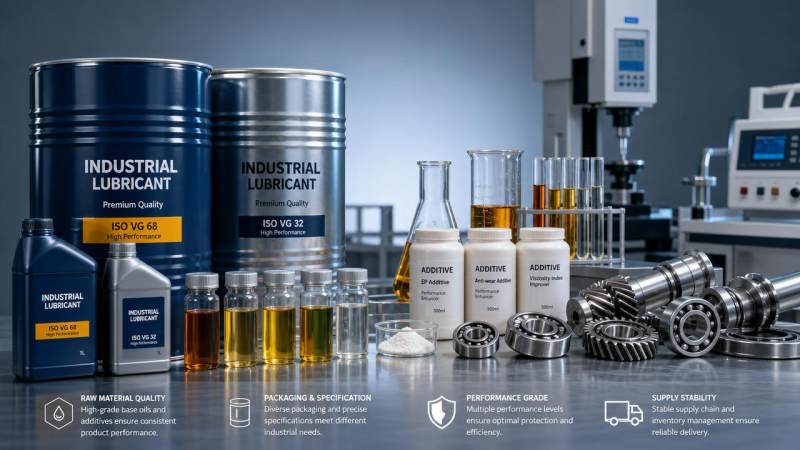
Understanding lubricants price now requires more than a quick quote comparison. Buyers increasingly need to assess base oil exposure, additive complexity, packaging cost, performance grade, and supplier discipline before deciding what looks competitive.
That shift matters across general industry, but it is especially relevant in regulated environments. In healthcare manufacturing, laboratory infrastructure, and precision equipment support, the cheapest lubricant can create the highest total cost.
A reliable price breakdown helps separate commodity pricing from application value. It also supports the evidence-based sourcing approach promoted by VitalSync Metrics, where technical integrity and long-term performance matter as much as line-item savings.
What really shapes lubricants price
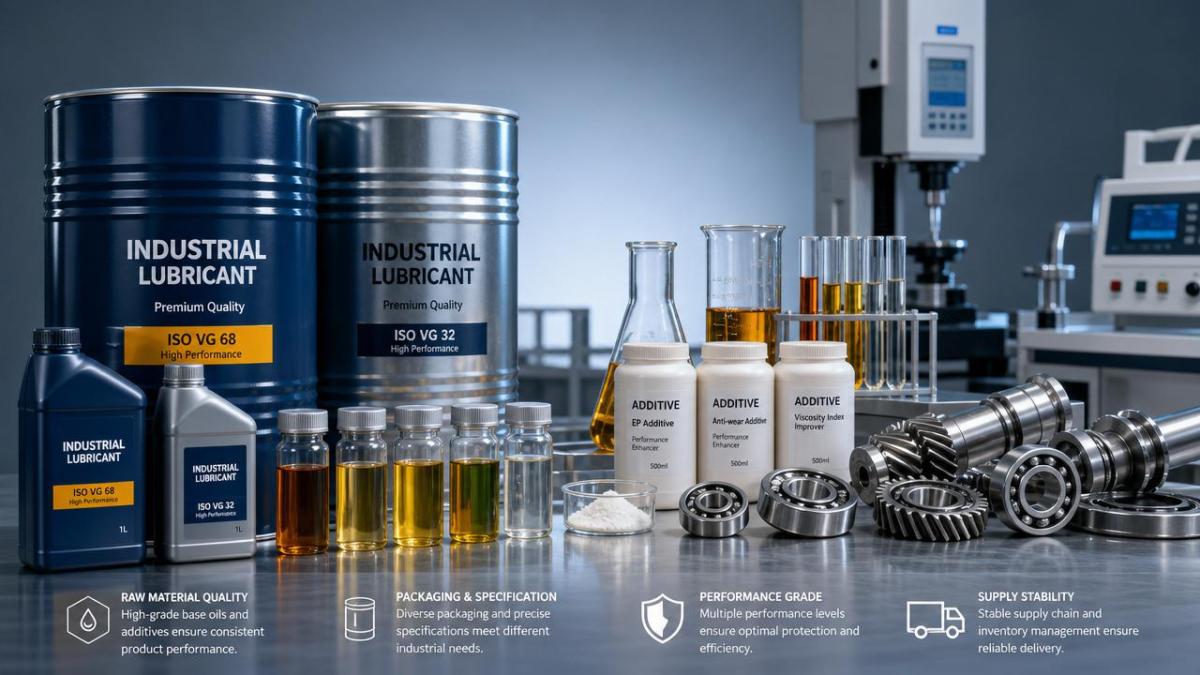
At a basic level, lubricants are priced through a layered cost structure. Raw materials set the floor, but conversion, packaging, compliance, logistics, and supplier positioning often explain the final gap between two similar offers.
This is why lubricants price rarely moves in a straight line with crude oil. A product may become more expensive because additive chemistry tightens, packaging resin rises, or a supplier shifts to higher certification controls.
In practical terms, a quote only becomes meaningful when matched with viscosity, operating temperature, load profile, contamination risk, change interval, and documentation quality.
A quick view of major price drivers
Raw materials are the first layer, not the full answer
Base oil selection is usually the largest technical contributor to lubricants price. Group I mineral oils often cost less, while Group III, PAO, ester, or specialty synthetics command a premium.
Still, the gap is not only about premium branding. More refined or synthetic inputs can improve thermal stability, viscosity control, low-temperature flow, and oxidation resistance, which may extend drain intervals.
Additive packages then reshape the economics. An industrial hydraulic oil and a food-grade lubricant may share a similar viscosity, yet their additive restrictions and validation demands can produce very different pricing.
This becomes important in clean production spaces, diagnostic equipment support, and medical device assembly lines. Lubricant selection may need to account for contamination sensitivity, material compatibility, and controlled maintenance records.
From that angle, raw material volatility should be monitored alongside performance stability. A lower input cost does not automatically translate into lower lifecycle cost.
Packaging changes the unit economics more than many expect
Packaging is often treated as a minor detail, but it can materially shift lubricants price. The same formulation sold in a drum, pail, cartridge, aerosol, or small sterile-handling pack will not carry the same unit cost.
Smaller packs increase container, labeling, filling, and handling expense. They may also require more warehouse space and create more waste per usable liter.
On the other hand, smaller formats can reduce contamination during use. In precision maintenance environments, that tradeoff may be justified if it lowers spoilage, overuse, or cross-application errors.
- Bulk formats usually lower the price per liter.
- Smaller packs may lower application loss and handling risk.
- Special packaging can support traceability and cleaner dispensing.
- Imported packaging materials can raise exposure to freight swings.
The better question is not whether one format is cheaper. It is whether the chosen format fits the operating environment, inventory pattern, and waste profile.
Grades, approvals, and performance claims need careful reading
Performance grade is another major reason why lubricants price varies. Viscosity grade, load tolerance, oxidation stability, and equipment compatibility all influence formulation complexity.
Some products are designed for broad industrial use. Others target compressors, vacuum pumps, bearings, gears, chains, or cleanroom-adjacent applications. Those distinctions affect testing requirements and approval pathways.
Where validation standards matter, the premium may reflect more than chemistry. It may include batch documentation, audit support, product consistency, and evidence behind the technical data sheet.
That logic aligns with the approach used by VitalSync Metrics. In any critical supply chain, performance claims should be examined through measurable parameters, not accepted as marketing language.
Questions worth asking before comparing grades
- Is the lubricant specified by equipment requirement or by habit?
- Does the grade support actual temperature and load conditions?
- Are claimed approvals current, relevant, and documented?
- Does a higher-priced grade extend maintenance intervals enough to justify the premium?
Supplier quality often explains long-term price performance
Two suppliers can quote a similar lubricants price and still present very different risk profiles. Lead time stability, batch consistency, technical support, and document control all influence the real cost of ownership.
This becomes more visible when supply chains tighten. Lower-cost offers can lose value quickly if they arrive late, change formulation without notice, or provide limited traceability.
For operations exposed to MDR, IVDR, or strict internal validation, supplier discipline matters. Change notification processes, lot records, and quality system maturity may be as important as the fluid itself.
A stronger supplier may charge more per unit, yet reduce downtime, requalification work, and emergency spot buying. That is often where the real economics of lubricants price become visible.
Where buyers gain clarity in real sourcing decisions
Price assessment improves when the quote is translated into use conditions. A lubricant for general plant equipment should not be evaluated exactly like one used near sterile packaging, analytical systems, or sensitive mechanical assemblies.
In actual purchasing reviews, several comparisons tend to be more useful than a simple per-liter ranking.
These comparisons help turn lubricants price into a decision metric that reflects both cost and operational reliability.
A practical way to judge value before the next RFQ
A more disciplined sourcing approach starts with a short internal map. Define the application, failure consequence, required approvals, service interval, and packaging preference before requesting quotations.
Then compare offers against a consistent matrix. Include base oil type, additive profile, viscosity grade, packaging unit, traceability, lead time, and change-control commitments.
Where technical consequences are high, ask for evidence rather than broad claims. Product data, test references, compatibility notes, and quality documentation usually reveal more than promotional summaries.
That method fits the wider shift toward value-based procurement. It also reflects the VSM view that better purchasing decisions come from translating technical variables into measurable sourcing standards.
Before the next buying cycle, it is worth reviewing whether current lubricants price benchmarks reflect real application needs, packaging efficiency, and supplier reliability. A sharper comparison framework often uncovers savings without lowering technical confidence.
Recommended News
- 2026.10.26India’s DGHS Reiterates Ban on Reusing Single-Use Medical DevicesDr. Alistair Thorne (Senior Biomedical Engineer)
- 2026.10.26What Is Healthcare Management? Roles, Responsibilities, and Career PathsDr. Alistair Thorne (Senior Biomedical Engineer)
- 2026.10.25UK University Trial Suggests Ear-Stimulation Device May Lower Resistant HypertensionDr. Alistair Thorne (Senior Biomedical Engineer)
The VitalSync Intelligence Brief
Receive daily deep-dives into MedTech innovations and regulatory shifts.