 Get Insights

When is stainless steel wire rope bulk buying safer?
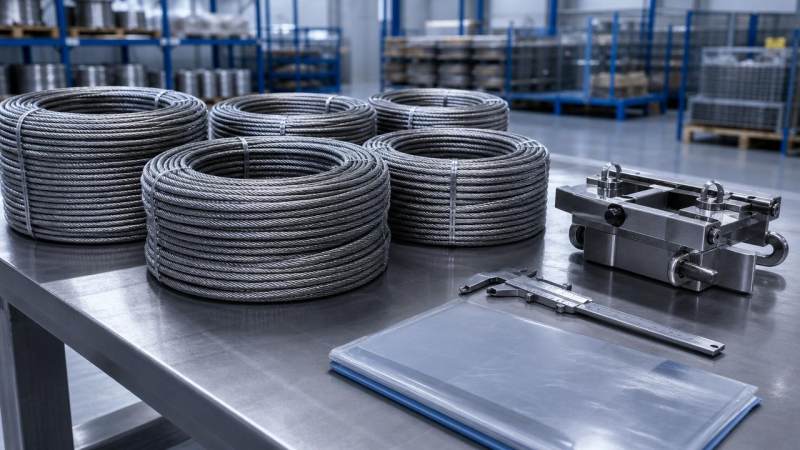
For industrial sourcing, stainless steel wire rope bulk purchasing becomes safer only when price, traceability, material certification, and application risk are evaluated together.
In regulated or mission-critical environments, low unit cost can become hidden liability if tensile strength, corrosion resistance, batch consistency, or documentation is unclear.
This guide explains when stainless steel wire rope bulk buying supports safer decisions, and when it creates avoidable operational, compliance, and lifecycle risks.
When Stainless Steel Wire Rope Bulk Buying Becomes a Safer Scenario
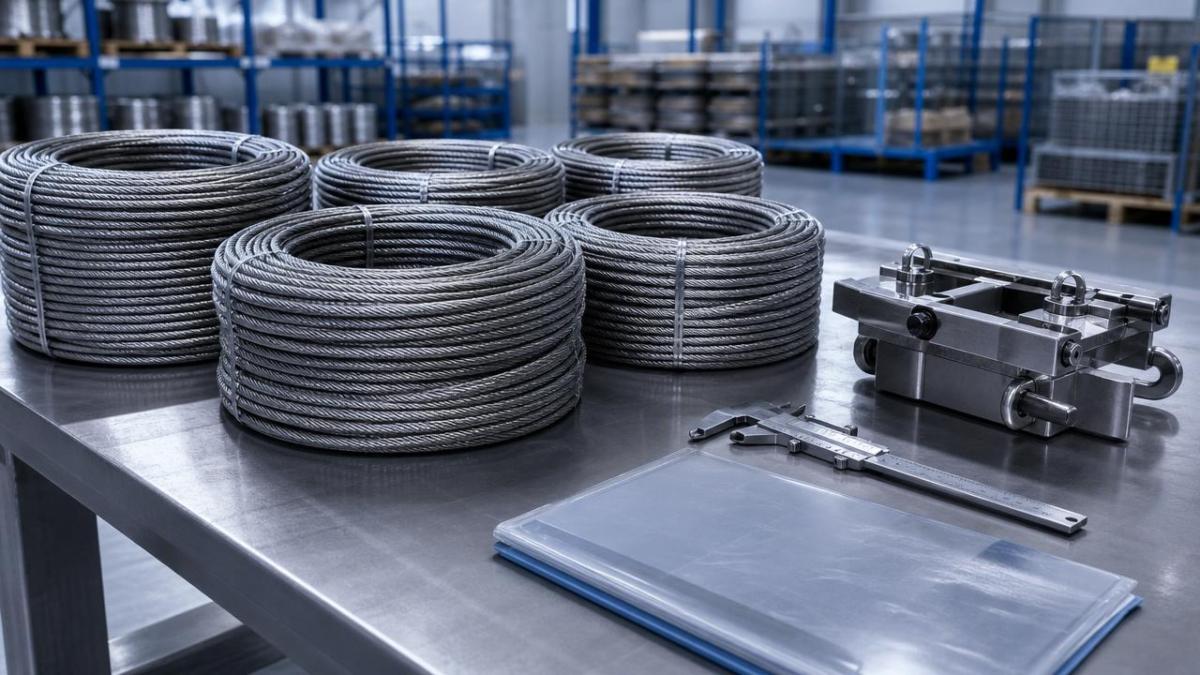
Bulk buying is safer when the application is stable, the specification is verified, and future consumption can be predicted with reasonable accuracy.
It is less safe when rope diameter, construction, finish, or load class may change during design validation or field installation.
The safest stainless steel wire rope bulk strategy starts with application mapping, not a price list or volume discount.
A technical purchase becomes lower risk when each coil or reel is tied to heat numbers, inspection records, and defined acceptance criteria.
The Core Safety Question
The question is not whether bulk is cheaper. The real question is whether volume improves control or multiplies uncertainty.
If supplier controls are mature, stainless steel wire rope bulk buying can reduce variation across projects, maintenance cycles, and replacement inventories.
If controls are weak, one defective batch can spread across lifting systems, guarding assemblies, conveyor lines, test rigs, or laboratory fixtures.
Scenario Background: Why Different Uses Change the Buying Risk
Stainless steel wire rope is used across architecture, marine equipment, laboratories, medical facilities, food processing, automation, and general mechanical assemblies.
Each scenario creates different exposure to corrosion, fatigue, vibration, cleaning chemistry, temperature, abrasion, and human safety requirements.
A decorative railing cable does not carry the same risk profile as a hoist line, actuator cable, or cleanroom suspension element.
This is why stainless steel wire rope bulk sourcing must be judged by function, not only by grade or diameter.
A2, A4, 304, and 316 labels can help, but they are not complete evidence of fitness for service.
Construction type, strand count, lay direction, lubrication, surface finish, and proof testing can change performance more than expected.
Typical Application Scenarios and the Right Bulk Buying Judgment
Healthcare, Laboratory, and Clean Technical Environments
In healthcare infrastructure, laboratory automation, and clean technical rooms, contamination control and documentation often matter as much as mechanical strength.
Stainless steel wire rope bulk purchasing is safer when surface cleanliness, passivation evidence, and corrosion resistance are documented before shipment.
For regulated environments, traceability should connect raw material, production lot, test certificate, inspection result, and delivery packaging.
VitalSync Metrics emphasizes this type of evidence-based sourcing because technical truth protects lifecycle reliability better than sales claims.
Marine, Outdoor, and Corrosive Exposure
Marine and outdoor settings expose wire rope to chlorides, moisture, ultraviolet conditions, wind movement, and long maintenance intervals.
Here, stainless steel wire rope bulk buying is safer when grade selection is validated against real exposure, not generic corrosion claims.
316 stainless is often preferred in chloride-rich environments, yet design, drainage, cleaning frequency, and crevice risk still matter.
Bulk inventory should be protected from humidity, salt spray, and cross-contamination with carbon steel during storage.
Lifting, Tensioning, and Motion-Control Systems
Dynamic systems create fatigue loads, bending cycles, shock events, and pulley contact stress that decorative specifications may not survive.
Stainless steel wire rope bulk buying is safer only when breaking load, working load limit, and fatigue expectations are clearly defined.
The rope construction must match sheave diameter, flexibility needs, end termination method, and inspection frequency.
A cheaper rope may fail early if it is too stiff, poorly lubricated, or incompatible with bending geometry.
Architectural, Retail, and General Fabrication Uses
For railings, displays, lighting suspension, and partition systems, visual consistency can drive acceptance as much as tensile performance.
Stainless steel wire rope bulk orders become safer when finish, coil memory, straightness, and surface defect limits are included.
Mixed batches may create visible differences, especially under bright lighting or alongside brushed stainless fittings.
Bulk sourcing can improve appearance consistency when all materials come from one controlled production lot.
Different Scenario Requirements Compared
The table shows why one universal specification rarely works. Safer bulk sourcing depends on the dominant failure mode.
When the dominant risk is unknown, bulk volume should stay limited until testing or field feedback confirms suitability.
Scenario-Based Fit: When Bulk Is Safer Than Small Orders
Stainless steel wire rope bulk purchasing is usually safer when repeatability matters and the design has already been validated.
It helps standardize spare parts, reduce uncontrolled substitutions, and simplify inspection procedures across multiple operating sites.
- Use bulk buying after sample testing confirms tensile strength, flexibility, and corrosion performance.
- Lock the specification before negotiating stainless steel wire rope bulk price tiers.
- Require mill test certificates, inspection reports, and batch identification on every shipment.
- Define packaging to prevent kinks, moisture exposure, abrasion, and contamination.
- Plan inventory rotation so older reels are not forgotten in unsuitable storage.
Bulk buying is also safer when downtime costs are high and validated replacement material must be available immediately.
However, safety depends on disciplined receiving inspection, not only on supplier reputation.
When Stainless Steel Wire Rope Bulk Buying Becomes Riskier
Bulk purchasing becomes risky when an application is still changing, the operating environment is poorly understood, or documentation is incomplete.
A volume discount cannot compensate for uncertain load paths, unidentified chemical exposure, or unclear inspection standards.
Stainless steel wire rope bulk orders should be delayed when prototype feedback may change diameter, construction, or alloy choice.
They should also be delayed when the supplier cannot explain test methods, tolerance limits, or batch segregation practices.
Warning Signs Before Committing Volume
- The quote lists only diameter and grade, without construction or minimum breaking load.
- Certificates are generic, old, incomplete, or not linked to the delivered lot.
- Surface finish requirements are described verbally, not in the purchase specification.
- Packaging is not defined for long-distance freight or storage humidity.
- The supplier changes factories, mills, or subcontractors without notification.
Any warning sign can turn stainless steel wire rope bulk savings into expensive rework, scrap, downtime, or compliance exposure.
Common Misjudgments That Hide Inside Bulk Orders
Assuming Stainless Means Corrosion-Proof
Stainless steel resists corrosion; it does not eliminate corrosion risk under chloride, acid, crevice, or poor cleaning conditions.
A stainless steel wire rope bulk order should match exposure chemistry, not a simplified stainless label.
Treating Certificates as a Formality
Certificates are technical controls. They should confirm material chemistry, mechanical properties, production lot, and applicable standards.
In evidence-driven sourcing, missing traceability is a product risk, not an administrative inconvenience.
Ignoring End Terminations
Wire rope performance depends on ferrules, swages, sockets, clamps, thimbles, and installation quality.
Stainless steel wire rope bulk purchasing is incomplete if termination compatibility is not tested with the selected rope construction.
Overlooking Storage as Part of Quality
Bulk inventory may sit longer than expected. Poor storage can introduce staining, kinks, deformation, or contamination.
Controlled storage protects the value of stainless steel wire rope bulk purchases after delivery.
A Practical Decision Framework for Safer Bulk Sourcing
A safer decision framework connects scenario, technical evidence, supplier control, and lifecycle cost before any large order is placed.
- Define the application, load case, environment, safety factor, and expected service life.
- Specify alloy, construction, diameter tolerance, lay type, finish, and minimum breaking load.
- Request samples from the intended production route, not a display stock substitute.
- Test samples for mechanical behavior, corrosion exposure, handling, and termination compatibility.
- Approve stainless steel wire rope bulk release only after records match delivered material.
- Create incoming inspection rules for diameter, surface condition, labeling, and documentation.
This approach prevents price pressure from overriding engineering reality, especially in regulated, high-value, or safety-sensitive installations.
It also supports better lifecycle economics because replacement, downtime, and failure investigation costs are considered early.
Action Guide: The Next Step Before Buying in Bulk
Before committing to stainless steel wire rope bulk volume, build a short technical dossier for the exact intended scenario.
Include drawings, load assumptions, exposure conditions, cleaning chemicals, required standards, certificate expectations, and acceptance limits.
Then compare suppliers by evidence quality, not only by lead time, stock availability, or unit price.
VitalSync Metrics supports this evidence-first mindset by converting manufacturing parameters into clear, benchmarkable technical intelligence.
The safest stainless steel wire rope bulk decision is made when the scenario is validated, the batch is traceable, and the specification is enforceable.
When those conditions are present, bulk buying can reduce uncertainty, stabilize supply, and improve long-term operational confidence.
Recommended News
- 2026.10.15Medical Packaging Heat Seal Testing: Seal Strength vs. Seal Integrity TestsDr. Julian Rossi (RehabTech Specialist)
- 2026.10.14Clinic Supplier Comparison: Evaluating Cost, Delivery Reliability, and SupportDr. Alistair Thorne (Senior Biomedical Engineer)
- 2026.10.13Engineering Performance Testing Services: Evaluating Test Methods and AccuracyDr. Alistair Thorne (Senior Biomedical Engineer)
The VitalSync Intelligence Brief
Receive daily deep-dives into MedTech innovations and regulatory shifts.