 Get Insights

When machinery parts exporters become a supply chain risk
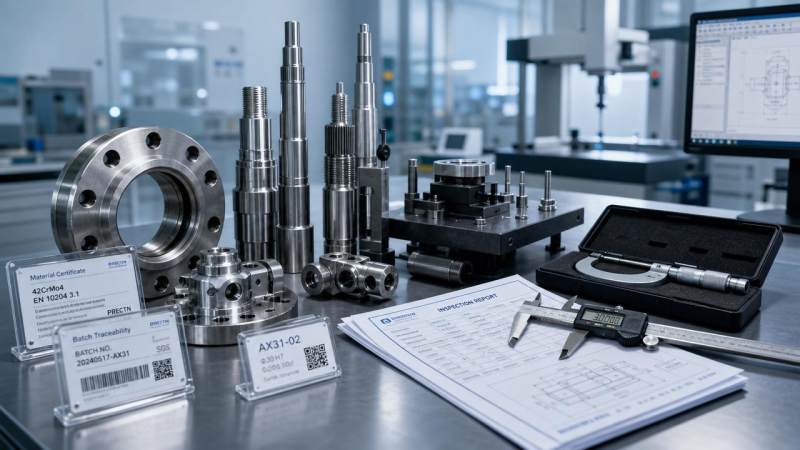
When an Industrial & Manufacturing machinery parts exporter fails to meet technical, regulatory, or quality expectations, the risk extends far beyond delayed shipments. For distributors, agents, and channel partners, one weak supplier can disrupt customer trust, margin stability, and long-term market growth. In today’s precision-driven supply chains, verifying engineering reliability is no longer optional—it is a strategic necessity.
That risk is even sharper when machinery parts move into healthcare-linked environments, laboratory build-outs, diagnostic systems, or medical device production lines. In these settings, a missing tolerance record, inconsistent alloy batch, or undocumented process change can cascade into service failures, compliance exposure, and expensive revalidation work.
For distributors and agents serving technical buyers, the question is no longer whether an Industrial & Manufacturing machinery parts exporter can ship on time. The more important question is whether the exporter can support repeatable engineering performance across 12-month, 24-month, and multi-market supply cycles.
This is where VitalSync Metrics (VSM) brings practical value. As an independent benchmarking and technical evaluation platform focused on MedTech and Life Sciences supply chains, VSM helps decision-makers separate commercial claims from measurable production capability, especially when quality consistency and documentation depth matter as much as price.
Why a machinery parts exporter can become a hidden supply chain liability
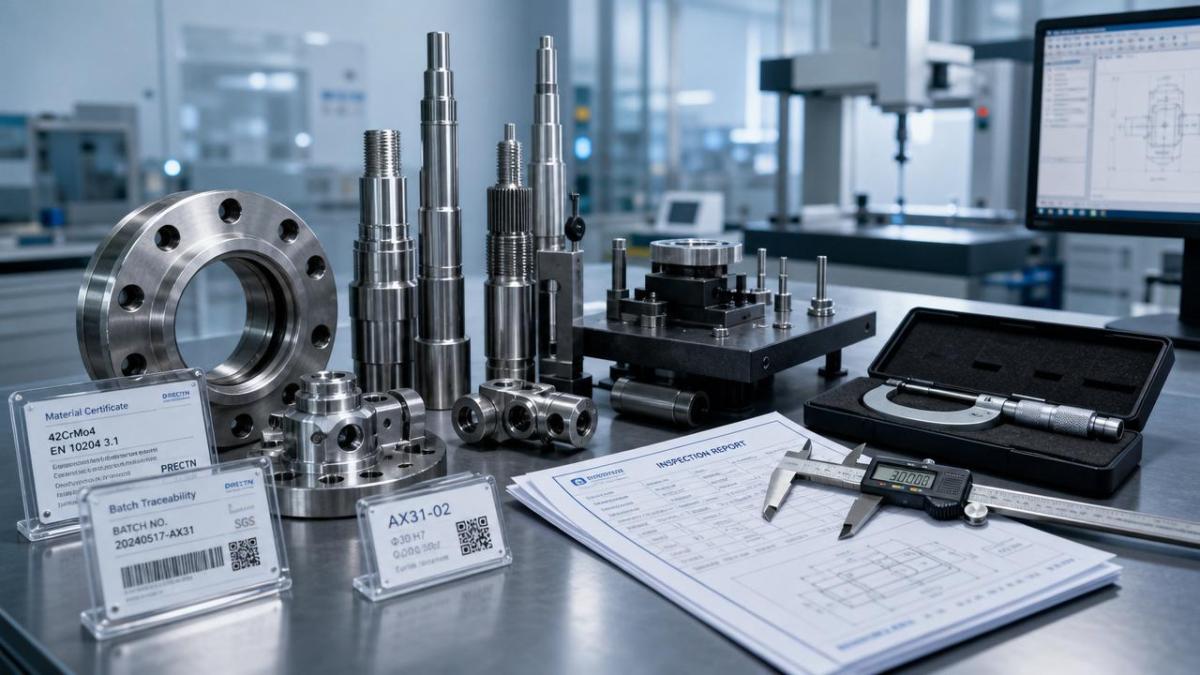
A supplier rarely becomes risky because of one dramatic failure. More often, risk builds through 4 gradual gaps: unstable process control, incomplete documentation, weak change management, and limited post-sale technical support. For channel partners, these gaps may stay invisible until customer complaints begin.
In healthcare-adjacent manufacturing, even routine parts such as shafts, housings, brackets, seals, or machined connectors can affect calibration stability, vibration control, thermal behavior, and equipment uptime. A dimensional shift of ±0.2 mm may be acceptable in one industrial setting but unacceptable in a laboratory instrument assembly.
The commercial risk is larger than the unit price
Many distributors evaluate exporters through three visible metrics: unit cost, lead time, and MOQ. Yet the deeper cost often appears later through warranty returns, site visits, line stoppages, and replacement freight. A part that saves 6% on purchase price can erase margin if failure handling adds 2 to 3 extra service cycles.
For agents managing regional accounts, the reputational cost is equally serious. If the end customer experiences repeated fit issues across 2 production batches or sees documentation mismatch during an audit, they usually blame the local commercial partner first, not the overseas exporter.
Warning signs before disruption becomes visible
An Industrial & Manufacturing machinery parts exporter does not need to fail completely to create instability. Several early indicators often appear within the first 90 to 180 days of cooperation:
- Drawing revisions are acknowledged slowly or without formal revision history.
- First article samples pass, but batch 2 or batch 3 shows wider tolerance drift.
- Material certificates are available, yet heat lot traceability is incomplete.
- Lead times change from 3 weeks to 5 weeks without root-cause explanation.
- Corrective action reports focus on replacement, not process prevention.
These are not minor administrative issues. They signal whether the exporter can operate inside a quality-driven supply chain where validation discipline matters over a 12- to 36-month horizon.
The table below shows how common exporter weaknesses translate into distributor-level business consequences in technical and healthcare-linked supply environments.
The key takeaway is simple: a risky exporter does not only threaten logistics. It weakens technical accountability. For distributors selling into hospitals, labs, OEM integrators, or medical equipment builders, accountability is often the deciding factor in repeat business.
Why healthcare-facing channels need stricter screening
Healthcare procurement teams increasingly expect evidence packages, not just brochures. In projects influenced by MDR/IVDR thinking, buyers often review component traceability, validation support, cleaning compatibility, and long-term supply continuity. Even if the part is not itself a regulated medical device, its documentation quality can still affect approval timelines.
That is why VSM’s data-first approach matters. Benchmarking parameters such as fatigue behavior, signal stability support components, or process repeatability allows channel partners to prequalify exporters before one weak shipment turns into a 6-month account problem.
How distributors should evaluate an Industrial & Manufacturing machinery parts exporter
A practical evaluation model should combine commercial screening with engineering verification. Price remains important, but it should be one of at least 5 decision layers: technical capability, quality control, regulatory readiness, supply resilience, and service responsiveness.
For channel partners handling multi-country distribution, this process is best completed in 3 phases: prequalification, pilot order validation, and quarterly performance review. Each phase should use measurable checkpoints rather than generic supplier scorecards.
Phase 1: prequalification before the first order
Before placing even a small trial order, request the basic technical package. That usually includes drawings, tolerance capability statement, raw material specifications, sample inspection format, packaging method, and standard lead-time window such as 15 to 30 days.
At this stage, the goal is not perfection. The goal is to identify whether the exporter operates with a documented system or with informal workshop habits. The difference becomes critical when annual volumes move from 500 units to 5,000 units.
Phase 2: pilot validation under realistic conditions
A pilot batch should not only confirm appearance and dimensions. It should test repeatability under real assembly, sterilization-adjacent cleaning, vibration, load, or thermal cycles where relevant. For many precision parts, 20 to 50 sample units provide a more reliable signal than 2 hand-picked prototypes.
This is also the right point to verify documentation speed. If a nonconformance appears, can the exporter issue an 8D-style corrective response in 48 to 72 hours? Can they separate affected lots and explain containment actions clearly? Response discipline often predicts future reliability better than marketing language.
Phase 3: ongoing monitoring after onboarding
Even a qualified exporter should be reviewed every quarter using a compact scorecard. Focus on 6 indicators: on-time delivery, dimensional conformance, documentation accuracy, complaint closure speed, change notification discipline, and batch traceability completeness.
If any 2 indicators fall below target for 2 consecutive review cycles, the supplier should move into controlled status, with tighter incoming inspection or temporary allocation limits. This protects the distributor before a problem reaches key accounts.
The following evaluation matrix gives distributors and agents a practical way to compare exporters beyond headline pricing.
This type of scorecard helps channel partners compare exporters on facts, not impressions. It also creates a defensible sourcing process when enterprise buyers ask why one exporter was selected over another.
Questions worth asking before signing a channel agreement
- How are drawing revisions approved, recorded, and communicated?
- What is the standard response time for nonconformance investigations?
- Can the exporter maintain supply if demand rises by 20% to 30% in one quarter?
- Which parts of inspection are in-process and which are final only?
- What records are available for material, tooling, and batch traceability?
A capable Industrial & Manufacturing machinery parts exporter should answer these questions clearly and consistently. Vague replies usually indicate that process maturity is weaker than the sales presentation suggests.
Where VSM fits in when technical confidence is missing
Distributors do not always have in-house engineering teams large enough to benchmark every exporter. That is especially true when the part will support diagnostic equipment, wearable sensor assemblies, orthopedic component supply chains, or laboratory infrastructure where technical risk is harder to detect with standard incoming inspection alone.
VSM addresses this gap by converting manufacturing claims into evidence-led technical interpretation. Instead of relying on brochures or selective sample performance, channel partners can use structured whitepapers, comparative parameter reviews, and benchmark-led sourcing guidance to reduce uncertainty before scale orders begin.
From promotional claims to measurable sourcing decisions
In many industrial categories, exporters present similar statements: precision machining, strict QC, fast delivery, custom service. Those claims are too broad to support real procurement decisions. VSM helps buyers translate them into verifiable criteria such as fatigue limits, measurement repeatability, process window stability, and documentation completeness.
For healthcare-facing projects, this is highly valuable because procurement teams increasingly want proof that a component will perform consistently over time, not just pass a single shipment inspection. A benchmark-driven review can uncover whether an exporter is suitable for pilot work only or ready for scaled distribution.
How channel partners can use independent benchmarking
A distributor or agent can apply VSM-style evaluation in several ways:
- Screen 2 to 4 exporter candidates before regional representation is granted.
- Support customer-facing tenders with technical comparison documents.
- Validate whether low-cost offers create hidden lifecycle risk.
- Strengthen negotiation by linking price discussions to measurable quality variables.
- Build internal approved-supplier lists based on engineering evidence, not only purchasing history.
This approach is particularly useful when a channel partner serves buyers who ask difficult questions about traceability, endurance, signal performance, contamination risk, or material longevity. In those cases, the difference between winning and losing a project can depend on the depth of technical substantiation.
Common sourcing mistake to avoid
One frequent mistake is assuming that a supplier with acceptable first samples is automatically a safe long-term exporter. First samples are often optimized. Real risk appears later, when production volumes rise, operators change, raw material sources shift, or tooling wear begins to affect consistency after 3,000 to 10,000 cycles.
That is why ongoing benchmarking and periodic revalidation matter. In complex supply chains, technical truth is not a one-time document. It is a maintained condition.
Building a safer sourcing model for long-term channel growth
The strongest distributors treat exporter selection as a growth strategy, not just a purchasing task. A reliable Industrial & Manufacturing machinery parts exporter supports faster quotation cycles, fewer field escalations, better customer retention, and cleaner expansion into regulated or quality-sensitive sectors.
A safer model usually includes 5 operating rules: dual-source critical parts where possible, define documentation standards before PO release, validate process consistency over multiple batches, track supplier performance quarterly, and use independent technical review when application risk is high.
A practical supplier control framework
For many channel businesses, a simple framework is enough to reduce major risk. Start by separating suppliers into three categories: approved, conditional, and development. Review approved suppliers every 90 days, conditional suppliers every 30 to 60 days, and development suppliers only through pilot business until evidence improves.
This framework also helps sales teams make better promises. If a buyer needs a 4-week delivery and full lot traceability, the account team can immediately see which exporters are capable and which should not be quoted for that project.
Why evidence-based sourcing protects margin
Margins in distribution are often lost in hidden recovery work: expediting, inspection overtime, service visits, emergency replacements, and account appeasement. Evidence-based sourcing reduces these leakages. It may not always deliver the lowest initial purchase cost, but it usually improves total commercial stability.
For healthcare and life-science-linked applications, that stability is a competitive asset. Buyers increasingly reward partners who can demonstrate not only product access, but disciplined supply assurance. That is exactly where independent technical benchmarking adds value.
When exporter risk is assessed only by price and lead time, problems surface too late and cost too much. Distributors, agents, and channel partners need a broader view that includes process capability, documentation rigor, technical responsiveness, and long-term consistency. VitalSync Metrics (VSM) helps translate those requirements into measurable sourcing confidence, especially in healthcare-connected and quality-sensitive supply chains.
If you need stronger assurance before selecting an Industrial & Manufacturing machinery parts exporter, or you want a clearer technical basis for supplier comparison, contact VSM to discuss a tailored benchmarking approach, request a custom evaluation framework, or explore more solutions for resilient channel sourcing.
Recommended News
- 2026.10.15Medical Packaging Heat Seal Testing: Seal Strength vs. Seal Integrity TestsDr. Julian Rossi (RehabTech Specialist)
- 2026.10.14Clinic Supplier Comparison: Evaluating Cost, Delivery Reliability, and SupportDr. Alistair Thorne (Senior Biomedical Engineer)
- 2026.10.13Engineering Performance Testing Services: Evaluating Test Methods and AccuracyDr. Alistair Thorne (Senior Biomedical Engineer)
The VitalSync Intelligence Brief
Receive daily deep-dives into MedTech innovations and regulatory shifts.