 Get Insights

Where can exporters find trade resources in the USA?
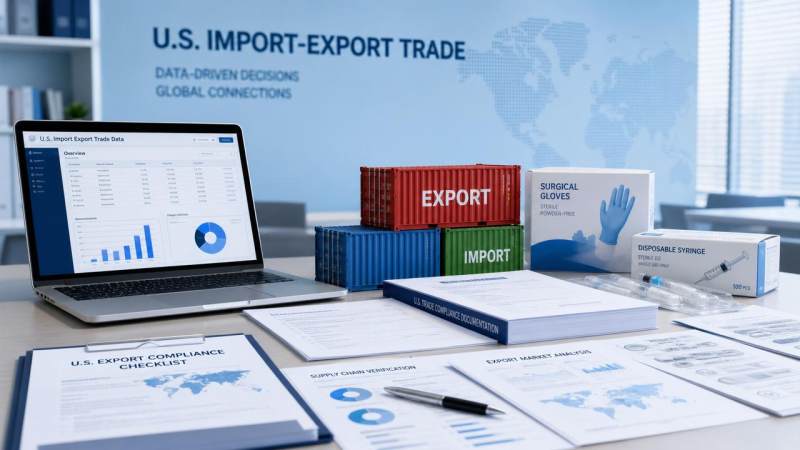
Finding reliable trade resources for exporters in the USA is no longer just about directories or trade shows—it is about validating partners, compliance, and supply-chain credibility. For business evaluators in healthcare and related sectors, the right resources can reduce sourcing risk, improve market access, and support informed procurement decisions. This guide explores where exporters can find trustworthy channels, data, and verification tools in the U.S. market.
For most exporters, the best trade resources for exporters in USA are not single databases but a layered mix of public agencies, industry associations, import data tools, compliance registries, and third-party validation sources.
Business evaluators usually care less about lead volume and more about partner quality, regulatory fit, and long-term reliability. That is especially true in healthcare, MedTech, diagnostics, and laboratory supply chains.
If your goal is market entry with lower risk, focus first on resources that help verify buyers, distributors, standards, and procurement pathways. General networking channels matter, but decision-grade intelligence matters more.
What business evaluators really need from U.S. trade resources

When someone searches for trade resources for exporters in USA, the real question is usually practical: where can we find trustworthy market access channels and verify whether opportunities are commercially and technically credible?
For business assessment teams, this means looking beyond promotional lists. They need evidence on importer behavior, product category demand, regulatory barriers, payment risk, and distributor capability.
In healthcare-related industries, another layer matters. Exporters must often confirm whether a target partner understands FDA expectations, hospital procurement cycles, clinical documentation, and post-market service responsibilities.
That is why the most useful U.S. trade resources are those that support decisions, not just discovery. A resource becomes valuable when it helps a team qualify, compare, and reduce uncertainty.
Start with official U.S. government trade support channels
Government-backed resources are usually the best starting point because they offer structured information, market access guidance, and a higher baseline of credibility than many commercial lead platforms.
The International Trade Administration, under the U.S. Department of Commerce, is one of the most useful sources. It provides market intelligence, trade counseling, export guides, and industry-specific insights.
Although many ITA materials are designed for U.S. exporters, international companies can still use them to understand how U.S. sectors are structured, which regions are active, and where demand is concentrated.
Exporters should also review U.S. Customs and Border Protection information. CBP resources help clarify import procedures, documentation expectations, tariff classifications, and enforcement realities that affect market entry planning.
The U.S. Small Business Administration and state-level economic development offices can also provide useful market context. They often publish directories, sector reports, and information on local clusters or business incentives.
For exporters evaluating specific states, local port authorities and state commerce agencies can reveal logistics strengths, distribution ecosystems, and industrial specialization that are not obvious in national summaries.
Use industry associations to identify credible networks and market access paths
Industry associations are often better than broad business directories because they reflect actual operating communities. In many sectors, membership signals seriousness, visibility, and ongoing market engagement.
For healthcare and life sciences exporters, relevant U.S. associations may include medical device groups, hospital procurement networks, laboratory organizations, and digital health alliances.
These associations help exporters identify conferences, policy trends, member directories, working groups, and educational events. More importantly, they reveal which topics matter most to buyers and regulators.
Business evaluators can use association participation as a screening factor. A distributor or manufacturer active in respected associations is not automatically trustworthy, but it often indicates stronger market integration.
Association websites also help exporters understand terminology, reimbursement discussions, clinical workflow priorities, and purchasing pressures. This context is essential when adapting value propositions for the U.S. market.
Import-export databases help validate real market activity
One of the most practical trade resources for exporters in USA is shipment and import data. These tools show who is importing, from where, how often, and sometimes in what approximate volume.
Commercial trade data platforms can help identify active buyers, recurring distributors, and product movement trends. For evaluators, this is often more useful than a static company list.
If a target importer appears consistently in a relevant product category, that suggests real channel activity. If a company claims strong distribution reach but shows little visible trade movement, caution is warranted.
Shipment data is especially useful when comparing potential entry partners. It can reveal whether a distributor is focused on your segment, diversified across adjacent categories, or dependent on a narrow supplier base.
However, trade data should never stand alone. It works best when paired with website review, compliance checks, customer references, financial screening, and operational interviews.
Regulatory databases are essential for healthcare and technical sectors
In regulated industries, compliance resources are not optional. They are central to evaluating whether a U.S. opportunity is viable, scalable, and aligned with product requirements.
For medical devices, diagnostics, and many laboratory-related products, the FDA database ecosystem is a core resource. Exporters should review establishment registration, device listings, recalls, warning letters, and clearance pathways.
These tools help answer several important questions. Is the target market segment highly regulated? Do comparable products already have clearance? Has a potential partner been associated with compliance issues?
For business evaluators, this information improves partner screening and market prioritization. It also helps estimate documentation effort, timeline risk, and post-market obligations before commercial commitments are made.
In sectors influenced by MDR or IVDR thinking, exporters should also evaluate whether U.S. partners understand global evidence expectations, traceability, and quality-system discipline. Regulatory maturity is a commercial asset.
Trade shows are useful, but only when paired with pre-event verification
Many exporters still rely heavily on U.S. trade shows, and they can be valuable. But exhibitions are best treated as relationship accelerators, not primary proof of partner quality.
A trade show helps exporters meet distributors, procurement stakeholders, and technical buyers efficiently. It also offers direct feedback on product positioning, pricing assumptions, and competitive language.
However, business evaluators should qualify targets before and after the event. Review company registrations, product portfolios, distribution footprint, service capability, and compliance history before assuming a booth equals credibility.
In healthcare sectors, ask whether the potential partner has experience with hospital systems, integrated delivery networks, GPO-linked purchasing environments, or technical support for clinical users.
The strongest event strategy combines scheduled meetings, post-event scoring, and follow-up diligence. Without that structure, trade shows often generate contact volume but little decision value.
Commercial directories and B2B platforms should be filtered carefully
Online B2B marketplaces, supplier directories, and business databases can help exporters build a long list. They are fast, searchable, and often useful for initial mapping.
But they also create noise. Many listings are outdated, self-reported, thin on verification, or focused more on visibility than operational depth. That makes them risky as standalone decision tools.
A practical approach is to use directories for discovery and then move quickly into validation. Confirm legal identity, office presence, sector specialization, certifications, and channel relevance.
For business evaluators, the key question is not whether a company appears in multiple directories. It is whether the company shows consistent evidence across independent sources.
If a prospect appears in directories, shipment data, association materials, regulatory records, and conference participation, confidence increases. If it only appears in sales-oriented listings, skepticism is justified.
How to assess whether a U.S. distributor or buyer is worth pursuing
The most helpful trade resources are those that support partner scoring. Exporters should create a simple evaluation model rather than relying on intuition or first impressions.
Start with market fit. Does the company already serve the customer type you need, such as hospitals, laboratories, outpatient clinics, or specialty providers?
Next assess technical capability. Can the partner support installation, training, after-sales service, documentation handling, or complaint processes if your product category requires them?
Then review compliance maturity. Look for regulatory familiarity, quality-system awareness, and evidence that the company can operate in environments where traceability and documentation matter.
Commercial strength is another factor. Evaluate geographic coverage, account concentration, product overlap, channel conflicts, and whether the company can realistically prioritize your line.
Finally, examine credibility signals. References, case studies, visible leadership, conference participation, and transparent communication patterns often reveal more than polished marketing material.
Why third-party benchmarking matters in technical procurement decisions
For complex healthcare products, exporters increasingly need more than trade contacts. They need technical evidence that supports trust during vendor review and procurement assessment.
This is where independent benchmarking and engineering-focused evaluation become strategically useful. Buyers want proof that performance claims align with real operational and clinical requirements.
Organizations like VitalSync Metrics reflect this shift. In high-stakes supply chains, standardized technical whitepapers, performance comparisons, and compliance-oriented analysis can strengthen market conversations significantly.
For business evaluators, such resources help separate commercially attractive opportunities from technically fragile ones. They also improve internal decision-making when multiple suppliers or channels are under review.
In the U.S. market, where procurement scrutiny is rising, independently structured evidence can shorten doubt cycles and support more credible discussions with distributors, hospitals, and laboratory stakeholders.
A practical resource stack exporters can use right away
Instead of searching for one perfect source, exporters should build a repeatable resource stack. This creates better decisions and reduces dependence on incomplete signals.
First, use government and customs resources to understand market structure, import rules, and regional entry considerations. This establishes the regulatory and logistical baseline.
Second, use industry associations and event calendars to identify relevant communities, sector language, and credible networking environments. This improves targeting accuracy.
Third, use commercial trade data tools to validate active buyers and distribution patterns. This adds behavioral evidence to market assumptions.
Fourth, use regulatory and compliance databases to screen technical fit and risk exposure. For healthcare exporters, this step is essential before deep commercial engagement.
Fifth, use independent benchmarking, reference checks, and structured partner scoring to confirm whether a target deserves investment of time, inventory, and brand reputation.
Conclusion: the best U.S. trade resources are the ones that reduce uncertainty
Exporters can find many trade resources in the USA, but not all of them are equally useful. For business evaluators, the goal is not maximum exposure. It is better judgment.
The strongest trade resources for exporters in USA are those that help verify demand, screen partners, understand compliance, and support technically credible market entry decisions.
In general sectors, that means combining official trade support, associations, directories, and data tools. In healthcare and technical industries, it also means adding regulatory review and independent performance validation.
If exporters approach U.S. trade research with a verification mindset, they will identify fewer but better opportunities. That usually leads to stronger partnerships, lower risk, and more durable commercial growth.
Recommended News
- 2026.10.15Medical Packaging Heat Seal Testing: Seal Strength vs. Seal Integrity TestsDr. Julian Rossi (RehabTech Specialist)
- 2026.10.14Clinic Supplier Comparison: Evaluating Cost, Delivery Reliability, and SupportDr. Alistair Thorne (Senior Biomedical Engineer)
- 2026.10.13Engineering Performance Testing Services: Evaluating Test Methods and AccuracyDr. Alistair Thorne (Senior Biomedical Engineer)
The VitalSync Intelligence Brief
Receive daily deep-dives into MedTech innovations and regulatory shifts.